Thac Bac Ban Vang is one of those places that rewards the effort of actually getting there. Tucked into the forested hills of what was formerly Bac Kan province — now part of the expanded Thai Nguyen — this silver waterfall draws a trickle of domestic visitors on weekends but remains largely off the radar for foreign travelers.
What it is
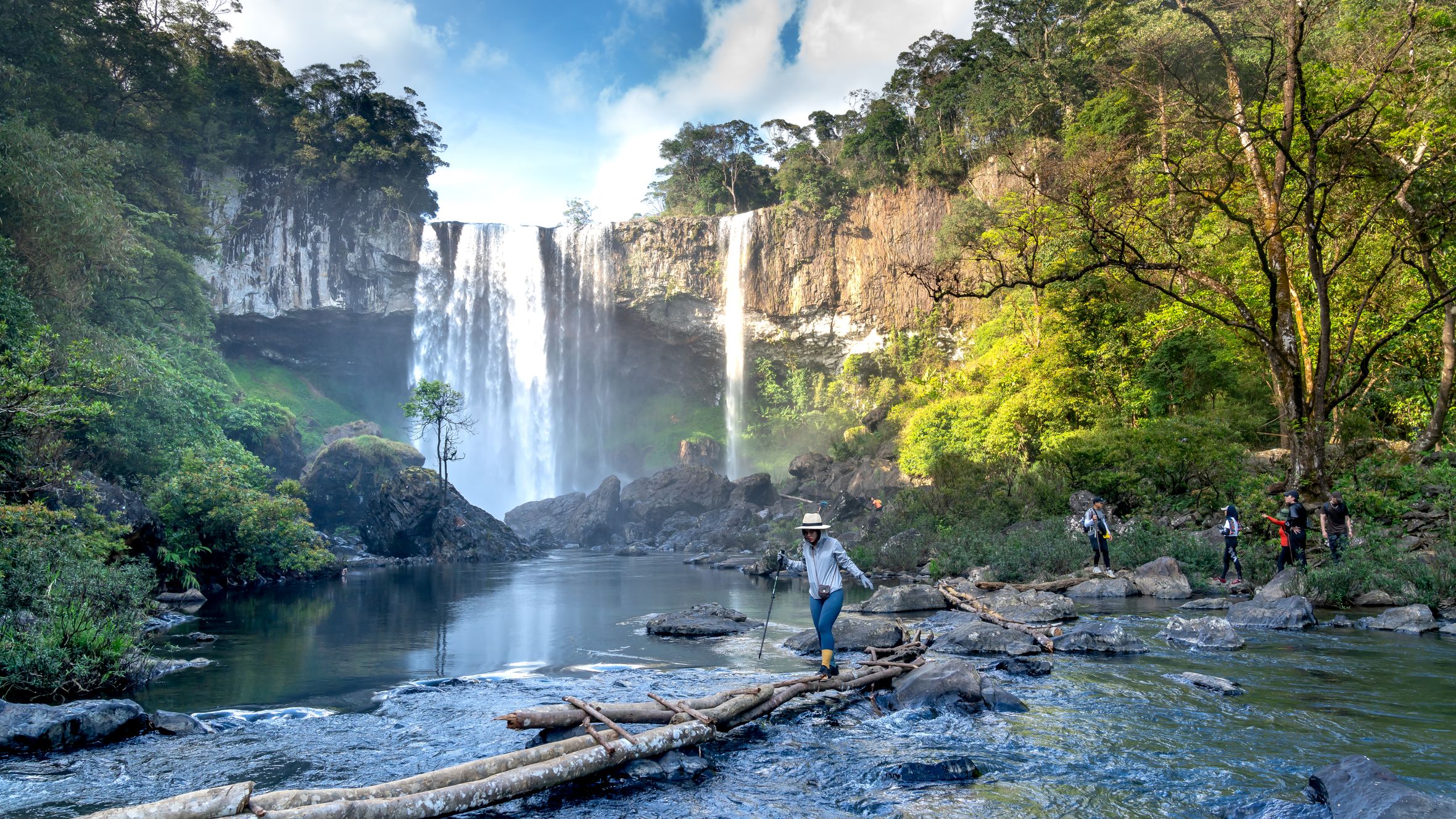
Thac Bac Ban Vang (literally "Silver Waterfall of the Gold Village") is a multi-tiered cascade dropping roughly 30 meters through dense subtropical forest. The waterfall feeds into a series of natural pools at the base, surrounded by mossy boulders and old-growth trees. The area is home to Tay and Dao ethnic communities, and the name Ban Vang references a small Tay hamlet nearby.
This isn't a heavily developed tourism site. There's no elevator, no glass walkway, no ticket booth charging 200,000 VND. It's a forest waterfall with a dirt trail, which is exactly why it's worth the trip.
Why travelers go
People come here for the quiet. If you've spent a week bouncing between Hanoi's Old Quarter and Ha Long Bay, Thac Bac Ban Vang is a hard reset. The hike in takes about 40 minutes through bamboo groves and farmland, and you'll likely have the falls to yourself on a weekday. The pools at the base are swimmable in the right season — cold, but swimmable. Birdwatching is genuinely good along the trail, especially early morning.
For photographers, the layered cascade and the way light filters through the canopy in the late afternoon make this a far more interesting subject than most of the big-name waterfalls that get paved over and floodlit.
Best time to visit
Aim for September through November. The rainy season (June–August) fills the falls to their most impressive volume, but the trail turns into a mud chute and leeches come out in force. By September, water flow is still strong but the paths are drying out. October and November offer comfortable temperatures (18–25°C) and less humidity.
Avoid Tet and public holiday weekends if you want solitude — local families picnic at the base pools and it gets crowded by Thai Nguyen standards, which means maybe 30 people instead of three.
The dry season (December–February) brings cooler weather and thinner water flow. The falls lose some drama but the hike is easier and the skies tend to be clearer.
How to get there
The nearest major hub is Thai Nguyen city, about 80 km north of Hanoi (하노이 / 河内 / ハノイ).
Hanoi to Thai Nguyen: Buses leave from My Dinh and Gia Lam stations roughly every 30 minutes, costing 80,000–100,000 VND. The ride takes about 1.5–2 hours depending on traffic. If you're on a motorbike, take QL3 north — straightforward road, decent surface.
Thai Nguyen city to Thac Bac Ban Vang: This is the trickier leg. The waterfall is in the northern reaches of the province, roughly 60–70 km from the city center. You have two options:
- Motorbike rental (recommended): Rent in Thai Nguyen city for 120,000–180,000 VND/day. The ride takes about 1.5–2 hours on provincial roads that wind through tea plantations and small villages. The last 5 km is on a narrow concrete path — passable but slow.
- Xe om or taxi: A car from Thai Nguyen city runs around 500,000–700,000 VND one way. Arrange a round trip with waiting time if you go this route, because you won't find a ride back from the trailhead.
There is no public bus to the waterfall itself.

Photo by Quang Nguyen Vinh on Pexels
What to do
Hike the trail to the falls
The main trail from the road to the waterfall base is roughly 2 km. It's not technical — no ropes, no scrambling — but it's uneven and can be slippery after rain. Wear proper shoes, not sandals. The walk passes through secondary forest with tall bamboo stands and a few stream crossings on makeshift log bridges.
Swim in the base pools
The natural pools at the bottom of the falls are chest-deep in places during high-water months. The water is cold — genuinely cold, mountain-stream cold — but on a humid day it's exactly what you want. Bring a dry bag for your phone.
Visit Ban Vang hamlet
The Tay village near the trailhead is small but welcoming. Traditional stilt houses line a single path, and if you're polite about it, locals are usually happy to show you how they process tea or make "com lam" (sticky rice cooked in bamboo tubes). Don't barge in with a camera — ask first.
Explore the tea hills
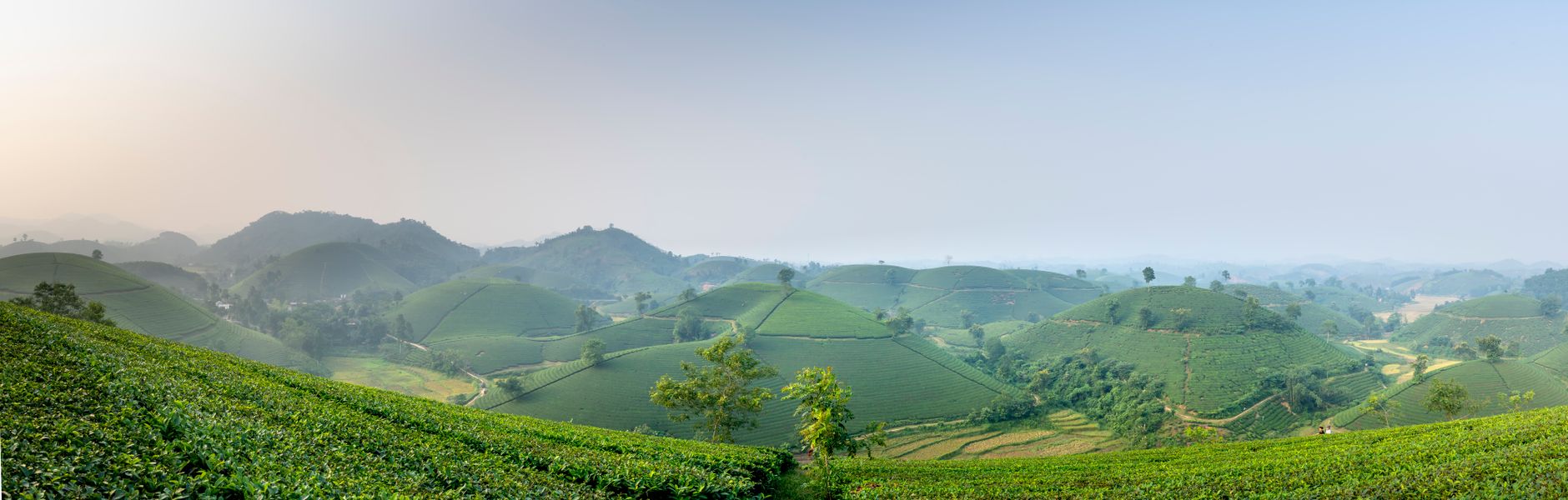
Thai Nguyen is Vietnam's most famous tea-producing province. The roads leading to the waterfall pass through rolling plantations where you can stop, buy fresh green tea directly from farmers for 100,000–200,000 VND per kilogram, and watch the picking and drying process. This is where a lot of the lotus tea sold in Hanoi actually originates.
Catch the sunrise from the ridge
If you stay overnight nearby, the ridge above the access road offers a wide view east over the valley. Get there by 5:30 AM in autumn for mist burning off the tea fields.
Where to eat nearby
Don't expect restaurants. The closest proper food is back in the nearest town, about 10–15 km from the trailhead.
Look for "com lam" — bamboo-tube sticky rice, often served with grilled pork or chicken. It's a staple Tay dish and far better here than the tourist versions sold in Sapa. A plate with grilled meat runs 40,000–60,000 VND.
Also seek out "thit trau gac bep" — smoked buffalo meat hung above the kitchen fire. It's chewy, intensely savory, and pairs well with rice wine if you're not riding back that evening. Sold by weight, usually around 250,000–350,000 VND per kilogram.
Where to stay
There are no hotels at the waterfall. Your options:
- Homestays near Ban Vang: A few families offer basic rooms — expect a mattress on the floor, mosquito net, shared bathroom. Around 150,000–250,000 VND per night, sometimes including dinner.
- Guesthouses in the nearest town: Simple but clean rooms with private bathrooms, hot water, and Wi-Fi. Budget 200,000–400,000 VND.
- Thai Nguyen city hotels: If you want proper accommodation, stay in the city and make the waterfall a day trip. Mid-range hotels run 400,000–800,000 VND per night.

Photo by Quang Nguyen Vinh on Pexels
Practical tips locals would tell you
- Bring cash. There are no ATMs anywhere near the waterfall, and nobody takes cards.
- Pack your trash out. There are no bins on the trail, and littering here would be a real shame.
- Carry at least 2 liters of water per person. The hike isn't long, but it's humid and there's no clean drinking water source along the way.
- If you ride a motorbike, fill up in town. The last petrol station is about 15 km before the trailhead.
- Bug spray matters. Mosquitoes along the stream are persistent, especially in the late afternoon.
Common mistakes to avoid
- Wearing flip-flops on the trail. The rocks near the falls are covered in algae. People slip every week. Wear shoes with grip.
- Arriving after 2 PM. The canopy blocks light early, and the trail has no lighting. You want to be heading back by 3:30 PM at the latest if you don't know the path.
- Skipping the village. Most visitors walk straight to the waterfall and straight back. Spending even 30 minutes in Ban Vang gives the trip context — the waterfall is part of a living landscape, not just a photo op.
- Expecting Hanoi-level food options. Eat a proper breakfast before you leave and bring snacks. The "restaurants" near the trail are someone's front porch with a cooking pot.
Practical notes
Thac Bac Ban Vang works best as part of a longer loop through Thai Nguyen's northern hills, combining tea country with ethnic-minority homestays. It pairs well with a few days in Hanoi on either end, or as a detour if you're heading further north toward Ha Giang. No entrance fee at the time of writing, though that may change as the area develops.
Last updated · May 26, 2026 · independently researched, never sponsored.