Niet Ban Tinh Xa is one of those places that rewards you for wandering past the obvious attractions. Perched on the slopes of Nho Mountain (Nui Nho) in Vung Tau — now part of the expanded Ho Chi Minh City — this Buddhist hermitage trades the grandeur of big-name pagodas for something harder to find: genuine quiet, ocean air, and a sense of being slightly off the map.
What it is
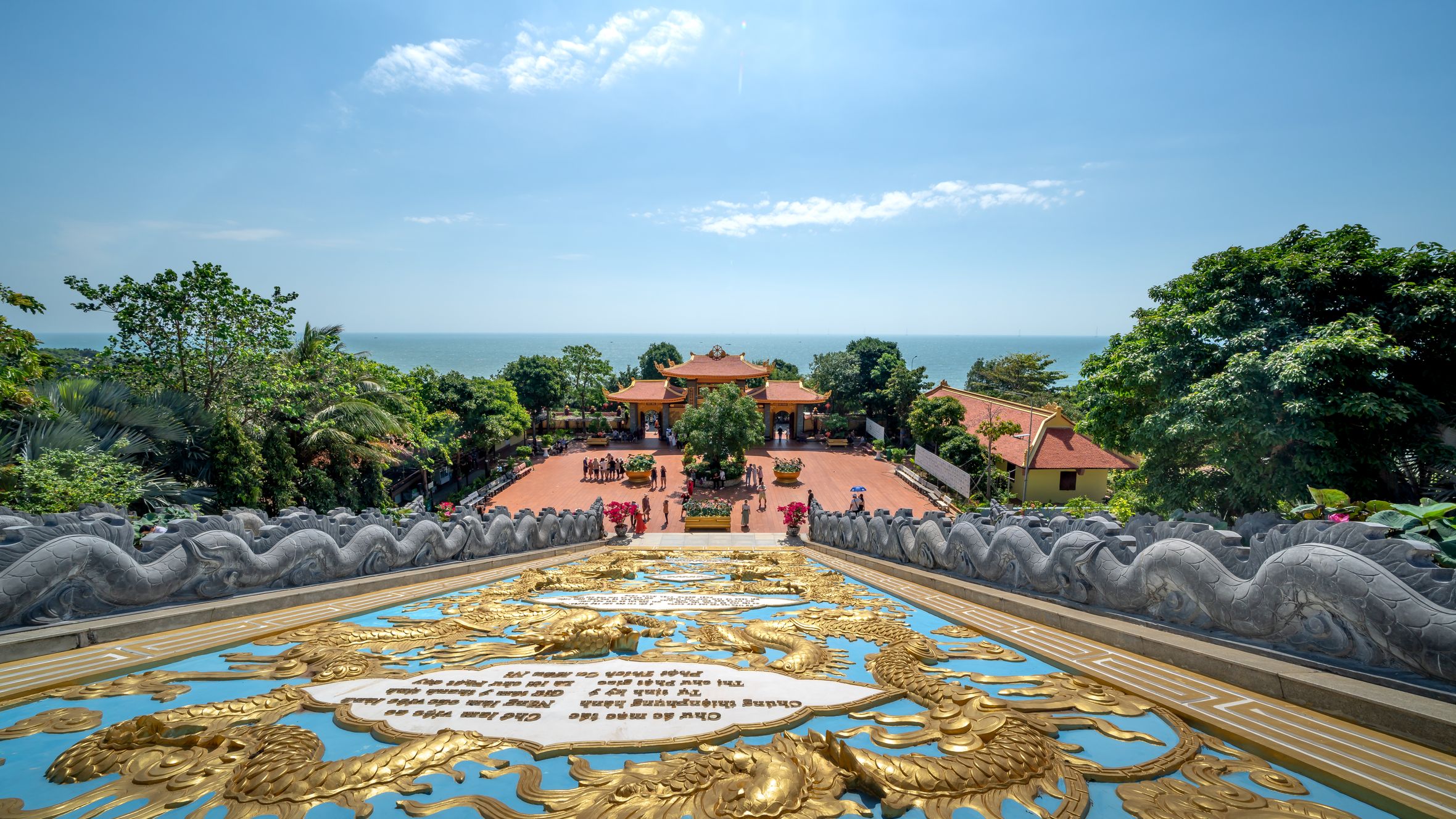
Niet Ban Tinh Xa (roughly "Nirvana Hermitage") is a Theravada Buddhist monastery built in the early 1970s on the rocky southern flank of Nui Nho, just a short walk from the more famous Tuong Dai Chua Kito (Christ of Vung Tau (붕따우 / 头顿 / ブンタウ) statue). The complex is modest compared to the large pagodas you'll find in central Saigon. There's no towering gate or ornate dragon-scaled roof. Instead, the architecture leans minimalist — clean lines, whitewashed walls, open-air meditation platforms that face the East Sea.
The centrepiece is a reclining Buddha statue, about 12 metres long, lying in the parinirvana position on a stone platform overlooking the water. It's not the biggest reclining Buddha in Vietnam (베트남 / 越南 / ベトナム), but its setting — framed by frangipani trees and the sound of waves below — makes it one of the more memorable.
Why travelers go
Most visitors to Vung Tau cluster around Back Beach, the Christ statue, or the lighthouse. Niet Ban Tinh Xa sits in between these spots geographically but gets a fraction of the foot traffic. That's the draw. You can sit on the terraced grounds for half an hour without another person walking past. The ocean views from the upper levels stretch across the shipping lanes toward Con Dao, and on clear mornings the light is genuinely good for photography.
It's also a functioning monastery. Monks live and practice here daily, which gives it a lived-in quality that tourist-oriented temples sometimes lack. If you've spent a few days in Saigon visiting places like Tran Quoc Pagoda or the big Chinatown pagodas, the contrast is sharp.
Best time to visit
Vung Tau's dry season runs from November through April, with the least rain in January and February. Mornings are ideal — arrive before 9 AM and you'll have cooler temperatures (around 26-28°C) and softer light on the reclining Buddha. The hermitage faces east, so sunrise visits are worth the early alarm.
Avoid weekends and public holidays around Tet if you want solitude. Vung Tau is Saigon's default beach escape, and during long weekends the entire Nui Nho area gets busier.
How to get there from Saigon
Vung Tau is roughly 95 km southeast of central Saigon. You have three realistic options:
Hydrofoil (fastest)
Greenlines DP operates high-speed ferries from Bach Dang Wharf (District 1) to Vung Tau. The ride takes about 90 minutes. Tickets run 250,000-350,000 VND one way depending on seat class. Book a day ahead on weekends.
Bus
Phuong Trang (FUTA) and Kumho Samco run buses from Mien Dong bus station. The trip takes 2-2.5 hours depending on traffic. Expect to pay around 100,000-160,000 VND.
Motorbike or car
Take the Long Thanh - Dau Giay expressway then cut south via Route 51. About 2 hours without heavy traffic. Grab car from District 1 will cost roughly 700,000-900,000 VND one way.
Once in Vung Tau, Niet Ban Tinh Xa is on Tran Phu Street, on the Nui Nho hillside. From Back Beach, it's a 10-minute motorbike ride or a 50,000-70,000 VND Grab bike.

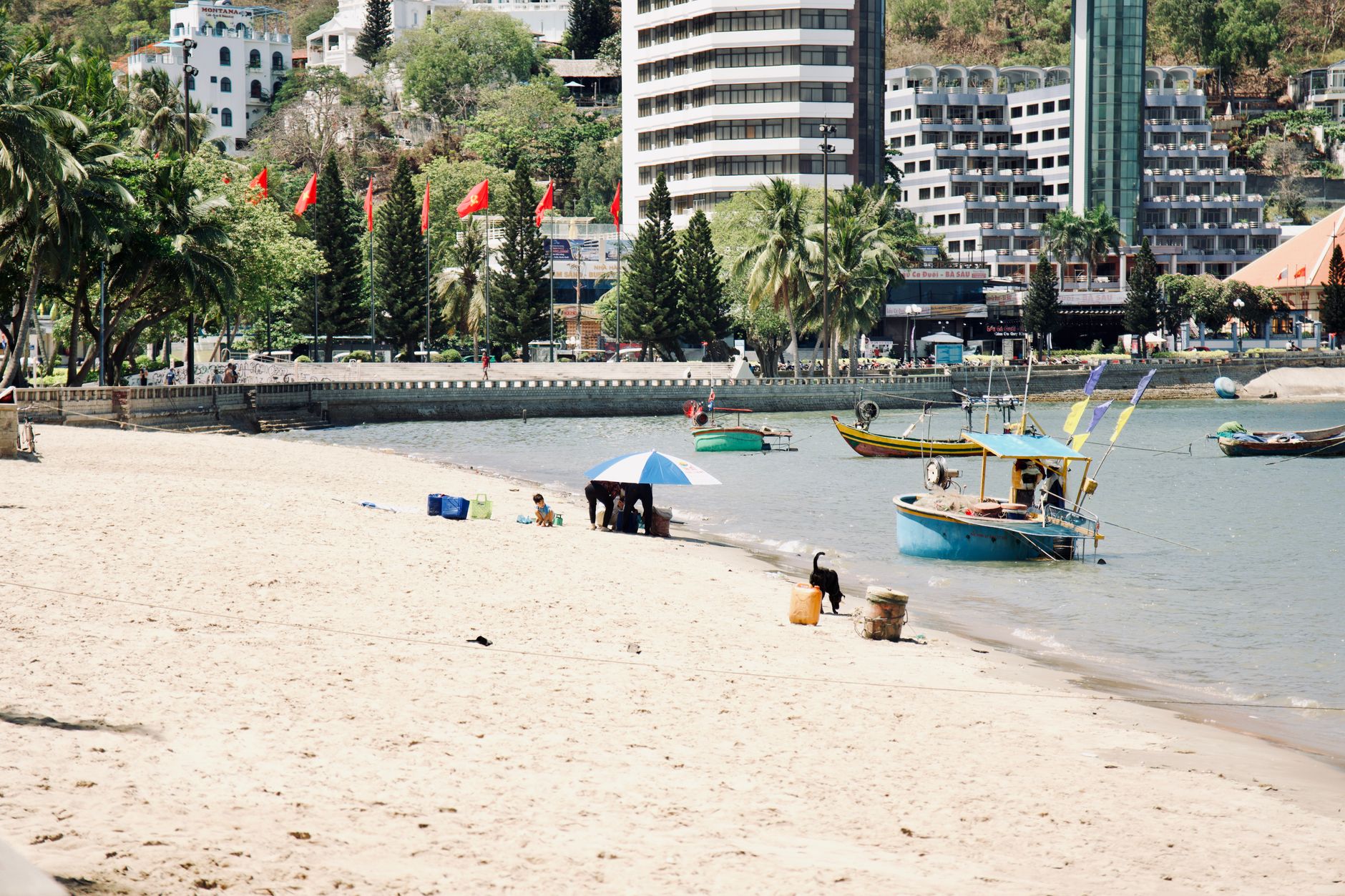
Photo by Haneul Trac on Pexels
What to do
Walk the terraced grounds. The hermitage is built into the hillside on multiple levels connected by stone steps. Take your time moving between platforms. Each level offers a slightly different angle on the coastline and the reclining Buddha.
Sit with the reclining Buddha. The statue sits on an open platform with no barriers or ropes. You can get close, and the space around it is designed for contemplation. Early morning, when incense smoke drifts across the platform, is the best time.
Explore the meditation caves. Below the main complex, natural rock formations and small caves have been incorporated into the monastery's layout. Some contain small altars and Buddha images. They're cool even on hot days.
Combine with the Christ statue and lighthouse. Both are within walking distance on Nui Nho. A half-day loop — Niet Ban Tinh Xa first, then the Christ statue, then down to the Vung Tau Lighthouse — covers the three best things on the mountain without backtracking much. Total walking distance is about 3 km with some steep sections.
Watch the container ships. Vung Tau sits at the mouth of the Saigon River shipping channel. From the upper terraces, you can watch enormous cargo vessels pass surprisingly close to shore. It's oddly hypnotic.
Where to eat nearby
Vung Tau has its own food identity, separate from Saigon's. Two things to seek out after your visit:
Banh khot — small, crispy rice-flour pancakes cooked in cast-iron moulds, topped with shrimp and eaten with fresh herbs and fish sauce. Banh Khot Goc Vu Sua on Nguyen Truong To Street is a reliable local spot. A plate of 10-12 runs about 50,000-80,000 VND.
"Bun rieu" — crab-and-tomato noodle soup — is everywhere in Vung Tau and tends to be slightly sweeter here than versions in Hanoi. Look for stalls along the alleys behind Front Beach near Tran Hung Dao Street. A bowl costs 35,000-50,000 VND.
If you need coffee, Vung Tau has a growing cafe scene. A "ca phe sua da" at any local spot will cost 20,000-30,000 VND and usually comes stronger than the chains.
Where to stay
Most travelers base in the Back Beach area, which puts you 10-15 minutes from Nui Nho by motorbike.
- Budget: Guesthouses and hostels along Thuy Van Street start at 200,000-400,000 VND/night. Basic but functional.
- Mid-range: 3-star hotels along Back Beach with ocean-view rooms run 600,000-1,200,000 VND/night. Imperial Hotel and Sammy Hotel are reliable options.
- Higher-end: The Malibu Hotel or Pullman Vung Tau sit right on Back Beach. Expect 1,500,000-3,000,000 VND/night.

Photo by Quang Vuong on Pexels
Practical tips locals would tell you
- Wear shoes with grip. The stone steps between levels get slippery after rain, and some sections are steep.
- Dress modestly — shoulders and knees covered. It's an active monastery, not a museum.
- Bring water. There's no vendor inside the complex, and the climb between levels in midday heat will dehydrate you fast.
- Leave a small donation at the main hall if you visit. There's a donation box near the entrance — 20,000-50,000 VND is appropriate.
- If you're visiting Vung Tau as a day trip from Saigon, book the morning hydrofoil out and the late afternoon return. This gives you enough time to cover Nui Nho properly and eat lunch.
Common mistakes to avoid
Skipping it for the Christ statue only. Most day-trippers go straight to the Christ statue, take photos, and leave Nui Nho. Niet Ban Tinh Xa is a five-minute walk away and arguably more interesting as an experience.
Coming at midday. The hillside has limited shade. Between 11 AM and 2 PM the stone terraces radiate heat. Morning or late afternoon is far more comfortable.
Not budgeting enough time. People often allocate 20 minutes. Give it at least 45 minutes to an hour to walk the full complex, sit for a while, and explore the lower caves.
Practical notes
Niet Ban Tinh Xa is free to enter. The complex is open daily from early morning until around 5 PM. It pairs naturally with a broader Vung Tau day trip — combine it with seafood on Back Beach and a walk along Front Beach to round out the day.
Last updated · May 29, 2026 · independently researched, never sponsored.