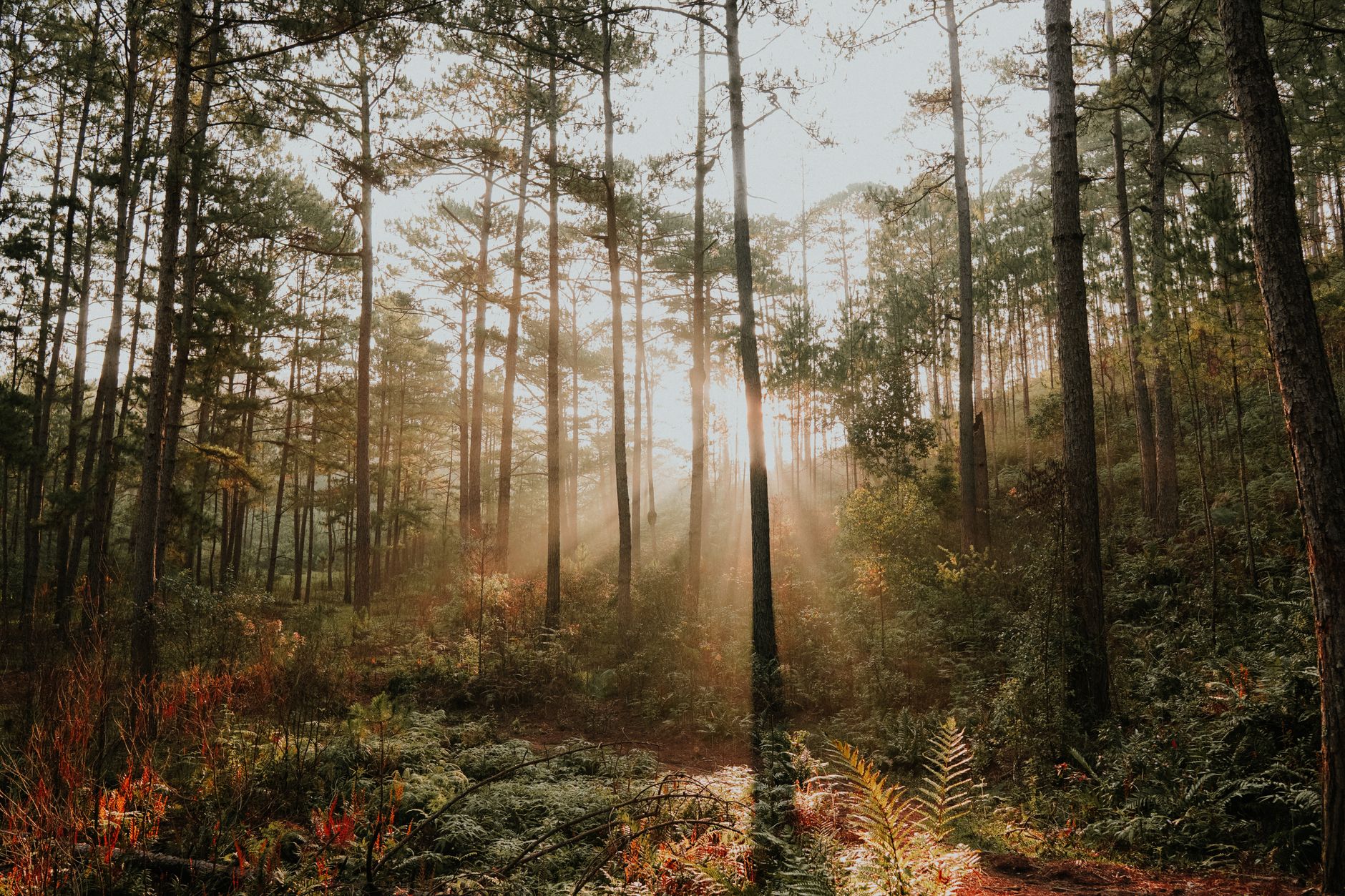
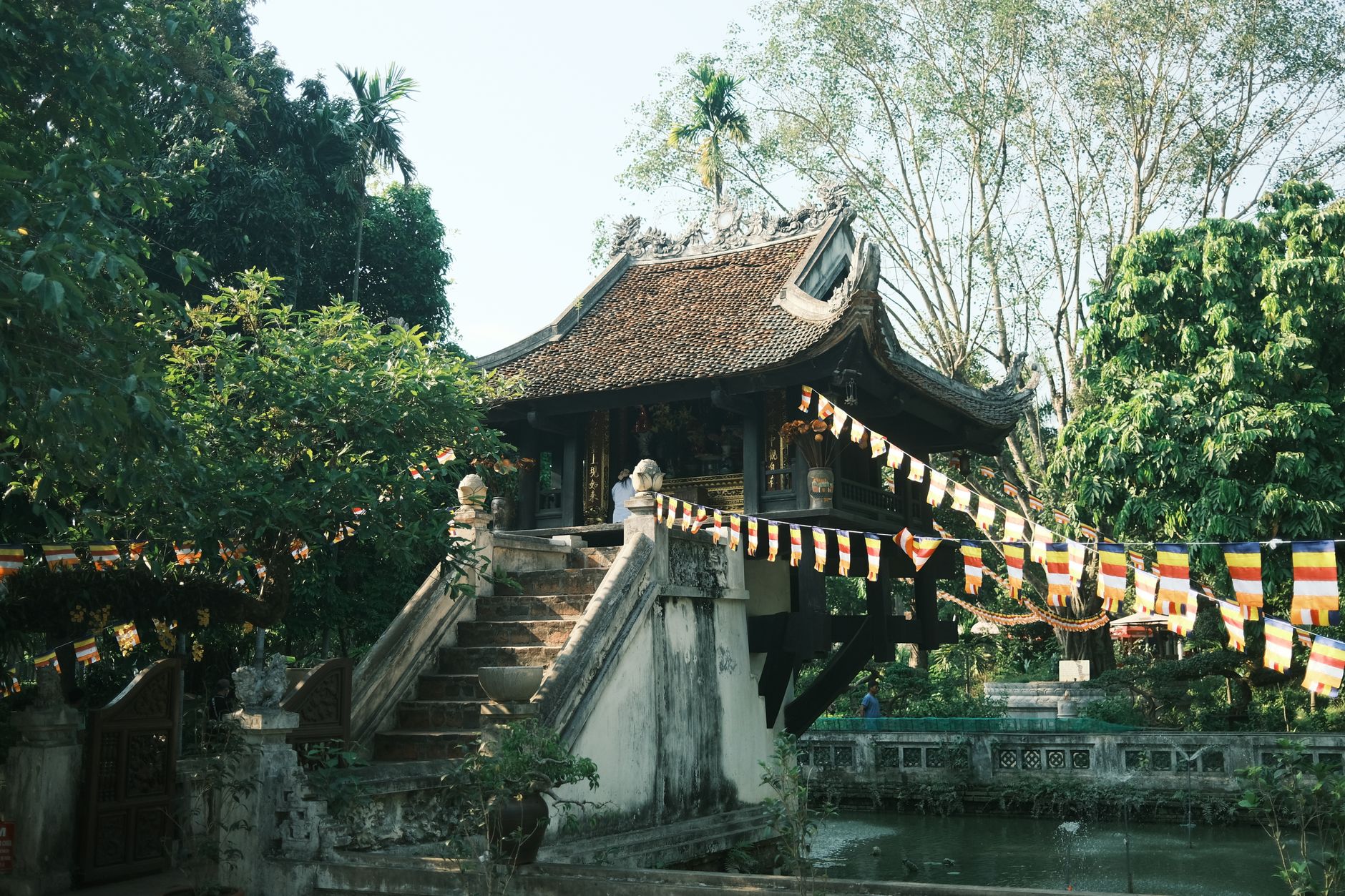
Den Quan Thanh is one of Hanoi's "Tu Tran" — four guardian temples historically positioned at the cardinal points to protect the city. It sits at the junction of Thanh Nien Road and West Lake, shaded by old banyan trees, and most visitors walk right past it on their way to Tran Quoc Pagoda across the road. That's a mistake worth correcting.
What it is
Den Quan Thanh (also written Quan Thanh Temple) is a Taoist temple dedicated to Huyen Thien Tran Vu, the god of the north. The site dates to the founding years of [Thang Long](/posts/imperial-citadel-thang-long-hanoi (하노이 / 河内 / ハノイ)-history) — Hanoi's original name — around the 11th century during the Ly dynasty. The temple has been rebuilt and renovated multiple times, but its most important artifact is original to 1677: a black bronze statue of Tran Vu, standing nearly 4 metres tall and weighing around 4 tonnes. The statue was cast by a craftsman named Trum Trong, and it remains one of the finest examples of Vietnamese bronze work from the Le dynasty period.
The temple compound is relatively small — a front gate, a courtyard, a main hall, and a bell tower. You can see the whole thing in 30 minutes. But the atmosphere, especially on a weekday morning, is the real draw.
Why travelers go
Three reasons, honestly. First, the bronze statue. It's genuinely impressive — dark, massive, detailed in a way that photographs don't capture well. Second, the location. Den Quan Thanh sits right where Truc Bach Lake meets West Lake, one of the most pleasant corners of Hanoi. Third, it's a functioning place of worship, not a museum. Locals come here to burn incense, pray, and sit in the courtyard. You get the feeling of a living temple rather than a roped-off monument.
For anyone interested in the Imperial Citadel Thang Long and Hanoi's deeper historical layers, Den Quan Thanh fills in context about how the city was spiritually organized.
Best time to visit
November through March is the most comfortable weather-wise — cooler, less humid, and the temple courtyard feels pleasant rather than oppressive. Early mornings (before 9 AM) on weekdays are ideal. The temple gets busier on the 1st and 15th of each lunar month, when worshippers come in larger numbers. If you want to see it active with incense smoke and offerings, time your visit to one of those days. If you want quiet, avoid them.
During Tet, the temple is packed — locals come for new year prayers. It's atmospheric but crowded, and the surrounding streets are chaotic.
How to get there
From the Old Quarter (Hoan Kiem area), Den Quan Thanh is about 2.5 km northwest. A Grab bike takes 10-15 minutes depending on traffic and costs 15,000-25,000 VND. A Grab car runs 30,000-50,000 VND. You can also walk it in about 30 minutes — head north along Hang Than, then continue onto Thanh Nien Road. The walk itself is pleasant once you hit Thanh Nien, which is the narrow causeway between Truc Bach Lake and West Lake.
Bus route 33 (from Long Bien Bus Station) stops nearby on Quan Thanh street. Fare is 7,000 VND.
The temple is at 59 Thanh Nien Road, Ba Dinh district. You'll see the gate from the street.

Photo by Thuan Pham on Pexels
What to do
See the bronze statue up close
The main hall is dim and incense-thick, which makes the statue feel larger than it is. Tran Vu holds a sword resting on a tortoise-snake figure, a classic Taoist motif. Take a moment to look at the casting details on the robes and face — this is 17th-century metalwork and it holds up remarkably well.
Walk the courtyard
The courtyard has a collection of bonsai trees, stone stelae, and a bronze bell cast in 1677 alongside the statue. The stelae record temple renovations across centuries. The banyan trees here are old and dramatic, their roots crawling over walls.
Cross to Tran Quoc Pagoda
Tran Quoc Pagoda is literally across Thanh Nien Road, sitting on a small peninsula in West Lake. It's the oldest Buddhist pagoda in Hanoi (6th century). Visiting both takes about an hour total and gives you a Taoist temple and Buddhist pagoda side by side — a useful comparison.
Walk Thanh Nien Road
The causeway between the two lakes is one of Hanoi's best short walks. Locals jog here at dawn. In the late afternoon, vendors sell "che" (sweet soup) and fruit along the lakeside. It's the kind of spot where you sit on a plastic stool and watch the city without doing anything in particular.
Visit the nearby flower market
Quang Ba Flower Market operates in the early morning hours (2-6 AM) about 1 km north along West Lake. If you're an early riser, combine it with a dawn visit to the temple area.
Where to eat nearby
The Truc Bach Lake area has solid food options. "Pho" shops line Nguyen Khac Hieu street on the eastern bank of Truc Bach — nothing fancy, just good bowls in the 40,000-55,000 VND range. For something specific to this neighborhood, look for "banh cuon" Thanh Tri style: thin steamed rice rolls with minced pork and wood ear mushroom, served with fried shallots and dipping sauce. There are a few stalls on Ngu Xa street.
If you want egg coffee (에그커피 / 蛋咖啡 / エッグコーヒー), the original Cafe Giang is a 15-minute walk back toward the Old Quarter at 39 Nguyen Huu Huan. It's worth the detour.
Where to stay
Most travelers base themselves in the Old Quarter, which is close enough. Budget guesthouses in the Old Quarter run 200,000-400,000 VND per night. Mid-range hotels on Ma May or Hang Bac streets cost 600,000-1,200,000 VND. If you want to stay closer to West Lake, the Tay Ho district has serviced apartments and boutique hotels starting around 800,000 VND — quieter, more residential, but farther from the central sights.

Photo by Trần Phan Phạm Lê on Pexels
Practical tips locals would tell you
- Entrance fee is 10,000 VND. Have small bills ready; the ticket booth doesn't always have change.
- Dress modestly — shoulders and knees covered. This is enforced loosely but respectfully followed.
- Remove shoes before entering the main hall. There's a shoe rack at the entrance.
- Photography is allowed in the courtyard but restricted inside the main hall. Signs are posted, though enforcement varies. When in doubt, ask.
- Incense bundles are sold at the entrance for 5,000-10,000 VND if you want to participate in offerings.
Common mistakes to avoid
- Skipping it for Tran Quoc Pagoda only. Most tourists visit the pagoda and ignore the temple across the street. They're a natural pair — budget 30 minutes for each.
- Coming at midday in summer. The courtyard has shade, but Hanoi's July heat and humidity make any outdoor activity between 11 AM and 3 PM unpleasant. Morning visits are dramatically better.
- Not bringing cash. The entrance fee is cash only, and so are nearby street food vendors. ATMs are a 5-minute walk away on Quan Thanh street, but save yourself the hassle.
- Rushing through. The temple is small enough to "see" in 10 minutes, but sitting in the courtyard for a while, watching people come and go, is the better experience.
Practical notes
Den Quan Thanh is open daily from roughly 8 AM to 5 PM, though hours can shift slightly. It pairs naturally with the Temple of Literature (about 2 km south) and One Pillar Pagoda (1 km southwest) for a half-day of Hanoi's historical sites. Budget a full morning if you want to do all three without rushing.
Last updated · May 26, 2026 · independently researched, never sponsored.