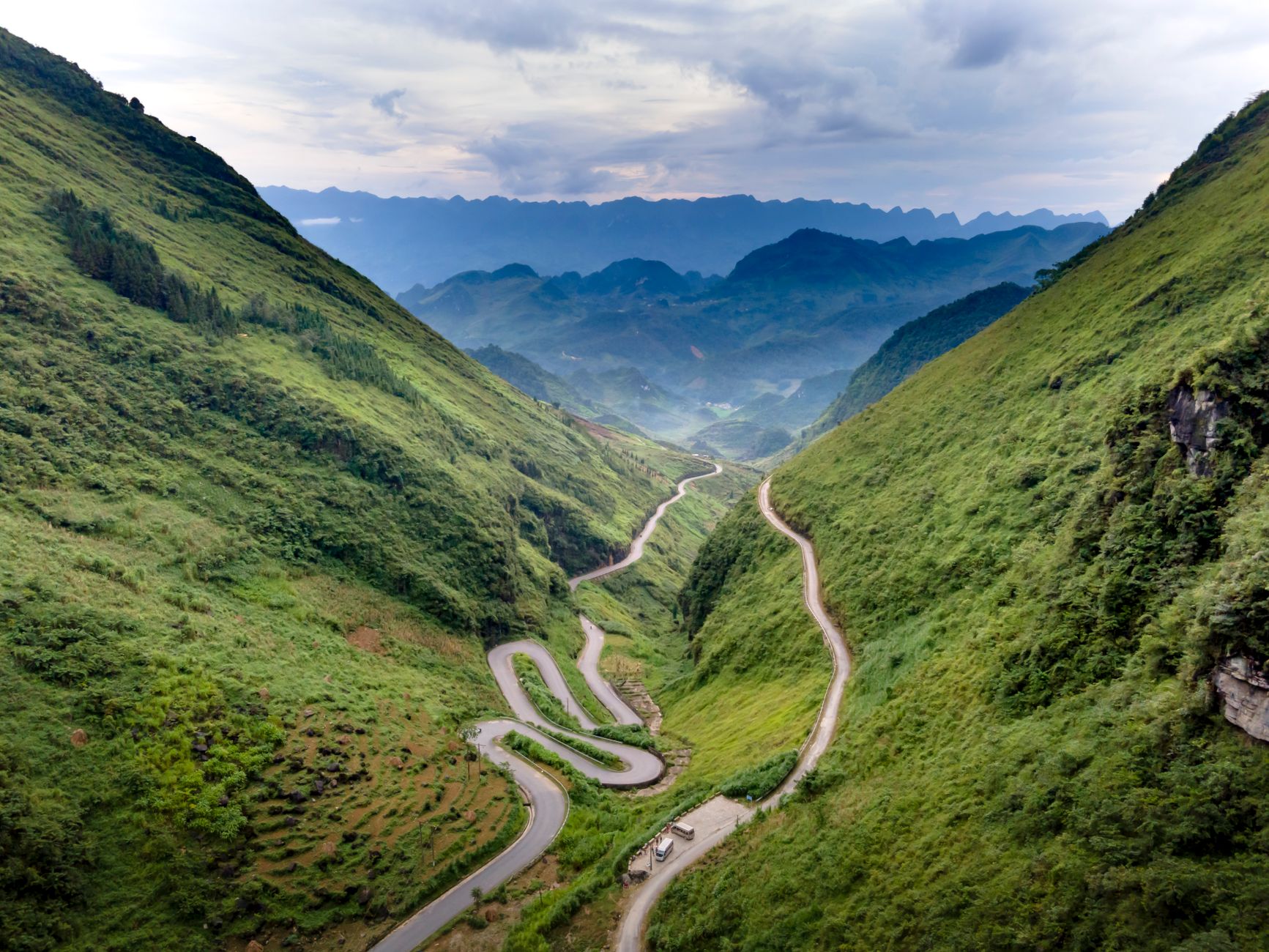
Den Che Thang Phu Nhan sits where the Ngang Mountain range meets the East Sea in Ky Anh district, Ha Tinh province. It's one of those places where the history, the coastline, and the incense smoke all converge into something genuinely worth the detour off Highway 1A.
What it is and why it matters
This temple honors Nguyen Thi Bich Chau, a court lady of the Tran Dynasty (13th-14th century) renowned for her intelligence and loyalty. According to historical accounts and local legend, she authored a famous petition — the "Ke Minh Thap Sach" — offering ten policies to strengthen the kingdom. She later sacrificed herself to the sea during a storm to protect the royal fleet. The temple was built at the site where her body reportedly washed ashore, on the coast of what is now Ky Ninh commune.
The complex has been rebuilt and expanded over the centuries, but the core shrine retains its traditional Vietnamese temple architecture: curved tile roofs, carved wooden beams, dragon motifs, and a layout that faces the ocean. It was recognized as a national historical relic in 1991.
For travelers, this isn't a major tourist attraction in the Ha Long Bay or Hoi An sense. It's a regional pilgrimage site and a cultural landmark that gives you a reason to stop in Ha Tinh — a province most people just drive through on the north-south route.
Why travelers go
Most visitors are Vietnamese pilgrims, especially women, who come to pray for safety, prosperity, and family wellbeing. But the site is genuinely interesting for anyone with a curiosity about Vietnamese folk religion and Tran Dynasty history. The oceanfront setting is a bonus — the temple grounds open directly onto Ky Ninh beach, and on a clear day the view south toward the Hoanh Son pass is worth standing around for.
It's also one of the better-preserved examples of a "phu nhan" temple — dedicated specifically to a historical woman — which makes it culturally distinct from the more common communal houses and pagodas you'll find elsewhere.
Best time to visit
The annual temple festival falls on the 12th day of the 2nd lunar month (usually March), and that's when the site comes alive with processions, rituals, and crowds. If you want atmosphere and ceremony, aim for that window.
For a quieter visit, March through May is ideal — warm but not yet scorching, and the coastal haze has usually cleared. June through August brings serious heat (35°C+) and occasional typhoon-season rain. September and October are the wettest months; the coast can get hammered. November through February is cooler but gray.
How to get there
Ha Tinh city is the nearest hub. From there, Den Che Thang Phu Nhan is about 55 km south in Ky Anh district.
- From Hanoi: Take the Thong Nhat (Reunification) train to Ha Tinh station — roughly 6 hours, tickets from around 200,000 VND for a hard seat to 500,000 VND for a soft sleeper. Alternatively, buses from Nuoc Ngam or Giap Bat station run frequently (5-6 hours, 180,000-250,000 VND).
- From Hue: Buses north along Highway 1A take about 5 hours to Ha Tinh city (around 150,000-200,000 VND). The SE trains also stop at Ha Tinh.
- Ha Tinh city to the temple: Hire a xe om (motorbike taxi) or grab a local bus heading toward Ky Anh town. A xe om will run about 150,000-200,000 VND one way. If you've rented a motorbike — the better option — head south on Highway 1A, then turn east at the signed junction toward Ky Ninh commune. The road is paved and straightforward.

Photo by Hồng Quang Official on Pexels
What to do
Walk the full temple complex
Don't just peek at the main shrine and leave. The complex includes multiple halls, a bell tower, a rear sanctuary, and memorial steles. The carvings on the wooden transoms inside the main hall are detailed — dragons, phoenixes, and wave motifs that reference the ocean legend. Budget 45 minutes to an hour.
Visit the beach
Ky Ninh beach is right behind the temple. It's a local swimming spot, not a resort strip — expect fishing boats, a scattering of seafood shacks, and relatively uncrowded sand. The water is swimmable from April to August.
Read the steles
Several stone steles on the grounds record the temple's history across different dynasties. Most are in classical Chinese characters ("Han Nom"), but newer plaques have Vietnamese translations. They're a rare chance to see layered historical documentation outside of a museum.
Explore the Hoanh Son pass area
The Deo Ngang (Hoanh Son) pass is about 15 km further south — the historic boundary between the old regions of Nghe An and Thuan Hoa. The pass itself is a short ride through forested hills with a couple of old watchtower ruins and good coastal views. Pair it with the temple for a half-day trip.
Attend a ritual (if timing allows)
Outside of the main festival, smaller ceremonies happen on the 1st and 15th of each lunar month. Arrive early morning to see offerings laid out and incense lit by local devotees.
Where to eat nearby
Ky Anh district is not a food destination, but two things are worth seeking out:
- "Chao luon" (eel porridge) — a Ha Tinh specialty. Freshwater eel simmered until the broth turns rich, served with herbs and crispy shallots. Stalls in Ky Anh town center sell bowls for 25,000-35,000 VND.
- Fresh seafood at Ky Ninh beach — the shacks near the fishing boats serve whatever came in that morning. Grilled squid, steamed clams, and fried fish are standard. A filling meal runs 80,000-150,000 VND per person. Point at what looks good in the ice tray and negotiate.
If you're heading back through Ha Tinh city, look for "banh canh" — thick tapioca noodle soup, often made with crab or shrimp. It's a central Vietnamese staple done well here.
Where to stay
There's no accommodation at the temple itself. Your options:
- Ky Anh town: A handful of nha nghi (guesthouses) in the 150,000-300,000 VND range. Basic but functional — expect a bed, AC, and hot water.
- Ha Tinh city: Better selection. Budget hotels from 250,000-400,000 VND; mid-range options (Muong Thanh, Vinpearl) from 600,000-1,200,000 VND. Ha Tinh city is the more comfortable base if you're spending a night.

Photo by AN Nhol on Pexels
Practical tips locals would tell you
- Dress modestly when entering the shrine halls. Shoulders and knees covered — this is a pilgrimage site, not a tourist attraction, and locals take it seriously.
- Bring incense and offerings if you want to participate in prayers. Vendors outside the gate sell small bundles for 10,000-20,000 VND.
- Go early. The temple opens at dawn and the morning light on the ocean-facing courtyard is the best time for photos and quiet.
- Bring cash. There are no ATMs at Ky Ninh. The nearest reliable ATM is in Ky Anh town center.
Common mistakes to avoid
- Skipping the back halls. Most visitors photograph the front gate and main shrine, then leave. The rear sanctuary and surrounding gardens are where the compound feels most atmospheric.
- Visiting midday in summer. The temple has limited shade and no indoor AC. Midday heat in July or August is brutal on this coast.
- Not combining it with Deo Ngang. Coming all the way to Ky Anh just for the temple alone feels like a missed opportunity. The pass is a short ride further and adds genuine historical context.
Practical notes
Den Che Thang Phu Nhan works best as a half-day stop on a longer north-south journey — pair it with Phong Nha (퐁냐 / 峰牙 / フォンニャ) to the south or a Hue stopover. If you're specifically interested in Vietnamese temple architecture and folk religion, it's one of the more rewarding sites in Ha Tinh province. No entrance fee.
Last updated · May 26, 2026 · independently researched, never sponsored.