What it is and why it matters
Han Mac Tu died at 28 in a leprosy hospital in Quy Nhon in 1940. He left behind some of the most widely memorized poetry in Vietnamese literature — lines about moonlight, madness, and longing that schoolchildren still recite today. His tomb, Mo Han Mac Tu, sits on a low hill called Ghenh Rang overlooking the coast south of Quy Nhon city center.
The site was originally in a modest cemetery, but in 1969 the grave was relocated to this hilltop spot in what was then Binh Dinh province. Following administrative boundary changes, the area now falls under Quy Nhon city. You'll sometimes see it tagged to Gia Lai online due to old or confused listings, but the tomb is firmly in Quy Nhon, Binh Dinh — about 300 km from Gia Lai's capital, Pleiku. Worth clarifying before you plan transport.
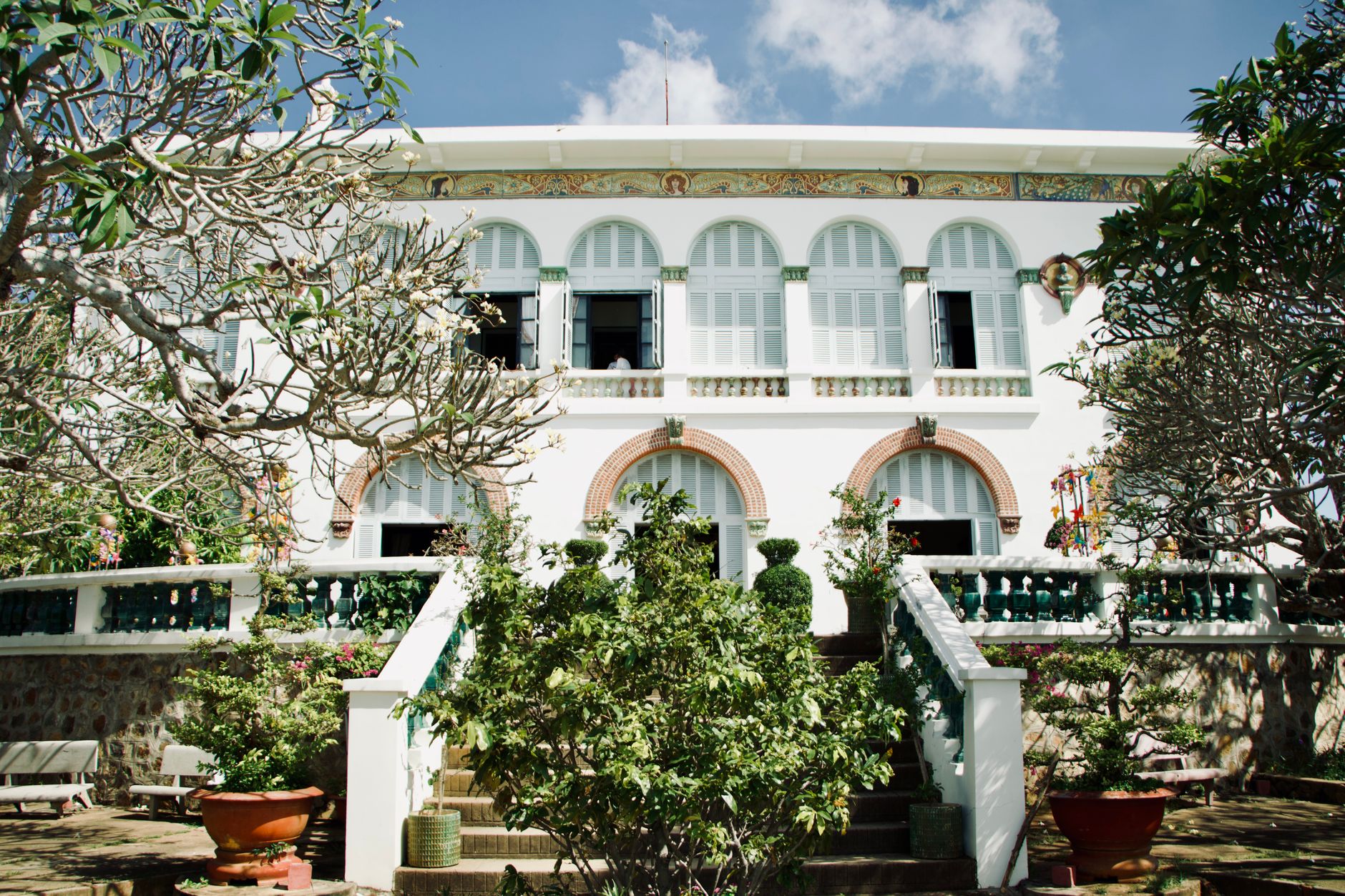
The complex today includes the poet's granite tomb, a small museum with manuscripts and personal belongings, and a garden with lines of his poetry carved into stone. It's not a grand monument. It's a quiet, slightly melancholic place — which feels appropriate.
Why travelers go
Most visitors are Vietnamese, and this is genuinely one of those places where you'll understand something about the culture that doesn't come through in phrasebooks or cooking classes. Han Mac Tu occupies a space in Vietnamese literary life roughly equivalent to Keats or Shelley in English — the doomed young Romantic. Visiting the tomb is part literary pilgrimage, part coastal walk with good views of Quy Nhon's curving shoreline.
For foreign travelers, the appeal is more atmospheric than informational. The museum captions are mostly in Vietnamese, but the setting itself — a breezy hilltop, frangipani trees, the sea below — makes the detour worthwhile even without deep knowledge of the poetry.
Best time to visit
Quy Nhon's dry season runs from March through September. April to June is ideal: warm but not yet peak-summer hot, and the hillside is green. Mornings before 9 AM are best for photos and avoiding the midday heat.
Avoid October through December if you can — Binh Dinh gets its heaviest rain then, and the paths around the tomb get slippery. The site is open daily, typically from 7 AM to 5 PM, with no entrance fee.

Photo by Tiểu Bảo Trương on Pexels
How to get there from Quy Nhon
The tomb is about 3 km south of Quy Nhon city center, in the Ghenh Rang ward along the coastal road.
By motorbike or scooter: The easiest option. Follow Nguyen Hue street south along the coast, then turn onto the road climbing up to Ghenh Rang. Takes about 10 minutes from the city center. Bike rentals in Quy Nhon run 120,000–150,000 VND per day.
By taxi or Grab: A Grab car from central Quy Nhon costs around 30,000–50,000 VND one way. Ask the driver to wait — there's limited transport back from the hilltop, and you won't need more than 45 minutes to an hour.
Getting to Quy Nhon: If you're coming from Da Nang or Hoi An, the train is the most comfortable option. Quy Nhon's Dieu Tri station is about 10 km from the city center, and the ride from Da Nang takes roughly 5–6 hours (tickets from around 150,000 VND for a hard seat, 300,000–400,000 VND for a soft sleeper). Buses from Hue or Nha Trang (냐짱 / 芽庄 / ニャチャン) also run daily.
What to do
Walk the tomb and garden
The tomb itself is simple — polished granite, usually with fresh flowers left by visitors. Surrounding it is a garden with poetry steles, and the pathway is lined with tropical trees. Give yourself 20–30 minutes here. Read the inscriptions even if your Vietnamese is basic; the rhythm of the carved words against the sea breeze is its own experience.
Visit the small museum
A single-room exhibition near the tomb displays reproductions of Han Mac Tu's manuscripts, a few personal artifacts, and photographs from his short life. The explanatory panels are in Vietnamese, but the handwritten poetry pages are worth seeing regardless. It adds maybe 15 minutes to your visit.
Walk down to Ghenh Rang beach
Below the hill, Ghenh Rang has a rocky stretch of coast with calm water. It's not a swimming beach in the resort sense, but it's good for a walk and some photos. The boulders and coconut palms have a rougher, less manicured feel than Quy Nhon's main beaches.
Combine with Queen's Beach (Bai Tam Hoang Hau)
Just south along the coast, this small cove is named after a historical legend. It's swimmable in calm weather, and the rock formations are worth the short ride. You can hit both spots in a single morning loop.
Climb Ghenh Rang hill for the coastal view
The hill behind the tomb offers a wider panorama of the Quy Nhon coastline. No formal trail — just follow the path upward for 10 minutes. Early morning light here is particularly good.
Where to eat nearby
Quy Nhon is one of the better food cities in central Vietnam (베트남 / 越南 / ベトナム), and you should eat well while you're here.
"Banh xeo" in Quy Nhon is different from the southern version — smaller, crispier, often served with a stack of rice paper and herbs for wrapping. Try the strip of banh xeo stalls on Nguyen Hue street near the seafront. Expect to pay around 5,000–8,000 VND per piece.
The city is also known for "bun cha ca" — rice noodle soup with fish cake. It's a Quy Nhon signature. Bun Cha Ca Ba Bong on Tran Hung Dao street is a reliable local pick, with bowls running about 30,000–40,000 VND.

Photo by Valeria Drozdova on Pexels
Where to stay
Quy Nhon has accommodation at every price point:
- Budget: Guesthouses and mini-hotels in the city center start at 200,000–350,000 VND per night. Basic but clean.
- Mid-range: Newer hotels along the beach road offer sea-view rooms from 500,000–900,000 VND.
- Splurge: A few boutique resorts sit along the coast south of town, from around 1,500,000 VND and up.
Stay near the waterfront on Xuan Dieu or An Duong Vuong streets for easy access to both the tomb and the beach.
Practical tips
- Bring water and a hat. The hilltop is exposed and there's no shade for stretches of the walk. No vendor stalls at the tomb itself.
- Go early. By mid-morning, tour buses arrive and the small site feels crowded. Before 8 AM you'll likely have it to yourself.
- Combine trips. The tomb pairs well with a half-day exploring Ghenh Rang and the southern beaches. Don't make it a standalone trip — it's a 45-minute visit at most.
- Learn one poem. Even reading an English translation of "Day Thon Vi Da" before visiting changes the experience. Context turns a hillside grave into something that sticks with you.
Common mistakes
Planning a special trip to Gia Lai for this site — the tomb is in Quy Nhon, not Pleiku. Double-check your map before booking transport. Also, don't expect a large museum or interpretive center. This is a modest memorial, not a tourism complex. Visitors who arrive expecting a major attraction sometimes feel underwhelmed. Approach it as a quiet stop on a Quy Nhon day, and it fits perfectly.
Last updated · May 29, 2026 · independently researched, never sponsored.