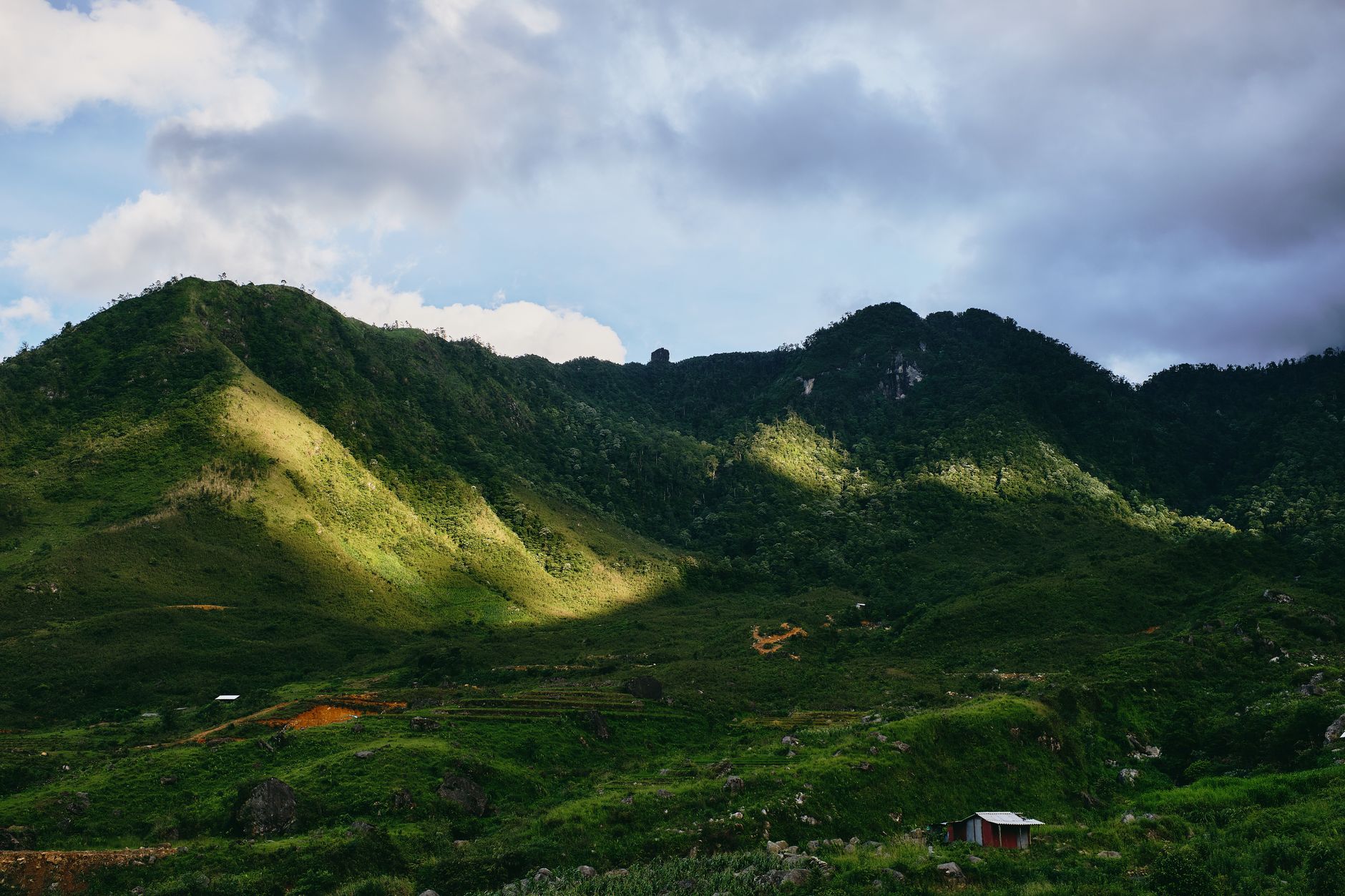
Dien Bien Phu sits 1,600 meters above sea level in the northwest, near the Laotian border. The food here is heavier, spicier, and more rural than what you'll find in Hanoi or Saigon—pork and sticky rice dominate, and rice whiskey flows at nearly every meal. Tourism infrastructure is still thin, which means fewer tourist traps and more honest prices. But it also means knowing where to eat is half the battle.
What Dien Bien eats
Start with the staple: sticky rice ("com tam" in the south, but called "com nep" or just "com" here). It's not the broken-rice breakfast dish; it's glutinous, chewy, and inseparable from Tai and H'Mong culture. You'll eat it with grilled pork, smoked fish, or dried meat.
Thit nuong (grilled pork) is everywhere. Vendors marinate pork belly or shoulder in garlic, lemongrass, and fish sauce overnight, then char it over charcoal. A plate with rice, greens, and pickled vegetables runs 25,000–40,000 VND (₫). Quality varies: locals know which street corner to go to; tourists often don't.
Com lam (bamboo-tube rice) is a specialty in the upland villages around Dien Bien Phu. Young bamboo is filled with sticky rice, herbs, and pork, sealed, and roasted over coals. It's earthy and smoky—nothing like the polished versions sold in Hanoi. If you're staying a few days, ask your hotel about a village tour that includes lunch cooked this way. Cost: 80,000–120,000 ₫ for a private visit, but worth the trip.
Cau lau (a Hoi An classic) doesn't originate in Dien Bien, but local versions exist. Skip them. The dish needs specific water and rice flour from the coast; northern highlands copies taste watered-down.
Grilled fish (ca nuong) from local streams is excellent. Dien Bien's rivers are clean and cold. Whole fish, split and grilled with salt and herbs, costs 30,000–50,000 ₫ depending on size.
Markets: where locals eat breakfast
Dien Bien Phu Market (Cho Dien Bien Phu, on Vo Nguyen Giap Street) opens at 5:30 a.m. Go early. You'll find "pho" cooked in huge pots, grilled sticky-rice cakes (banh com), and "banh mi" vendors with crusty baguettes stacked waist-high. Breakfast runs 15,000–25,000 ₫ per bowl or sandwich.
The pho here is thinner and less sweet than Hanoi's; the broth is lighter, cleaner. Some stalls use local herbs that give it a faint mint-and-grass note. It's polarizing—locals love it, some tourists find it thin. Try it anyway.
At the back of the market, look for a woman (no sign, no English menu) selling "banh cuon" (steamed rice rolls). She fills them with pork and wood-ear mushroom, wraps them in banana leaf, and steams them in a metal drum over charcoal. Two rolls, 10,000 ₫. Locals queue here; tourists miss it.
Street food and casual eating
Banh mi stands (Vo Nguyen Giap, Thao Nhan streets). The bread is good—crusty outside, airy inside. Fillings are basic: pâté, cold cuts, pickled daikon, cilantro, chilies. 12,000–18,000 ₫. Eat standing up; it's faster and cheaper than sitting down.
Com tam (broken rice) stalls cluster near the market and bus station. Not the famous Saigon version, but a lighter, often greasy local take. A plate with grilled pork, egg, and pickles: 20,000–30,000 ₫. Many places skimp on vegetables; ask for extra greens (rau) if you want them.
Grilled meat skewers (nem nuong). Walk Thao Nhan Street at 6 p.m.—vendors set up charcoal pots and grill minced pork wrapped around lemongrass stalks. Five or six skewers with rice paper and dipping sauce: 25,000–35,000 ₫. Sit on plastic stools, watch traffic, eat fast.

Photo by Jordan Coleman on Pexels
Sit-down restaurants: local vs. tourist-facing
Local hangouts (where residents eat lunch):
-
Nha hang Dien Bien (No. 3 Thao Nhan Street): Basic, fluorescent-lit, no English menu. Specializes in grilled fish and sticky rice. Lunch 30,000–60,000 ₫ per plate. Go at noon; empty by 1:30 p.m.
-
Nha hang Thai Nguyen (near Dien Bien Museum): Tai food, lots of sticky rice and grilled meat. Â group meal with rice, three dishes, and beer runs 150,000–200,000 ₫ split four ways.
Tourist-facing spots (acceptable, but pricier):
- restaurants near Dien Bien Museum or Nui Xay viewpoint: Expect 60,000–100,000 ₫ for a main dish. Food is standardized, safe, and less interesting. Good for peace of mind, bad for authenticity.
Drinking and spirits
Can (rice whiskey) is the social drink. It's made locally, cheap (30,000–50,000 ₫ per bottle), and strong (about 25–40% ABV). It's served warm in small glasses and shared communally through a bamboo straw. Only drink it if invited—and only if you're comfortable with the peer pressure that comes with a Tai or H'Mong meal. Tourist deaths from alcohol poisoning are rare but documented; pace yourself.
Beer (bia hoi) is available everywhere. A draught lager costs 8,000–12,000 ₫ per glass at market stalls, 15,000–25,000 ₫ at restaurants.
Vietnamese coffee is good here too. The water is cool at elevation, so iced coffee (ca phe sua da) is refreshing in the afternoon. 12,000–18,000 ₫.

Photo by Nguyen Truong Khang on Pexels
Cost expectations
- Breakfast (market): 15,000–25,000 ₫
- Lunch (casual, local): 25,000–50,000 ₫
- Dinner (restaurant, group): 60,000–150,000 ₫ per person
- Street snacks (skewers, rolls): 10,000–20,000 ₫
Dien Bien is the cheapest food region in northern Vietnam. Your money goes further than in Sapa, Ha Giang, or any tourist town. A full day of eating (breakfast, lunch, dinner, snacks) costs 80,000–120,000 ₫ if you stick to local spots.
Tourist traps to avoid
- High-street restaurants with English menus and color photos: They overcharge and water down the food. Stick to places with Vietnamese-only menus and locals eating.
- "Authentic Tai village experiences" sold by tour operators: Overpriced, staged, and the food is reheated from a central kitchen. If you want com lam, ask your hotel—there are real villages 10–15 km away.
- Imported snacks and soft drinks: Vending machines at the museum and viewpoint charge 2–3× market price. Bring water and eat at the market.
Frequently Asked Questions
How much does street food cost in Dien Bien Phu?
Street food in Dien Bien Phu is cheap and honest. A bowl of pho or banh mi at Cho Dien Bien Phu market runs 15,000-25,000 VND. Grilled pork (thit nuong) with rice and pickles costs 25,000-40,000 VND. Nem nuong skewers on Thao Nhan Street go for 25,000-35,000 VND for five or six pieces. Banh cuon at the back of the market is just 10,000 VND for two rolls.
What is com lam and where can you eat it near Dien Bien Phu?
Com lam is sticky rice packed with herbs and pork inside a young bamboo tube, then roasted over coals. It is a specialty of the upland villages around Dien Bien Phu rather than the city itself. The result is smoky and earthy, distinct from tourist-oriented versions sold in Hanoi. A private village visit that includes a com lam lunch costs 80,000-120,000 VND; ask your hotel to arrange transport.
When should you arrive at Dien Bien Phu Market to eat breakfast?
Cho Dien Bien Phu on Vo Nguyen Giap Street opens at 5:30 a.m., and going early is worth it. Morning stalls serve pho, grilled sticky-rice cakes (banh com), and banh mi with crusty baguettes. The pho here is lighter and less sweet than Hanoi's, with a faint mint note from local herbs. Arriving close to opening gives you the freshest stock and the same crowd of locals who eat there daily.
Practical notes
Dien Bien Phu has one main market and scattered street vendors—nothing like Dong Xuan Market in Hanoi. Restaurants close by 9 p.m. Most don't have printed menus; point at other diners' plates or ask "Co gi ngon?" (What's good today?). Bring small bills; change-making is slow. The food is real, unpretentious, and cheap. Spend time here, eat breakfast at the market, and skip the tourism polish.
Last updated · May 26, 2026 · independently researched, never sponsored.