What it is
Dinh Bao Dai, commonly called Dinh 3, is a 1930s summer palace built for Bao Dai, Vietnam (베트남 / 越南 / ベトナム)'s last emperor, on a pine-covered hill about 4 km southwest of Da Lat's city center. Designed by French architect Paul Revere and completed in 1933, it's an Art Deco villa with 25 rooms spread across two floors. Unlike some heritage sites in Vietnam that have been gutted and rebuilt, Dinh 3 still has most of its original furniture — the emperor's desk, the queen's vanity, the family's dining table. It's not grand in the way Hue's Imperial Citadel is grand. It's domestic, almost intimate, and that's exactly what makes it interesting.
The building served as a working residence where Bao Dai received officials and spent summers with his family away from the heat of the lowlands. After 1954, the palace passed through various government hands. Today it operates as a museum managed by Lam Dong province.
Why travelers go
Da Lat (달랏 / 大叻 / ダラット) has no shortage of French-colonial architecture, but most of it has been converted into hotels or government offices. Dinh 3 is one of the few places where you can actually walk through rooms that look more or less the way they did 90 years ago. The appeal is specific: if you're interested in early 20th-century Vietnamese history, colonial architecture, or just want a quiet hour away from Da Lat's increasingly busy center, it delivers. The gardens around the palace are well-kept, shaded by old pine and cherry blossom trees, and the hilltop location gives you a clear view over the southern part of the city.
It pairs well with a half-day that includes the other Bao Dai palaces (Dinh 1 and Dinh 2), though Dinh 3 is the most complete and best maintained of the three.
Best time to visit
Da Lat sits at around 1,500 meters elevation, so it never gets properly hot. That said, the best months for Dinh 3 are December through March — dry, cool (15-24°C), and the gardens are at their greenest from the tail end of the rainy season. Mornings are crisp enough to want a light jacket.
Avoid Vietnamese public holidays, especially Tet and the April 30 long weekend, when Da Lat fills up and the palace grounds get crowded with domestic tour groups. A weekday morning visit in January or February is about as peaceful as it gets.
How to get there
From Da Lat city center (around Da Lat Market or Xuan Huong Lake), Dinh 3 is about 4 km southwest along Trieu Viet Vuong Street.
- Motorbike or scooter: 10-15 minutes. Rentals in Da Lat run 120,000-150,000 VND/day for a semi-auto.
- Grab/taxi: Around 30,000-50,000 VND one way from the center.
- Walking: Possible but uphill for the last stretch. Allow 40-50 minutes from the lake.
If you're coming from Saigon, the most common route is the overnight bus (7-8 hours, 200,000-350,000 VND) or a flight to Lien Khuong Airport (50 minutes), then a 30 km shuttle or taxi into Da Lat city (around 200,000 VND).
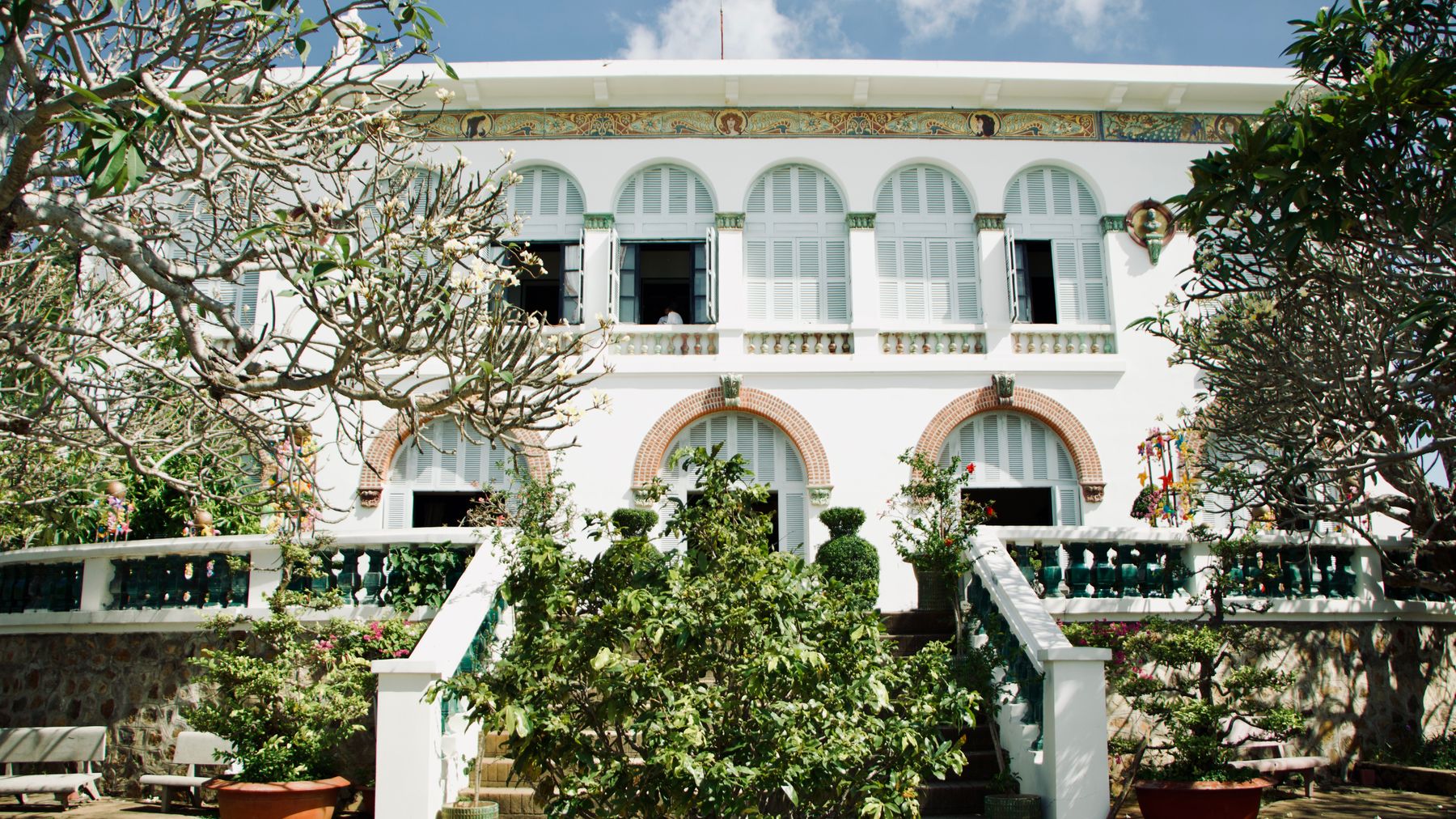
Photo by Tuan Vy on Pexels
What to do
Walk the rooms with intention
Don't rush through. The ground floor has Bao Dai's office and reception rooms — look for the original maps on the walls and the heavy teak furniture. Upstairs, the family quarters include the queen's room with her French-imported dressing table and the children's rooms, still arranged with period items. Each room has Vietnamese and English signage, though the English can be sparse. Budget 45-60 minutes for a proper visit.
Check the wax figures (and manage expectations)
The palace has added wax figures of Bao Dai and his family in some rooms. They're not Madame Tussauds quality — more like department store mannequins in royal clothing. Some visitors find them tacky, others find them helpful for imagining the space in use. Either way, they're part of the experience now.
Spend time in the gardens
The grounds are genuinely pleasant — old-growth pine trees, flower beds, and a few benches where you can sit and look out over the valley. The back garden has a rose section that blooms well from December to February. It's a good place to slow down after the interior tour.
Rent an "ao dai" for photos
There's a rental booth near the entrance offering traditional "ao dai" for photos on the palace grounds. It runs about 50,000-100,000 VND for 30 minutes. Mostly popular with Vietnamese visitors, but foreign travelers do it too — the Art Deco backdrop works well.
Combine with Dinh 1
Dinh 1 (also called Dinh Toan Quyen) is about 2 km north and was the French Governor-General's residence. It's grander in scale but less personal. Doing both takes a relaxed half-day.
Where to eat nearby
Dinh 3 is close to the southern part of Da Lat where food options thin out, so most visitors eat before or after in the center. Two things worth seeking:
- Banh mi xiu mai at Banh Mi Huynh Hoa copycat stalls near Da Lat Market — Da Lat's version uses small meatballs in a tomato-based broth for dipping. A full banh mi runs 25,000-35,000 VND.
- "Mi quang" — while it originates in Central Vietnam, Da Lat's large transplant community means you'll find solid bowls around Phan Dinh Phung Street. Expect 40,000-55,000 VND.
For vietnamese coffee, Da Lat has its own thing going — the city is surrounded by coffee farms. An "egg coffee" at one of the cafes along Truong Cong Dinh Street is a good way to warm up on a cool morning (30,000-45,000 VND).
Where to stay
- Budget: Hostels and guesthouses near Da Lat Market from 150,000-300,000 VND/night. Basic but central.
- Mid-range: Boutique hotels around Xuan Huong Lake, 500,000-1,000,000 VND/night. Some with valley views.
- Splurge: Ana Mandara Villas or Swiss-Belresort, 2,000,000-4,000,000 VND/night. The Ana Mandara property is itself a restored French-colonial compound, which fits the Dinh 3 mood.

Photo by Tuan Minh on Pexels
Practical tips locals would tell you
- Bring cash. The ticket office (40,000 VND for adults, 20,000 VND for children as of early 2025) doesn't always accept cards.
- Go early. The palace opens at 7:00 AM. Tour buses from Saigon typically arrive between 10:00-11:00 AM. If you're there by 7:30, you'll have the rooms mostly to yourself.
- Wear shoes you can slip on and off. You'll need to remove them in some interior sections.
- Photography is allowed inside, but no flash. Tripods are technically not permitted, though enforcement is loose on quiet days.
Common mistakes to avoid
- Skipping the upstairs. Some visitors only do the ground floor reception rooms and miss the more personal family quarters above. The staircase is easy to overlook.
- Coming on a holiday weekend. The palace is small. With 200 people inside, it loses all its atmosphere. Weekdays are dramatically better.
- Expecting a grand palace. This is a villa, not Versailles. Calibrate expectations — the value is in the details and the historical context, not scale.
Practical notes
Dinh 3 is open daily from 7:00 AM to 5:00 PM. Allow one hour for the palace and gardens. It works best as part of a broader Da Lat day that includes the other French-era sites, a walk around Xuan Huong Lake, and some serious eating — Da Lat's food scene borrows from all over Vietnam, and it's one of the better reasons to linger in the city.
Last updated · May 29, 2026 · independently researched, never sponsored.








