Monsoon season in central Vietnam (베트남 / 越南 / ベトナム) (May–September) brings heavy rain, cooler temperatures, fewer tourists, and — if you time it right — some of the best local food and lower prices. This 5-day itinerary trades dramatic mountain views for empty beaches, empty markets, and bowls of "bun rieu" that taste better when the cook isn't rushed. You'll split time between the coast and a mountain town, avoid the worst wet-season destinations (Ha Giang, Sapa in peak downpour), and stay dry enough to actually enjoy yourself.
Day 1 — Arrival in Da Nang, afternoon walk
Fly into Da Nang, the central hub. Most monsoon flights still run; the rain is warm and periodic, not constant. Skip the hotel pickup line and grab a Grab (the local ride-app) to your guesthouse in the Hai Chau district near the Han Market — 180,000 VND (~7 USD) from airport.
Check into a mid-range hotel: Furama Resort Da Nang (다낭 / 岘港 / ダナン) (around 60–80 USD per night, non-peak monsoon rates) or Bamboo Hostel Da Nang (15–25 USD dorm, 35–50 USD private). Neither books up during wet season.
Lunch: Walk to the Han Market (Cho Han). The wet season is peak season for "com tam" — broken-rice dishes with grilled pork, egg, and sour soup. Grab a plastic stool at one of the market vendors; a full plate runs 40,000 VND. The rain clears afternoon crowds by 2 p.m.
Afternoon: Walk the Riverfront (Thu Bon River). You'll pass fishermen repairing nets — a normal sight, way more interesting than the packed touristed Beach Streetside cafes. Grab "ca phe sua da" (Vietnamese iced coffee) at a corner stall (15,000 VND) and sit under an awning. Monsoon afternoons are cooler and quieter than peak season.
Dinner: Eat at Com Hen (Com Hen Street, near the bridge) — a narrow alley of tiny restaurants serving "com hen" (rice with small clams in a rich broth). Around 50,000 VND. During monsoon, the clams are fresher because fishing boats are pulling smaller, closer hauls.
Day 1 cost estimate: Hotel 70 USD, meals 15 USD, transport 7 USD. Total: ~92 USD.
Day 2 — Da Nang beaches + Marble Mountains
Monsoon doesn't mean no beach. The rain is warm; the water is warm. Beaches are empty.
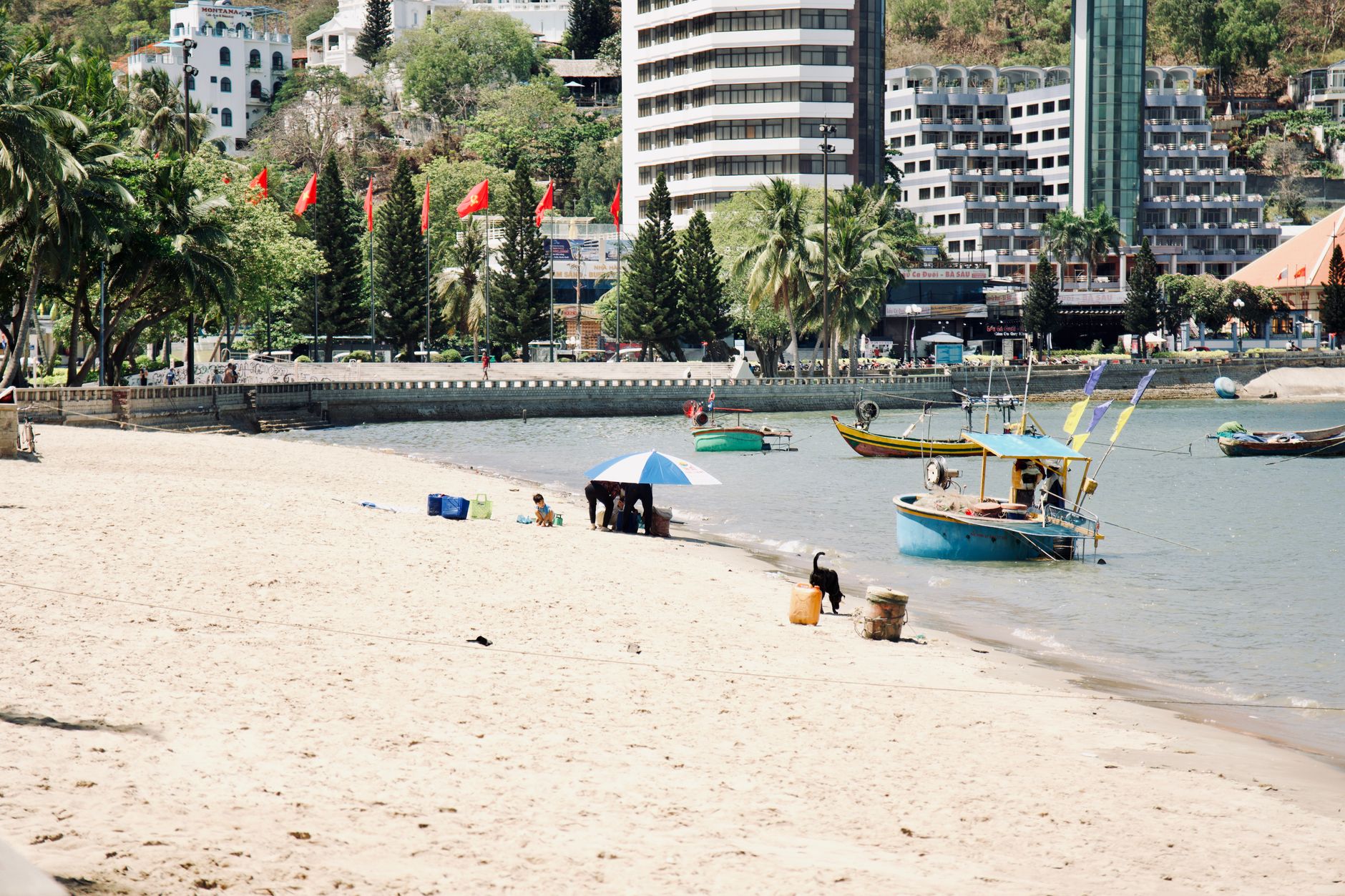
Morning: Take a Grab to My Khe Beach (40 minutes from town center, 80,000 VND). Swim. The undertow is stronger in monsoon, but the beach is yours. Rent a beach chair and umbrella from a vendor (40,000 VND) and sit for an hour. No jet skis, no selfie-stick crowds.
Lunch: Walk back to the main strip and eat at one of the beachfront pho stalls. A bowl of "pho" runs 35,000 VND. Sit on a plastic stool facing the rain and the sea.
Afternoon: Head to the Marble Mountains (Ngu Hanh Son) — a cluster of limestone hills 10 km south. Grab ride: 100,000 VND roundtrip. The mountains have five "marble" quarries (actually limestone), temples, and a cave. The climb is short (15–20 minutes) and mostly stairs. Monsoon means mist hangs over the peaks — moody and good for photos. Entrance: free. Donation to monks at the temple: 50,000 VND optional.
Evening: Dinner at Com Tam Thap Cam (a "com tam" chain near the market). Order a plate with grilled pork, fried egg, and cucumber salad. 45,000 VND. The monsoon season is peak season for this dish because the broken rice is cheaper and sold fresh daily in high volume.
Day 2 cost estimate: Transport 180,000 VND, meals 110,000 VND, Marble Mountains 50,000 VND. Total: ~9 USD (converted).
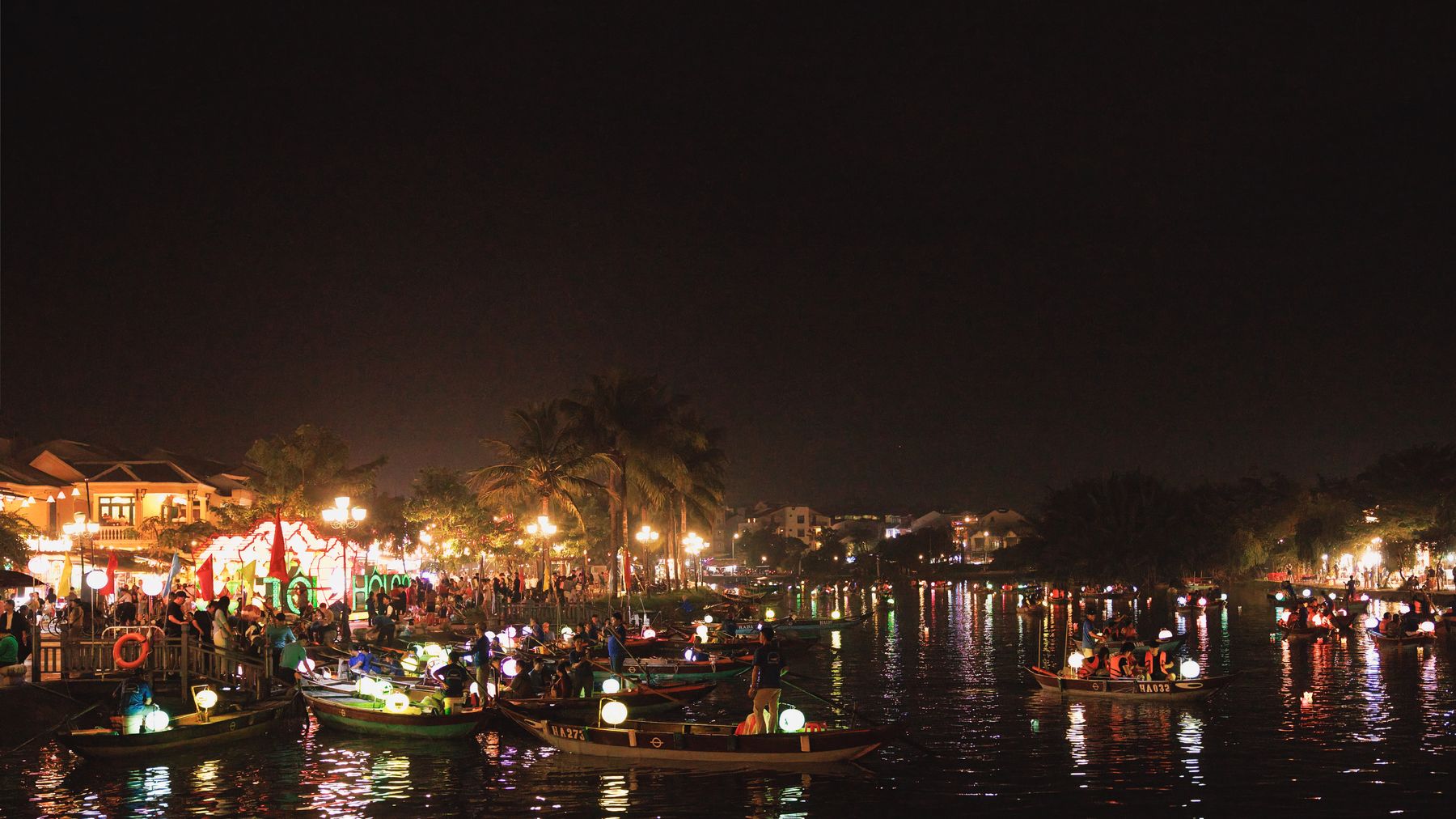
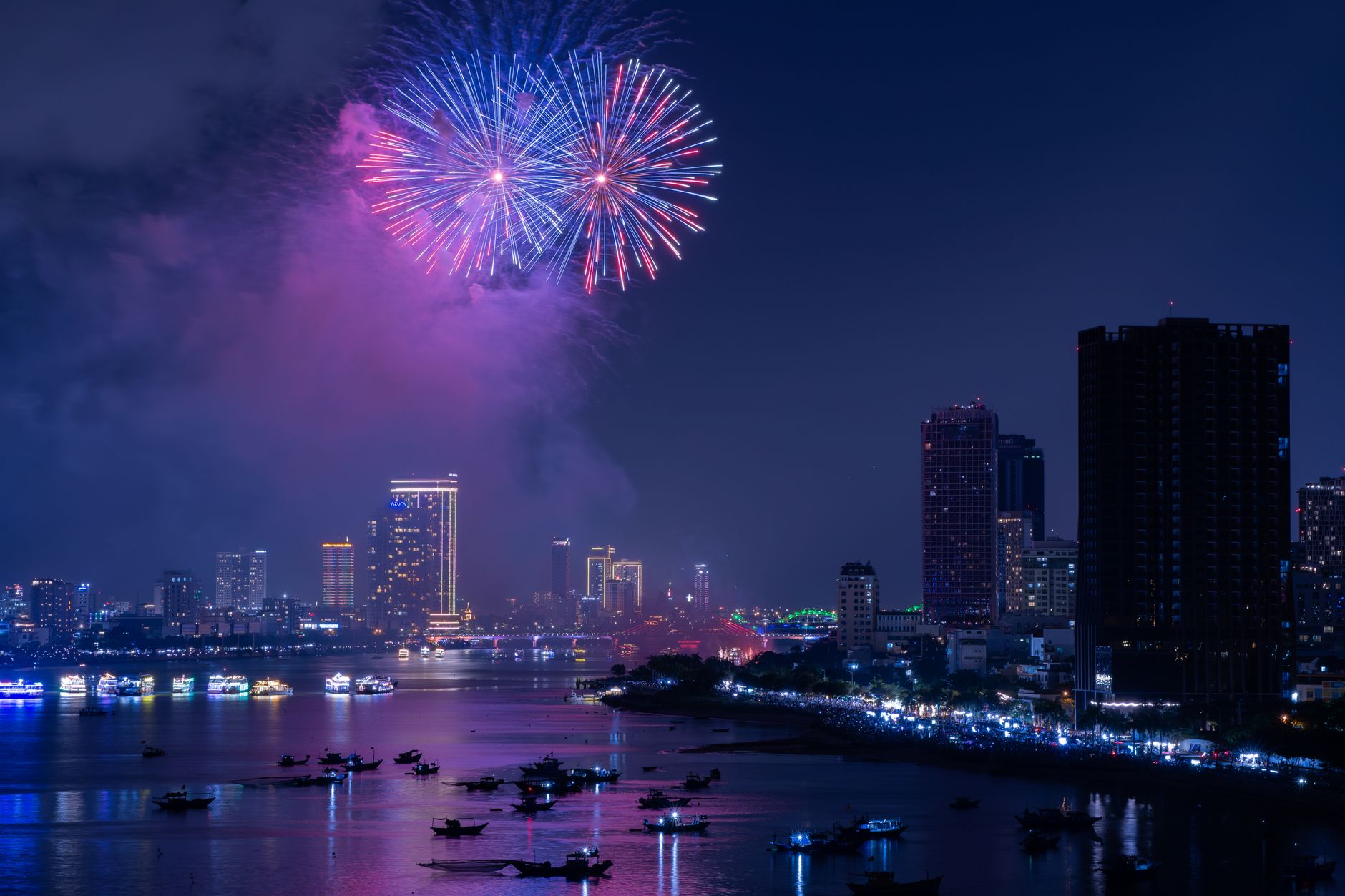
Photo by Fernando B M on Pexels
Day 3 — Travel to Hoi An, half-day town walk
Take a local bus or Grab from Da Nang to Hoi An (30 km, 1 hour, 120,000 VND by Grab for 2 people, or 50,000 VND per person by public bus from the main station).
Hoi An during monsoon is a completely different place than peak season. The UNESCO Old Town has no crowds. Streets are wet; water pools in the ancient assembly halls. Lanterns reflect in puddles. It is genuinely photogenic in a way that the daylight, peak-season crush never is.
Check into a mid-range hotel: Hoi An Riverside Resort (50–70 USD) or Coco Riverside Boutique (40–60 USD). Book online beforehand — even in monsoon, central Hoi An hotels fill by mid-afternoon.
Lunch: Banh Mi 37 Tran Hung Dao — a hole-in-the-wall "banh mi" stand. Grab a banh mi with pâté and pork (25,000 VND) and eat standing or squat on a plastic stool. The bread is fresh; the fillings are local.
Afternoon: Walk the Old Town on foot. Buy a town ticket (120,000 VND) at the gate, which gives you access to five historical buildings or museums. Go to the Japanese Covered Bridge (Chùa Cầu), the Assembly Hall of Hoi An Chinese Merchants, and the Tan Ky House. Monsoon means you'll be alone or in groups of 2–3, not 50. Bring an umbrella; the rain is part of the mood.
Evening: Dinner at Banh Hoai Hoi An (riverside banh hoai stall). Order a plate of "banh hoai" — a crispy, round crepe with shrimp and pork — 40,000 VND. The night market (nightly, riverside) is smaller in monsoon but open. Walk it and buy fresh "goi cuon" (spring rolls) from rolling vendors, 15,000 VND for two.
Day 3 cost estimate: Transport 120,000 VND, hotel 60 USD, meals 120,000 VND, Old Town entry 120,000 VND. Total: ~75 USD.
Day 4 — Hoi An to Da Lat (highland escape)
Take a morning bus from Hoi An to Da Lat (5 hours, ~200 km inland, uphill). Futa Bus or Phuong Trang (both reliable, air-conditioned) depart 7–8 a.m. from near the Old Town; tickets cost 180,000–200,000 VND. Book the night before at any hotel reception.
Da Lat is a highland town (1,500 m elevation) famous for cooler weather, flower gardens, and a slightly French-colonial vibe. Monsoon in Da Lat means misty mornings, cool afternoons (around 18–20°C), and almost no tourists. It feels like a small town in Provence after rain.
Arrive ~1 p.m. Check into a mid-range hotel: Terrace Garden Dalat (45–60 USD) or Thao Nguyen Guesthouse (20–35 USD for a double). Both are clean and quiet.
Lunch: Hit Hang Nga Cafe (a local spot, not the famous Hang Nga Crazy House). Order "banh canh" — a thick tapioca broth with pork or crab — 50,000 VND. Monsoon season is peak for this comfort dish.
Afternoon: Walk the Da Lat Flower Gardens (Dalat Flower Park). Entrance 60,000 VND. In monsoon, the flowers are at their best because of the rain and cool air. Spend 1–2 hours walking the gardens. Almost empty. Bring a light rain jacket.
Evening: Dinner at a local barbecue spot (thit nuong) in the downtown area. Order grilled pork, beef, and vegetable skewers with rice paper wraps (each item 20,000–30,000 VND, total meal 100,000 VND for two). Da Lat is famous for BBQ; monsoon season keeps prices low.
Day 4 cost estimate: Bus 200,000 VND, hotel 50 USD, meals 150,000 VND, Flower Gardens 60,000 VND. Total: ~85 USD.

Photo by Nguyen Ngoc Tien on Pexels
Day 5 — Da Lat morning + return to Da Nang or Saigon
Morning: Breakfast at a local cafe: "ca phe sua da" and "banh trang nuong" (grilled rice paper with egg and herbs) — 35,000 VND total.
Walk to Thien Vien Truc Lam Zen Monastery (5 km from town, Grab 120,000 VND roundtrip). It's a working Buddhist monastery built in 1993, set on a hillside with views of the Da Lat valley. No entrance fee; donations welcome (50,000 VND). You can meditate with monks or just sit in the quiet. In monsoon, it's misty and serene.
Return to town by 11 a.m. Lunch at Mien Yen (a noodle spot downtown): "bun rieu" (crab and tomato broth with noodles) — 45,000 VND.
Afternoon: Take a bus or flight back to Da Nang (5 hours, 180,000–200,000 VND bus) or Saigon (6 hours, 200,000–250,000 VND bus). If flying from Da Nang (1 hour domestic flight, 900,000–1.2M VND), leave by 2 p.m. to catch a 5 p.m. flight.
Day 5 cost estimate: Transport 180,000 VND (bus to Da Nang) or 1M VND (flight), meals 80,000 VND, monastery donation 50,000 VND. Total: ~8–40 USD depending on transport choice.
Frequently Asked Questions
How much does a typical day cost during monsoon season in Vietnam?
Day 1 costs roughly 92 USD, covering a mid-range hotel (60-80 USD at Furama Resort Da Nang or 35-50 USD private room at Bamboo Hostel), meals around 15 USD, and a Grab ride from the airport for 180,000 VND (about 7 USD). Day 2 runs under 10 USD for food and transport combined. Monsoon rates are consistently lower because tourist demand drops across hotels, markets, and beach vendors.
What foods are best to eat during monsoon season in central Vietnam?
Com tam (broken rice with grilled pork, fried egg, and sour soup) is at its best during monsoon — vendors sell it fresh daily in high volume at Han Market for around 40,000 VND. Com hen (rice with small clams in rich broth) is also fresher because fishing boats pull smaller, closer hauls. A bowl of pho at beachfront stalls runs 35,000 VND. Bun rieu tastes better when cooks are not rushed by peak-season crowds.
When should first-time travelers avoid visiting Vietnam during monsoon season?
Ha Giang and Sapa are specifically worth avoiding during peak downpour months. The itinerary instead focuses on Da Nang and the coast, where monsoon rain is warm and periodic rather than constant. Central Vietnam monsoon runs May through September. The rain typically clears afternoon crowds by 2 p.m., and beaches like My Khe remain swimmable, though undertow is stronger than in dry season.
Practical Notes
Monsoon season (May–Sept) in central Vietnam is wet, not flooded. Expect 1–2 hours of heavy rain per day, usually in the afternoon. Rain is warm. Outdoor activities (hiking, beaches, temples) are still doable; just bring a lightweight rain jacket and quick-dry clothing.
Costs drop 30–40% in monsoon compared to peak season (Oct–Apr). Hotels discount nightly rates; restaurants have more time for you. The trade-off is fewer other tourists — which is a feature, not a bug.
This itinerary avoids far-north destinations (Sapa, Ha Giang, Hanoi) because May–July monsoon there is torrential and landslides are common. Central Vietnam and highlands (Da Lat) are safer and more pleasant in wet season.
Total 5-day budget: ~350–450 USD per person (mid-range hotels, local food, transport, entry fees). Budget travelers can cut this to 250–300 USD; luxury travelers will spend 600+ USD.
Last updated · May 29, 2026 · independently researched, never sponsored.