Hoan Kiem Lake is not a tourist attraction you visit once and tick off. It's the city's living room — locals do tai chi here at dawn, teenagers sit on the railings at night, and every Hanoian has some memory attached to its shoreline. Knowing a bit of its history and the rhythms of the place makes it significantly more rewarding.
The Legend of the Returned Sword
The lake's name translates roughly to "Lake of the Restored Sword," and the story goes like this: in the 15th century, Emperor Le Loi used a magical sword to drive out Chinese Ming-dynasty occupiers. After the war, while boating on the lake, a giant golden turtle surfaced and reclaimed the sword, returning it to the divine realm. The lake was renamed Hoan Kiem in honor of that moment.
It reads like mythology, but it has real historical roots — Le Loi was an actual king who founded the Le dynasty after a decade-long resistance campaign. The turtle part is harder to verify, though Hoan Kiem did historically support a population of large Yangtze giant soft-shell turtles. The last confirmed individual, nicknamed "Cu Rua" (Grandfather Turtle) by locals, died in 2016. The species is functionally extinct in the wild. The glass-encased specimen inside Ngoc Son Temple is from a turtle caught in the lake in 1968 — it's worth seeing, though it's more melancholy than majestic.
Walking the Lake
The lake is small — about 1.2 km in circumference — so a single loop takes 20 minutes at a casual pace. That said, most people end up doing two or three circuits without noticing.
Start from the southeastern corner near the Dinh Tien Hoang intersection and walk counterclockwise (north along the western bank first). The western side has more shade from mature trees and fewer souvenir stalls. The path is well-maintained and mostly flat. Watch for the morning crowd — between 5:30 and 7:30 AM, retirees run the outer ring, and older men set up portable chess boards along the benches.
The eastern bank faces the Huc Bridge and Ngoc Son Temple and gets more foot traffic. This is where you'll find the best angles for photography, particularly from the small plaza near the northern tip.
Ngoc Son Temple and the Huc Bridge
Ngoc Son Temple sits on a small island connected to the eastern shore by the Huc Bridge — a wooden bridge painted deep red-orange that dates to 1865 in its current form. Entry to the temple compound costs 30,000 VND. It's a functioning religious site, so dress modestly (covered shoulders and knees). The temple is dedicated to several figures including General Tran Hung Dao, the 13th-century military commander who repelled Mongol invasions.
The interior is compact. The embalmed turtle from 1968 is displayed in a glass case near the back hall — roughly 2 meters long, a reminder of how large these animals once grew. The altar area is active with incense and offerings; step around rather than through it.
The Huc Bridge is genuinely photogenic in morning light, especially before 8 AM when the crowds are thin. The red lacquer against the green water photographs well with natural light from the east. Avoid midday — the glare off the water is flat and harsh.
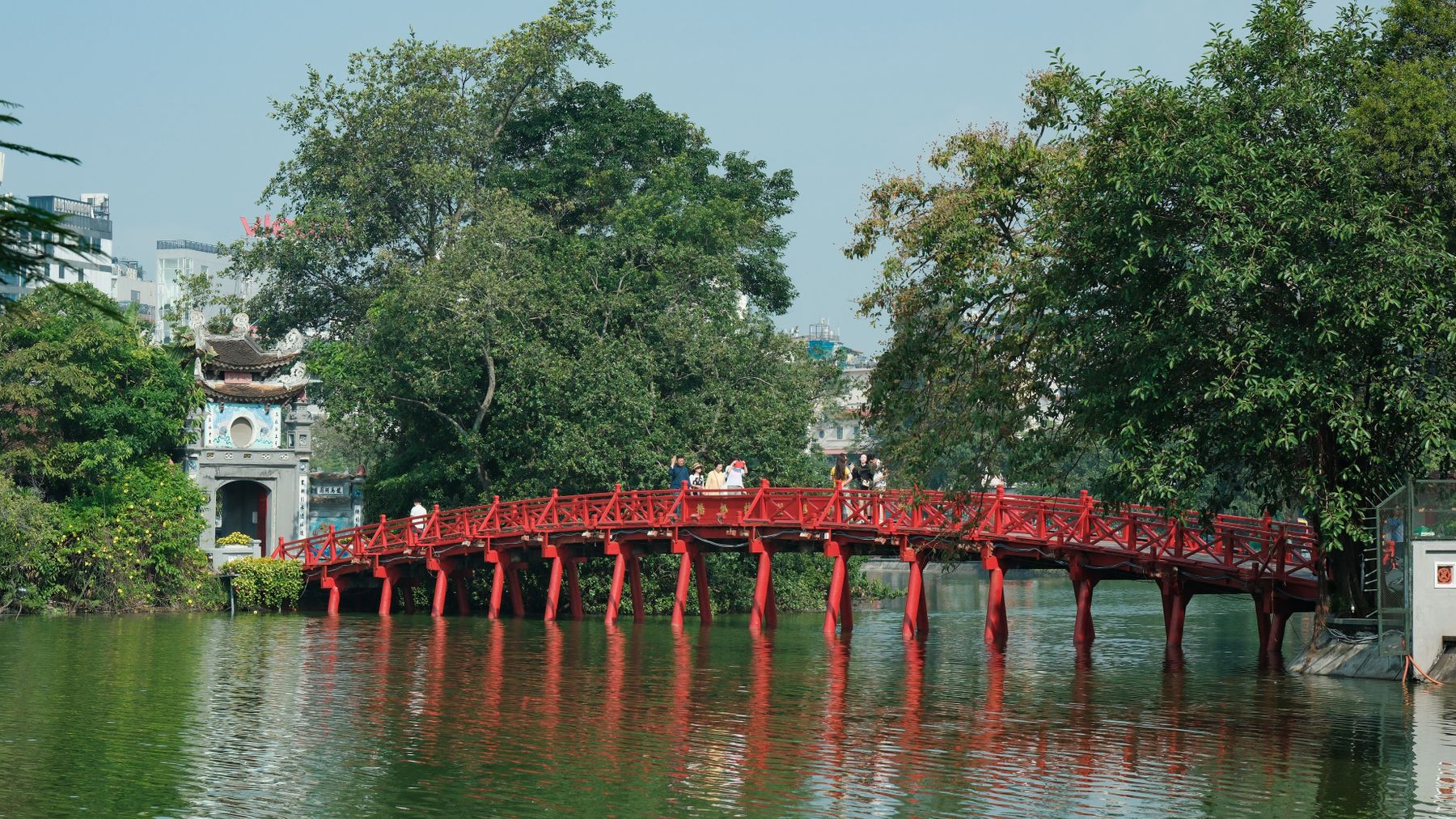
Photo by tu nguyen on Pexels
When Pedestrian Streets Close to Traffic
Every weekend, the roads immediately surrounding Hoan Kiem Lake close to motorbikes and cars from Friday evening through Sunday night — roughly 7 PM Friday to midnight Sunday. This is by far the best time to walk the lake. The transformation is immediate: the noise drops, families spread out across the full width of the road, street food vendors set up carts, and the whole area takes on a different energy.
During pedestrian hours, the stretch along Hang Dao and Dinh Tien Hoang fills with food stalls selling "banh trang tron" (rice paper salad), grilled corn, and sugarcane juice. It can get crowded by 8–9 PM on Saturdays — that density is part of the experience, but if you want space, come between 7 and 8 PM or early Sunday morning.
Weekday mornings (before 7:30 AM) are the quietest the lake gets while still being active. Traffic is light, the tai chi groups are out, and the coffee shops haven't filled yet.
Coffee Spots Overlooking the Lake
Hanoi's cafe culture and Hoan Kiem overlap here more than anywhere else in the city. A few reliable spots:
Dinh Café at 13 Dinh Tien Hoang has a narrow upper-floor window seat looking directly toward the water. "ca phe sua da" (iced milk coffee) runs about 35,000–45,000 VND. It gets busy on weekends; arrive before 9 AM to get a window seat.
Café Lam on Nguyen Huu Huan is a short walk from the lake's southern end, famous among painters and old Hanoi (하노이 / 河内 / ハノイ) regulars. The walls are covered in original artwork that has accumulated since the 1970s. It's quiet, slightly dim, and sells "egg coffee" alongside traditional drip.
For something with direct lake views and less tourist markup, walk the small alley off Dinh Tien Hoang between the lake and the street — a few local-facing coffee stools set up here most mornings with plastic chairs and a clear sightline to the water. No signs, no English menu. Point at what the person next to you is drinking.
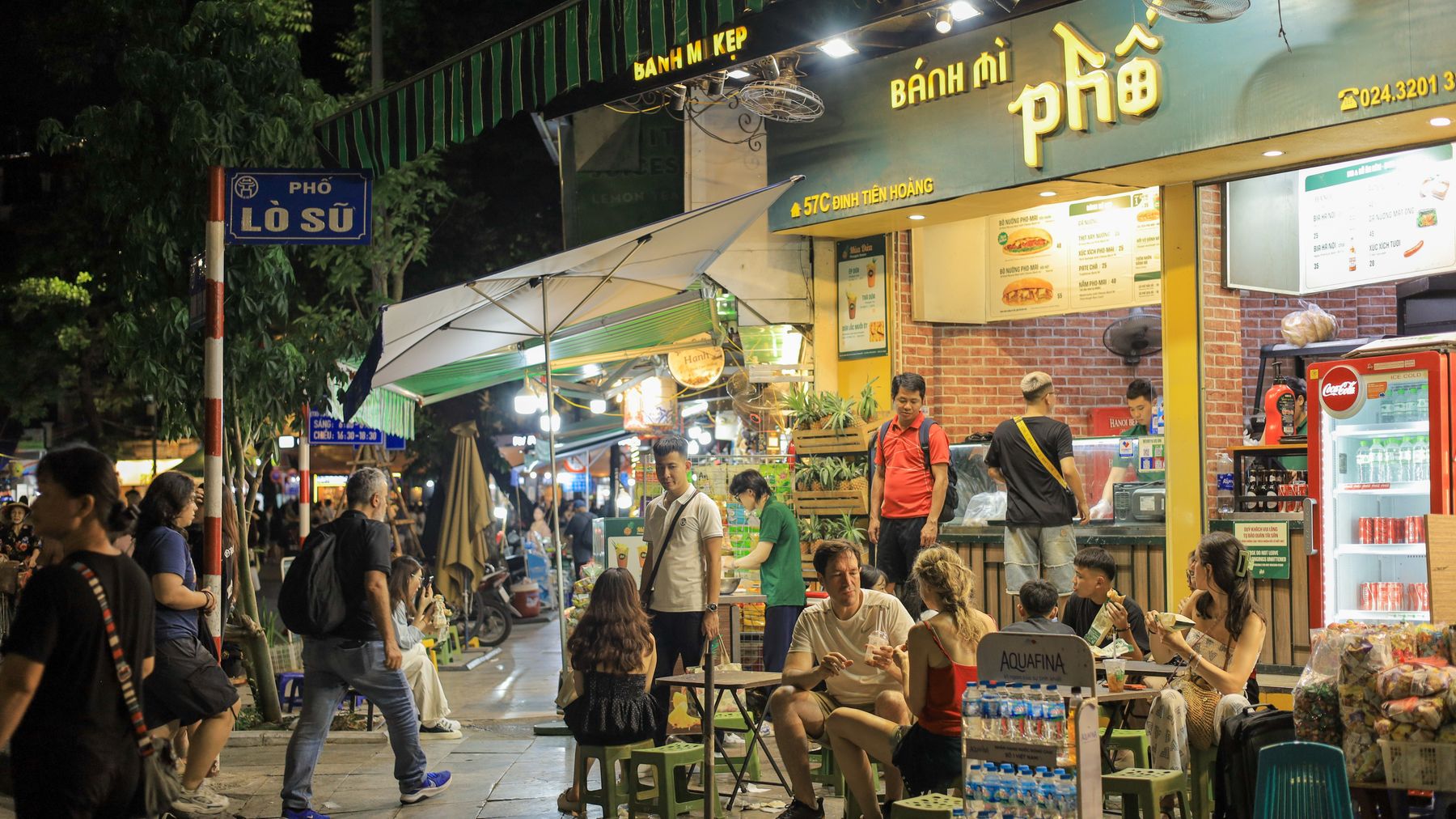
Photo by Hồng Quang Official on Pexels
Photography Tips
The Huc Bridge and Thap Rua (Turtle Tower, the small tower on a mid-lake island on the western side) are the two main visual landmarks. For Thap Rua, the best angle is from the southwestern bank, roughly 50 meters north of the Ly Thai To statue. Early morning gives you mist off the water in cooler months (November through February).
For the Huc Bridge, shoot from the eastern bank looking northwest, with the temple roofline visible behind the bridge. The warm orange lacquer reads best in the first hour after sunrise.
Avoid weekend evenings for photography — the pedestrian street is lively but the light is artificial and the crowds make composition difficult unless you're specifically shooting street scenes.
Frequently Asked Questions
How much does it cost to enter Ngoc Son Temple on the island?
Entry to the Ngoc Son Temple compound costs 30,000 VND. The temple sits on a small island reached via the Huc Bridge, a red-orange wooden bridge dating to 1865. Inside, dress modestly with covered shoulders and knees, as it is an active religious site. The main draw is the embalmed Yangtze giant soft-shell turtle from 1968, displayed in a glass case near the back hall — approximately 2 meters long.
What is the best time of day to photograph the Huc Bridge?
Before 8 AM offers the best light and thinnest crowds. The bridge's red lacquer contrasts well against the green water when lit by natural morning light from the east. Midday should be avoided — glare off the water produces flat, harsh results. The eastern bank near the bridge also sees heavier foot traffic than the western shore, so arriving early keeps both the light and the frame cleaner.
When do the roads around Hoan Kiem Lake close to traffic?
The streets surrounding Hoan Kiem Lake become pedestrian-only every weekend, from approximately 7 PM Friday through midnight Sunday. During these hours, motorbikes and cars are excluded, noise levels drop noticeably, and street food vendors set up along Hang Dao and Dinh Tien Hoang. Stalls sell items like banh trang tron (rice paper salad). This is the most comfortable time to walk the roughly 1.2 km lake circuit.
Practical Notes
Ngoc Son Temple is open daily from around 7:30 AM to 6 PM; entry is 30,000 VND. The lake itself has no entry fee and no closing time. Getting here from most Old Quarter hotels is a 5–10 minute walk — it's the easiest landmark to navigate toward in central Hanoi.
Last updated · Aug 26, 2026 · independently researched, never sponsored.