Tau Hu in Hoi An Is Not What You Find Elsewhere
"Tau hu" (tofu soup) in Hoi An has a specific identity. Unlike the sweeter versions in Hanoi or the thicker gravies down south, Hoi An's tau hu sits somewhere between delicate and savory. The broth tends toward salt and subtle spice, the tofu is often a touch firmer, and the dish arrives with fewer frills—usually just green onion, fried shallots, and sometimes a crack of black pepper. Locals order it at breakfast or lunch, rarely at dinner. A bowl costs 15,000–25,000 VND depending on the stall and toppings.
Tau Hu Che on Tran Phu Street
This is the most-mentioned spot when you ask residents where to eat tau hu. It's a small streetside stall that opens around 6 a.m. and closes by 10 a.m., so timing matters. The broth has a light, slightly sweet undertone—not saccharine, just balanced. They serve tau hu alone or with a side of banh mi (crispy baguette with pâté and pickled vegetables), which many locals order together as a set for around 35,000 VND. The owner has run the stall for over a decade. Queue forms by 7 a.m. on weekdays.
Tau Hu o Tran Hung Dao
A few blocks south, near the covered market, there's a tau hu vendor who operates from 5:30 a.m. to 9 a.m. out of a small storefront. The broth here is notably salty and ginger-forward, appealing to people who find other versions too mild. They add extra crispy fried onions and a pinch of white pepper. A bowl is 18,000 VND. This is where construction workers and cyclo drivers eat. Seating is plastic stools on the sidewalk.
Tau Hu at the Hoi An Central Market (Cho Hoi An)
Inside the main market, there are three or four tau hu stalls clustered near the entrance. The most consistent is run by a woman in her 50s who sets up by 6 a.m. Her broth is lighter than the Tran Hung Dao version but richer than Tran Phu's. She offers tofu in varying firmness—ask for "mềm" (soft) or "chắc" (firm). A bowl is 15,000–20,000 VND. The market is chaotic and colorful; watching locals move through while eating gives you a real sense of Hoi An (호이안 / 会安 / ホイアン) rhythms.

Photo by Quang Nguyen Vinh on Pexels
Tau Hu Ngon (Nguyen Trai Street)
A slightly more upscale stall—still street-food casual, but with a small sign and a few chairs. Open 6 a.m. to 11 a.m. The owner studied the regional variations and deliberately keeps the broth lighter and the tofu cubes larger than nearby competitors. She serves it with a tiny bowl of chili paste on the side. 20,000 VND. It's popular with older locals and some tourists who've heard about it through word-of-mouth, but it doesn't feel commercialized.
Tau Hu Dung at the South End of Nguyen Duy Hinh Street
If you wander past the main tourist zones into residential Hoi An, this stall appears around 6:30 a.m. and closes by 10 a.m. It's tucked near a small school. The tau hu here is slightly thicker, closer to a gravy, and tastes more like what you'd find in central Vietnam. Ginger is prominent. 16,000 VND. It's not on tourist maps. Locals living in that neighborhood consider it the best value.
What Makes Hoi An's Tau Hu Different
Hoi An sits between Hanoi (하노이 / 河内 / ハノイ) and Ho Chi Minh City culturally, and its tau hu reflects that. The broth is more restrained than northern versions (which sometimes lean sweet) and less creamy than southern versions. The tofu is also typically fresher here—vendors source from local makers, not from pre-packaged supplies. Because Hoi An is a smaller town, the turnover of ingredients is high, which means a better product.
The dish is also deeply tied to Hoi An's schedule. Most vendors close by 10 a.m. because it's considered a breakfast or early-lunch item. Ordering tau hu at 3 p.m. will earn you blank looks.
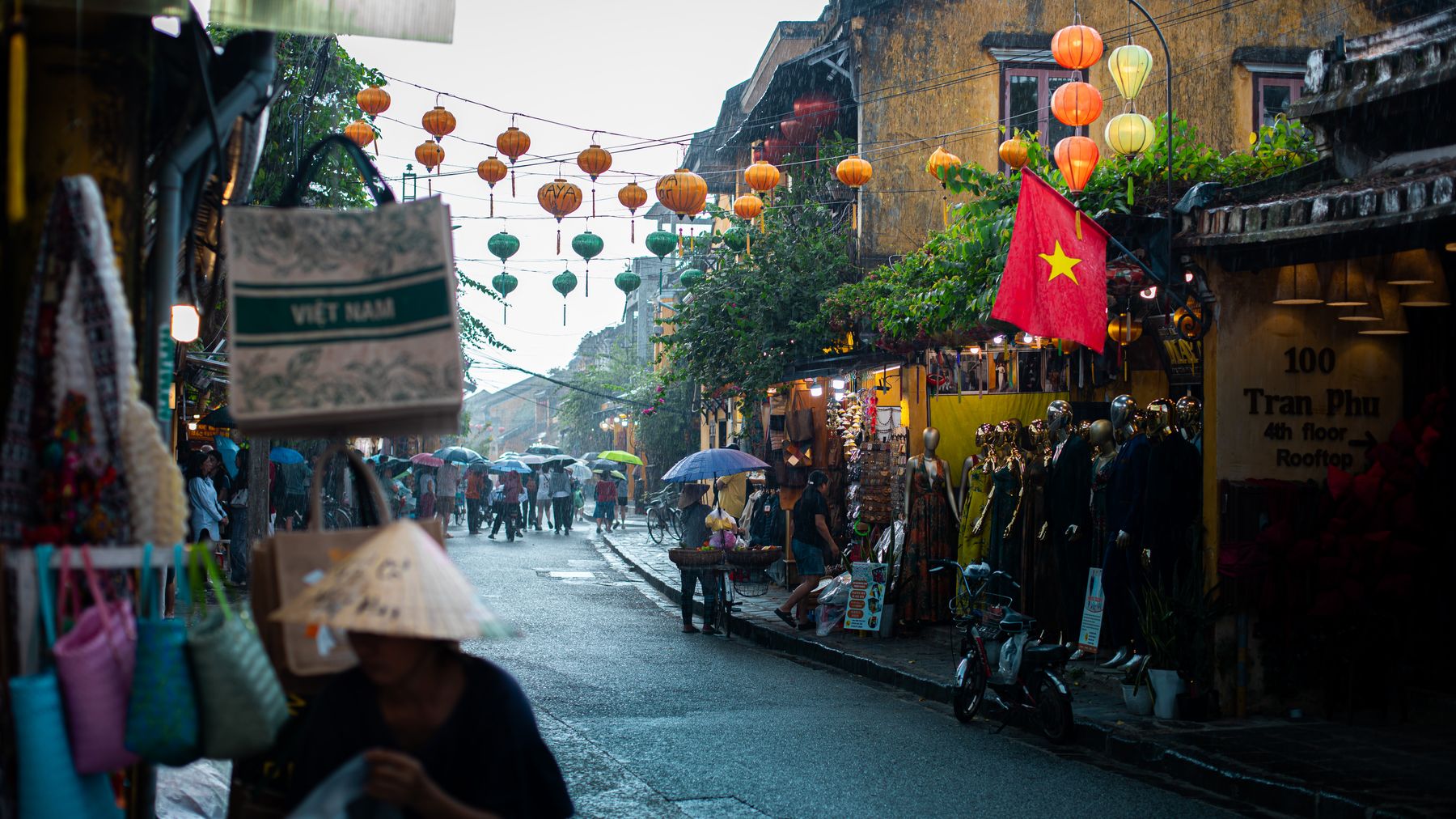
Photo by Sachith Ravishka Kodikara on Pexels
How to Order and What to Expect
Point to a bowl in the vendor's display (or say "một tô tau hu," one bowl of tofu soup) and specify firmness if you want: "mềm" for soft tofu, "chắc" for firm. You may be asked if you want "cay" (spicy) or "không cay" (not spicy). Most vendors assume not spicy, but can add chili paste. Eat it at the stall—the broth cools quickly.
Many vendors will ask if you want "kèm banh mi" (with baguette). This is standard. The baguette comes on the side, and you either dip it or eat it between spoonfuls of soup.
Best Time to Go
Arrive between 6:30 a.m. and 8 a.m. for the fullest experience and no wait. By 9 a.m., many stalls are running low on tofu or broth. Weekdays are more local-focused; weekends draw a few tourists to the better-known spots, but the market stalls remain quiet.
Practical Notes
Bring cash (coins preferred). None of these stalls accept cards. The experience is quick—ten to fifteen minutes. If you're exploring Hoi An for multiple days, trying three different stalls shows you the subtle regional and vendor differences. Start at the Hoi An Central Market if you're uncertain; it's easy to find and gives you multiple options without commitment.
Last updated · May 29, 2026 · independently researched, never sponsored.