Why Nam Dinh matters
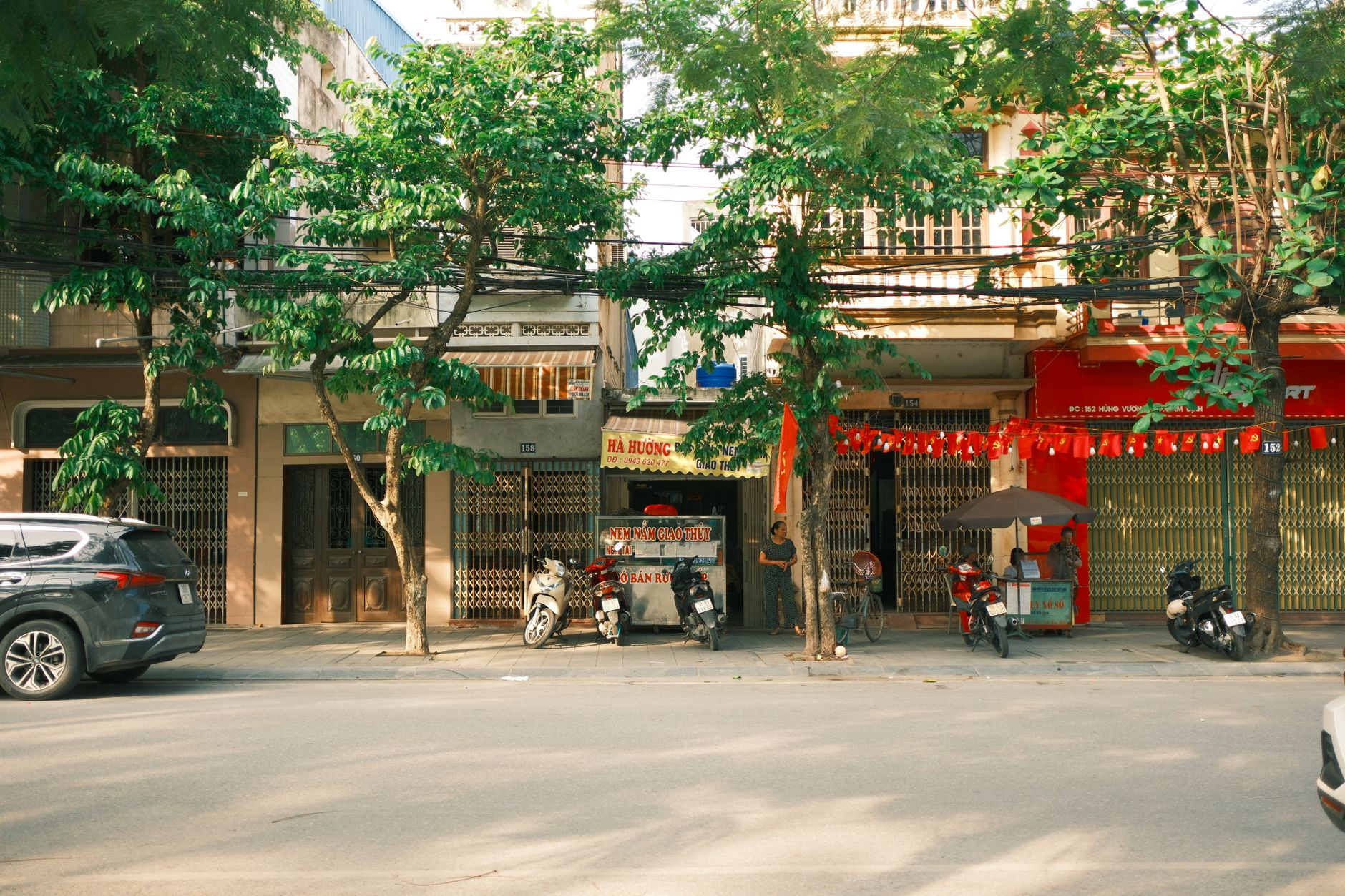
Nam Dinh sits 90 km south of Hanoi on the Red River, a city of 400,000 people that barely registers on most visitor maps. It's not scenic in the way Sapa or Ha Long Bay are. It's industrial, humid, and the riverfront is full of cargo ships. But that's precisely why it's worth a half-day or full-day detour: you'll find real temples, silk weaving villages, and restaurants packed with locals rather than tour groups.
The city was Vietnam's textile heartland under French rule and remains one. If you're interested in how Vietnam actually works—not theme-park versions of it—Nam Dinh repays curiosity.
Tran Quoc Pagoda and the city temples
Tran Quoc Pagoda in Hanoi gets all the guidebook ink, but Nam Dinh's temple culture is deeper and less crowded. Start at Phu Minh Pagoda (Chua Phu Minh), on Tran Hung Dao street, a 17th-century temple rebuilt in the 1990s. The architecture is sturdy, unpretentious, and often empty on weekday mornings—monks are somewhere in the back, ringing bells. Entry is free; small donations welcome. A 10-minute walk north brings you to Hay Pagoda (Chua Hay), a riverside temple with a working nunnery. The complex is set back from the main road; ask a local, or look for the white gate on Tran Hung Dao.
The real gem is Tran Vu Temple (Den Tran Vu), a 12th-century shrine to the god of the northern waters. It sits in a residential quarter a few km northeast of central Nam Dinh (ask for directions, or hire a xe om—motorcycle taxi—for 20,000–30,000 VND). The temple courtyard is intimate, with stone stelae and an altar room lit by oil lamps. Women light incense and bow; tourists are rare enough to attract gentle curiosity. Go in the late afternoon, when light through the wooden shutters is soft.
Co Le Silk Weaving Village
Co Le is a 20-minute drive south of Nam Dinh city center—a village of about 2,000 people where silk weaving looms clatter from 6 a.m. to evening. You can watch weavers at work, buy scarves and lengths of fabric directly from producers (much cheaper than Hanoi boutiques: 100,000–300,000 VND for a scarf, versus 200,000–500,000 in the capital), and have a meal at a local restaurant. Several workshops welcome walk-ins; ask your hotel to call ahead or arrange a driver (hire a taxi from the city for 300,000–400,000 VND for a half-day).
The most accessible workshop is Tran Thi Huong's operation near the village center. Huong speaks some English, will let you sit and watch the loom, and is patient with questions. Buying is not obligatory, but a 150,000 VND scarf is fair value for the craftsmanship, and the money goes directly to the weaver.
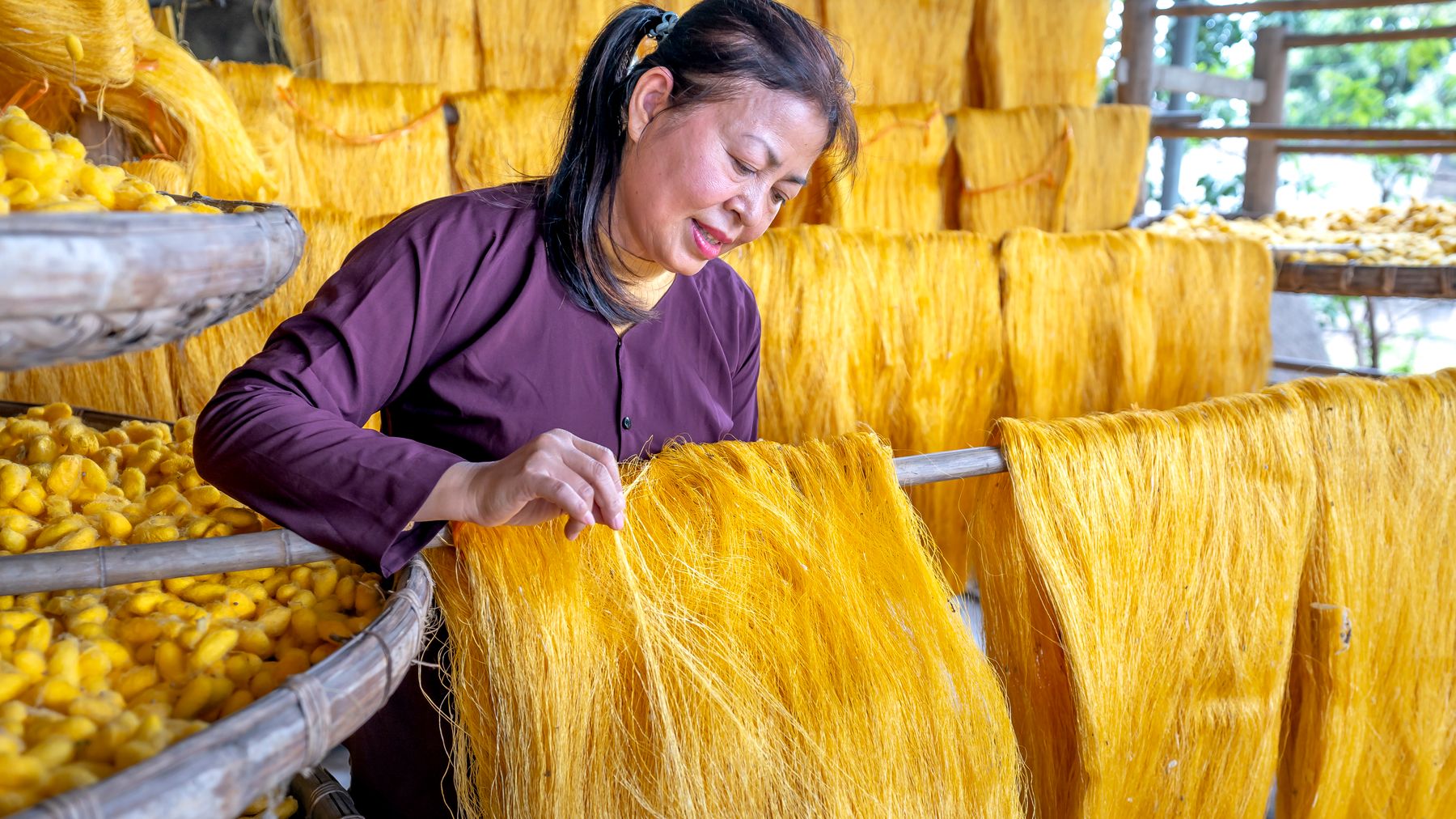
Photo by Quang Nguyen Vinh on Pexels
Cua Lo Beach (day trip)
If Nam Dinh feels too industrial, Cua Lo Beach is a 30 km drive east, a 45-minute ride. It's a working fishing harbor and weekend getaway for Hanoi families—not postcard-pretty, but authentic. The beach is 5 km of gray sand and warm water (swimmable March–November). Stalls sell fresh seafood grilled on the spot: mussels, squid, shrimp. A full grilled fish, rice, and beer runs 150,000–200,000 VND. Hotels and guesthouses line the main road, mid-range and budget. If you're driving, park near the pier and walk the beach at dawn; fishermen are landing their catch, and the air is cooler.
Textile Museum and Hoa Lu (half-day culture)
The Nam Dinh Textile Museum (Bao Tang Vai Nam Dinh) documents the city's industrial history with photographs, looms, and exhibits on French colonial-era factories. It's small, but if you're interested in Vietnamese industrial heritage, it's worthwhile. Located on Tran Hung Dao, admission is about 30,000 VND. Call ahead (+84-350-346-111) to confirm hours; some displays rotate.
If you have a car, combine a morning at the museum with a drive to Hoa Lu, an ancient capital site 50 km northwest (a 90-minute drive via Ninh Binh). Hoa Lu is a valley with two restored royal temples (Dinh Tien Hoang and Le Hoan), surrounded by limestone karsts. It's more compact than Ninh Binh's main attractions and sees far fewer tourists. Guides are available at the site entrance. Budget 2–3 hours.

Photo by Quang Nguyen Vinh on Pexels
Street food and local eating
Nam Dinh's food is meat and broth–heavy, reflecting the river culture. "Com tam" (broken rice), is a staple breakfast, served with pork, pickled vegetables, and a fried egg. Eat at stall #7 in the morning market (Ben Tre Market, near the city center) around 7 a.m.—a bowl costs 25,000 VND.
For lunch, try "banh chung", the northern glutinous cake of sticky rice, pork, and mung bean wrapped in bamboo leaves. It's a Tet dish, but Nam Dinh makes it year-round. A slice with broth is 15,000–20,000 VND at any market stall.
For dinner, head to the Cua Lo Harbor or a street corner near the waterfront where vendors grill "ca loc" (snakehead fish) and shrimp. Eat standing up, use newspaper as a napkin, order a beer. Locals eat this way every evening.
What to skip
Don't expect resort infrastructure. There are no beach clubs, no five-star hotels, no spa treatments. Nam Dinh and Cua Lo are working-class destinations. If you need Wi-Fi, English-speaking staff, and a pool, Hanoi or Ha Long Bay are 90 minutes away and better equipped.
Also skip the main waterfront commercial strip in downtown Nam Dinh on busy hours (11 a.m.–2 p.m., 5–7 p.m.). It's congested with motorcycles and trucks. Visit the temples and villages in the early morning instead.
Practical notes
Hire a driver from Hanoi (300,000–400,000 VND for a half-day, 600,000–800,000 for a full day via Grab or a hotel connection). Buses run from Hanoi's Giap Bat station every 30 minutes (2 hours, 60,000 VND), but a car gives you flexibility for the villages and temples. Stay overnight in Hanoi or Nam Dinh town itself; there's no tourist resort infrastructure here, only family-run guesthouses (300,000–600,000 VND per night). Bring cash; ATMs work, but many small vendors and workshops don't take cards.
Last updated · May 26, 2026 · independently researched, never sponsored.