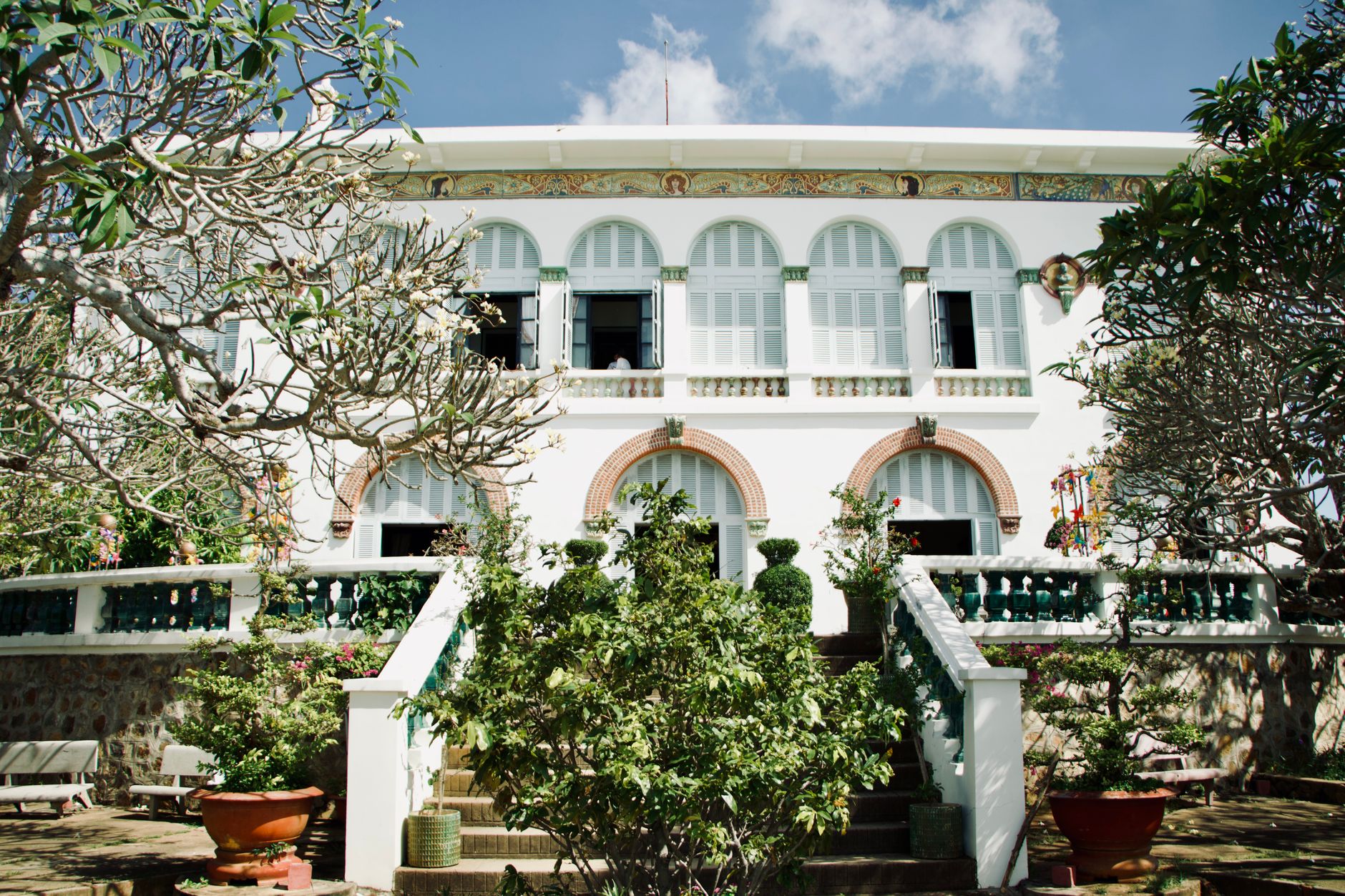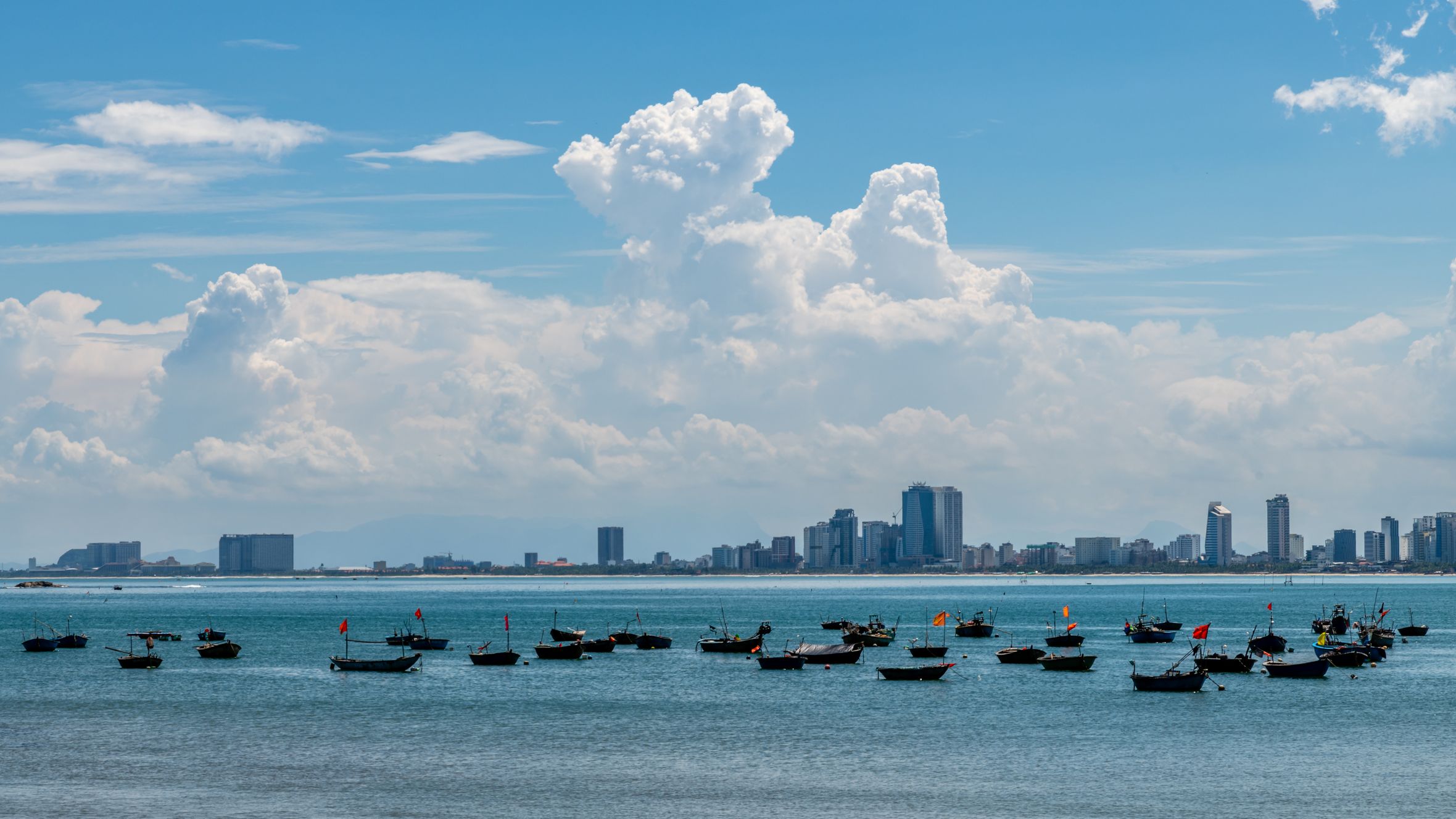
What it is
Nha Tho Con Ga — literally "Rooster Church" — is a pale-pink Catholic cathedral sitting at 156 Tran Phu, right in the middle of Da Nang's downtown grid. The rooster weathervane on its bell tower gave it the nickname decades ago, and nobody calls it anything else. Its official name is Da Nang Cathedral, or Chinh Toa Da Nang if you want to impress a local.
French priest Louis Vallet oversaw its construction in 1923, making it one of the few colonial-era churches on this stretch of the central coast. The Gothic Revival design — pointed arches, a single spire reaching about 70 meters, candy-colored walls — is compact compared to cathedrals in Hanoi or Saigon, but that's part of the appeal. It doesn't try to be grand. It just sits there on its corner, dwarfed now by hotels and office towers, looking quietly out of place in the best way.
Note: Da Nang (다낭 / 岘港 / ダナン) recently merged administratively with Quang Nam province, so you may see references to the expanded municipality in newer maps and guides. For travelers, nothing changes — the church is in the same downtown core it's always been.
Why travelers go
Honestly, most people stop here because it's pink and photogenic, and that's a perfectly good reason. The church photographs well in the late afternoon when the light turns warm against those pastel walls. But beyond the camera appeal, it's one of the only French colonial structures left in Da Nang — a city that rebuilt itself almost entirely after 1975. Walking inside during a quiet weekday, you get stained-glass light filtering through the nave and a sense of stillness that's hard to find in this part of town.
It also sits within easy walking distance of Han Market and the Han River waterfront, so it slots naturally into a morning or afternoon exploring downtown on foot.
Best time to visit
Da Nang's dry season runs roughly from March through August. April and May hit a sweet spot — warm but not yet peak-summer scorching, and the tourist numbers haven't spiked for the July-August holiday rush. If you're photographing the exterior, come between 4:00 and 5:30 PM when the western light catches the facade.
Sunday morning Mass (usually around 6:00 AM and 8:00 AM) draws a full congregation. You're welcome to attend respectfully, but if you just want to look around inside without feeling intrusive, a weekday mid-morning visit is better. The church is typically open from about 6:00 AM to 5:00 PM, though the doors sometimes close during lunch.
How to get there
If you're already in Da Nang, the church is on Tran Phu street, about 1.5 km from the Dragon Bridge. A Grab bike from most beach hotels along My Khe costs 15,000–25,000 VND and takes under 10 minutes.
Coming from Hoi An — roughly 30 km south — a Grab car runs about 200,000–250,000 VND and takes 40 minutes outside rush hour. Local bus route 1 connects Hoi An to Da Nang's central bus station for around 30,000 VND, then it's a short walk or another Grab from there.
From Hue, the train takes about 2.5 hours (from 65,000 VND for a hard seat) and drops you at Da Nang station, which is less than 2 km from the church. The Hai Van Pass road trip is the scenic alternative — roughly 90 minutes by motorbike if you stop for the views.

Photo by FOX ^.ᆽ.^= ∫ on Pexels
What to do
Walk the exterior and courtyard
The front courtyard has a small grotto with a statue of the Virgin Mary, framed by frangipani trees. The pink walls photograph best from across Tran Phu street, where you can frame the full spire. Look up — the rooster weathervane is smaller than you'd expect.
Step inside the nave
The interior is modest: a single nave, wooden pews, arched ceilings with simple ribbing. The stained-glass windows are the highlight, casting colored light across the floor in the mornings. Keep your visit brief and quiet if services are being prepared.
Walk to Han Market
From the church, head east on Tran Phu for about 600 meters and you'll hit Han Market (Cho Han). The ground floor sells dried seafood, "nem chua" (fermented pork rolls), central Vietnamese spices, and tourist souvenirs at prices that are negotiable but already reasonable. The upper floors have fabric and clothing stalls.
Cross to the Han River waterfront
Another 200 meters past Han Market puts you on Bach Dang street along the river. From here you can see the Dragon Bridge to the south — it breathes fire and water on weekend nights at 9:00 PM. The riverside promenade is good for an evening walk when the city cools down.
Visit Dong Xuan Market area vibes — but make it central
If you enjoy market culture, combine Han Market with Con Market (Cho Con), about 1 km southwest. Con Market is more local, less tourist-oriented, and the food stalls on the ground floor serve solid "mi quang (미꽝 / 广南面 / ミークアン)" and "bun cha" for 30,000–40,000 VND a bowl.
Where to eat nearby
Within a 10-minute walk of the church, you have solid options for "banh mi" — Da Nang does its own version with a slightly different bread texture than Hoi An's famous "banh mi". Banh Mi Ba Lan on Hoang Dieu (about 800 meters south) has been operating for years; expect to pay 20,000–30,000 VND per sandwich.
For something more substantial, look for "bun cha ca" — fish cake noodle soup that's a Da Nang specialty you won't find done this way elsewhere. Bun Cha Ca Ba Huyen on Le Hong Phong street is a reliable pick, bowls around 35,000–45,000 VND. Pair it with a "ca phe sua da" from any nearby cafe and you've got a proper central Vietnamese lunch for under 70,000 VND.
Where to stay
Da Nang's hotel stock is huge and competitive. Near the church in the downtown area, budget guesthouses run 200,000–400,000 VND per night. Mid-range hotels with river views along Bach Dang street go for 600,000–1,200,000 VND. Most travelers stay along My Khe beach (3 km east), where the range widens from 300,000 VND hostels to 3,000,000+ VND resort rooms.
Staying downtown puts you closer to the church, Han Market, and the food scene. Staying beachside gives you sand and surf. Neither is wrong — Da Nang is small enough that a Grab between the two zones takes 10 minutes.

Photo by Nghĩa Văn on Pexels
Practical tips locals would tell you
- Dress modestly if you plan to enter the church. Shoulders and knees covered. This is actively observed, not just a suggestion.
- Don't use flash photography inside. Natural light from the stained glass is better for photos anyway.
- The church is not a museum. It's an active parish. If you show up during a service, sit quietly in the back or come back later.
- Combine it with a walking loop. Church → Han Market → riverside → Dragon Bridge is a clean 2-3 hour circuit that covers downtown Da Nang's highlights without needing transport.
- Parking a motorbike is easy — there's informal parking along Tran Phu for 5,000 VND.
Common mistakes to avoid
Showing up at noon. The church often closes for lunch, the light is flat and harsh, and you'll be sweating through your clothes. Early morning or late afternoon is better in every way.
Skipping the interior. A lot of visitors snap a photo of the pink facade and leave. The inside takes five minutes and is worth seeing, especially the windows.
Confusing it with the larger cathedral in Hue. Phu Cam Cathedral in Hue is a different building entirely. If someone tells you "the big church in central Vietnam," clarify which city they mean.
Practical notes
Nha Tho Con Ga is a 20-minute stop or a 2-hour anchor depending on how you build your day around it. It works best as part of a downtown Da Nang walking route rather than a standalone destination. Free entry, no tickets, no guides needed — just show up, look around, and head to lunch.
Last updated · May 29, 2026 · independently researched, never sponsored.