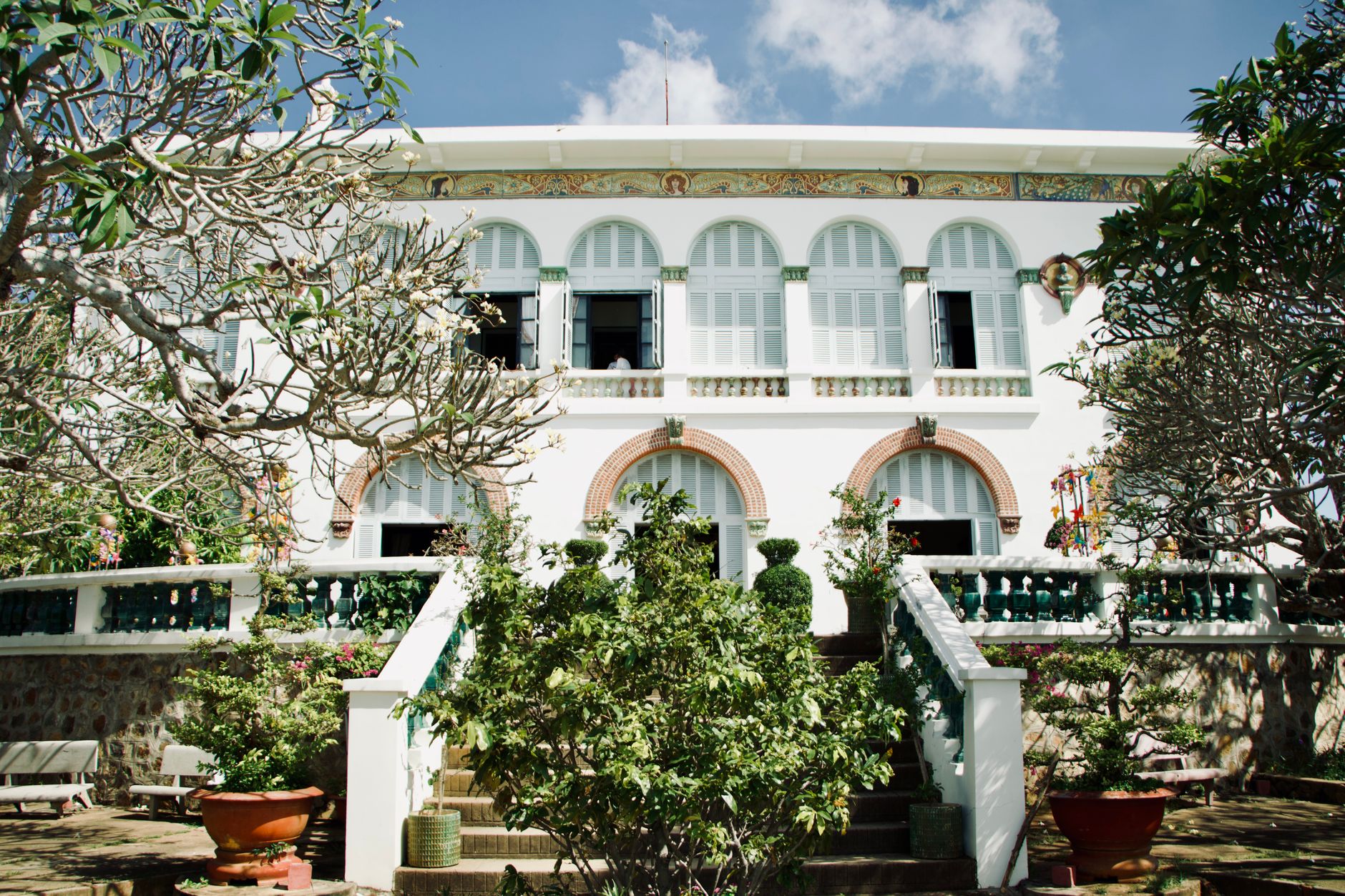
What it is
Thien Vien Truc Lam Bach Ma is a Zen Buddhist monastery sitting at around 1,000 meters elevation on the edge of Bach Ma National Park, roughly 55 km south of Hue. It belongs to the Truc Lam Zen tradition — a Vietnamese school of Buddhism revived in the 1960s and 1970s by Zen Master Thich Thanh Tu, with monasteries now scattered across the country from Da Lat to Sapa. This particular one was built in 2007, so the architecture is modern, but the setting is not. The surrounding forest is old-growth, thick with tropical hardwoods and cloud cover, and the monastery was placed here deliberately — Buddhist practice and mountain silence tend to go well together.
Unlike the more famous royal tombs and pagodas in downtown Hue (후에 / 顺化 / フエ), this place sees relatively few international visitors. Most of the people you'll encounter are Vietnamese day-trippers, monks in residence, and the occasional photographer chasing fog.
Why travelers go
The main draw is the combination of monastery grounds and mountain scenery. Hue's lowlands are flat, humid, and dense. Up here, the air temperature drops 8–10°C compared to the city, and you're surrounded by jungle canopy instead of motorbike traffic. People come for the quiet, the views down toward the coastal plain, and the slightly surreal feeling of walking through a Buddhist temple complex wrapped in cloud forest.
If you're already planning a trip to Bach Ma National Park, the monastery sits along the same access road, so combining both in a day trip makes logistical sense.
Best time to visit
March through August gives you the best weather — drier skies, warmer temperatures at altitude, and better visibility from the monastery grounds. The sweet spot is April to June, before the worst of the summer heat hits Hue but after the spring drizzle tapers off.
September through January is Hue's rainy season. The road up to Bach Ma can get slippery, fog can reduce visibility to a few meters, and the monastery grounds are less pleasant when everything is soaked. That said, if you like moody atmosphere and don't mind getting damp, the off-season has its own appeal — you'll likely have the place almost to yourself.
How to get there from Hue
The monastery is about 55 km south of central Hue. You have a few options:
Motorbike
The most common way for independent travelers. Ride south on the AH1 (National Route 1A) toward Phu Loc, then turn inland at the signed junction for Bach Ma National Park. The last stretch is a winding mountain road — scenic but demanding if you're not confident on a motorbike. Total ride time is about 1.5–2 hours. Motorbike rental in Hue runs 120,000–180,000 VND per day for a semi-automatic.
Grab car or private driver
A Grab car from Hue will cost roughly 400,000–550,000 VND one way, depending on demand. A private driver booked through your hotel typically runs 800,000–1,200,000 VND for a round trip including wait time. This is the most comfortable option if you want to combine the monastery with Bach Ma National Park in a single day.
Guided tour
Several tour operators in Hue bundle Thien Vien Truc Lam Bach Ma with Bach Ma National Park as a day trip. Expect to pay around 600,000–900,000 VND per person, usually including transport and a basic lunch.

Photo by Ninh Tien Dat on Pexels
What to do
Walk the monastery grounds. The complex is spread across a hillside with multiple prayer halls, meditation spaces, a bell tower, and landscaped gardens. The main hall has a large golden Buddha statue and detailed woodwork. The grounds are well-maintained and designed for slow walking — there are no ticket gates or guided routes. Take your time.
Sit at the overlook. Behind the main buildings, a terrace faces east toward the coast. On clear days, you can see the Tam Giang Lagoon and the distant shoreline. Mornings tend to be clearer than afternoons.
Visit the bell tower. The monastery's bell tower is one of the highest points on the grounds. It's a short climb, and the acoustics when the bell rings during prayer times (typically early morning and late afternoon) carry across the valley.
Hike into Bach Ma National Park. The national park entrance is nearby, and several trails branch off from the access road. The Five Lakes trail (roughly 3 km) and the Rhododendron trail are the most popular. Separate park entry is 60,000 VND.
Talk to the monks. If you visit during a quiet period, some of the resident monks are happy to chat with visitors. A few speak basic English. This is a functioning monastery, not a museum — treat it accordingly.
Where to eat nearby
There's no real restaurant scene on the mountain. Your best bet is to eat before or after the trip.
Back in Hue, "bun bo Hue" is the obvious local dish — a spicy, lemongrass-heavy beef noodle soup that's arguably better here than anywhere else in the country. Try it at a street stall in the Dong Ba Market area, where a bowl runs 30,000–40,000 VND.
For something lighter, "banh canh (반깐 / 粗米粉汤 / バインカイン)" — thick tapioca noodles in a pork or crab broth — is a Hue staple worth tracking down. Stalls along Pham Hong Thai street serve solid versions for around 25,000–35,000 VND.
If you're passing through Phu Loc town on the way back, look for roadside "com hen" — clam rice, a distinctly Hue dish served cold with herbs and chili.
Where to stay
Most travelers base themselves in Hue and visit the monastery as a day trip.
- Budget: Guesthouses and hostels in Hue's backpacker zone (Pham Ngu Lao / Le Loi area) start at 150,000–250,000 VND per night.
- Mid-range: Hotels with air conditioning, breakfast, and decent beds run 500,000–900,000 VND. The area south of the Perfume River has good options.
- Upscale: Boutique hotels and heritage properties in the Citadel district go for 1,500,000–3,000,000 VND.
There's no accommodation at the monastery itself, and nothing within walking distance on the mountain.

Photo by Quang Nguyen Vinh on Pexels
Practical tips locals would tell you
- Dress appropriately. This is an active monastery. Cover your shoulders and knees. Shoes off before entering any prayer hall.
- Bring a light jacket. Even in summer, the temperature at 1,000 meters can feel cool compared to Hue's lowland heat. In the rainy season, a rain shell is essential.
- Fuel up before you go. The last reliable petrol station is in Phu Loc town. Don't assume you'll find fuel on the mountain road.
- Start early. Leave Hue by 7:00–7:30 AM to get the clearest skies and avoid afternoon fog.
- Combine trips. Pair the monastery with Bach Ma National Park or a stop at Lang Co beach on the way back — both are on the same route, and Lang Co has decent seafood shacks right on the shore.
Common mistakes to avoid
- Underestimating the road. The mountain section has tight switchbacks and can be slippery after rain. If you're not experienced on a motorbike, hire a driver.
- Showing up during lunch. The monastery is quietest (and most photogenic) in the early morning. Midday brings tour buses and less atmosphere.
- Skipping water and snacks. There's limited food available on site — one small drink stall at most. Bring what you need.
- Expecting a tourist attraction. This is a place of worship first. There are no audio guides, souvenir shops, or entrance fees. That's the point.
Practical notes
Thien Vien Truc Lam Bach Ma is free to enter. The monastery is open daily, but arrive before 4:00 PM to have enough time on the grounds before dark. If you're visiting Hue and want a break from the Tomb of Tu Duc, the Imperial Citadel Thang Long–era sites, and the lowland pagoda circuit, the mountain air up here is a solid reset.
Last updated · May 26, 2026 · independently researched, never sponsored.