Crossing a street in Hanoi for the first time, most people stop dead on the kerb and wait for a gap that never comes. The gap is not the point. Here is what is actually happening at a Vietnamese intersection — and how to move through it without causing an accident or embarrassing yourself.
How the Flow Actually Works
Vietnamese traffic operates on a logic closer to fluid dynamics than to rulebook driving. Vehicles — mostly motorbikes — fill available space continuously, adjusting speed and angle to avoid collision rather than stopping to yield in sequence. This is not recklessness. It is a shared, real-time negotiation. Everyone on the road is reading everyone else, and the system mostly works because every rider assumes others are also reading the situation.
The key mental shift: predictability matters more than right-of-way. If you move at a steady pace and a consistent angle, traffic flows around you. If you stop suddenly or reverse direction, you break the calculation and that is when accidents happen.
Traffic Lights — When They Actually Mean Stop
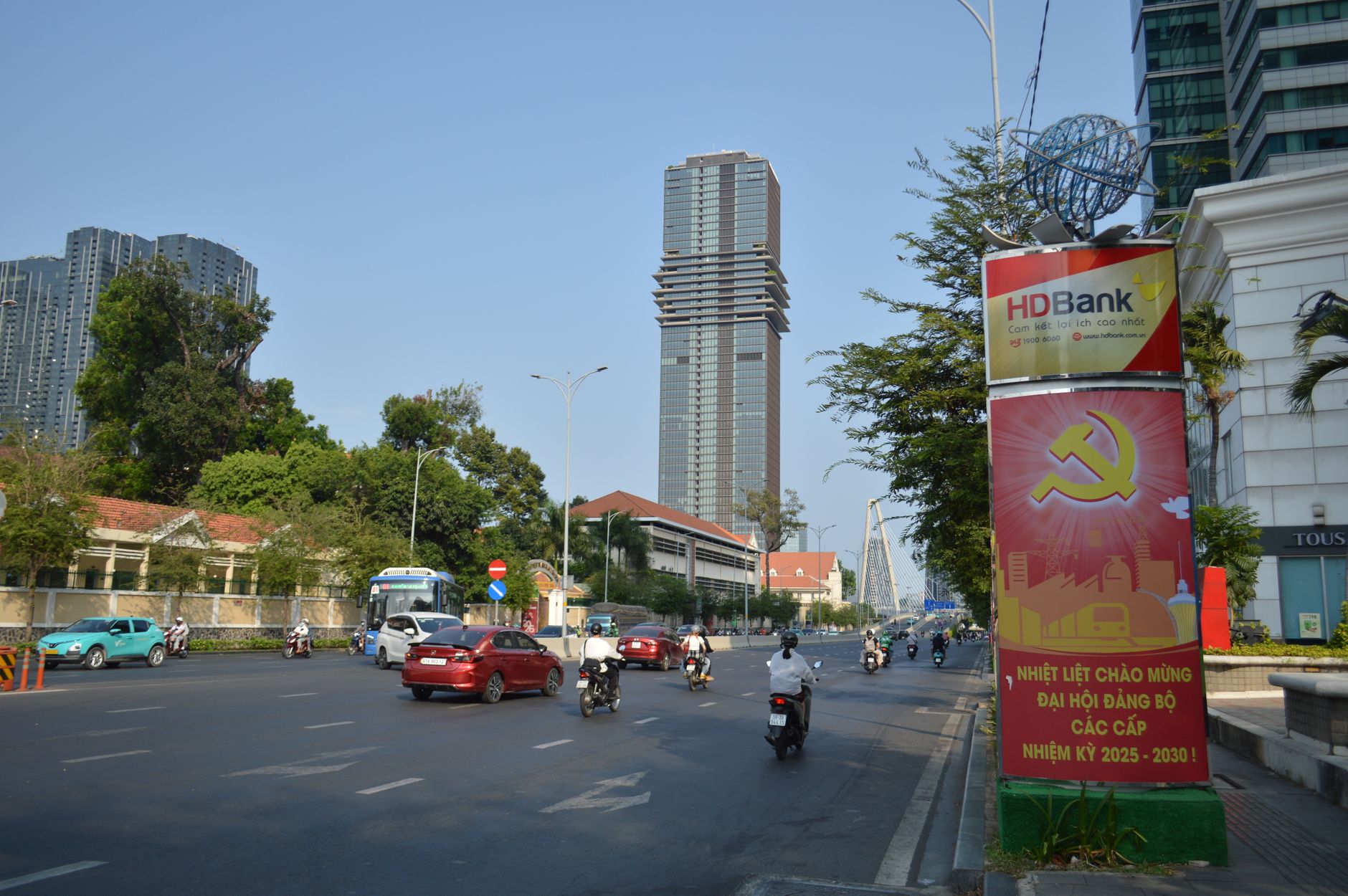
In Hanoi (하노이 / 河内 / ハノイ), Saigon, Da Nang, and other large cities, traffic lights at major intersections are enforced and generally obeyed — especially since traffic police fines were substantially increased in recent years. Running a red at a camera-monitored city junction can get you pulled over or, for registered vehicles, a fine issued by post.
That said, you will still see motorbikes edge into the box, creep forward, and occasionally roll through on amber (or even early red) at quieter junctions. This is a local calibration, not an invitation for tourists to copy it. If you are renting a motorbike and you are not deeply familiar with local reaction times, treat red lights as absolute stops.
Amber in Vietnam (베트남 / 越南 / ベトナム) means go faster, not slow down. Budget for that when you are behind the wheel.
At smaller intersections — district roads, town junctions outside the main cities — lights are often treated as advisory. A flashing yellow is common after 22:00 in many areas, meaning yield and proceed with caution. At these junctions, the fluid-dynamics rule takes over entirely.
The Countdown Timer Is Your Friend
Most urban traffic lights in Vietnam display a digital countdown — sometimes in red for stop, sometimes green for go. This is actually more useful than what you get in most Western cities. When the green reads 4 seconds, you know the amber is coming. When the red reads 8, you know you have time to check your mirror. Use these actively. Locals do.
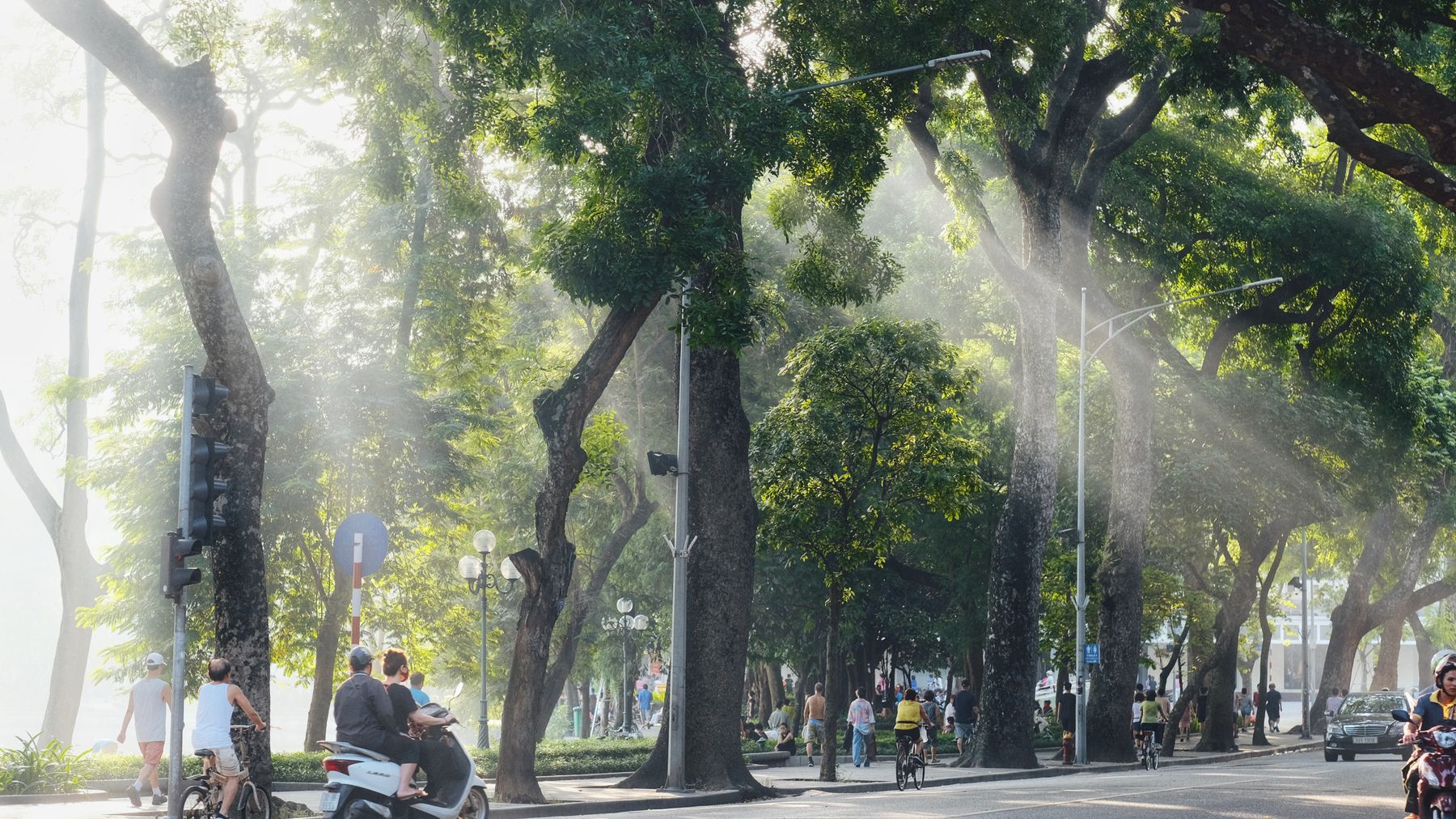
Photo by tu nguyen on Pexels
Turning Right on Red
Right turns on red are common and largely tolerated at many intersections, even where technically prohibited. You will see this constantly. In practice, a slow, yield-first right turn on red is rarely penalised at quiet junctions. At major intersections with police presence or cameras, follow the light. The rule of thumb: if there is a traffic officer in the box, stop.
Roundabouts — Merge Logic
Vietnamese roundabouts do not follow the strict "give way to traffic already in the circle" rule that applies in the UK or Australia. In reality, entry traffic and circulating traffic merge simultaneously, with both sides adjusting speed. Nobody has a clean priority claim, and waiting for a full gap before entering will leave you at the roundabout indefinitely.
The practical approach:
- Enter slowly and visibly. Signal your intention with your position — ease into the entry lane without committing to a full-speed merge. Riders in the circle will see you and adjust.
- Commit once you move. Half-entering and hesitating is the dangerous move. A smooth, moderate-speed entry gives everyone time to read you.
- Stay in the outer lane if you are exiting early. Inner lanes are for riders going further around. Cutting across lanes mid-roundabout to exit is where collisions cluster.
- Horn use is polite, not aggressive. A short beep as you enter a roundabout is a standard "I am here" signal, not road rage. Use it.
In smaller towns — Hoi An's outskirts, the roads around Ninh Binh, rural Da Lat — roundabouts are often unmarked or faded, functioning purely on the fluid-dynamics logic. Slow, visible entry, steady speed, short horn tap.

Photo by Tuan Vy on Pexels
Pedestrians at Intersections
If you are on foot: move at a slow, steady pace and do not stop mid-crossing. Riders will route around a predictable pedestrian. A pedestrian who freezes or reverses becomes unpredictable, and that is the collision risk. Eye contact with approaching riders helps — it confirms they have seen you.
At signalled crossings in city centres, the green pedestrian phase is real and traffic does stop. Wait for it, then move with purpose.
What Renting a Motorbike Adds to This
If you are getting on a motorbike for the first time in Vietnam — even if you ride at home — spend 20 minutes on a quiet side street before you hit a main road. The density and pace of city traffic is genuinely different from most places. Braking distances on older rental bikes are longer than you expect, and the instinct to swerve rather than brake is common among local riders, so following distance matters more than it might at home.
Costs for motorbike rental run roughly 100,000–200,000 VND per day for a semi-automatic in most cities. For an automatic scooter in tourist areas, add 20–30% to that.
Practical Notes
An international driving permit is technically required to ride legally in Vietnam; in practice, enforcement varies widely by city and checkpoint. Helmet use is mandatory and police do enforce it, particularly in urban areas — fines start around 400,000 VND. If you are uncomfortable with city traffic, Grab motorbike or car is affordable, reliable, and takes the navigation stress off your plate entirely.
Last updated · May 29, 2026 · independently researched, never sponsored.