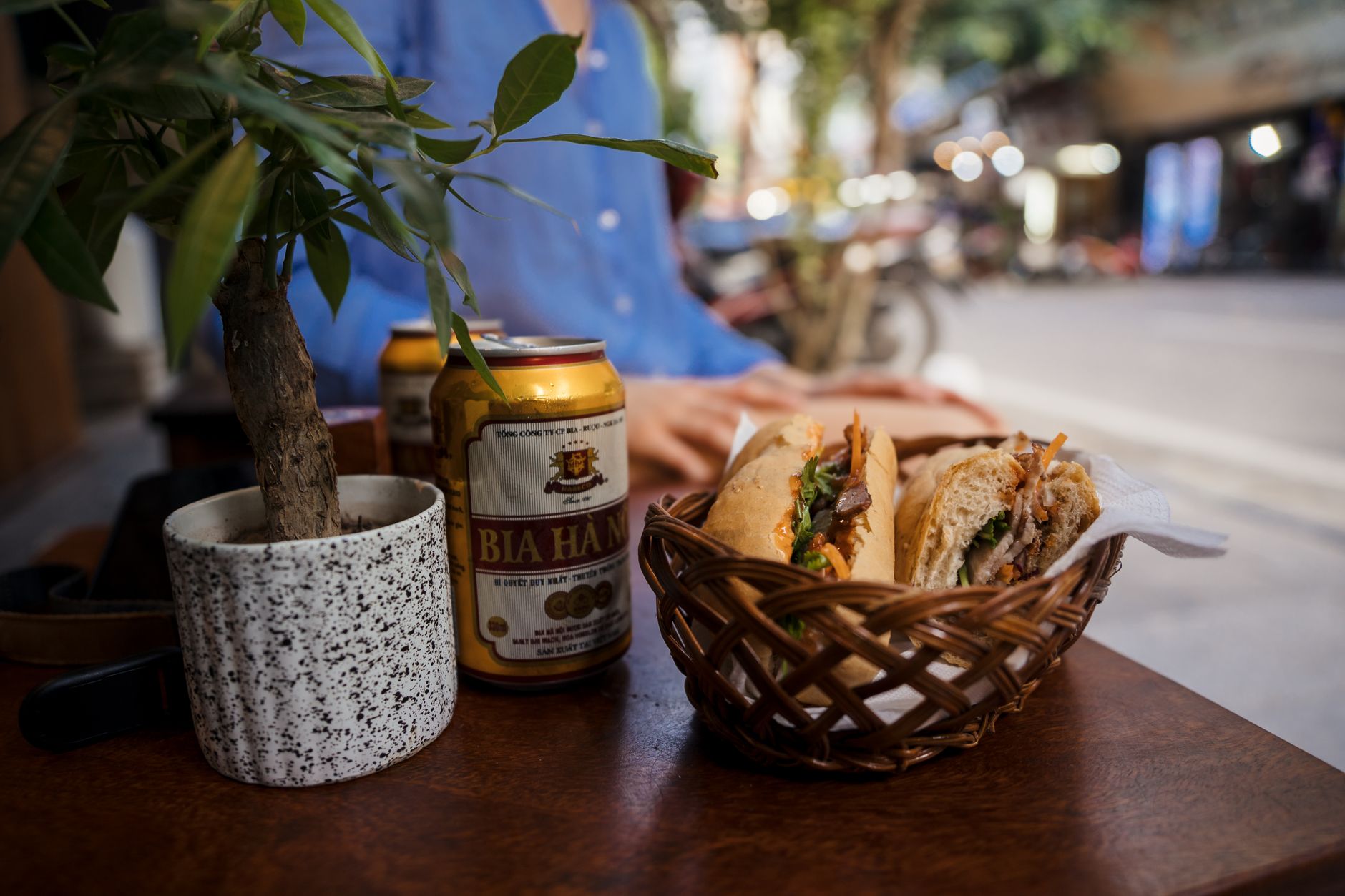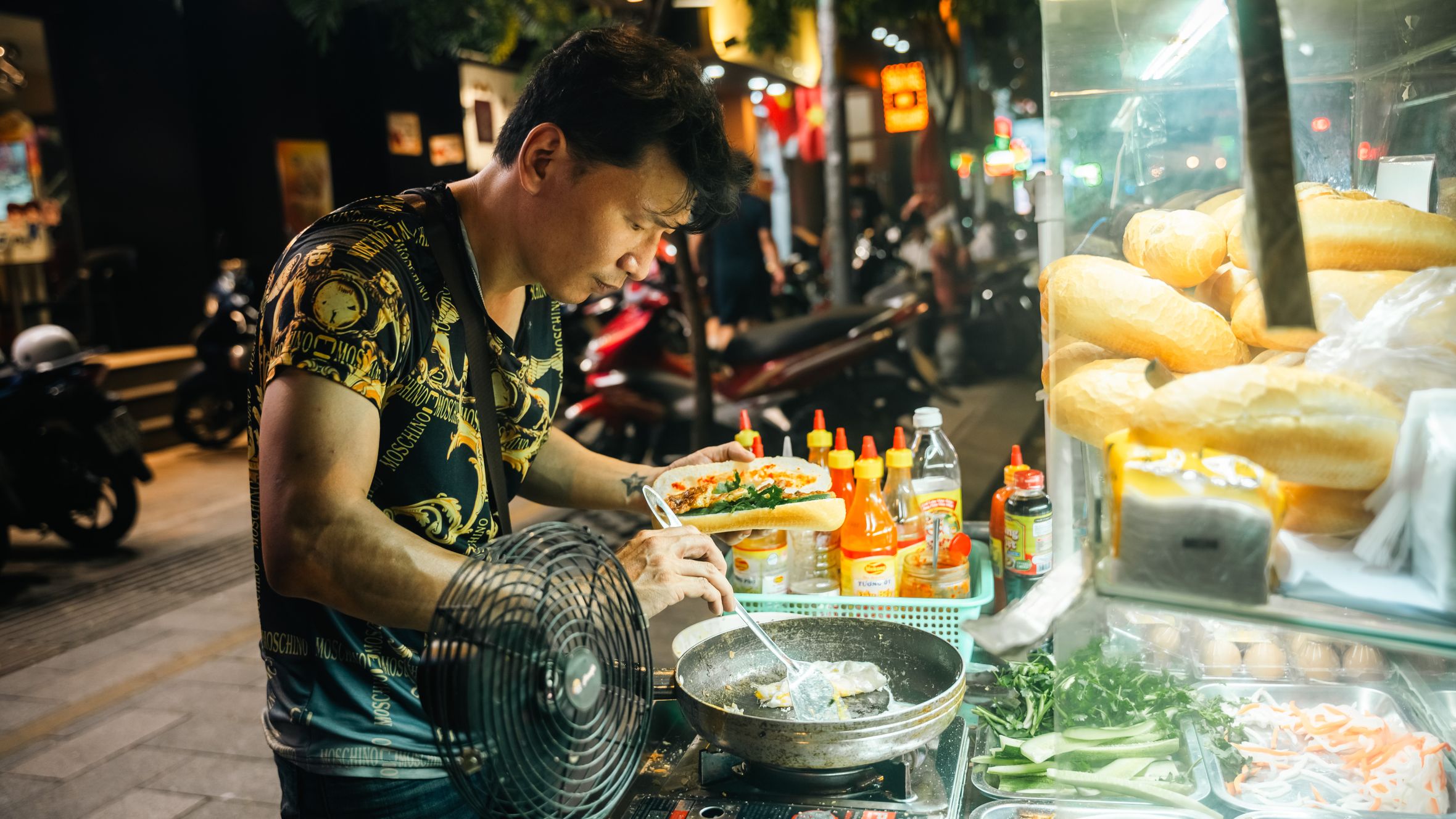
The Breakfast Ritual: Banh Hoi Long Heo
If you ask a local in Quy Nhon where to start your day, they will point you toward a plate of "banh hoi long heo". This dish is the city’s signature, a deceptively simple combination of woven rice vermicelli sheets topped with chopped chives and served alongside a platter of pork offal.
Unlike the dry, tangled vermicelli found in other parts of the country, the "banh hoi" here is delicate and brushed with a light layer of scallion oil. The accompanying "long heo"—a mix of boiled pork heart, liver, tongue, and small intestine—is prepared fresh every morning. You eat it by wrapping a piece of the pork and a small bundle of the vermicelli in rice paper, adding fresh herbs, and dipping it into a bowl of spicy, garlic-heavy fish sauce.
For the most authentic experience, head to the small stalls near the Tran Phu and Bach Dang intersection. Expect to pay between 35,000 VND and 50,000 VND per portion. It is a hearty, protein-rich start that explains why the city moves at a slightly slower pace than the frantic streets of Saigon.
The Soul of the Sea: Bun Cha Ca
While "bun cha ca" (fish cake noodle soup) is common along the central coast, Quy Nhon takes its version seriously. The broth is not made from pork bones, but rather from boiled sailfish and mackerel heads, giving it a clean, oceanic sweetness that is distinct from the heavier soups you might find in Da Nang or Hue.
The "cha ca" itself is the star. It is pounded by hand until it reaches a bouncy, elastic texture, then fried until golden. You will find two types in your bowl: the fried version and the steamed version, which is often mixed with dill and black pepper. The noodles are thin, white rice vermicelli, and the bowl is finished with a handful of fresh herbs and a squeeze of lime.
I recommend visiting the stalls around the local markets, such as the area near the Quy Nhon Market on Tang Bat Ho street. A bowl will set you back about 30,000 VND to 40,000 VND. It is a dish that relies entirely on the freshness of the morning catch, which is why you will rarely find a bad bowl in this city.

Photo by Toàn Đỗ Công on Pexels
A Note on Rice-Based Snacks
Beyond the main meals, keep an eye out for "banh xeo tom nhay". These are small, crispy rice flour pancakes filled with fresh shrimp caught from the nearby lagoons. The term "tom nhay" literally translates to "jumping shrimp," referring to the fact that the shrimp are still alive when they hit the pan. The crunch of the pancake combined with the sweetness of the shrimp, wrapped in mustard greens and dipped in a pungent chili-garlic sauce, is the perfect afternoon snack.
Photo by Toàn Đỗ Công on Pexels
Practical Notes
Most of these stalls are morning-only operations, typically closing by 10:00 AM or 11:00 AM, so plan your breakfast accordingly. Bring small denominations of cash, as these local spots rarely handle large bills or digital payments. If you are looking for a drink to pair with these, a glass of "ca phe sua da" from a street-side cart is the standard local accompaniment.
Last updated · May 30, 2026 · independently researched, never sponsored.