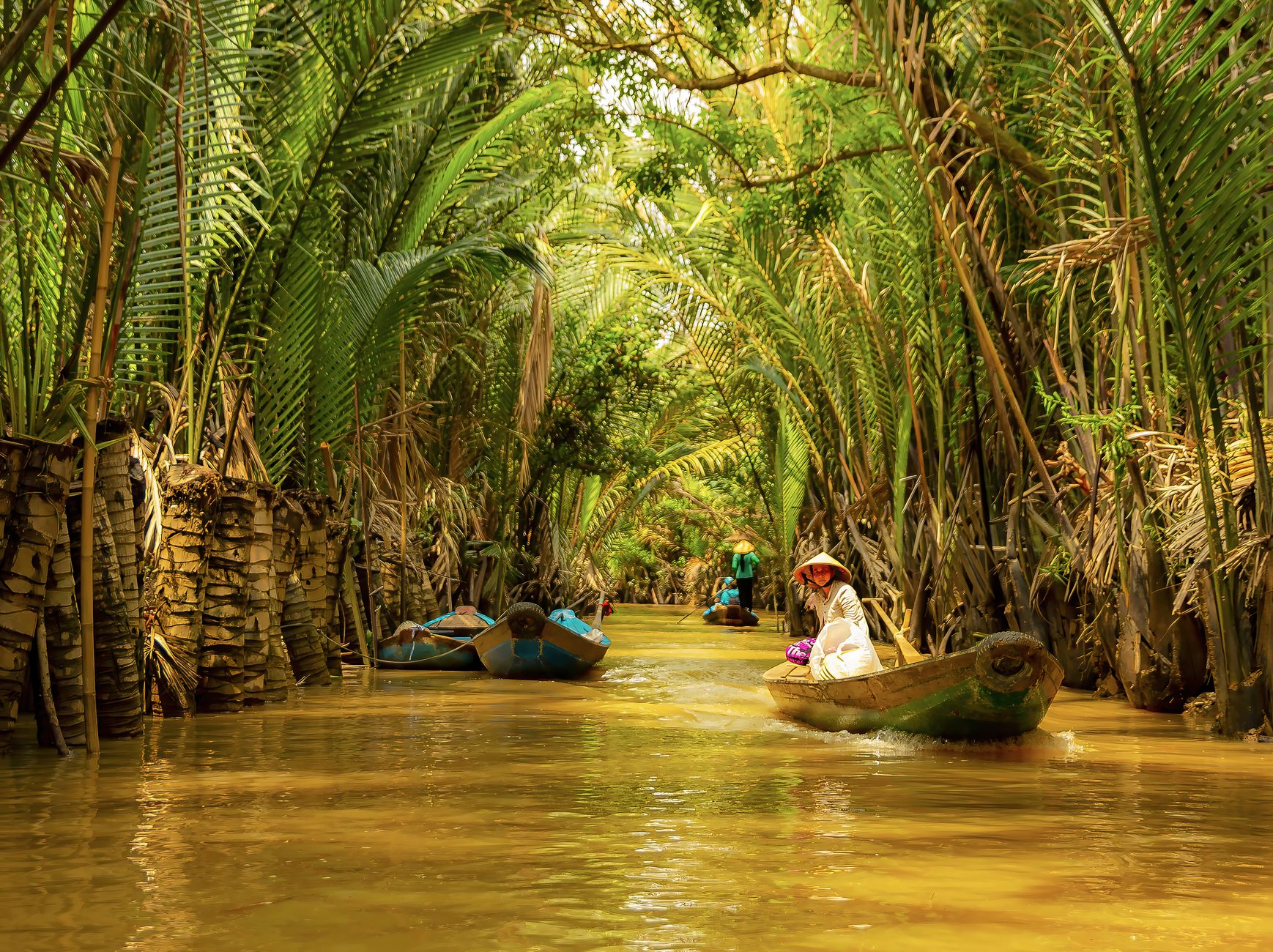
Bai Bien Nha Mat sits about 10 km southeast of Ca Mau city center, where the Mekong Delta (메콩 델타 / 湄公河三角洲 / メコンデルタ) finally runs out of land and meets the sea. It's not a white-sand postcard beach — the water is brown, the shoreline is silty, and the whole scene feels more like a working coast than a resort strip. That's exactly the point.
What It Is
Bai Bien Nha Mat is Ca Mau province's most accessible public beach, historically part of Bac Lieu province before administrative redistricting folded the area into greater Ca Mau. The name "Nha Mat" (literally "cool house") traces back to French colonial times, when officials built rest houses along this stretch to escape the delta heat. The beach runs along a narrow band of coastline where mangrove-lined channels open up to the East Sea.
Don't come expecting Phu Quoc or Mui Ne (무이네 / 美奈 / ムイネー). The water here is shallow and murky — typical for this part of the delta where rivers carry sediment out to sea. What you get instead is a genuinely local scene: families grilling seafood under casuarina trees, kids splashing in the shallows, and a long concrete promenade that fills up on weekends and stays mostly empty on weekdays.
Why Travelers Go
Most visitors to Ca Mau are heading to Dat Mui — the southernmost tip of Vietnam — and Bai Bien Nha Mat makes a logical half-day stop on the way through. It's one of the few places in the deep Mekong Delta where you can actually stand on a beach and look out at open water rather than endless rice paddies and fish ponds.
For food travelers, the real draw is the seafood. Ca Mau's coastline produces some of the cheapest and freshest shrimp, crab, and shellfish in the country. The restaurants lining the beach road serve it straight off the boats, and prices are noticeably lower than what you'd pay in Saigon or even Can Tho.
Best Time to Visit
The dry season — roughly November through April — is your best window. Skies are clearer, humidity drops slightly, and the coastal road stays in better shape. December to February is the sweet spot: cooler temperatures (by delta standards, so still around 26-28°C) and minimal rain.
Avoid June through September if you can. Heavy afternoon downpours turn the beach area soggy, and the sea gets rougher. Weekday mornings are always quieter than weekends regardless of season.
How to Get There
From Can Tho, the nearest major hub, it's about 180 km and roughly 3.5-4 hours by car or motorbike via National Route 1A south through Soc Trang and Bac Lieu. Buses from Can Tho to Ca Mau city run frequently — Phuong Trang (FUTA) and Kumho Samco both operate the route, with tickets around 120,000-150,000 VND for a reclining seat.
From Ca Mau city center, Bai Bien Nha Mat is a 20-minute motorbike ride heading southeast on Provincial Road 32. A Grab bike costs around 40,000-60,000 VND. If you're renting a motorbike in town (100,000-150,000 VND/day is standard), the road is flat and easy — classic delta riding with zero hills and shrimp ponds on both sides.
Flights from Saigon to Ca Mau (Ca Mau Airport) take about an hour and run daily on Vietnam Airlines and VASCO. From the airport, Nha Mat is roughly 8 km.

Photo by Vietnam Tri Duong Photographer on Pexels
What to Do
Walk the Promenade
The concrete walkway stretching along the beach is the main attraction. It's about 2 km long, lined with benches and the occasional seafood stall. Late afternoon is the best time — the light softens, the heat breaks, and locals come out in force. It's a good place to just sit and watch delta life happen.
Eat Seafood at the Beach Restaurants
A cluster of open-air restaurants sits right along the beach road. Order "ghe" (swimming crab) steamed with beer or grilled with salt and chili — Ca Mau crabs are famous across the south and cost roughly 200,000-350,000 VND per kilogram here, depending on size and season. Blood cockles ("so huyet") boiled and dipped in lime-pepper-salt are another local staple, usually around 60,000-80,000 VND a plate.
Visit the Nha Mat Park Area
The small park behind the beach has a few monuments and shaded walking paths. It's not spectacular, but it's pleasant enough for a morning stroll before the heat kicks in. On weekends, local vendors set up selling coconut juice, grilled corn, and "banh trang nuong" (grilled rice paper with egg and toppings).
Hire a Boat into the Mangroves
Small boats near the beach can take you into the mangrove channels that flank the coastline. A 45-minute to one-hour trip typically runs 150,000-250,000 VND for the boat (not per person). You'll see shrimp farms, fishing operations, and the dense mangrove forests that define Ca Mau's landscape. This connects well with a longer day trip out to the Mui Ca Mau National Park if you have the time.
Try the Local Coffee Scene
Ca Mau town has a surprisingly solid cafe culture. Back in town after the beach, grab a "ca phe sua da" at one of the local spots along Tran Hung Dao street. It's thick, sweet, and strong — standard southern style. A glass runs 15,000-25,000 VND.
Where to Eat Nearby
Beyond the beach strip, Ca Mau city has solid "hu tieu" — the southern noodle soup that rivals "pho" as the delta's breakfast of choice. Hu tieu in Ca Mau tends to come with pork, shrimp, and a clear broth that's lighter than the Saigon versions. Look for shops along Ly Bon street in the morning. A bowl costs 30,000-40,000 VND.
For something heavier, seek out "lau mam" — a fermented fish hotpot loaded with vegetables, catfish, shrimp, and eggplant. It's a Mekong Delta specialty and Ca Mau does it well. Expect to pay 200,000-300,000 VND for a pot that feeds two.
Where to Stay
Ca Mau city is your base — there's virtually no accommodation at the beach itself. Budget guesthouses around the city center run 200,000-350,000 VND per night. Mid-range hotels with air conditioning, hot water, and decent wifi cost 400,000-700,000 VND. The Muong Thanh chain has a property in Ca Mau that's the most reliable option at around 600,000-900,000 VND.
Booking.com and Agoda both list Ca Mau properties, though selection is limited compared to Can Tho or Saigon.

Photo by Đạt Nguyễn on Pexels
Practical Tips Locals Would Tell You
- Bring sunscreen and a hat. There's almost no natural shade on the beach itself, and the delta sun hits hard even on hazy days.
- The beach is better for walking and eating than swimming. Locals wade in the shallows, but the water isn't clear and the bottom is muddy.
- Carry cash. Card acceptance outside the city's hotels is basically nonexistent.
- If you're combining Nha Mat with Dat Mui, arrange transport the day before. Boats to the southern tip book up during holidays, especially around Tet.
- Mosquitoes pick up at dusk near the mangroves. Bring repellent.
Common Mistakes to Avoid
Don't expect a beach day in the Phu Quoc sense — you'll be disappointed. Come for the atmosphere, the seafood, and the novelty of standing on Vietnam's southern edge. Don't skip the seafood restaurants in favor of bringing packed food; the whole point is eating what comes off the boats. And don't try to day-trip from Saigon — Ca Mau is deep in the delta, and rushing it defeats the purpose. Give yourself at least two nights in the area to do it properly.
Practical Notes
Bai Bien Nha Mat works best as part of a broader Mekong Delta loop — Can Tho for the floating markets, Soc Trang for Khmer pagodas, Ca Mau for the mangroves and coastline. It's not a destination you'd fly across the country for, but if you're already in the deep south, it's a genuine slice of delta life that most travelers never see.
Last updated · May 29, 2026 · independently researched, never sponsored.