What it is
Quang Truong Hung Vuong sits at the center of Ca Mau city, the capital of Ca Mau province — the southernmost point of mainland Vietnam (베트남 / 越南 / ベトナム). It's a large public square named after the Hung Kings, the semi-mythical founders honored during the annual Hung Kings Festival across the country. The square functions as the city's main civic gathering space: part park, part plaza, part evening hangout for locals who come to walk laps, let kids run around, and buy snacks from the vendors who set up along the edges after dark.
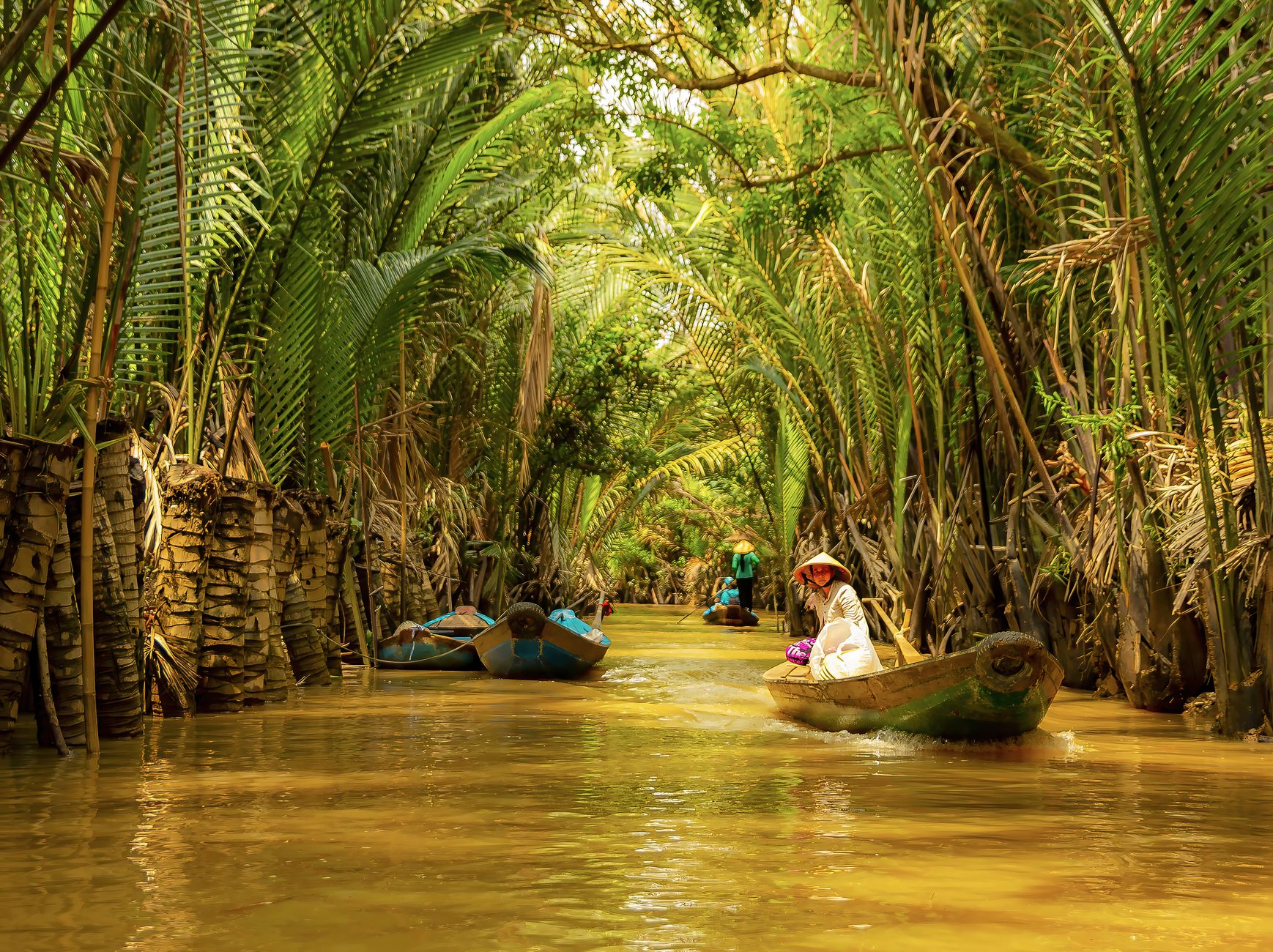
Ca Mau itself is not a city most travelers linger in. It's the jumping-off point for the Dat Mui mangrove forests at the country's southern cape, and the Mekong Delta (메콩 델타 / 湄公河三角洲 / メコンデルタ)'s least-touristed provincial capital. But Hung Vuong Square is where you'll get a feel for Ca Mau as a living town rather than just a transit stop. The square was renovated and expanded in recent years, with clean pathways, a large open plaza area, decorative lighting, and a central monument. It's not grand on the scale of Saigon's public spaces, but for a small delta city, it's well-kept and genuinely pleasant.
Why travelers go
Most visitors to Ca Mau are passing through on their way to or from the southernmost tip, or exploring the less-traveled corners of the Mekong Delta after spending time in Can Tho or other better-known spots. Hung Vuong Square is worth your time for a few reasons:
- It's the social center of the city. If you want to understand Ca Mau beyond its mangroves, this is where daily life plays out.
- The evening atmosphere is genuinely enjoyable — locals strolling, street food carts appearing, families out in numbers.
- It's a practical landmark. Hotels, restaurants, the market, and transport connections are all within walking distance of the square.
Don't come expecting a major attraction. Come expecting a good place to sit, eat something grilled on a stick, and watch a delta town do its thing.
Best time to visit
Ca Mau has two seasons: wet and dry. The dry season runs roughly from December through April, and that's when you want to be here. Temperatures hover around 26-33°C, humidity is lower (by Mekong Delta standards, which still means sticky), and the roads to Dat Mui and surrounding areas are easier to navigate.
The wet season (May through November) brings heavy afternoon downpours. The square itself drains fine, but surrounding streets can flood briefly, and boat trips to the mangroves are less reliable. If you're at the square in the evening during dry season, you'll catch it at its liveliest — the heat drops enough after 5 PM that the whole neighborhood seems to migrate outdoors.
How to get there
From Can Tho — the nearest major hub — Ca Mau is about 180 km southwest. You have a few options:
- Bus: Direct buses from Can Tho's bus station run frequently. The trip takes around 3.5-4 hours and costs 120,000-150,000 VND. Phuong Trang (Futa) is the most reliable operator on this route.
- Private car/taxi: Faster if you're splitting costs, around 2.5-3 hours. A one-way Grab or private car runs roughly 1,200,000-1,500,000 VND.
- Motorbike: Doable and scenic if you're comfortable on delta roads. The route passes through Soc Trang and Bac Lieu, both worth a stop.
From Saigon, it's about 350 km — a solid 7-8 hour bus ride (around 200,000-250,000 VND) or a short domestic flight to Ca Mau airport, which has limited service from Tan Son Nhat. Flights, when available, run about 800,000-1,200,000 VND one-way.
Once in Ca Mau city, Hung Vuong Square is central. From the bus station, it's a 10-minute taxi ride (around 30,000-40,000 VND) or a straightforward 2 km walk east along the main roads.

Photo by VINVIVU ® on Pexels
What to do
Walk the square in the evening
This is the main event. Show up around 5:30-6 PM and join the locals doing laps. The lighting comes on, vendors appear, and the energy shifts from sleepy afternoon to something genuinely social. You'll see badminton games, groups doing aerobics to loudspeakers, and kids on rented electric cars.
Visit the nearby Ca Mau Market
A few blocks from the square, the city's central market is a proper delta trading market — not a tourist market. Expect dried fish, shrimp paste, seasonal fruit, and household goods. Mornings are best, before 9 AM, when the seafood section is at full volume.
Catch a sunset from the riverside
The Ca Mau River runs close to the square area. Walk down toward the riverbank for a low-key sunset view over the water. It's flat delta landscape in every direction — no drama, just wide sky and slow boats.
Day-trip to Dat Mui
From Ca Mau city, arrange a boat or car-and-boat combination to Dat Mui, the actual southernmost point. Most guesthouses near the square can help book this. The mangrove forests along the way are dense and worth the trip. Budget around 300,000-500,000 VND per person for a group tour, more for a private boat.
Photograph the Hung Vuong monument
The central monument on the square is a local landmark. It's not architecturally remarkable, but it photographs well at dusk with the lighting, and it gives you a reference point for the city.
Where to eat nearby
Ca Mau's food identity leans heavily on seafood and Mekong Delta staples. Two things to seek out near the square:
- "Banh canh" with crab: Ca Mau's version of this thick noodle soup uses local mud crab, and it's richer and more intensely flavored than what you'll find further north in the delta. Several small shops within a few blocks of the square serve it for 35,000-50,000 VND a bowl.
- Grilled shrimp paste on sugarcane: Street vendors near the square sell "chao tom" — shrimp paste wrapped around sugarcane sticks and grilled over charcoal. It's a snack, not a meal, but it's good and costs about 15,000-20,000 VND per stick.
For a sit-down meal, look for local "com tam" restaurants along Ly Thuong Kiet or Tran Hung Dao streets, both within walking distance.
Where to stay
Ca Mau has a limited but functional hotel scene, mostly clustered near the square:
- Budget: Basic guesthouses and mini-hotels run 200,000-350,000 VND per night. Clean enough, usually with air conditioning and hot water. Don't expect frills.
- Mid-range: A few newer hotels in the 500,000-800,000 VND range offer better rooms, breakfast included, and helpful front desk staff who can arrange transport to Dat Mui.
- Top-end (local scale): The best hotel in town will run you about 1,000,000-1,200,000 VND. It's comfortable but not luxury by Saigon or Da Nang standards.
Book directly or walk in — Ca Mau doesn't sell out unless there's a local festival.

Photo by HIEU NGUYEN on Pexels
Practical tips locals would tell you
- Bring mosquito repellent. The delta breeds them generously, and evenings on the square are prime time.
- Cash is king in Ca Mau. ATMs exist but card acceptance is spotty outside hotels.
- If you're heading to Dat Mui, go early. The boat ride is better in the morning before afternoon heat and potential rain.
- Vietnamese coffee is excellent here — look for small sidewalk "ca phe" shops near the market rather than chains. A "ca phe sua da" runs 15,000-20,000 VND.
Common mistakes to avoid
- Skipping Ca Mau entirely: Many delta itineraries stop at Can Tho. Ca Mau is further and less polished, but the mangroves and the end-of-the-road atmosphere make it worthwhile.
- Expecting nightlife: The square is the nightlife. Ca Mau shuts down early. Enjoy the evening atmosphere and get to bed — you'll want an early start for Dat Mui anyway.
- Not negotiating boat prices: Always agree on a price before boarding any boat to Dat Mui or the mangroves. Get it in writing or on your phone if possible.
Practical notes
Hung Vuong Square is free and open 24 hours, though it only comes alive after sundown. One night in Ca Mau is enough for most travelers — arrive by afternoon, enjoy the square in the evening, and head to Dat Mui the next morning. If you're doing a deeper Mekong Delta loop from Can Tho through Bac Lieu and Ca Mau, budget two to three days for the whole stretch.
Last updated · May 29, 2026 · independently researched, never sponsored.