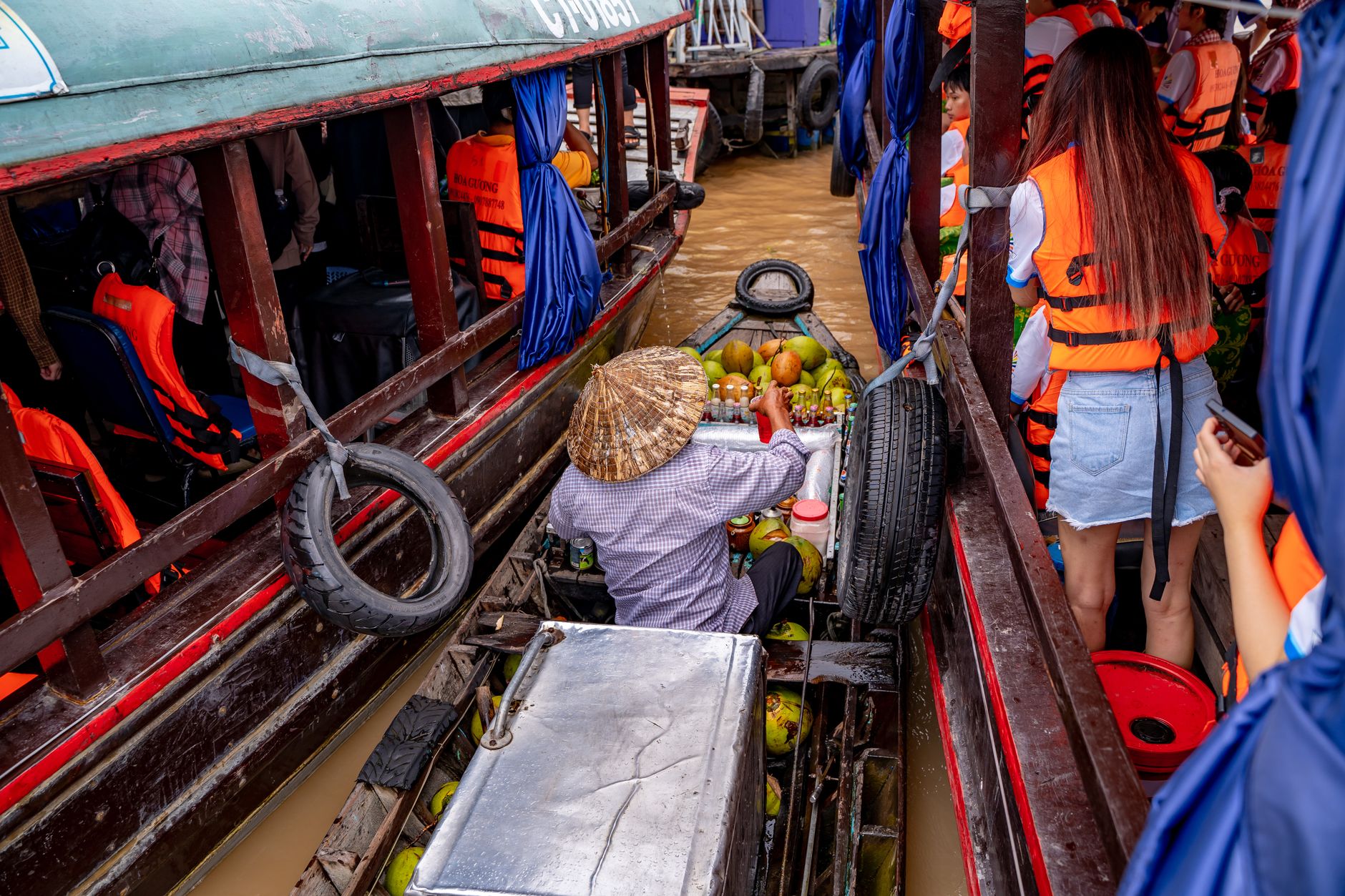
Dong Thap's Food Identity
Dong Thap province sits deep in the Mekong Delta (메콩 델타 / 湄公河三角洲 / メコンデルタ), bordered by Cambodia, and that geography shapes everything on the plate. You'll eat a lot of freshwater fish here—catfish, snakehead, and the small fish that go into the region's sauces and soups. Rice paddies and fruit orchards (dragon fruit, pomelo, mango) mean the produce is cheap and seasonal. The food is less refined than what you find in Hanoi or Saigon—it's direct, salty, often spicy, and designed to work hard in heat and humidity.
Travelers often skip Dong Thap entirely on their Mekong itineraries, which is a mistake. The food is worth a detour, and the cost is among the lowest in the country: a full meal with drink runs 40,000–80,000 VND outside tourist zones.
Signature Dishes
Hu Tieu Dong Thap
"Hu tieu" is a clear noodle soup found across the south, but Dong Thap's version is distinctive: thin rice-flour noodles in a pork or fish-based broth, topped with pork liver, shrimp, squid, and crispy shallots. The broth is the point—it's light, salty, and takes hours to build. Most bowls come with a small plate of fresh herbs (mint, cilantro, saw-leaf coriander) and a lime wedge on the side.
Find it anywhere in Cao Lanh (the capital) or Hong Ngu. The best version is often at streetside stalls that open around 6 a.m. and run out by 9 a.m. Cost: 35,000–50,000 VND. Expect a line of locals—that's the sign.
Cai Luong (Fish Cake Soup)
A pale, savory broth loaded with hand-pounded fish cakes, pork bone, and soft rice noodles. The fish cakes are the labor—they're made fresh from snakehead or catfish, pounded by hand, and poached in the broth. The result tastes less like "cake" and more like a delicate, bouncy fish mousse. It's gentle food, often eaten at breakfast or as a light lunch.
This is not a tourist dish. You'll find it at wet markets or at family-run stalls in residential neighborhoods, not in the Old Quarter (Dong Thap has no major tourist zone). Price: 25,000–40,000 VND.
Banh Canh
"Banh canh" is tapioca-flour dough dumplings in broth. Dong Thap's version leans heavily into catfish—the broth is made from catfish stock, and the bowl comes topped with shredded catfish, pork, and fried shallots. It's thick, starchy, warming, and best eaten in the early morning when it's sold fresh.
Find it at markets or early-morning street food zones in Cao Lanh and Sa Dec. Cost: 30,000–45,000 VND.
Cua Rang Me (Stir-Fried Crab with Tamarind)
When in season (summer, early fall), Mekong mud crabs are boiled or stir-fried with tamarind, causing the shells to turn reddish and the meat to absorb a sour, slightly sweet glaze. It's one of the few dishes here that feels luxurious—crabs are expensive by Dong Thap standards (100,000–200,000 VND per portion). Order at a seafood restaurant or at better pho shops that keep a live tank.

Photo by Trần Phan Phạm Lê on Pexels
Market Food & Street Eating
Cao Lanh Central Market (Cho Lon Cao Lanh)
The main wet market in Cao Lanh sits in the center of town (District 1). Early morning is the time: arrive by 7 a.m. to see vendors setting up, and by 10 a.m. most of the fresh stock is sold. You'll find stalls selling pre-made breakfast: hu tieu, pho, banh canh (반깐 / 粗米粉汤 / バインカイン), and smaller items like "banh mi" (though the Dong Thap version is more plain than the Saigon showstopper).
The market is chaotic and not tourist-coded—no English, no menus, often no prices written. Bring small bills and point at what you want. A full breakfast runs 30,000–60,000 VND.
Mam Tom (Fermented Shrimp Paste)
Dong Thap is famous for "mam tom"—a pungent, fermented paste made from tiny river shrimp and salt. It smells aggressively funky (like gym socks mixed with low tide) but tastes rich and salty. Locals eat it as a dip for fresh vegetables, or mixed into rice or soups for depth. You can buy jars at the market for 30,000–80,000 VND depending on size and maker.
If you want to try it without committing to a jar: order "com tam mam tom" (broken-rice with shrimp paste) at a com tam stall. The paste is mixed into the rice in a small amount—enough to taste the funk without overwhelming.
Fruit & Orchards
Dong Thap is the dragon fruit capital of Vietnam. From May to October, vendors sell whole dragon fruit (white or hot pink flesh) at markets for 10,000–20,000 VND each. The season peaks June–July. Pomelos are fall/winter, mangoes are spring. If you stay more than a day, ask a hotel staff member if any local orchards offer farm tours—some allow visitors to pick and eat fruit on-site, and costs are minimal (50,000–100,000 VND per person).

Photo by Kawê Rodrigues on Pexels
Where Locals Eat vs Tourist Traps
Where Locals Eat
- Early-morning pho and hu tieu stalls in residential streets or at market edges. These operate 6–9 a.m., serve locals, and close when food runs out. Quality is high, cost is low, English is zero.
- Com tam shops (broken-rice joints) scattered throughout Cao Lanh and Sa Dec. These are open lunch and dinner, cheap (30,000–50,000 VND), and reliable. Look for places with a line at 11:30 a.m.—that's lunch rush.
- Family restaurants in District 1 and District 3 of Cao Lanh with no signage in English. Menus are often in Vietnamese only. Ask a local or use a translation app on a photo of the menu.
Tourist Traps
- Waterfront seafood restaurants aimed at tour groups (you'll see them near boat docks). They mark up fish heavily and serve to-order seafood that's often less fresh than what you'd get at a mid-range local spot.
- "Vietnamese cooking class" packages sold at hotels. Dong Thap has none; if offered, it's a markup scheme. Instead, ask your hotel to direct you to a local market vendor or a family willing to cook with you—these are free or 50,000–100,000 VND.
- Cafes in Cao Lanh center with English menus and air conditioning. Food is fine but marked up 2–3x compared to street stalls.
Practical Notes
Getting there: Cao Lanh is 160 km southwest of Saigon by road (2.5–3 hours by car or coach). Sa Dec is 35 km southeast of Cao Lanh. Both towns have basic bus connections from Saigon (Chau Doc, Ben Luc, or Mien Tay bus stations). No train.
When to go: October–April is cooler and drier. May–September is hot, humid, and flooding season (not ideal for travel). The food scene doesn't change much seasonally, except for crabs and certain fruits.
Money: Most street stalls and markets take cash only. ATMs are plentiful in Cao Lanh but rare in smaller towns. Restaurants that cater to groups may accept card.
Language: English is minimal. A translation app on your phone is useful. Locals are patient with pointing.
How long to stay: Two days in Cao Lanh is enough to eat well and explore the market. Combine it with a boat tour of Mekong floating gardens if you want a full Mekong Delta experience.
Last updated · May 29, 2026 · independently researched, never sponsored.