What Cua Lan Is and Why It Matters
Cua Lan sits in Hung Yen province, about 60 km southeast of Hanoi in the flat, green heart of the Red River Delta. The name refers to a river gate — a point where waterways branch or meet — and that geography has shaped the area for centuries. This part of Hung Yen was historically linked to Thai Binh province before administrative boundaries shifted, and you'll still hear older residents reference that connection.
Hung Yen itself doesn't appear on most tourist radars, which is part of the appeal. The province is famous across Vietnam (베트남 / 越南 / ベトナム) for its longan fruit ("nhan long"), its traditional villages, and a pace of life that Hanoi lost decades ago. Cua Lan is a sliver of that world — river confluences, dyke roads, and flatland agriculture stretching to the horizon.
Why Travelers Go
You come here to get off the bus route. Cua Lan and the surrounding Hung Yen countryside offer what the Red River Delta does best: a landscape shaped entirely by water and rice, punctuated by village pagodas and market towns that haven't been renovated for Instagram.
If you've spent time in Hanoi and want a day or overnight trip that isn't Ninh Binh (닌빈 / 宁平 / ニンビン) or Ha Long Bay, Hung Yen is a genuine alternative. It's closer, cheaper, and almost entirely free of other foreign travelers. Cua Lan's riverfront location gives it a slightly different character from inland Hung Yen — there's more activity on the water, more fishing culture, and the light over the river in the late afternoon is worth the trip alone.
Best Time to Visit
The sweet spot is July through September, when the longan harvest is on. Orchards around Hung Yen are heavy with fruit, roadside stalls sell fresh longan by the kilogram for 25,000–40,000 VND, and the air smells like it. The Hung Yen Longan Festival usually falls in late July or August.
Outside harvest season, October to December is comfortable — cooler, dry, and the rice paddies cycle between green and gold. Avoid March and April if you dislike drizzle; the delta gets a persistent grey mist that can last for weeks.
How to Get There from Hanoi
Hung Yen city is the main hub. From Hanoi, you have two practical options:
- Bus: Catch a bus from Giap Bat or Nuoc Ngam station heading to Hung Yen city. The ride takes about 1.5–2 hours and costs 60,000–80,000 VND. From Hung Yen city, you'll need a local xe om (motorbike taxi) or grab bike to reach the Cua Lan area — roughly 10–15 km depending on your exact destination, around 30,000–50,000 VND.
- Motorbike from Hanoi: The most flexible option. Take National Highway 5 or the newer expressway toward Hai Duong, then cut south on provincial roads toward Hung Yen. Total distance is about 60–65 km; allow 1.5 hours with stops. The last stretch follows dyke roads along the river — narrow, scenic, and lightly trafficked.
There's no train station in Hung Yen city that's useful for this trip. A private car or taxi from Hanoi runs about 600,000–800,000 VND one way.

Photo by Flint Huynh on Pexels
What to Do
Walk the Dyke Roads
The raised dyke paths along the river near Cua Lan are the best way to see the area. They sit above the floodplain, giving you wide views over fish ponds, rice fields, and the river itself. Early morning is ideal — farmers are out, the light is low, and you'll have the path mostly to yourself.
Visit a Longan Orchard
Hung Yen longan is considered the best in Vietnam. If you're here during harvest season, stop at any orchard with an open gate — most farmers are happy to let you look around and will sell fruit directly. Outside season, the orchards are still pleasant for a walk under the canopy.
Explore Pho Hien
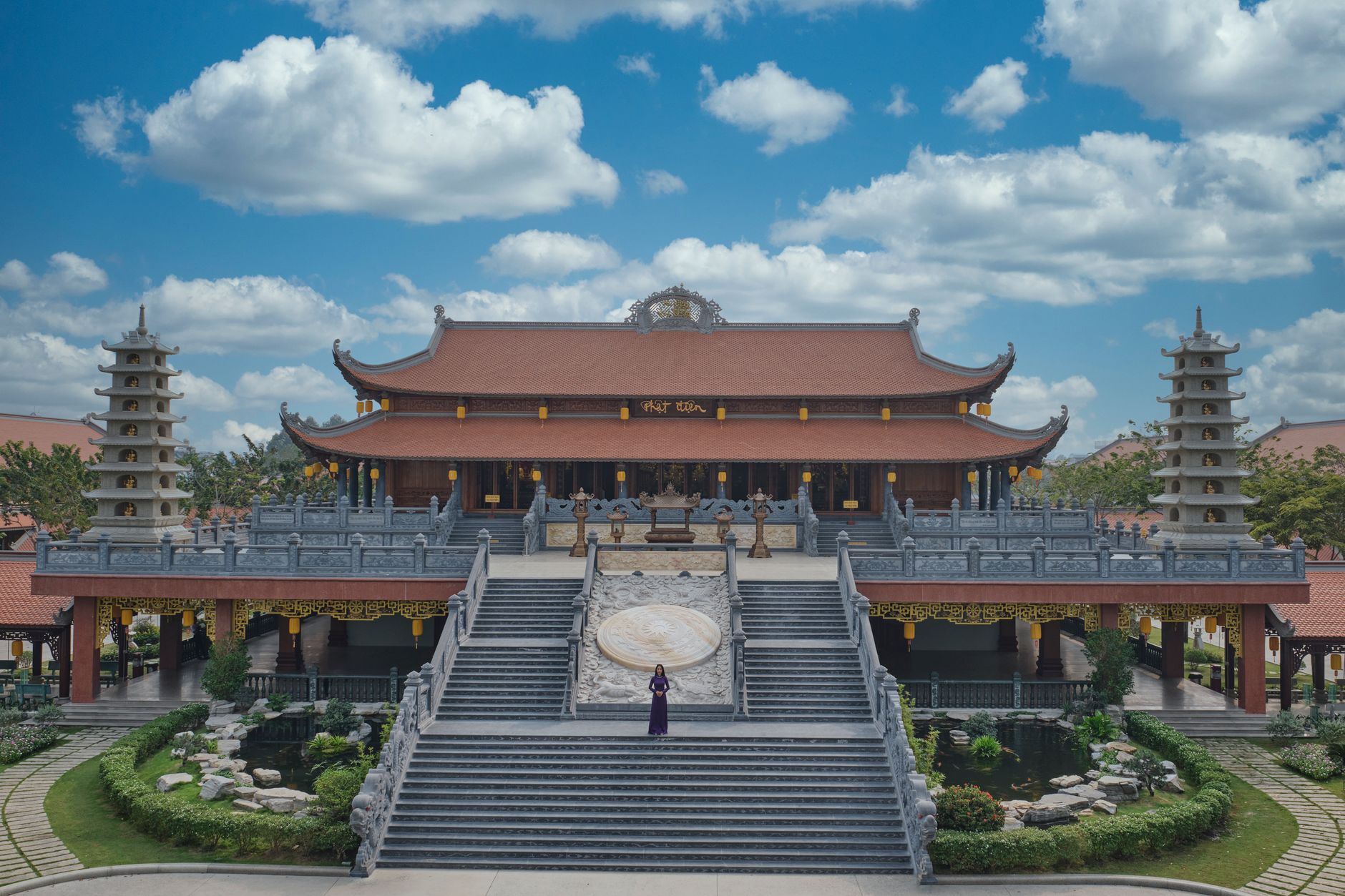
About 10 km from Cua Lan, the old trading port of Pho Hien was one of the most important commercial centers in northern Vietnam during the 16th and 17th centuries. Japanese, Chinese, Dutch, and Portuguese merchants traded here. Today it's a quiet town with a handful of well-preserved temples and communal houses. The Pho Hien area has several pagodas worth entering — Chuong Pagoda and Hien Pagoda are the most notable.
River Watching
This sounds like non-advice, but the river traffic near Cua Lan is genuinely interesting. Sand barges, small fishing boats, and cargo vessels pass through regularly. Find a spot on the dyke, sit down with a thermos of "lotus tea" if you can get one, and watch the water. It's a different rhythm from anything you'll find in the cities.
Catch a Local Market Morning
Village markets in Hung Yen typically run from 5:30 to about 8:00 AM. They sell produce, river fish, tofu, and "banh cuon" — steamed rice rolls made fresh on the spot. These markets aren't set up for tourists, so just observe, point, and pay. Prices are low.
Where to Eat Nearby
Hung Yen's signature dish is "banh cuon" — thin, silky steamed rice sheets filled with minced pork and wood ear mushroom, served with fried shallots and dipping sauce. It's eaten at breakfast, and the versions here are noticeably thinner and more delicate than what you'll find in Hanoi.
Also look for "bun thang" — a refined Hanoi-origin noodle soup with shredded chicken, egg, and pork — which shows up in Hung Yen with slight local variations. River fish dishes (ca kho, ca chien) are common at roadside com binh dan (everyday rice shops) and cost 35,000–50,000 VND for a full plate with rice.
Where to Stay
Hung Yen city has a few basic hotels and guesthouses (nha nghi) in the 200,000–400,000 VND range per night. Don't expect boutique anything — rooms are clean, air-conditioned, and functional. A couple of newer hotels near the city center push toward 500,000–700,000 VND with slightly better furnishings.
There's no accommodation directly in the Cua Lan area itself. Most travelers base in Hung Yen city and ride out. If you're on a motorbike, you could also loop back to Hanoi the same day.

Photo by Claire Dao on Pexels
Practical Tips Locals Would Tell You
- Bring cash. Card payment is rare outside Hung Yen city center.
- Sunscreen and a hat are non-negotiable on the delta — there's zero shade on dyke roads.
- If you're motorbike-riding, fill up in Hung Yen city. Fuel stops thin out quickly in the countryside.
- Learn the phrase "bao nhieu" (how much?) — it covers 80% of market interactions.
- Mosquito repellent for evening river-side sitting. The delta breeds them enthusiastically.
Common Mistakes to Avoid
- Rushing it as a half-day trip. The area rewards slow mornings and long afternoons. If possible, stay overnight in Hung Yen city and give yourself two unhurried half-days.
- Expecting English signage. There is essentially none. Download Vietnamese on Google Translate offline before you leave Hanoi.
- Skipping Pho Hien. Some travelers come just for the river and miss the historical port area, which gives the whole visit more context.
- Arriving after 9 AM for markets. They're done by then. Set an alarm.
Practical Notes
Cua Lan and Hung Yen province work best as a quiet counterpoint to a Hanoi-based trip — close enough for a day ride, different enough to feel like another country. Pair it with a stop in Ninh Binh or a few days in Hanoi exploring the Old Quarter, and you've got a north Vietnam itinerary that actually varies in texture. Just don't expect polish. That's the point.
Last updated · May 29, 2026 · independently researched, never sponsored.