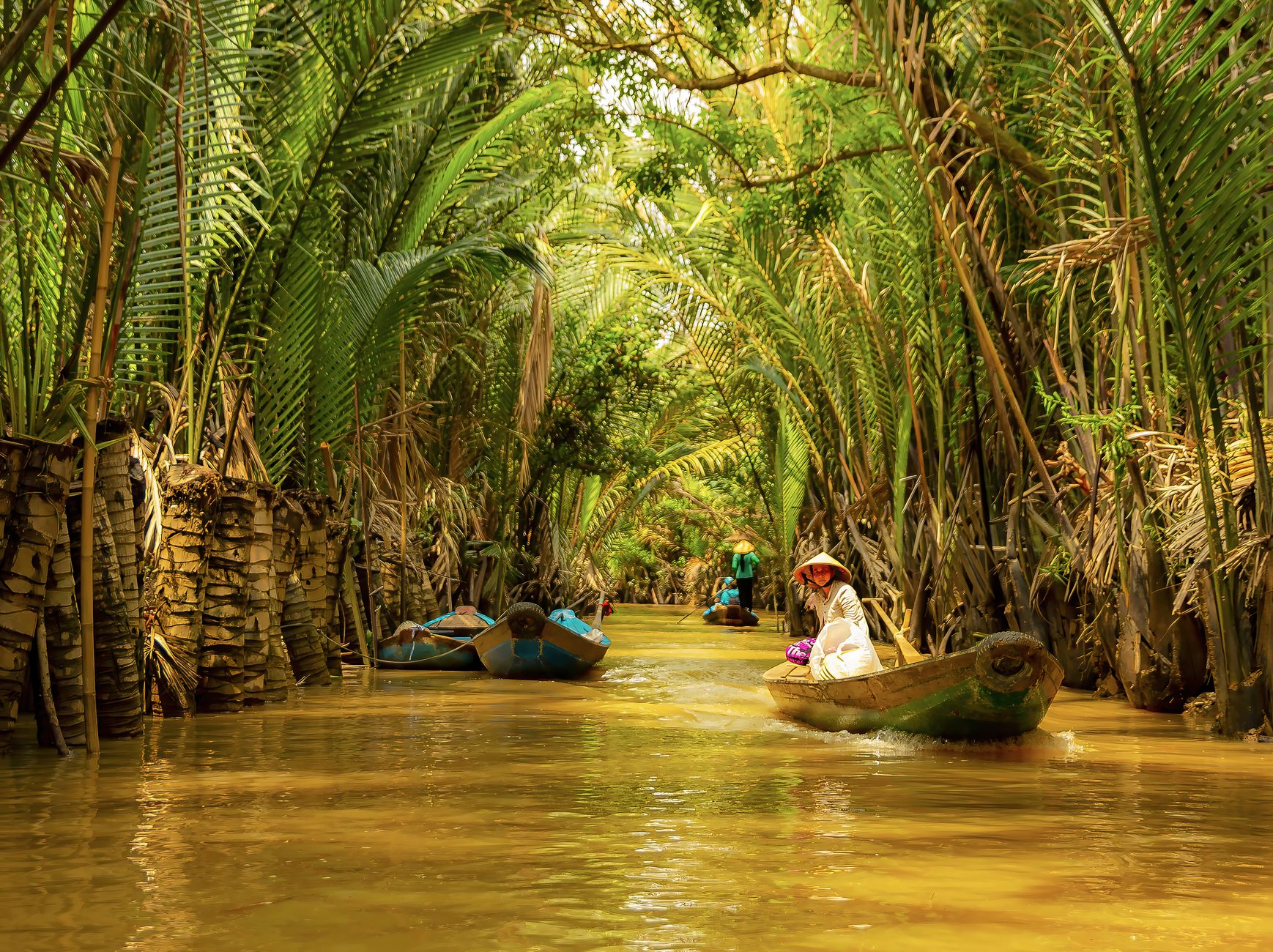
U Minh Ha National Park sits at the southern tip of Vietnam, about 30 km from Ca Mau city center. It's one of two U Minh reserves (the other, U Minh Thuong, lies further north in Kien Giang province), and together they protect what remains of the vast peat swamp forests that once blanketed this corner of the Mekong Delta (메콩 델타 / 湄公河三角洲 / メコンデルタ). If you've made it all the way down to Ca Mau, this park is the reason to stay an extra day.
What it is
U Minh Ha covers roughly 8,500 hectares of "tram" — melaleuca cajuputi — forest growing on a peat layer that can be several meters deep. The ecosystem is unusual: freshwater swamp forest on top of waterlogged peat, home to dozens of bird species, wild boar, otters, snakes (plenty of snakes), and freshwater fish. The park was designated a national park in 2006, though the forest itself has been loosely protected since the 1980s after decades of wartime defoliation and post-war land clearing nearly wiped it out.
The melaleuca forest here isn't dramatic in a mountain-and-waterfall sense. It's flat, dense, and quiet. The appeal is the strangeness of it — paddling through flooded forest where the water is the color of strong tea, stained by tannins from decomposing peat. The air smells like eucalyptus. It's one of the few places in Vietnam (베트남 / 越南 / ベトナム)'s deep south that still feels genuinely remote.
Why travelers go
Most foreign visitors who reach Ca Mau are already committed to seeing the southernmost point of Vietnam at Dat Mui (Cape Ca Mau). U Minh Ha is the natural second stop, and honestly, it's the more interesting one. Birders come for the waterbird colonies — herons, cormorants, storks — especially during breeding season. Others come for the novelty of canoeing through a flooded forest. A few come because they're ticking off Vietnam's national parks. Whatever the reason, it's rarely crowded. On a weekday you might share the park with a handful of domestic tourists and nobody else.
Best time to visit
The wet season (roughly July to November) is when the forest floods and the park is at its most photogenic. Water levels rise enough that you can paddle small boats deep into the melaleuca stands. This is also when bird colonies are most active. The downside: mosquitoes are fierce, and afternoon downpours are daily.
The dry season (December to April) makes the forest more accessible on foot via elevated walkways and dirt paths, but the water recedes and the fire risk goes up — peat fires have damaged parts of the park in past dry seasons. March and April can be brutally hot.
Sweet spot: September to early November. High water, active birdlife, slightly cooler mornings.

Photo by Duy Nguyen on Pexels
How to get there
From Saigon, the most practical route is a flight to Ca Mau airport (about 1 hour, tickets around 800,000–1,500,000 VND one way on Vietnam Airlines or Bamboo Airways, though schedules are limited). Alternatively, take a bus from Saigon's Mien Tay station — it's a 7–8 hour ride, around 200,000–280,000 VND.
From Ca Mau city, U Minh Ha is about 30 km southwest, reachable by motorbike (45 minutes) or taxi (around 250,000–350,000 VND one way). The road is paved the whole way. If you're renting a motorbike in Ca Mau, the ride is straightforward — head toward Tran Van Thoi district and follow signs for Vuon Quoc Gia U Minh Ha. There's no public bus to the park entrance.
What to do
Canoe through the flooded forest
This is the main event. Park staff operate small wooden boats (or you can rent a kayak-style canoe at the visitor center) that take you through narrow channels under the melaleuca canopy. A guided boat trip runs about 100,000–150,000 VND per person. The water is shallow and calm — no rapids, no drama, just a slow glide through tea-colored water under a ceiling of pale bark and narrow leaves. Trips last 1–2 hours depending on the route.
Walk the elevated boardwalks
A network of raised wooden walkways cuts through drier sections of the forest, passing through areas where you can see the layered peat soil up close. Interpretive signs (mostly in Vietnamese, some with English summaries) explain the ecosystem. The full loop takes about 40 minutes.
Visit the honey harvest areas
U Minh Ha has a long tradition of wild honey harvesting — locals hang wooden boards in the forest to attract bees, then harvest the combs by hand. Some sections of the park demonstrate this practice, and you can buy fresh "mat ong" (wild honey) at the entrance area. A bottle runs 150,000–250,000 VND depending on size. It's thinner and more floral than commercial honey.
Bird watching at dawn
If you stay overnight nearby, arrange an early morning boat trip (before 6:30 AM) to the bird sanctuary zones. Heron and cormorant colonies roost in the melaleuca tops, and the dawn departure — hundreds of birds lifting off the canopy — is genuinely impressive.
Fish with locals
Some boat operators offer a short "fishing experience" using traditional methods — basically dropping a baited line into the swamp channels. You won't catch much, but the guides are entertaining and it's a good excuse to spend more time on the water.
Where to eat nearby
There's no real restaurant scene at the park itself — just a small canteen at the visitor center selling rice plates and drinks. For better food, eat in Ca Mau city before or after your visit.
Ca Mau is known for a few local dishes worth tracking down. "Bun nuoc leo" is the signature — rice noodles in a rich broth made from fermented fish and pork, topped with roast pork and fresh herbs. You'll find it at small shops along Ly Thuong Kiet street. "Lau mam" (fermented fish hotpot) is another Ca Mau staple, best shared with a group. A hotpot for two to three people costs around 150,000–250,000 VND at local restaurants. If you're into seafood, Ca Mau's black tiger shrimp and mud crabs are the real deal — cheaper and fresher than what you'd pay in Saigon.

Photo by Alberto Capparelli on Pexels
Where to stay
Most travelers base themselves in Ca Mau city and visit the park as a day trip. Budget guesthouses in Ca Mau run 200,000–400,000 VND per night. Mid-range hotels (Muong Thanh, Anh Nguyet) go for 500,000–900,000 VND. There's a basic guesthouse near the park entrance for around 300,000 VND if you want to be there at dawn for birding, but don't expect much beyond a bed and a fan.
Practical tips locals would tell you
- Bring insect repellent. The mosquitoes in the wet season are relentless, especially near standing water.
- Wear long sleeves and a hat even if it's hot. The combination of sun on open water and bugs in the shade makes coverage worth the sweat.
- Bring cash. There are no ATMs at the park, and card payments aren't accepted.
- If you want a guided boat with any English, call the park office a day ahead (the visitor center phone number is posted at most Ca Mau hotels). Walk-in guides speak Vietnamese only.
- The park entrance fee is 30,000 VND — trivial, but have small bills ready.
Common mistakes to avoid
Don't try to visit U Minh Ha and Cape Ca Mau (Dat Mui) in the same day unless you're leaving Ca Mau very early. The two sites are in opposite directions from the city, and rushing both means you get a shallow version of each. Give each a half-day minimum.
Don't skip the boat trip. Walking the boardwalks alone is fine, but the flooded forest by canoe is the whole point. If water levels are too low for boats (late dry season), honestly consider postponing.
Don't expect Mekong Delta tourist infrastructure. This isn't Can Tho with its floating markets and polished homestays. Ca Mau province gets far fewer foreign visitors, and English is rare outside hotels. That's part of the appeal — but come prepared.
Last updated · May 29, 2026 · independently researched, never sponsored.