What is banh khot?
"Banh khot" translates roughly to "cake in a mold"—and that's exactly what it is. Unlike "banh xeo" (the larger, folded crepes), banh khot are tiny, crispy-edged rice-flour cups baked in special cast-iron molds, typically 2–3 cm in diameter. A single order is a cluster of 8–12 of these golden nuggets, still warm in their molds.
The batter is made from rice flour mixed with coconut milk, turmeric, and water. As it cooks in the oiled mold, the edges turn golden and crispy while the interior stays tender. A shrimp or two sits on top, and fresh herbs—usually mustard greens—nestle around the batter as it sets.
The turmeric does double duty here. It gives the cups their trademark gold color and adds a faint earthiness that keeps the coconut from tasting too sweet. Some home cooks swap in pumpkin puree for color, but the street vendors in Vung Tau almost always stick to turmeric. If a batch comes out pale or white, the cook skimped—move on to the next cart.
The taste and texture
Bite into one and you get contrast: the crispy, charred edges crunch against a soft, slightly sweet interior. The coconut milk gives banh khot a gentler, richer flavor than banh xeo (반세오 / 越南煎饼 / バインセオ). There's no cheese or meat inside; the shrimp and herbs are toppings, not fillings.
You eat them directly from the mold using a small bamboo or plastic pick (or your fingers, if you're not worried about grease). The traditional way is to load it with mustard greens, dip it in fish sauce with chili and lime, and pop the whole thing in your mouth. Speed matters—they cool fast, and reheated banh khot lose their edge.
The dipping sauce is non-negotiable. On its own, banh khot tastes pleasant but flat—a bit like a coconut rice fritter. The fish sauce ("nuoc mam") with lime and chili wakes everything up: salty, sour, and sharp against the mild sweetness of the batter. If the vendor gives you a small dish of pickled carrot and daikon on the side, pile those on too. The vinegar crunch adds another layer that makes each bite feel complete.
Where banh khot comes from
Banh khot originated in the Mekong Delta (메콩 델타 / 湄公河三角洲 / メコンデルタ), particularly around Ca Mau and Bac Lieu provinces, where coconut is king and shrimp farms dot the landscape. But the snack has spread up the southern coast, and Vung Tau—a fishing and beach town southeast of Saigon—has embraced it as local street food. You'll find banh khot carts clustered near beaches and in the Old Town market areas, especially in late afternoon.
What makes the Vung Tau version distinct is the shrimp. Being a port town, Vung Tau gets same-day catches from the fishing boats that dock near Front Beach. The shrimp on your banh khot are often just hours out of the water—small, sweet, with a snap when you bite through the shell. In Saigon, banh khot vendors sometimes use frozen shrimp or substitute with dried shrimp floss. In Vung Tau, fresh whole shrimp is the standard, and vendors will tell you so unprompted.
You can also find banh khot in parts of Da Lat, where the highland version sometimes swaps shrimp for minced pork or mushroom. And a few stalls in Hoi An serve a cousin that leans closer to "banh xeo" in batter thickness. But for the crispy, shrimp-topped original, Vung Tau is the benchmark.

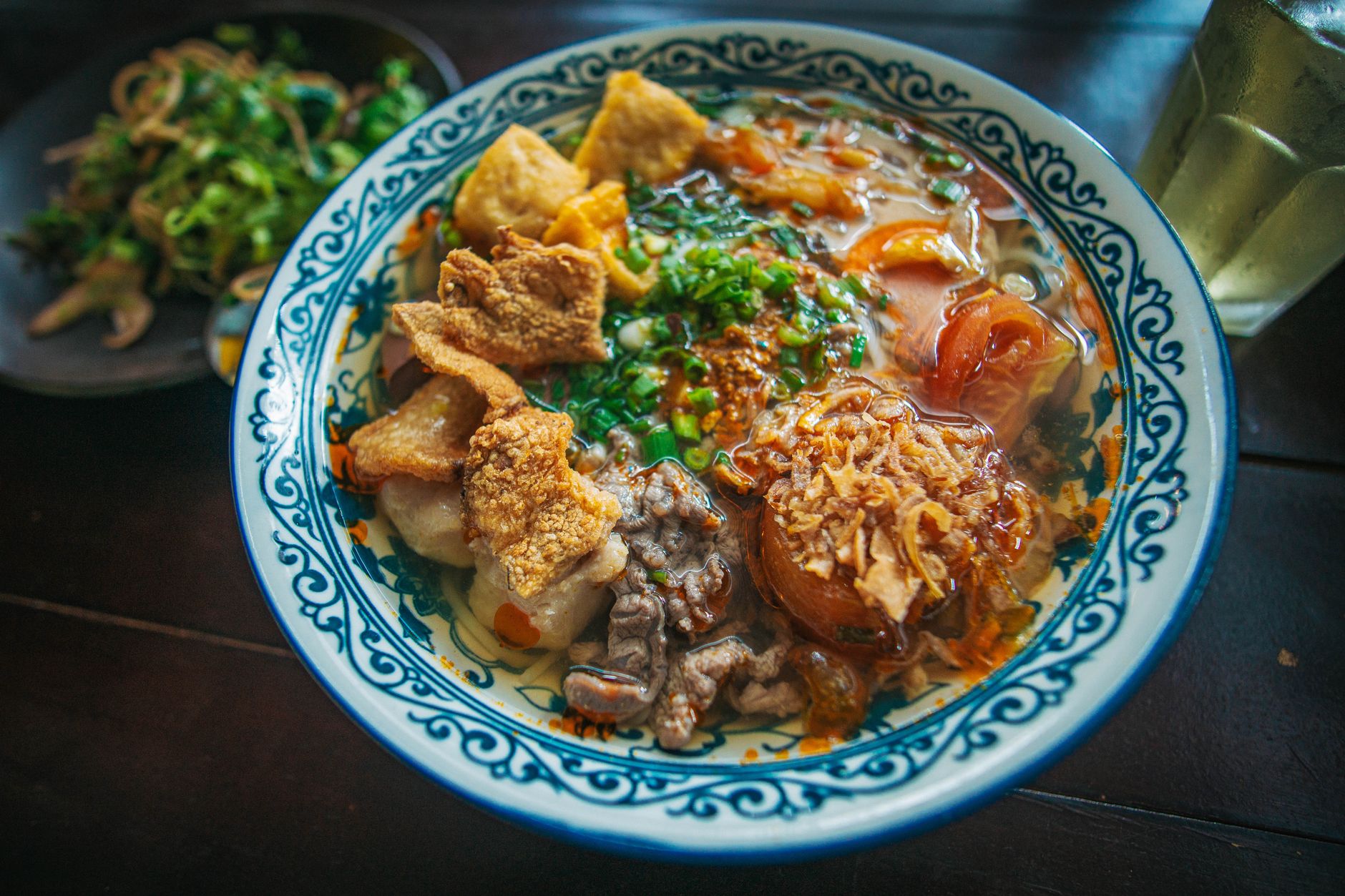
Photo by Pew Nguyen on Pexels
Eating banh khot in Vung Tau
The classic spot is Banh Khot Goc Vu Sua, a small storefront on Tran Phu Street in the Old Town. It's been there for years, and it shows: white plastic stools, a counter with mold racks, a loyal crowd of locals and cycling through every day. An order of 12 pieces runs 35,000–50,000 VND depending on shrimp size and what you add. A portion with extra mustard greens and a glass of fresh lime juice is still under 60,000 VND.
The owner cooks to order. You'll watch the molds get filled, the shrimp placed, the batter bubble and set. First-timers often order just one batch, but most people come back for seconds because 12 pieces vanish in about three minutes.
Other vendors operate from carts near Back Beach and around Tran Phu Market during lunch and early evening (around 4 p.m.). Prices are similar—30,000–50,000 VND for a standard order.
A few more spots worth knowing:
- Banh Khot Co Ba Vung Tau on Nguyen Truong To Street, Ward 1. A no-frills stall run by a mother-daughter team. Their molds are slightly larger than average, and they use a thicker layer of coconut milk in the batter. Twelve pieces cost around 40,000 VND. Open roughly 2 p.m. to 6 p.m.; closed Mondays.
- Quan Banh Khot 14 on Ba Cu Street. Slightly more "restaurant" than "cart"—they have fans and actual tables. The portions are generous, and they offer a squid version alongside the classic shrimp. Expect to pay 45,000–55,000 VND per plate. Open 10 a.m. to 8 p.m.
- Cart vendors along Ha Long Street near Front Beach. These appear from about 3 p.m. and sell until stock runs out, usually by 6 p.m. No fixed names; just look for the cast-iron molds and the queue. Prices run 30,000–40,000 VND.
What to eat them with
Banh khot come with mustard greens ("rau cai chua") and a dipping sauce: fish sauce with minced chili, lime juice, and a bit of sugar. Some vendors add a dollop of spicy chili paste. You're also usually offered a small glass of fresh lime juice or herbal tea—the acid cuts through the richness of the coconut.
If you're at a sit-down spot like Goc Vu Sua, you might also order spring rolls ("goi cuon") or a small bowl of calamansi shrimp soup to round out the meal. Total bill for one person: 100,000–120,000 VND.
Vung Tau is a seafood town, so it's easy to build a full afternoon around banh khot. Start with a plate, then walk to one of the grilled-seafood stalls on Hoang Hoa Tham Street for clams in garlic butter or grilled scallops with peanuts and scallion oil. If you want something in between, "banh mi" from the carts near the lighthouse makes a good bridge snack. A full street food crawl—banh khot, seafood, banh mi, and a "ca phe sua da" (iced milk coffee) to finish—can run under 200,000 VND total.

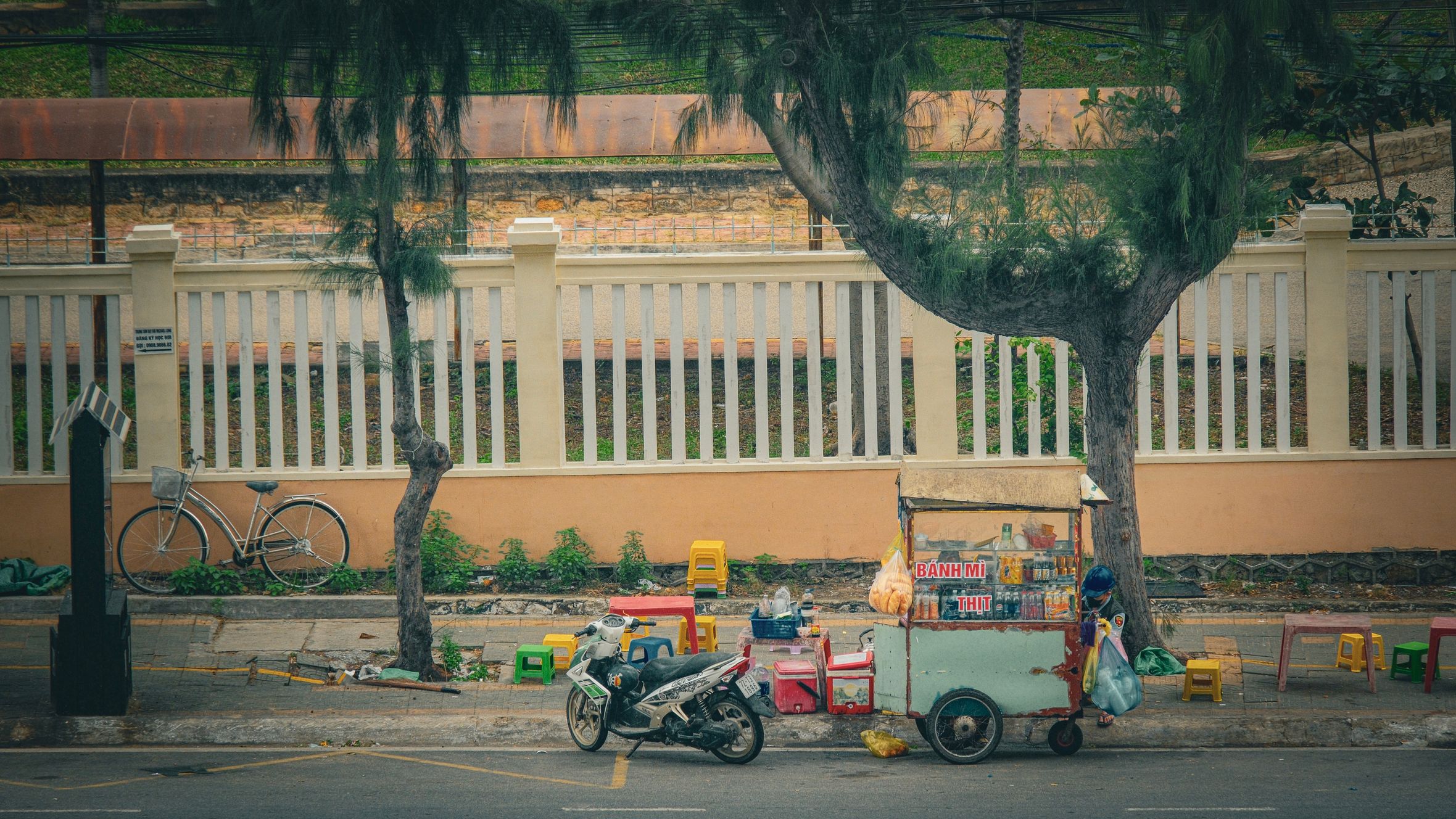
Photo by Pham Huan on Pexels
Best time to eat banh khot
Mid-afternoon (3–5 p.m.) is the sweet spot. The molds are hot, the shrimp are fresh, and the carts are busy enough that turnover is fast. Morning is possible at some vendors, but peak banh khot time in Vung Tau is when the beach crowd starts heading inland for a snack.
Avoid eating them hours after they're made. Banh khot don't reheat well—they lose their crisp and get gluey. Order fresh, eat immediately.
Weekends change the calculus slightly. Vung Tau gets a flood of day-trippers from Saigon on Saturdays and Sundays, especially during the dry season (November through April). The popular stalls can have waits of 15–20 minutes by 4 p.m. Weekday afternoons are calmer—you can sit down, watch the cook work, and eat at your own pace without someone hovering for your stool.
How to order (useful phrases)
You don't need much Vietnamese to get banh khot, but a few phrases help—especially at cart vendors where English is rare.
- "Cho toi mot dia banh khot" — Give me one plate of banh khot.
- "Them tom" — Extra shrimp (expect a 5,000–10,000 VND surcharge).
- "Khong cay" — Not spicy (if you want the dipping sauce without chili).
- "Them rau" — More greens.
- "Bao nhieu?" — How much? (useful when there's no visible menu.)
Most vendors understand pointing and holding up fingers for quantity. Two plates is "hai dia." If you see a mold with 14 or 16 cups instead of 12, confirm the price before ordering—larger molds cost more but are better value per piece.
Common mistakes foreigners make
Waiting too long to eat. This is the number-one error. You get your plate, take a photo, take another photo from a different angle, and by the time you eat, the edges have gone soft. Banh khot have a two-minute window of peak crunch. Shoot fast or eat first.
Skipping the greens. The mustard greens aren't decoration. They cut through the oil and coconut richness. Without them, three or four pieces in, the flavor turns monotone and heavy. Wrap each piece in a leaf, then dip. That's the intended ratio.
Ordering too little. Twelve pieces sounds like a lot until you realize each one is barely two bites. Most adults eat 12–24 pieces comfortably. If you're sharing with someone, order two plates minimum.
Comparing them to takoyaki or other small molded snacks. Banh khot look similar to Japanese takoyaki or Dutch poffertjes in shape, but the texture, flavor, and eating method are completely different. Going in with takoyaki expectations—doughy, sauced, skewered—will confuse you. Think of them as crispy coconut rice cups with shrimp, not as Asian octopus balls.
Ignoring the sauce ratio. Too much dipping sauce drowns the coconut flavor. Too little and the shrimp tastes bland. Aim for a quick dip—just enough to wet the bottom and one side. The sauce should accent, not dominate.
Quick reference — banh khot in Vung Tau at a glance
- What: Crispy, coconut-milk rice-flour cups with shrimp, cooked in cast-iron molds
- Where: Vung Tau Old Town, Back Beach area, Tran Phu Street, Ha Long Street carts
- When: Best 3–5 p.m.; some vendors open from 10 a.m.
- Price: 30,000–55,000 VND per plate (8–14 pieces depending on vendor)
- Served with: Mustard greens, fish sauce with chili and lime, sometimes pickled vegetables
- Pair with: Fresh lime juice, herbal tea, or "ca phe sua da"
- Getting there from Saigon: ~125 km southeast; 2–2.5 hours by car or minibus from Mien Dong bus station; hydrofoil ferry from Bach Dang Wharf (District 1) takes about 1.5 hours
- Good for: Snack, light lunch, or part of a larger Vung Tau street food crawl
- Dietary notes: Naturally gluten-free (rice flour base); contains shellfish and fish sauce; not vegan unless you find a rare mushroom version
Banh khot beyond Vung Tau
If you can't make it to the coast, you'll find banh khot in Saigon—though the experience is different. Restaurants like Banh Khot Co Ut on Vinh Khanh Street in District 4 serve decent versions, and some "com tam" lunch spots in Binh Thanh District add banh khot as a side dish. Prices in Saigon run slightly higher: 45,000–65,000 VND per plate. The shrimp are usually smaller and not as fresh, but the batter and technique are faithful.
In Hanoi, banh khot is rare. Northern street food leans toward "pho," "bun cha," and "banh cuon" rather than coconut-based southern snacks. You might find it at southern-food specialty restaurants in the Tay Ho or Cau Giay districts, but it's not something you'll stumble into on the street.
Hue has its own mold-cooked snack—"banh beo"—which looks similar but uses a thinner, wetter batter and is topped with dried shrimp and pork cracklings instead of fresh shrimp. If you're working your way through central Vietnam's food scene alongside "bun bo Hue" and "banh canh," banh beo is the regional cousin worth comparing.
Practical notes
Banh khot are best as a snack or light meal, not a full dinner (though locals will argue otherwise). They're a Vung Tau summer staple—go between May and September if you want them at their most abundant. If you're visiting from Saigon, Vung Tau is 2.5 hours by minibus or car, worth a day trip for the seafood, beach, and street food alone.
For the return trip, the last hydrofoil ferry back to Saigon usually departs around 4:30–5 p.m. (check current schedules; they shift seasonally). If you take the ferry, you'll need to time your banh khot run for early afternoon. Alternatively, stay overnight—Vung Tau has guesthouses from 300,000 VND/night along the back beach strip—and eat banh khot at the perfect 4 p.m. window without rushing.
Final note
Banh khot are one of those dishes that reward you for showing up at the right time, in the right town, and eating before the crunch fades. Vung Tau isn't a flashy destination, but for a plate of just-cooked coconut rice cups with sweet shrimp and a sharp dipping sauce, it's exactly where you want to be. Order two plates. You'll thank yourself.
Last updated · May 29, 2026 · independently researched, never sponsored.