What it is
Cau Thi Nai is a 2,475-meter bridge that spans the Thi Nai Lagoon, connecting Quy Nhon city to the Phuong Mai Peninsula in central Vietnam (베트남 / 越南 / ベトナム)'s Binh Dinh province (now part of the merged Gia Lai province). When it opened in 2006, it was the longest over-sea bridge in Vietnam. The bridge itself is functional — concrete, utilitarian — but the lagoon it crosses is the real draw. Thi Nai Lagoon is a shallow, brackish body of water fed by the Kon River system, ringed by fishing villages, salt flats, and mangrove patches. At certain hours, the light across this water is the kind of thing that makes you pull over and sit on your motorbike for twenty minutes doing nothing.
The area has deep roots. Quy Nhon was once part of the Champa kingdom, and the lagoon has served as a natural harbor and fishing ground for centuries. During the Tay Son uprising in the late 18th century, the lagoon saw naval activity. Today it's quieter — shrimp farms, oyster beds, and fishing boats with painted eyes on the bows.
Why travelers go
Most people who cross Cau Thi Nai are heading to or from Phuong Mai Peninsula, where you'll find Eo Gio (a rocky coastal gap), Ky Co beach, and several newer resort developments. But the bridge and lagoon have their own appeal. Sunrise and sunset crossings are genuinely good — the wide-open water catches color in a way that feels earned, not staged. Photographers and motorbike travelers treat it as a destination in itself rather than just a road to somewhere else.
The lagoon's eastern shore has small fishing hamlets that see almost no tourist traffic. If you're traveling the coast between Da Nang and Nha Trang (냐짱 / 芽庄 / ニャチャン) and want a reason to stop in Quy Nhon for more than one night, Thi Nai gives you that reason.
Best time to visit
March through September is dry season in Binh Dinh. The lagoon is calmest and most photogenic from April to June, before the summer heat peaks. July and August are hotter but still clear. October through January brings rain — sometimes heavy — and the lagoon can look grey and uninviting. If you're crossing the bridge by motorbike, wind is a factor: the exposed span catches strong gusts during storm season (October-November especially), which can be genuinely uncomfortable on two wheels.
Early morning — around 5:30 to 6:30 AM — is the best window for the lagoon. Fishing boats head out, the light is low and warm, and there's almost no traffic on the bridge.
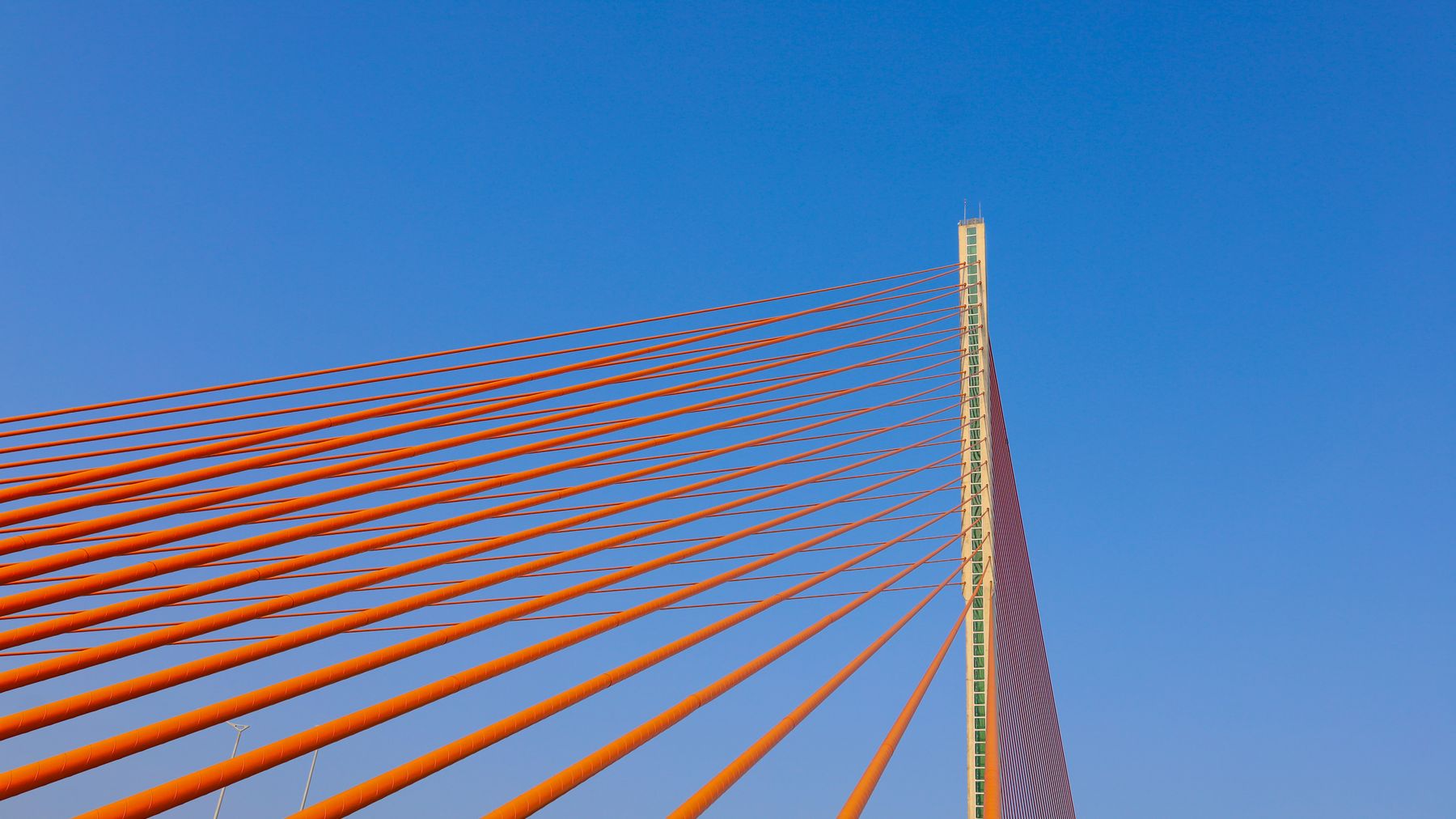
Photo by LÊ QUỐC VIỆT on Pexels
How to get there
Quy Nhon is the nearest city and the natural base. From Da Nang, it's roughly 300 km south along the coast — about 5-6 hours by bus (around 180,000-220,000 VND on a sleeper) or 1.5 hours by the occasional direct flight. From Ho Chi Minh City, there are overnight sleeper buses (about 10-12 hours, 250,000-350,000 VND) and flights (1.5 hours, from 800,000 VND if booked early). Phu Cat Airport sits about 35 km northwest of Quy Nhon; a taxi into town runs around 250,000-300,000 VND.
From central Quy Nhon, Cau Thi Nai is only about 3 km northeast. You can ride there in ten minutes on a motorbike rented from most guesthouses (100,000-150,000 VND/day for a semi-auto). Grab is available in Quy Nhon, though coverage thins out once you cross to the peninsula side.
What to do
Cross the bridge at sunrise
This sounds simple because it is. Rent a motorbike, set an alarm, and ride out before 6 AM. Stop at the midpoint where there's enough shoulder to park safely. The lagoon opens up in every direction and the fishing boats are already moving. Bring a coffee from one of the street carts near Tran Hung Dao street before you go — Quy Nhon's "ca phe sua da" game is strong.
Explore the lagoon's edge villages
On the western shore (Quy Nhon side), head south along the lagoon toward Nhon Hoi and the smaller hamlets where families farm shrimp and oysters. You'll see drying racks, net-mending, and the daily work of a lagoon economy. Nobody's trying to sell you anything. On the eastern shore past the bridge, Nhon Ly village is a fishing community with a small beach and boat access to Ky Co.
Visit Eo Gio
About 15 km past the bridge on the peninsula, Eo Gio is a natural gap in the coastal cliffs where waves push through a narrow rocky channel. It's been developed with walkways and a small entrance fee (around 30,000 VND), but the geology is real and worth seeing. Go early to avoid tour groups.
Take a boat on the lagoon
Local fishermen near the western shore will take you out on the lagoon in a basket boat or small wooden vessel. There's no formal booking — just show up, point at the water, negotiate. Expect to pay around 150,000-200,000 VND for an hour. You'll see oyster farms, wading birds, and the bridge from water level.
See the Cham towers
Quy Nhon has several Cham temple towers within easy reach. Thap Doi (Twin Towers) sits right in the city, while Thap Banh It is about 20 km northwest. These are cousins of the towers at My Son and Po Nagar — less restored, less crowded, and in some ways more atmospheric.
Where to eat nearby
Binh Dinh province is known for "banh xeo" — but the local version is smaller and crispier than the southern style, stuffed with shrimp and eaten with a mountain of fresh herbs and rice paper. Look for banh xeo stalls along Nguyen Hue street in Quy Nhon. A plate runs 15,000-25,000 VND.
Also worth finding: "bun cha ca" Quy Nhon, a fish cake noodle soup that's distinct from the northern "bun cha" — lighter, slightly sweet broth, with firm fish cakes and jellyfish on the side. Bun Cha Ca Ba Lu on Phan Boi Chau street is a reliable spot, around 30,000-40,000 VND per bowl.

Photo by Tiểu Bảo Trương on Pexels
Where to stay
Quy Nhon has a decent spread. Budget guesthouses near the beach and city center go for 200,000-400,000 VND/night. Mid-range hotels with sea views along An Duong Vuong street run 500,000-1,000,000 VND. On the higher end, there are a few resorts along the coast south of the city, including the well-known AVANI and Anantara properties, from around 2,500,000 VND/night. For the lagoon specifically, staying in central Quy Nhon and riding out is the easiest approach — there's nothing on the bridge itself.
Practical tips locals would tell you
- The bridge has no dedicated bike lane and trucks use it regularly. Ride on the right, stay alert, and don't stop in the middle during peak hours (7-8 AM, 5-6 PM).
- Sunscreen on the bridge crossing — there's zero shade for 2.5 km.
- The lagoon smells at low tide near the shrimp farms. This is normal, not a sign of pollution.
- If you want to combine the bridge with a full peninsula loop (Eo Gio, Ky Co, Nhon Ly), budget a full day and fill your tank in Quy Nhon.
Common mistakes to avoid
Don't try to walk across the bridge. It looks tempting but there's no real pedestrian path, and the traffic moves fast. Motorbike or car only.
Don't skip Quy Nhon city itself in a rush to reach Ky Co. The city has good food, a mellow beach, the Cham towers, and a pace that rewards an extra night. Treat the bridge as part of a wider Quy Nhon stay, not a standalone day trip from somewhere far away.
Don't arrive at midday expecting good photos. The lagoon flattens out under overhead sun. Morning and late afternoon are when it earns its reputation.
Last updated · May 29, 2026 · independently researched, never sponsored.