
What Bai Truong is
Bai Truong — literally "Long Beach" — is the 20km strip of sand running down Phu Quoc's western coast. It's the island's most developed beach, stretching from Duong Dong town in the north all the way past An Thoi communes in the south. Most visitors to Phu Quoc end up here whether they planned to or not, because the majority of the island's resorts, restaurants, and sunset bars line this coast.
The beach has transformed rapidly since Phu Quoc (푸꾸옥 / 富国岛 / フーコック) gained special economic zone status. A decade ago the southern end was deserted coconut groves. Now you'll find five-star resorts interspersed with local seafood shacks and stretches of genuinely empty sand — sometimes within walking distance of each other. Following recent administrative restructuring, Phu Quoc now falls under An Giang province, though nothing about getting there or being there has changed for travelers.
Why travelers go
The draw is simple: west-facing beach, warm water year-round, and sunsets that genuinely deliver. The seafloor slopes gently — you can wade out 30-40 meters before the water reaches your chest — which makes it forgiving for weak swimmers and families with kids.
Beyond the beach itself, Bai Truong works as a base for exploring the rest of Phu Quoc. The Duong Dong night market is a 5-minute ride from the northern end. Cable car to Hon Thom departs from the south. And unlike Phu Quoc's eastern beaches (Bai Sao, Bai Khem), you don't need to cross the island on potholed mountain roads to reach food and transport.
Best time to visit
Dry season runs November through April. December to February gives you the calmest seas and least humidity — water visibility is good for snorkeling off the southern rocks.
Avoid September and October if you want beach days. The southwest monsoon hits Bai Truong directly, churning up brown water and dumping plastic debris on the sand. Some resorts close their beach bars during peak monsoon.
March and April are hot (34-36°C) but the water stays clean and the crowds thin out after Tet. Shoulder months (May, November) are a gamble — you might get a week of perfect weather or three days of afternoon storms.
How to get there
Phu Quoc International Airport receives direct flights from Saigon (55 minutes, 800,000-1,500,000 VND one-way), Hanoi (2 hours 10 minutes), and Da Nang. Budget carriers Vietjet and Bamboo fly this route daily.
From the airport to Bai Truong's mid-section is about 8km — a 15-minute taxi ride costing 120,000-150,000 VND. Grab works on the island but drivers are scarce at off-peak hours. Most resorts offer airport transfers if you book ahead.
If you're coming overland from Can Tho or the Mekong Delta (메콩 델타 / 湄公河三角洲 / メコンデルタ), fast ferries run from Ha Tien to Phu Quoc (Superdong or Phu Quoc Express, 1 hour 15 minutes, around 350,000 VND). The ferry docks at Bai Vong on the east coast — from there it's 20 minutes by taxi across to Bai Truong.

Photo by Quang Nguyen Vinh on Pexels
What to do
Beach sections worth knowing
The northern third (near Duong Dong) is the busiest — beach clubs, jet skis, parasailing touts. Walk south past the InterContinental and things quiet down fast. The stretch between Ong Lang junction and the JW Marriott is where you'll find pockets of undeveloped sand backed by casuarina trees.
The far south (below the Novotel) is resort-dominated but the public access points between properties lead to clean, crowd-free sand.
Beyond the beach
- Duong Dong Night Market — grilled scallops, "hu tieu" soup, and fresh sea urchin for 50,000-80,000 VND per plate. Go after 6pm when the full range of stalls opens.
- Sunset at Sailing Club or Ocsen Beach Bar — drinks run 80,000-150,000 VND. Arrive by 5pm to claim a beanbag.
- Snorkeling trips — half-day boats to the An Thoi archipelago depart from the southern tip, around 400,000-600,000 VND per person including gear.
- Phu Quoc fish sauce factories — Nuoc Mam Hung Thanh on Nguyen Van Cu street offers free tours. The smell is aggressive but the history is interesting.
Where to eat
Bai Truong's restaurant scene splits into resort dining (overpriced, inconsistent) and local spots worth seeking out:
- Quan Oc Bien (near the old Vinpearl gate) — seafood by the kilo. Grilled "goi cuon" with shrimp here is 45,000 VND per roll. Blood cockles steamed with lemongrass run about 120,000 VND per plate.
- Pho Tau Bay on Tran Hung Dao — solid bowls of pho for 55,000 VND. Nothing fancy, just a reliable 6am-9pm option.
- Crab House mid-beach — tourist prices (mains 200,000-400,000 VND) but genuinely good crab in tamarind sauce.
- Com tam stalls cluster around Duong Dong market. Broken rice with grilled pork and a fried egg: 40,000-55,000 VND.
For Vietnamese coffee, Trung Nguyen has a branch on the main coastal road, but the smaller unnamed ca phe in the alleys behind Tran Hung Dao street serve better "ca phe sua da" for 25,000 VND.
Where to stay
Budget and midrange options line the northern section near Duong Dong — guesthouses from 400,000 VND/night, three-star hotels with pools around 800,000-1,200,000 VND.
For beach access without resort prices, look at the mid-section between km markers 5-12 along the coastal road. Small boutique hotels here (Cassia Cottage, Mai House) offer beachfront rooms for 1,500,000-2,500,000 VND.
High-end resorts (JW Marriott, InterContinental, Regent) cluster in the south. Expect 5,000,000+ VND per night but also private beach stretches and better maintained sand.
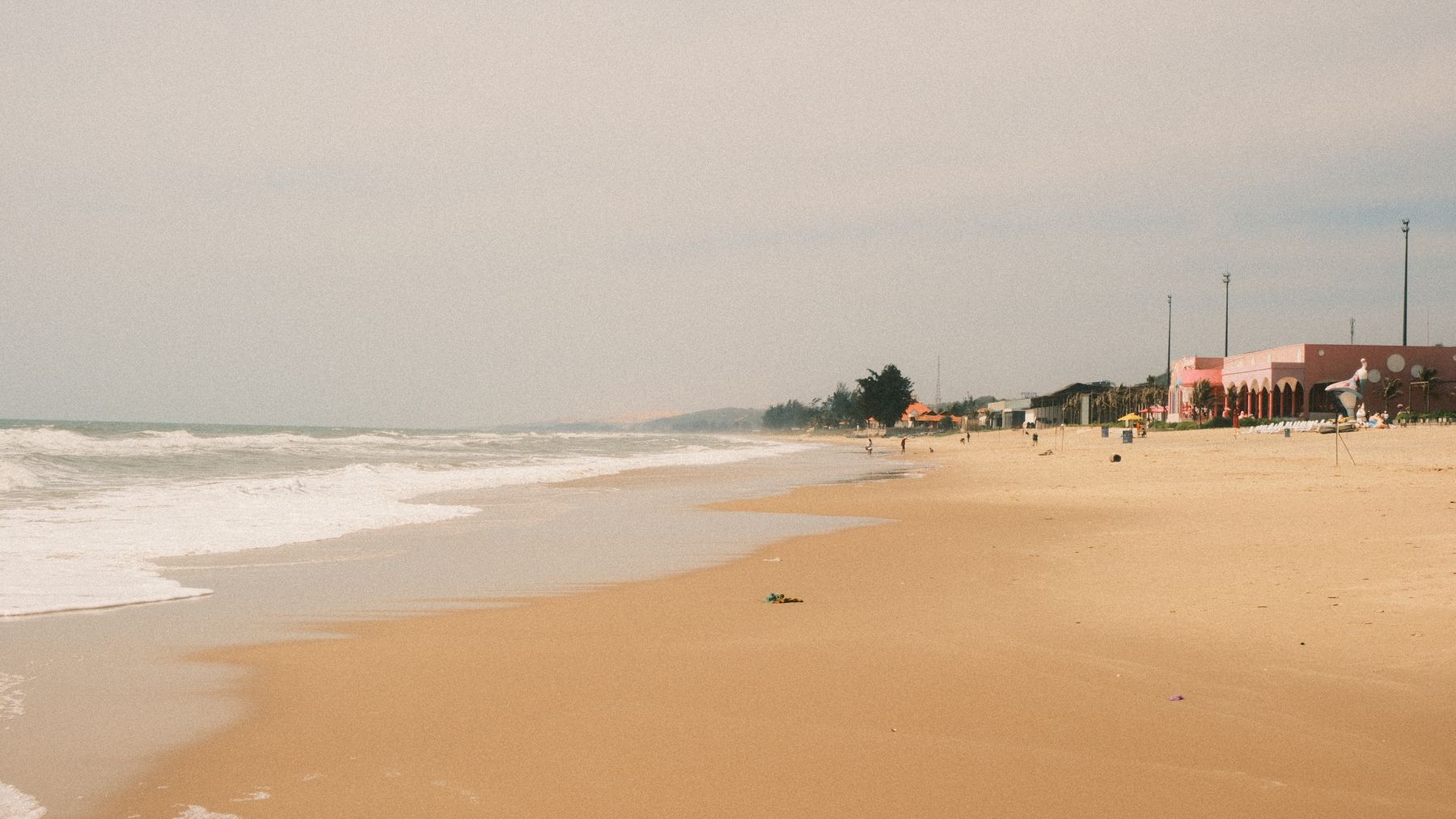
Photo by Ngoc Nguyen on Pexels
Practical tips
- Rent a motorbike (150,000-200,000 VND/day) to move between beach sections. The coastal road is flat and easy to navigate.
- Sunscreen is expensive on the island — bring it from Saigon or Hanoi.
- ATMs exist in Duong Dong but charge 50,000-60,000 VND per withdrawal for foreign cards. Carry cash for beach vendors and small restaurants.
- Jellyfish appear sporadically in March-April. Ask locals before swimming if you see purple floaters on the sand.
Common mistakes
- Booking a resort in the far south and expecting walkable nightlife. It's a 15-minute drive to Duong Dong. Budget for taxis or rent a bike.
- Swimming at the northern end during peak season. Jet ski operators crowd the water. Walk 500m south for calmer swimming.
- Assuming all of Bai Truong looks the same. The northern, mid, and southern sections are practically different beaches. Spend a morning scouting before committing to a spot.
- Visiting only Bai Truong. Phu Quoc has quieter beaches on the north coast (Bai Dai, Ganh Dau) that are worth a half-day trip.
Practical notes
Bai Truong is Phu Quoc's default beach for good reason — accessible, versatile, and reliably beautiful on the right day. It's not a hidden gem and doesn't pretend to be. The trick is finding your section of it and ignoring the rest.
Last updated · May 29, 2026 · independently researched, never sponsored.








