What it is
Den Tran Thai Binh is a temple complex in Hung Yen province dedicated to the Tran dynasty — the family that ruled Vietnam (베트남 / 越南 / ベトナム) from the 13th to 14th centuries and famously repelled three Mongol invasions. The temple sits in Tien Duc commune (formerly part of Thai Binh district before administrative mergers folded the area into greater Hung Yen), surrounded by flat rice paddies and village lanes that haven't changed much in decades.
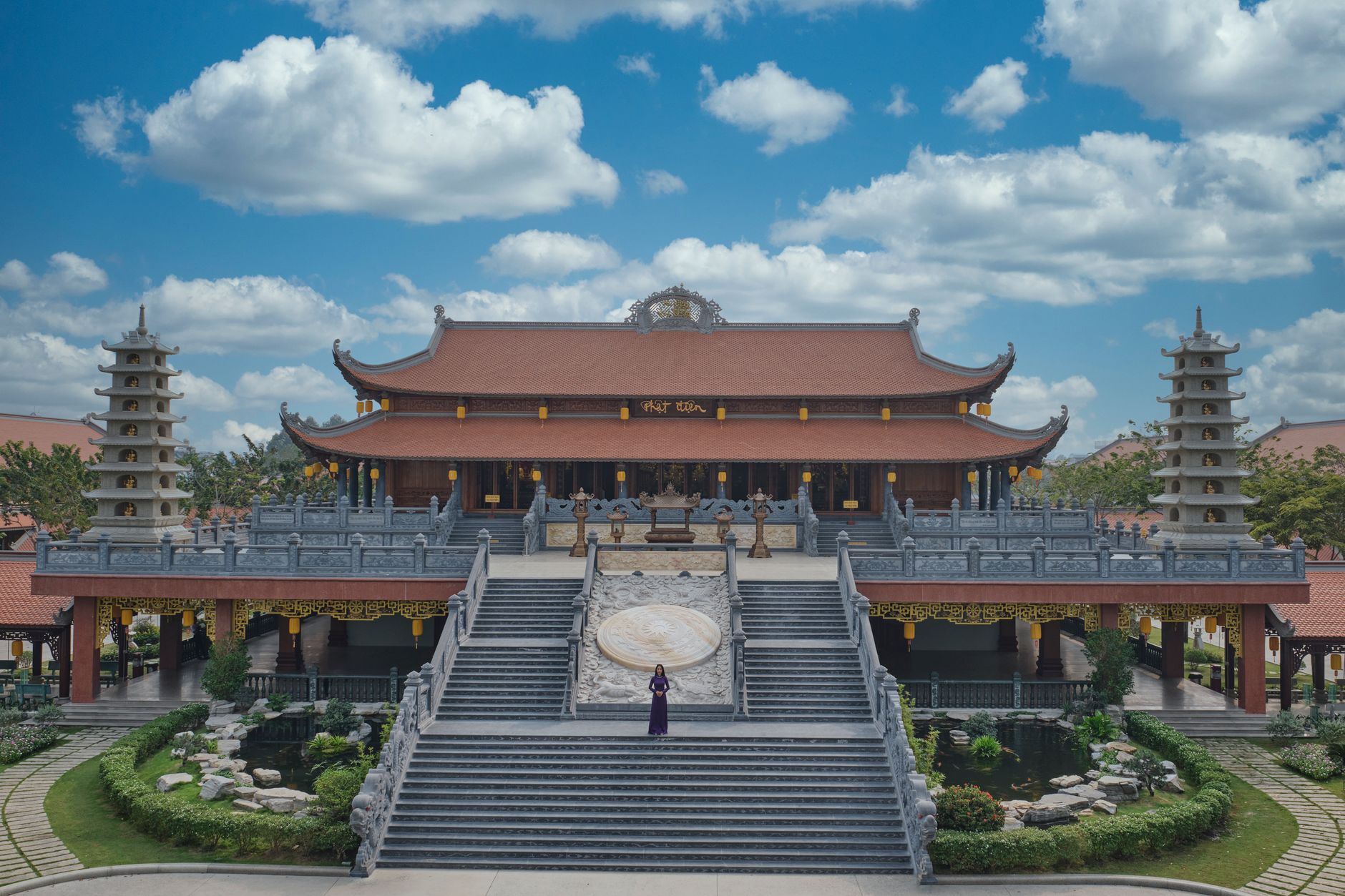
Unlike the more famous Den Tran in Nam Dinh, this site draws fewer tourists and more local worshippers. The complex includes the main temple hall, a rear shrine, a lotus pond, and several stele dating back to the Le dynasty. It's modest in scale — you won't spend a full day here — but the quiet atmosphere and genuine devotion of visitors make it worth the detour if you're already exploring the Red River Delta.
Why travelers go
Three reasons, honestly. First, it's a window into Tran dynasty worship culture without the crowds that pack Den Tran Nam Dinh during festival season. Second, the surrounding countryside is textbook northern delta landscape — narrow dikes between flooded paddies, water buffalo, brick kilns smoking in the distance. Third, if you're routing between Hanoi and Hai Phong or heading toward Thai Binh province, Hung Yen sits right along the way and gives you a reason to stop rather than just passing through.
The temple also holds significance for anyone interested in Vietnamese folk religion. Visitors come to pray for career success and family prosperity, especially around the [Lunar New Year](/posts/tet (뗏 (베트남 설날) / 越南春节 / テト)-lunar-new-year-guide) period and during the temple's annual festival.
Best time to visit
The temple's main festival falls in the first lunar month (usually February), on the 14th day. During this period, the complex fills with incense smoke, offerings, and ceremonial processions. It's atmospheric but crowded.
For a quieter visit, come between October and March — the dry, cool season in the north. Mornings are misty over the paddies, and the temple grounds feel contemplative rather than hectic. Avoid July and August: the heat is brutal in the delta flatlands, there's little shade, and afternoon downpours can turn unpaved paths muddy.
How to get there from Hanoi
Hung Yen city is about 65 km southeast of central Hanoi. From there, Den Tran Thai Binh is another 15-20 km depending on exact routing.
By motorbike: The most flexible option. Take National Highway 5 east toward Hai Duong, then turn south on QL38 toward Hung Yen. Total ride from Hanoi's Old Quarter: around 1.5-2 hours depending on traffic through Gia Lam. Fuel cost roughly 40,000-50,000 VND each way.
By bus: Catch a bus from Giap Bat or Gia Lam bus station to Hung Yen city (about 50,000-70,000 VND, 1.5 hours). From Hung Yen city, you'll need a local "xe om" (motorbike taxi) or Grab to the temple — expect 30,000-50,000 VND for the last stretch.
By car (private transfer): A round-trip day hire from Hanoi runs 800,000-1,200,000 VND depending on your negotiation skills and whether you book through a hotel or directly with a driver.

Photo by Sk4ter bol on Pexels
What to do
Walk the temple grounds properly
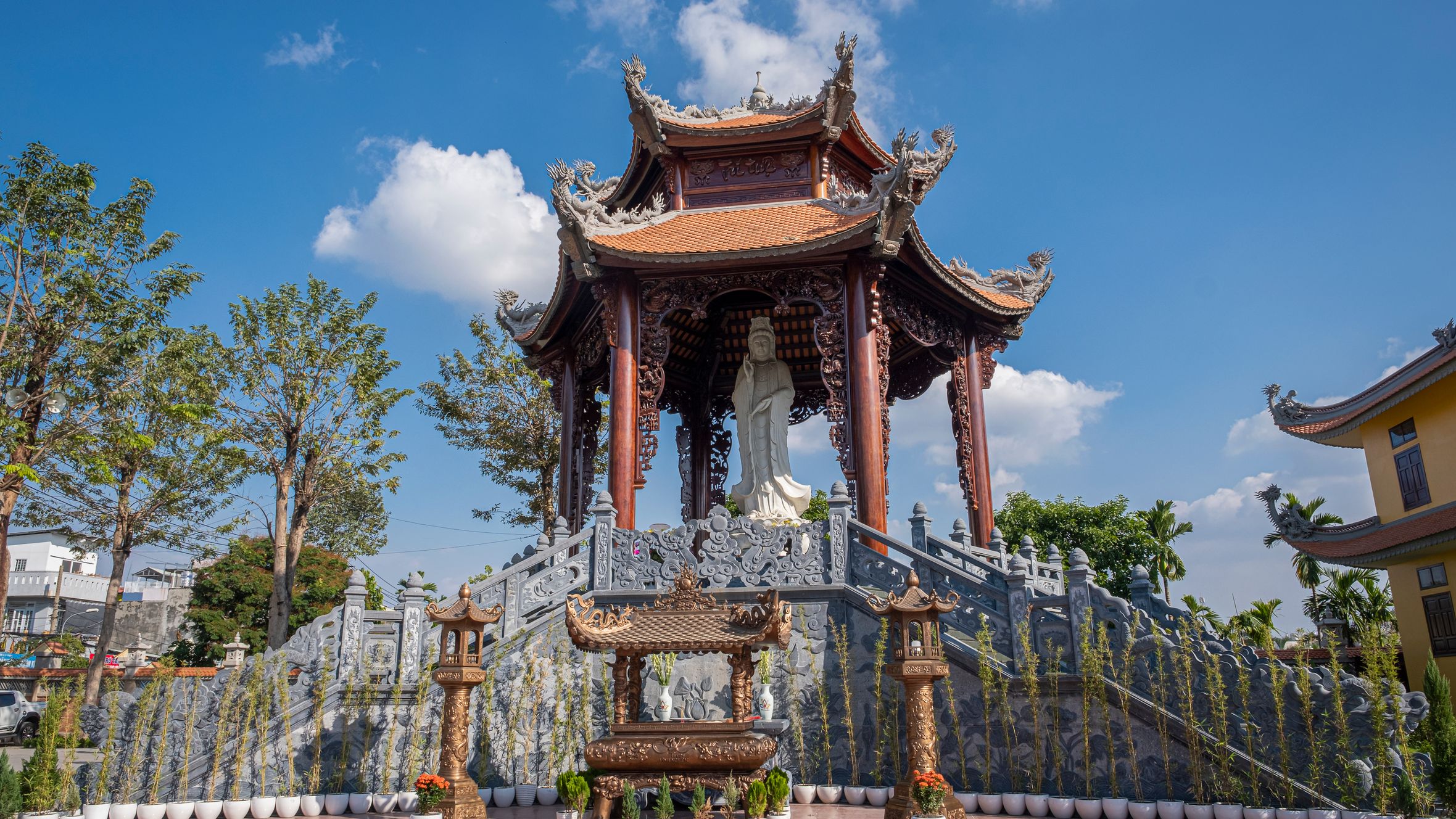
Enter through the main gate, pause at the incense burner in the courtyard, then proceed to the front hall. The rear shrine is where the most sacred altar sits — remove your hat, keep your voice low. Look for the carved dragons on the roof beams; they're Tran-dynasty style reproductions with distinct curled snouts.
Read the stele
Several stone stele near the temple record its construction history and renovations across centuries. Even without reading Han-Nom script, the craftsmanship on these stones — turtle bases, dragon borders — tells you about the era they came from.
Cycle the surrounding villages
Rent a bicycle in Hung Yen city (50,000-80,000 VND/day from guesthouses) and ride the dike roads out to the temple. The route passes through "nhan" longan orchards — Hung Yen's famous crop — brick-making villages, and small markets. This is delta Vietnam without a tourism layer.
Visit the lotus pond at dawn
The temple's lotus pond blooms between June and August. If you're visiting in summer despite the heat, come at 6 AM when the flowers open and the light is soft.
Combine with Pho Hien
The old trading port of Pho Hien in Hung Yen city — once a rival to Hoi An in the 17th century — is only 20 minutes away. The remaining temples, pagodas, and old merchant houses make a natural pairing for a half-day in the area.
Where to eat nearby
Hung Yen's signature dish is "banh day" — thick, chewy rice cakes served with gio lua (pork sausage). You'll find vendors near the market in Hung Yen city selling them for 15,000-25,000 VND per portion.
For a proper meal, look for "bun thang" — a Hanoi-adjacent clear broth noodle soup with shredded chicken, egg, and pork — at local com binh dan shops along the main road into town. A bowl runs 30,000-40,000 VND. The local longan fruit (in season July-August) is worth buying from roadside sellers; Hung Yen longan is considered the best in the country, and a kilo costs 40,000-60,000 VND in peak season.
Where to stay
Budget: Nha nghi (guesthouses) in Hung Yen city range from 200,000-350,000 VND/night. Basic but clean, with air conditioning and hot water. Don't expect English-speaking staff.
Mid-range: A few newer hotels near the city center offer rooms at 500,000-800,000 VND with breakfast included. Search for hotels on Phan Chu Trinh or Nguyen Van Linh streets.
Day trip: Most travelers visit Den Tran Thai Binh as a day trip from Hanoi and don't stay overnight. This is the practical choice unless you're combining with deeper exploration of Hung Yen province.

Photo by Quang Nguyen Vinh on Pexels
Practical tips locals would tell you
- Dress modestly at the temple. Covered knees and shoulders — this isn't enforced strictly, but you'll get looks otherwise.
- Bring small bills (10,000-20,000 VND notes) for offerings and donation boxes.
- The temple closes around 5 PM. Arrive before 4 PM to have time without rushing.
- If visiting during the festival, come early morning. By 10 AM the grounds are packed and parking becomes chaotic.
- There's no ATM at the temple. Withdraw cash in Hung Yen city before heading out.
Common mistakes to avoid
- Confusing this with Den Tran Nam Dinh. They're different temples in different provinces, both honoring the Tran dynasty. If you're booking transport, be specific about Hung Yen.
- Showing up midday in summer. The temple has minimal shade and no air-conditioned rest areas. Heat exhaustion on an exposed courtyard is no fun.
- Skipping the surroundings. The temple itself takes 30-45 minutes. The real value is combining it with the countryside ride and Pho Hien. Don't drive 90 minutes for a quick look and leave.
- Relying on Google Maps routing. Some village roads shown on maps are actually narrow dikes barely wide enough for a motorbike. Stick to marked provincial roads if you're in a car.
Practical notes
Den Tran Thai Binh works best as part of a broader Hung Yen day trip from Hanoi — pair it with Pho Hien and a longan orchard visit if timing allows. Budget half a day including transport. It's not a destination that justifies a special trip on its own, but as a stop on a Red River Delta loop through Ninh Binh or Hai Phong, it adds genuine texture to your route.
Last updated · May 29, 2026 · independently researched, never sponsored.