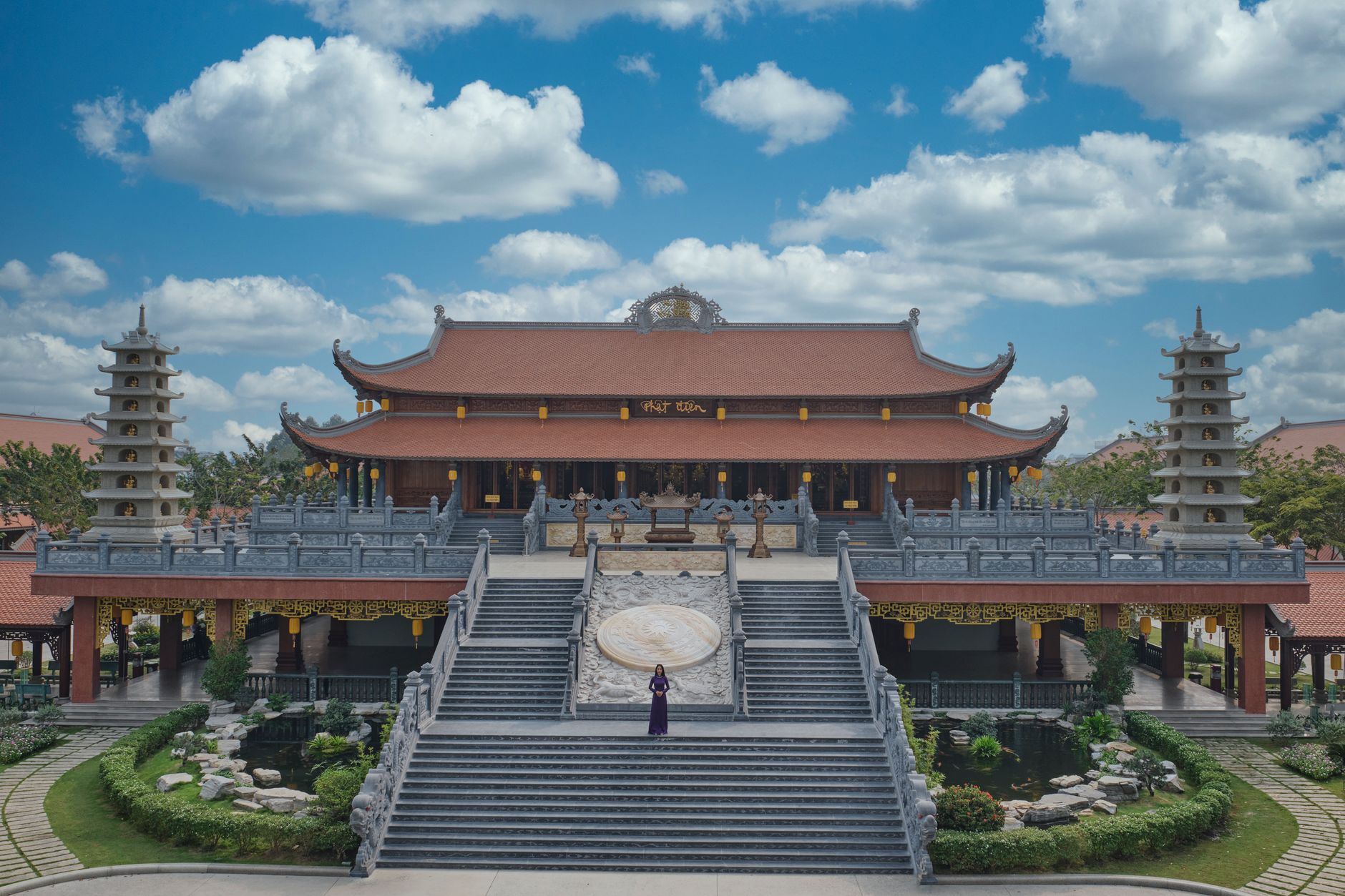
What it is
Den Dong Bang is a sprawling temple complex in Ninh Giang district, historically part of Thai Binh province but now administered under Hung Yen following provincial boundary changes. The temple honors Duc Vuong Tran Hung Dao — the 13th-century Tran dynasty general credited with repelling Mongol invasions — along with a constellation of associated deities and spirits from the Vietnamese folk religion pantheon.
The complex covers roughly 4,000 square meters across multiple worship halls, courtyards, and gardens. Unlike the more tourist-oriented temples around Hanoi, Den Dong Bang functions primarily as a living religious site. Mediums practice "len dong" (spirit mediumship ceremonies) here regularly, and the atmosphere during festival season is intense — drums, chanting, incense smoke thick enough to taste.
Why travelers go
Three reasons, mostly:
First, the architecture. The main hall features carved wooden beams and dragon motifs from multiple restoration periods layered over each other. You can trace centuries of craftsmanship in a single roof structure.
Second, the religious culture. Den Dong Bang is one of the most important sites for Dao Mau (Mother Goddess worship) and Tran dynasty veneration in the north. If you're interested in Vietnamese folk religion beyond the usual pagoda visit, this is where it gets real.
Third, the festival. The annual temple festival (held in the eighth lunar month) draws thousands of devotees and features spirit mediumship rituals that are genuinely unlike anything else you'll encounter in Vietnam (베트남 / 越南 / ベトナム). UNESCO recognized the practice of "len dong" as intangible cultural heritage in 2016, and Den Dong Bang is one of its heartlands.
Best time to visit
Festival season (8th lunar month, usually September-October): This is when the complex comes alive. The main festival runs from the 14th to 20th of the eighth lunar month. Expect crowds, processions, and ceremonies from dawn to late evening. Good for atmosphere, bad for quiet contemplation.
Off-season (March-May or November): Cooler weather, empty courtyards, and you can actually photograph the architecture without 200 people in frame. Mediumship ceremonies still happen on the 1st and 15th of each lunar month, so time your visit accordingly if that's what draws you.
Avoid July-August: the heat in the Red River Delta is oppressive and the complex offers limited shade.
How to get there
From Hanoi (하노이 / 河内 / ハノイ) (the nearest major hub), Den Dong Bang is approximately 90 km southeast — roughly 2 hours by car or motorbike depending on traffic.
By motorbike/car: Take National Highway 5 toward Hai Duong, then cut south on Highway 38B through Ninh Giang district. The temple is in An Le commune. Google Maps has it pinpointed accurately. Grab car from central Hanoi runs about 350,000-450,000 VND one way.
By bus: Catch a bus from Giap Bat station to Ninh Giang town (around 80,000-100,000 VND, 2-2.5 hours). From Ninh Giang, hire a "xe om" (motorbike taxi) for the remaining 5 km — should cost 30,000-50,000 VND.
By train: Not practical. The nearest station is Hai Duong, and you'd still need road transport from there.

Photo by HONG SON on Pexels
What to do
Walk the full complex
Don't just hit the main hall and leave. The complex has multiple worship areas dedicated to different spirits — the Tran dynasty generals' hall, the Mother Goddess shrine, and a quieter rear garden area with a sacred well. Budget at least 90 minutes to see everything properly.
Watch a len dong ceremony
If your visit coincides with the 1st or 15th of the lunar month (or festival days), you may witness a spirit mediumship ritual. These involve elaborate costume changes, traditional music, and offerings. Sit quietly, don't use flash photography, and don't walk between the medium and the altar. Ask permission before recording video.
Study the carvings
The wooden carvings on the main hall's columns and roof beams mix Buddhist, Taoist, and Confucian imagery with purely Vietnamese folk motifs. The dragon carvings here differ noticeably from those at temples closer to Hanoi — heavier, more muscular in style.
Visit the banyan tree courtyard
The ancient banyan in the outer courtyard is a gathering point for local elders in the mornings. Good place to sit, drink tea if offered, and observe daily life around the temple.
Check the neighboring rice paddies
The area surrounding the temple is flat delta farmland. A short walk (500 meters in any direction) puts you in working paddies — photogenic during planting season (May-June) or harvest (September-October).
Where to eat nearby
The area around Den Dong Bang isn't a culinary destination, but you won't go hungry.
"Banh cuon" in Ninh Giang town: The steamed rice rolls here are thinner and more delicate than the Hanoi version, served with a lighter dipping sauce and crispy shallots. Look for any shop with a steamer running near the town market. A plate runs 25,000-35,000 VND.
"Bun ca" (fish noodle soup): A freshwater fish soup common in this part of the delta. The broth uses "ca qua" (snakehead fish) or carp, turmeric-tinged, with dill and tomato. Available at small eateries along Highway 38B approaching Ninh Giang. Around 30,000-40,000 VND per bowl.
Where to stay
Let's be honest: most people visit Den Dong Bang as a day trip from Hanoi or Hai Duong. Accommodation options in Ninh Giang itself are limited to basic "nha nghi" (guesthouses) ranging from 200,000-350,000 VND per night. Clean enough, don't expect amenities beyond air conditioning and hot water.
If you want something more comfortable, base yourself in Hai Duong city (30 km north) where you'll find proper hotels in the 400,000-800,000 VND range with decent Wi-Fi and breakfast included.

Photo by Valeria Drozdova on Pexels
Practical tips locals would tell you
- Dress modestly. Long pants and covered shoulders for both men and women. This isn't enforced with signs, but you'll get disapproving looks otherwise.
- Bring cash. There are no ATMs at the temple and card payment doesn't exist here. Even the parking fee (5,000-10,000 VND for a motorbike) is cash only.
- Remove shoes before entering any worship hall. Socks are fine.
- Incense and offering supplies are sold at stalls outside the main gate. A basic set costs 20,000-50,000 VND. You don't need to buy the expensive bundles vendors push on you.
- The temple grounds close around 17:00 outside of festival season.
Common mistakes to avoid
Treating it like a museum. People are actively worshipping here. Don't step over offerings, don't sit on altar platforms, don't pose for selfies in front of active ceremonies.
Coming without checking the lunar calendar. If you specifically want to see ceremonies, verify dates before traveling. The Gregorian calendar won't help you here.
Skipping the outer halls. Most visitors photograph the main gate, peek into the central hall, and leave within 20 minutes. The most interesting architectural details and quieter shrines are in the rear and side halls.
Driving during festival week without a plan. Roads around the complex become gridlocked during the main festival. If visiting during peak days, arrive before 7:00 AM or accept that you'll be walking the last kilometer.
Practical notes
Den Dong Bang works well combined with a broader Red River Delta trip — pair it with Ninh Binh (2 hours further south) or a stop in Hai Duong for green bean cake, the province's famous snack. The temple requires no entrance fee, just parking and whatever you choose to spend on offerings.
Last updated · May 29, 2026 · independently researched, never sponsored.