
What Thac H'Ly is — and why it's still under the radar
Thac H'Ly is a tiered waterfall in the western part of Dak Lak province, deep in Vietnam's Central Highlands (중부 고원 / 中部高原 / 中部高原). It sits in what was formerly part of Phu Yen district before recent administrative redistricting folded the area into a larger unit under Dak Lak. The waterfall drops through several basalt ledges surrounded by dense tropical forest — not a single dramatic plunge, but a long cascade that fans out across mossy rock. The pools at the base are wide and surprisingly calm during the dry months.
The name comes from the Ede language, one of the indigenous ethnic groups who have lived across this plateau for centuries. You won't find Thac H'Ly on most tourist itineraries. It doesn't appear in the standard Dak Lak packages that shuttle visitors between Buon Ma Thuot's coffee farms and Lak Lake. That's part of the appeal — it's a place where you're more likely to run into local families on a weekend picnic than a tour bus.
Why travelers go
The Central Highlands doesn't get the foot traffic that Sapa or Da Lat pulls, and within the region, Dak Lak's waterfalls are second-tier attractions compared to its coffee culture and elephant tourism. Thac H'Ly draws the kind of traveler who's already spent time in Buon Ma Thuot and wants something beyond the city's edges.
The main reasons people make the trip:
- The setting. The waterfall is framed by old-growth forest with a canopy thick enough to drop the temperature a few degrees. In the wet season, the volume is impressive — wide sheets of water crashing across the full width of the rock face.
- Swimming holes. During the dry months (roughly November through April), the lower pools are calm enough for a swim. The water is cold and clean.
- Quiet. Even on weekends, visitor numbers stay low. There's no ticket booth infrastructure or concrete walkways — just a dirt trail and the falls.
Best time to visit
Dak Lak's rainy season runs from May through October, with the heaviest downpours in August and September. The waterfall is at its most powerful during this stretch, but the trail in can be slippery and the pools churn too hard for safe swimming.
The sweet spot is late October through December — the rains are tapering off, the falls still have good volume, and the trails have started to dry out. By February and March, the flow slows noticeably. It's still worth seeing, but the cascade thins to a fraction of its peak.
Temperatures in this part of the highlands hover around 22-26°C year-round, cooler than the coast. Mornings can be misty. Bring a light layer.
How to get there
Thac H'Ly is roughly 50-60 km west of Buon Ma Thuot, depending on which route you take. There's no public bus that drops you at the falls.
From Buon Ma Thuot
Rent a motorbike (150,000-200,000 VND/day from most guesthouses in town) and head west. The road passes through coffee plantations and small Ede villages. The final stretch is a smaller provincial road — paved but narrow. Allow about 90 minutes each way, more if you stop.
If you don't ride, hire a local driver for the day. A xe om (motorbike taxi) round trip runs around 400,000-500,000 VND including wait time. A car with driver is 800,000-1,200,000 VND depending on your negotiation.
From other cities
Buon Ma Thuot has a domestic airport (BMV) with daily flights from Saigon and Hanoi. From Da Lat, it's about 4.5 hours by bus or private car north on the QL27. From Da Nang or Hoi An, you're looking at a full day of travel — fly into BMV or take a long bus via Quy Nhon.

Photo by Quang Nguyen Vinh on Pexels
What to do at Thac H'Ly
This isn't an adventure-sport destination. There's no zip-lining or canyoneering operation set up here. The visit is simple:
- Walk the trail from the parking area down to the falls. It's about 15-20 minutes on foot through forest. Wear shoes with grip — flip-flops on wet rock is a recipe for a bad afternoon.
- Swim in the lower pools during dry season. The rocks around the edge make decent spots to sit and eat.
- Photograph the cascade. The best light hits the falls in the morning before 10:00. By midday, the canopy casts heavy shadow.
- Combine with a coffee farm visit. Dak Lak produces more coffee than any other province in Vietnam. On the drive back to Buon Ma Thuot, stop at one of the small family-run farms along the road — most will let you look around and sell you beans directly. A kilogram of freshly roasted robusta runs 80,000-120,000 VND. Pair it with a proper vietnamese coffee (베트남 커피 / 越南咖啡 / ベトナムコーヒー) back in town.
Where to eat
There's no restaurant at the waterfall. Pack food from Buon Ma Thuot before you go — "banh mi" from one of the stands near Nguyen Tat Thanh Street works perfectly, or grab "com tam" (broken rice) boxed up from a com binh dan shop.
Back in Buon Ma Thuot after the trip, don't skip "bun cha" — there are several good spots along Le Hong Phong Street. The Central Highlands version tends to use slightly sweeter dipping sauce than what you'd get in Hanoi. For something more local, look for "com lam" (bamboo-tube rice), a highland staple you'll find at small Ede-run eateries on the city's outskirts.
Where to stay
Stay in Buon Ma Thuot. There's nothing at the falls and nothing resembling accommodation in the immediate area.
- Budget: Guesthouses around the city center run 200,000-350,000 VND/night. Basic but clean, usually with motorbike rental on-site.
- Mid-range: A few hotels along Phan Chu Trinh Street offer rooms with air conditioning and breakfast for 500,000-700,000 VND.
- Homestay: For something with more character, look for Ede-community homestays on the road toward Lak Lake — about 250,000-400,000 VND including dinner.
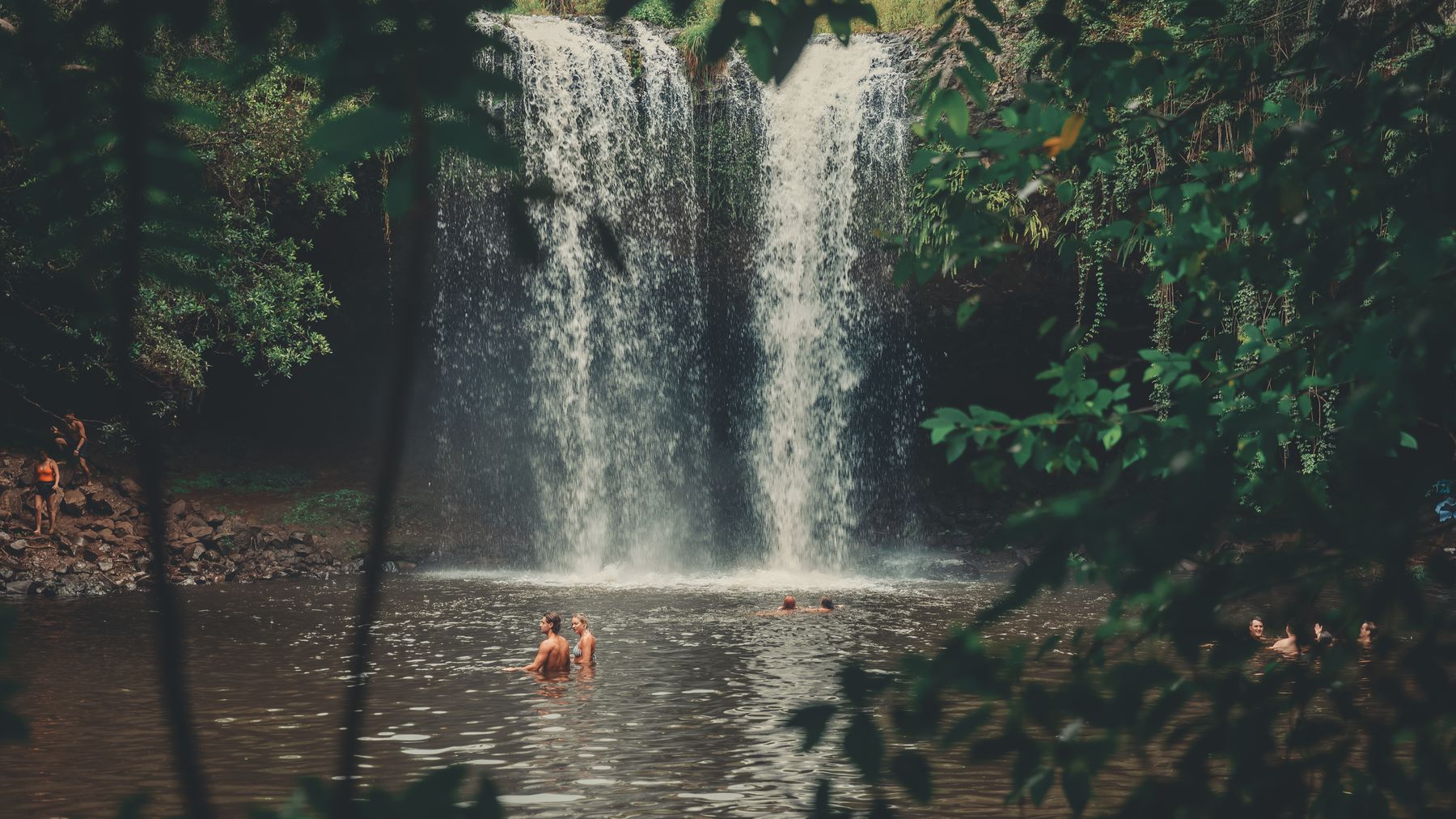
Photo by Brayden Stanford on Pexels
Practical tips
- Bring cash. There are no ATMs near the waterfall, and card payments don't exist out here. Load up in Buon Ma Thuot.
- Water and snacks. Carry at least 1.5 liters of water per person. There's no vendor at the site.
- Trash. Pack out everything you bring in. There are no bins on the trail.
- Phone signal. Spotty at best near the falls. Viettel has the strongest coverage in rural Dak Lak, but don't count on data working reliably once you're on the trail.
- Footwear. Closed-toe shoes with tread. The rocks around the cascade are slick with algae.
Common mistakes
Going midday in dry season
The falls are at their thinnest and the light is flat. Morning visits are better in every way.
Not allowing enough driving time
The road is decent but slow — lots of curves, farm vehicles, and the occasional herd of cows. People budget an hour and end up taking 90 minutes. Don't plan this as a quick side trip on a day you have a flight.
Expecting infrastructure
There's no entrance fee, no ticket booth, no changing rooms, no café. This is a raw site. That's the point — but come prepared.
Practical notes
Thac H'Ly works best as a half-day trip from Buon Ma Thuot, combined with a coffee-farm stop on the return. If you're building a longer Central Highlands loop — say, Buon Ma Thuot to Da Lat over several days — it slots in well on your first or last day in Dak Lak. Just don't expect a polished tourism experience. Expect a waterfall, a forest, and very few other people.
Last updated · May 29, 2026 · independently researched, never sponsored.







