What it is and why it matters
Den Mau Au Co sits on Hung Mountain in Hiem Quan commune, Ha Hoa district, Phu Tho province — about 80 km northwest of Hanoi. The temple honors Au Co, the mythical mountain fairy who, according to Vietnam (베트남 / 越南 / ベトナム)'s origin story, married Dragon Lord Lac Long Quan and gave birth to a sac of one hundred eggs. Those eggs became the hundred Viet clans, and every Vietnamese person traces a symbolic lineage back to this couple.
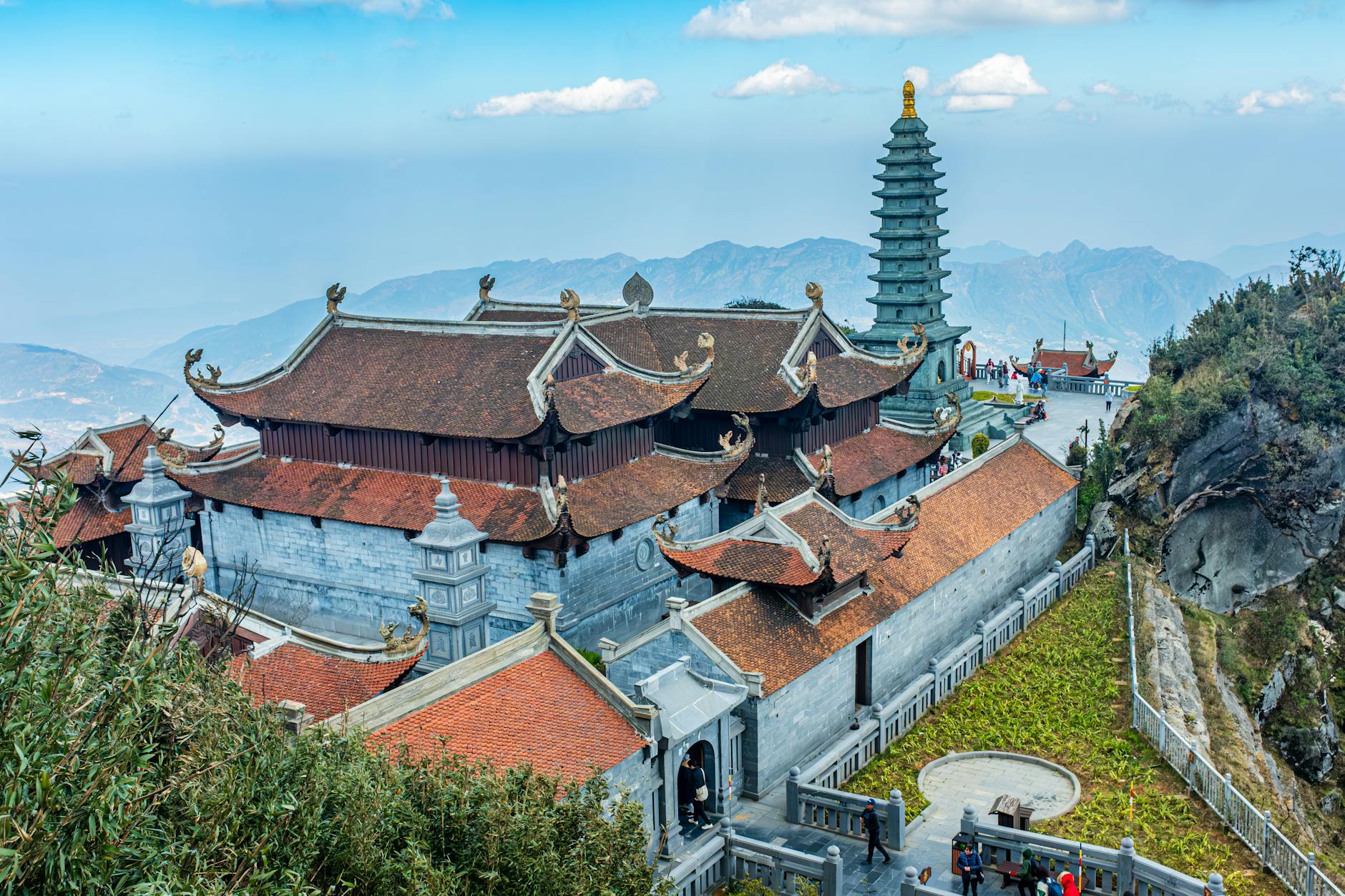
The current temple complex was rebuilt and expanded in 2005 on a site that locals say has been sacred for centuries. It's not a massive complex — three main structures arranged along a hillside — but the setting is quiet, forested, and genuinely atmospheric in a way that the more famous Hung Temple complex down the road sometimes isn't, especially during festival season when the crowds descend.
If you're interested in the foundational myths of Vietnamese culture, this is one of the few places where those stories are physically anchored to a landscape. It pairs well with a visit to the Hung Kings Temple, about 25 km southeast, where the Hung Kings Festival draws enormous crowds every year around the tenth day of the third lunar month.
Why travelers go
Most visitors are Vietnamese pilgrims, especially around the Hung Kings Festival period in spring. Foreign travelers are rare, which means you get a genuine local experience rather than a tourist circuit. People come for a few reasons: to pay respects at a site tied to the national creation myth, to walk through a temple complex that's well-maintained but not over-commercialized, and to get a feel for the spiritual culture of the northern midlands — a region most travelers blow past on the way to Sapa or Ha Giang.
The temple grounds also sit high enough on the hillside that you get wide views over the surrounding valleys and tea plantations. It's a good half-day trip if you're already in Phu Tho, or a worthwhile detour if you're driving the back roads between Hanoi (하노이 / 河内 / ハノイ) and the northwest.
Best time to visit
The prime window is March through April, coinciding with the lunar spring festival season. The seventh day of the third lunar month is the official Au Co Temple Festival — expect incense, ceremonial processions, folk games, and a lot more people than usual. If you want the atmosphere without the crush, aim for a weekday in the same period.
Autumn (September–November) is also pleasant: cooler air, thinner crowds, and the surrounding hills turn a deeper green after the rains taper off. Avoid midsummer (June–August) if you dislike heat and humidity — Phu Tho doesn't have the altitude relief of Da Lat or Sapa, and temperatures regularly push past 35°C.

Photo by Quang Nguyen Vinh on Pexels
How to get there from Hanoi
By bus: Catch a bus from My Dinh bus station heading to Ha Hoa or Thanh Ba. Tickets run about 80,000–120,000 VND. The ride takes roughly 2.5–3 hours depending on traffic and stops. From Ha Hoa town, hire a local "xe om" (motorbike taxi) for the remaining 8 km to the temple — expect to pay around 30,000–50,000 VND.
By motorbike or car: Take the Noi Bai–Lao Cai expressway (CT05), exit at Phong Chau, then follow provincial roads through Ha Hoa district. Total distance is about 115 km via expressway, roughly 2 hours by car or 2.5 by motorbike. The final stretch is a narrow but paved road winding uphill. Parking at the temple is free.
By private car/Grab: A one-way private car from central Hanoi costs around 1,200,000–1,500,000 VND. For a day trip, negotiate a round-trip rate with waiting time — somewhere around 2,000,000–2,500,000 VND is reasonable.
What to do
Walk the three-temple axis
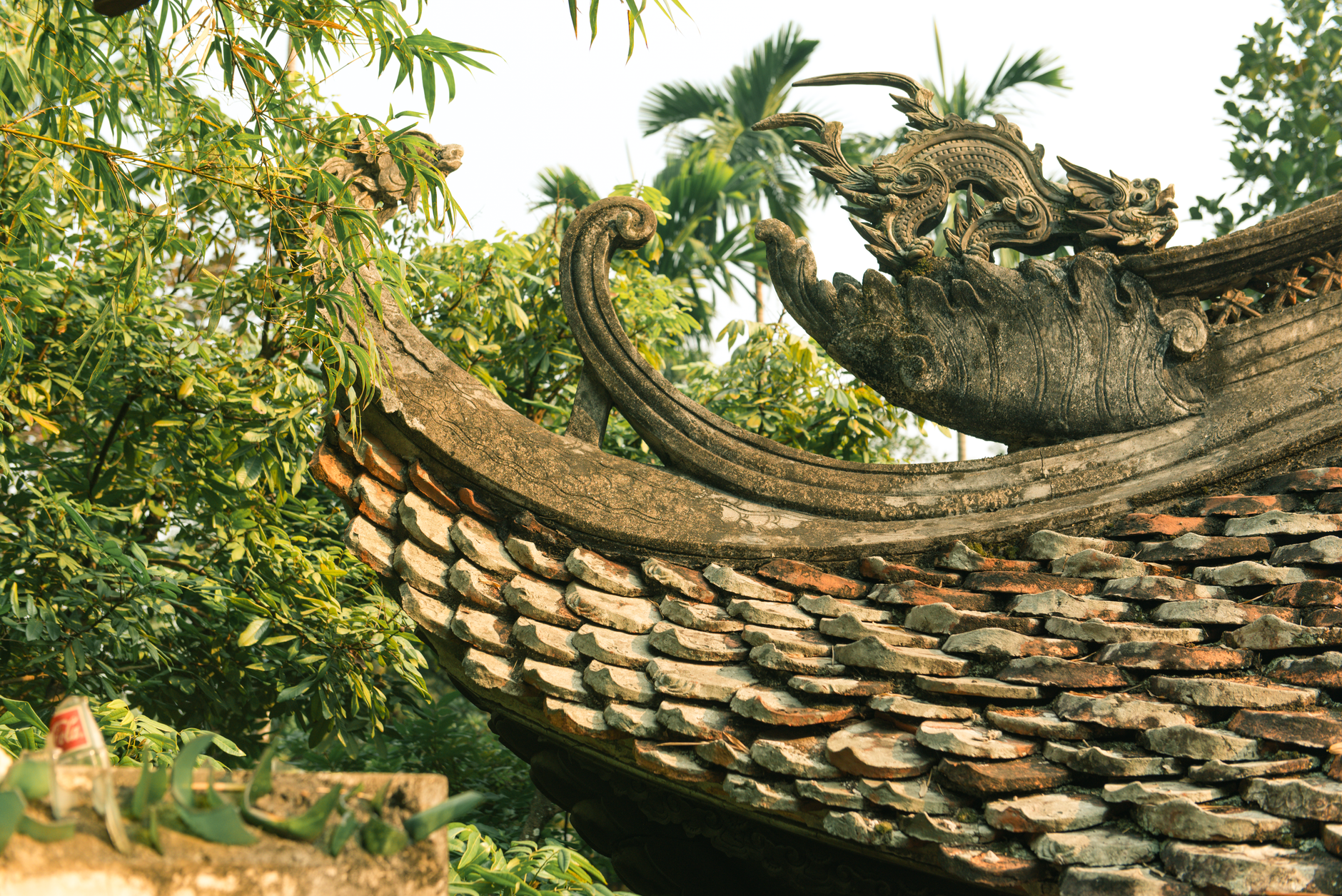
The complex follows a front-to-back ascending layout: the Ha Temple (lower), Trung Temple (middle), and Thuong Temple (upper). Each is a short climb from the last. The upper temple is the main shrine to Au Co. Take your time on the stone steps — the forest canopy provides decent shade, and the stone carvings along the path are worth pausing for.
Light incense and observe the rituals
Even if you're not religious, buying a bundle of incense (5,000–10,000 VND from vendors at the entrance) and following the local customs — three bows, plant the incense, step back — is a small gesture of respect that locals appreciate. Watch how others do it first if you're unsure.
Visit the Au Co cultural hall
A small exhibition building near the lower temple tells the Au Co–Lac Long Quan origin story through murals and dioramas. The displays are in Vietnamese, but the visuals are self-explanatory. It takes about 15 minutes.
Explore the surrounding tea hills
Ha Hoa district is tea country. Walking or riding a motorbike through the surrounding plantations gives you a feel for rural Phu Tho that most travel itineraries miss entirely. The tea here is mostly green tea for domestic consumption — not the artisan stuff from Thai Nguyen, but the landscape is just as good.
Combine with Hung Temple
The Hung Kings Temple complex in Viet Tri is about 25 km southeast. If you've got a full day, visiting both sites makes sense — Au Co in the morning, Hung Temple after lunch. Both are tied to the same origin mythology.
Where to eat nearby
Ha Hoa town has a handful of "com binh dan" (everyday rice) restaurants along the main road. Look for places with a crowd at lunchtime — that's your quality signal.
Two local dishes worth seeking out in Phu Tho province:
- "Thit chua" (sour fermented pork): A Phu Tho specialty — pork cured with rice powder and galangal, wrapped in banana leaves. Tangy, slightly funky, served with fresh herbs. You'll find it at most local eateries and market stalls.
- "Bun oc" (snail noodle soup): A northern staple done well in this region. Look for roadside stalls in Ha Hoa town center. A bowl runs 25,000–35,000 VND.
If you're heading back through Viet Tri, the city has better restaurant variety, including decent "pho" and "bun cha" spots along Tran Phu street.

Photo by Tiểu Bảo Trương on Pexels
Where to stay
Ha Hoa town has a few guesthouses ("nha nghi") in the 150,000–300,000 VND/night range. They're basic — clean bed, fan or AC, hot water — but functional. Don't expect English-speaking staff.
For more comfort, base yourself in Viet Tri city (about 40 minutes south), where mid-range hotels cost 400,000–800,000 VND/night. Muong Thanh and a few other chains have properties there.
Most travelers doing a day trip from Hanoi don't need to stay overnight at all.
Practical tips locals would tell you
- Dress modestly. Shoulders and knees covered. This is a functioning temple, not a museum. Shorts and tank tops draw disapproving looks.
- Bring cash. There are no ATMs near the temple. Ha Hoa town has a couple, but don't count on them working.
- Wear shoes you can slip on and off. You'll remove them at each temple entrance.
- Start early. The temple opens at dawn. Morning light through the forest is the best time for photos, and you'll beat the midday heat.
- Learn one phrase: "Con xin phep" (roughly: "I respectfully ask permission") — said quietly before entering a shrine room. Locals will notice and appreciate it.
Common mistakes to avoid
- Coming only during the festival and expecting a peaceful experience. The Au Co Temple Festival draws thousands. If contemplation is your goal, visit a different week.
- Skipping the upper temple. Some visitors stop at the lower temple and turn around. The upper shrine — the actual Au Co altar — is the whole point. It's only a 10-minute climb.
- Not combining it with Hung Temple. They're close enough that doing both in a day is easy, and the cultural context of one enriches the other.
Last updated · May 29, 2026 · independently researched, never sponsored.