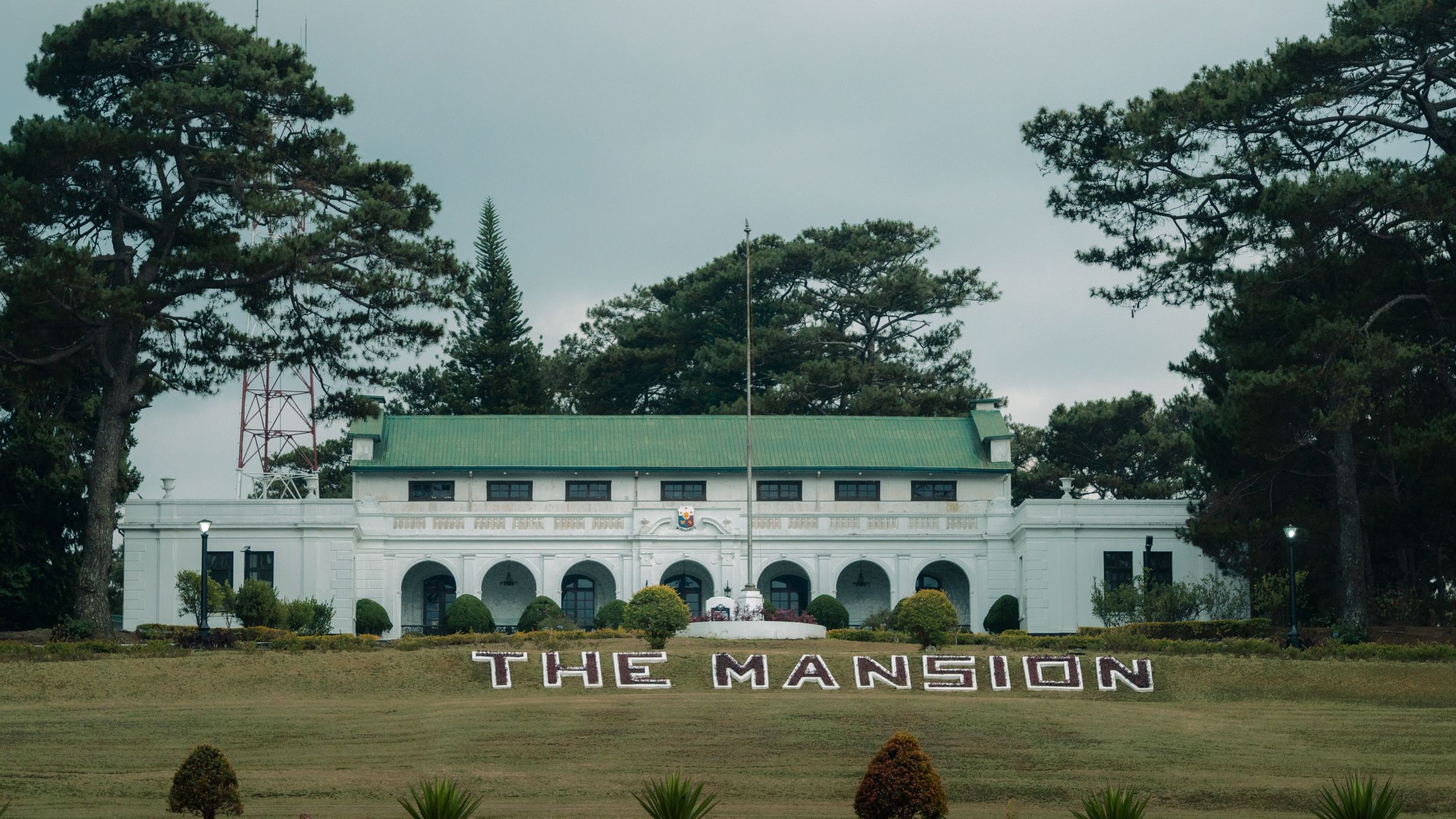
Dinh 1 sits on a pine-covered hill about 4 km southeast of Da Lat's center, and most visitors walk right past it on their way to the more famous Bao Dai Summer Palace (Dinh 3). That's a mistake. Dinh 1 is the quieter, better-preserved of Da Lat's three presidential villas, and it gives you a sharper sense of what colonial-era life in the highlands actually looked like.
What it is and how it got here
Built between 1937 and 1940, Dinh 1 was originally the residence of the French Governor-General of Indochina during their summer retreats to Da Lat (달랏 / 大叻 / ダラット). The architect, Paul Veysseyre, designed the villa in an Art Deco style adapted to the highland climate — high ceilings, large windows catching cross-breezes, and wide terraces looking out over the surrounding pine forest.
After 1954, the palace became the working residence of Ngo Dinh Nhu and later served various administrative purposes. Today it operates as a museum. The interior has been kept largely intact: original parquet floors, period furniture, porcelain, maps of colonial-era Indochina on the walls, and a few rooms arranged as they would have been in the late 1930s. It's not a blockbuster museum — it's a house that tells a story through its rooms.
Why travelers go
Dinh 1 appeals to a specific kind of visitor. If you're into architecture, colonial history, or just want an hour of quiet away from Da Lat's increasingly busy center, this is worth the detour. The grounds alone — mature pine trees, trimmed hedges, gravel paths — feel like a different city from the construction noise downtown.
The building itself is genuinely handsome. Art Deco in the Vietnamese highlands is a strange combination, and Veysseyre made it work. The proportions are elegant without being showy. Compared to Dinh 3, which gets bus-tour traffic and feels more like a theme park stop, Dinh 1 is calm enough that you might have entire rooms to yourself.
Best time to visit
Da Lat's weather is mild year-round, but the sweet spot for Dinh 1 is November through March — dry season, cooler temperatures (15-22°C), and the gardens look their best. Mornings are ideal; you'll catch the light through the east-facing windows and avoid the occasional afternoon fog that rolls in during rainy season (May-October).
Weekday mornings are significantly quieter than weekends. If you visit on a Saturday, expect domestic tour groups, especially around holidays like Tet.
How to get there
From central Da Lat (around Da Lat Market), Dinh 1 is about 4 km southeast along Tran Hung Dao street, then a turn onto Tran Quang Dieu.
- Motorbike or scooter: 10-15 minutes. Parking at the gate costs around 5,000 VND.
- Grab/taxi: 25,000-40,000 VND one way from the center.
- Walking: Possible if you enjoy hills — about 45 minutes uphill from the market area.
If you're arriving in Da Lat from Saigon, the most common route is a bus from Ben Thanh area (around 200,000-280,000 VND, 7-8 hours) or a flight to Lien Khuong Airport, which is 30 km south of the city (airport taxi into town runs about 200,000-250,000 VND).

Photo by Cá Bảo on Pexels
What to do
Walk the interior rooms
Take your time with the ground floor reception rooms and the upstairs private quarters. The dining room still has its original table set for eight. Look for the old Indochina maps — they show Da Lat as a tiny hill station dot, which puts the whole place in perspective. Admission is 40,000 VND per person.
Explore the gardens
The grounds stretch across several hectares of landscaped pine forest. There's a rose garden (hit or miss depending on the season) and a series of gravel walkways that loop around the property. The rear terrace has one of the better views in Da Lat — rolling hills, pine canopy, minimal concrete. Bring a book.
Combine with Dinh 3 and Dinh 2
Dinh 3 (Bao Dai Summer Palace) is about 2 km away and worth seeing for comparison — it's grander but more tourist-oriented. Dinh 2 is closer to the center and smaller. Visiting all three in a morning by motorbike is easy and gives you the full picture of Da Lat's colonial architecture.
Photograph the Art Deco details
If you're into architectural photography, the staircases, window frames, and ironwork at Dinh 1 are the best-preserved examples of 1930s Art Deco in the Vietnamese highlands. Morning light between 7:30-9:00 is ideal for the front facade.
Sit and do nothing
Seriously. The benches on the upper terrace are shaded by old pines, and there's almost no noise. After the sensory overload of Da Lat's night market, this is a reset.
Where to eat nearby
Dinh 1 is in a residential area without a strip of restaurants at its doorstep, but a few options are close.
- Head back toward the center on Tran Hung Dao for a bowl of "bun bo Hue" at one of the small shophouses — Da Lat has a surprisingly good version of this central Vietnamese noodle soup, brought by families who migrated south decades ago. Expect 35,000-50,000 VND.
- Da Lat is famous for "banh canh" — thick tapioca noodle soup, often served with crab or pork. Banh Canh Da Lat on Ngo Quyen is a local pick, about 1.5 km from Dinh 1. A bowl runs 40,000-55,000 VND.
- For coffee afterward, the streets around Hoa Binh Theatre in the center are loaded with cafes. Da Lat takes its "vietnamese coffee" seriously — the highlands grow a significant chunk of Vietnam's arabica.
Where to stay
Da Lat has accommodation across every budget:
- Budget: Hostels and basic guesthouses around the market area, 150,000-300,000 VND/night.
- Mid-range: Boutique hotels on the hills south of Xuan Huong Lake, 500,000-1,200,000 VND/night. Many have pine-forest views.
- Upper-range: A few well-run resorts on the outskirts (toward Tuyen Lam Lake), 1,500,000-3,500,000 VND/night.
Stay central if you want walkability. Stay near Tuyen Lam if you want quiet.

Photo by Tong Quan on Pexels
Practical tips locals would tell you
- Bring a light jacket. Even in dry season, Da Lat mornings can dip below 18°C, and the pine-shaded grounds of Dinh 1 feel cooler than the city center.
- The ticket office closes at 4:30 PM. Last entry is around 4:00 PM. Don't show up late.
- There's no cafe or gift shop inside. Bring water.
- If you're visiting during a public holiday (especially Tet or the April 30 long weekend), the palace grounds get busy with domestic visitors taking photos in "ao dai (아오자이 / 奥黛 / アオザイ)." Plan for early morning or skip those dates.
Common mistakes to avoid
- Skipping Dinh 1 for Dinh 3 only. Dinh 3 is fine, but Dinh 1 has better architecture and far fewer people. Do both.
- Relying on walking. The hill up to Dinh 1 is steeper than it looks on Google Maps. Grab a bike or a Grab.
- Visiting in afternoon fog. Rainy-season afternoons (June-September) can bring dense mist that kills the views and makes the gardens feel gloomy. Morning visits are safer year-round.
- Not budgeting enough time. Most people spend 20 minutes and leave. Give it at least 45 minutes to an hour — the rooms reward slow looking, and the grounds are worth a full lap.
Practical notes
Dinh 1 is a low-key stop that rewards attention. It won't blow your schedule open, but it fills a quiet hour well and gives you a piece of Da Lat's history that the flower gardens and cable cars don't touch. Pair it with the other two palaces for a morning route, then eat your way back into town.
Last updated · May 26, 2026 · independently researched, never sponsored.








