What it is
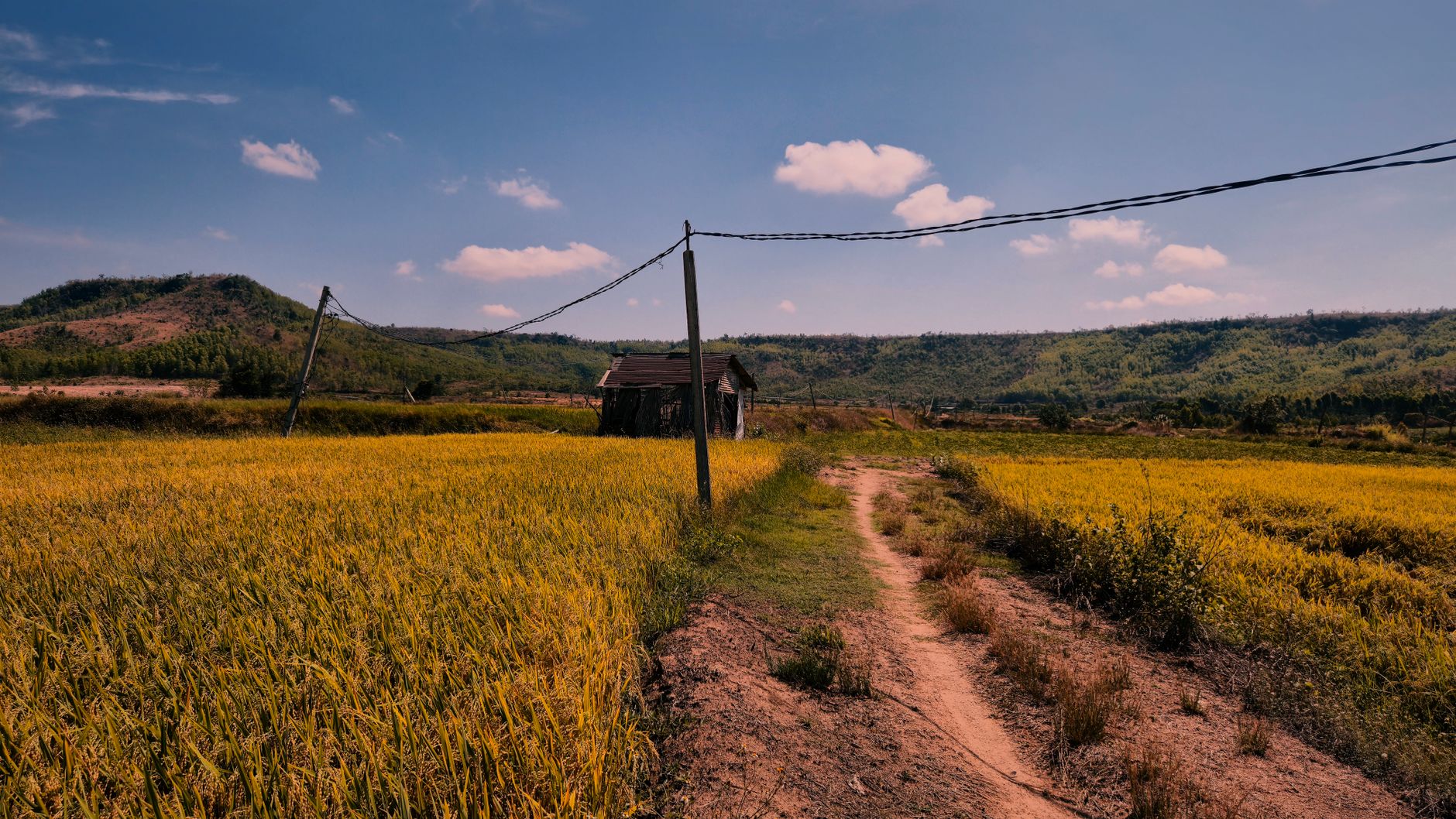
Dap Tan Son is an irrigation reservoir sitting at the border zone where Gia Lai province meets the northern edge of Binh Dinh, in Vietnam's Central Highlands (중부 고원 / 中部高原 / 中部高原). Built primarily to serve agricultural needs — rubber plantations, coffee farms, and rice paddies downstream — the dam created a sizeable lake surrounded by low hills covered in scrubby forest and red laterite soil. It's not a tourism mega-project. There's no ticket booth, no parking lot full of tour buses. That's precisely the point.
The reservoir dates back to the post-reunification era of infrastructure development in the highlands, part of a broader irrigation network feeding the Kon and Ba river systems. For decades it served farmers and not much else. In recent years, domestic travelers from Quy Nhon and Pleiku started showing up on weekends — mostly photographers chasing golden-hour light over still water, and families looking for a picnic spot away from town.
Why travelers go
Three reasons, really. First, the landscape. The Central Highlands get overlooked by foreign visitors who default to Da Lat or Sapa for their mountain fix. Dap Tan Son offers something different: wide-open water reflecting terracotta hills, scattered eucalyptus groves, and the occasional fishing boat drifting at dawn. It's not dramatic in the Ha Long Bay sense — it's calm, spacious, and almost empty.
Second, it works as a half-day detour if you're already driving between Pleiku and Quy Nhon on QL19 (one of Vietnam (베트남 / 越南 / ベトナム)'s more scenic national highways). The reservoir sits close enough to the main road that you don't lose much time.
Third, the area gives you a taste of highland ethnic-minority culture. Bahnar and Jarai communities live in villages nearby, and you'll see traditional stilt houses, communal "rong" houses, and — if your timing is right — gong ceremonies tied to harvest festivals.
Best time to visit
The Central Highlands have two seasons that matter: dry (November to April) and wet (May to October). For Dap Tan Son specifically:
- November–February: Best months. Water level is still high from recent rains, air is cool (18–25°C in the mornings), skies are clear. The surrounding hills are at their greenest.
- March–April: Drier, hotter (up to 35°C by midday), but the lake remains photogenic. Dust on the laterite roads picks up.
- May–October: Rainy season. Roads can get muddy, especially the last few kilometers of unpaved track near the reservoir. The upside: dramatic cloud formations and empty shores.
Weekdays are always quieter than weekends, when Pleiku families drive out for picnics.
How to get there
Dap Tan Son is roughly 50 km southeast of Pleiku city center and about 80 km west of Quy Nhon. The most common approach:
From Pleiku: Take QL19 east toward Binh Dinh. After passing An Khe town, watch for the turnoff south toward the reservoir — locals know it, Google Maps pins it correctly. The last 5–7 km is a mix of concrete village road and packed-earth track. A motorbike handles it fine; a car works in dry season but may struggle on muddy stretches after heavy rain.
From Quy Nhon: Head west on QL19 through the An Khe Pass (Deo An Khe, a scenic ride in its own right). Total drive is around 2 hours by motorbike, 1.5 hours by car.
No public bus goes directly to the reservoir. You'll need your own wheels — rented motorbike from Pleiku (150,000–200,000 VND/day for a Honda Wave) or a car with driver (around 1,200,000 VND for a day trip from Pleiku).

Photo by HONG SON on Pexels
What to do
At the reservoir
- Walk the dam crest: The top of the dam is a flat concrete path, maybe 300 meters long, with views over the lake on one side and the valley below on the other.
- Photography: Early morning (6:00–7:30) and late afternoon (16:00–17:30) give you the best light. Mist sometimes sits on the water at dawn.
- Fishing: Locals fish from the banks with simple rod-and-line setups. You can join if you bring your own gear — no permit needed, no organized fishing tours.
- Picnic: Flat grassy areas near the spillway work well. Bring your own food and water; there's no vendor at the site.
Nearby
- Bahnar villages: A few kilometers from the reservoir, ask for directions to the nearest "lang" (village) with a rong house. Be respectful — these are people's homes, not exhibits. A small gift (fruit, snacks) goes further than cash.
- An Khe town: 20 minutes back toward QL19. Has a morning market worth browsing for local coffee beans, dried jackfruit, and "com lam" (bamboo-tube rice).
Where to eat
There's nothing at the reservoir itself — no restaurant, no cafe, no convenience store. Plan accordingly.
In An Khe (closest town with options):
- Market stalls serve "bun" noodle soups and "com binh dan" (everyday rice plates) for 25,000–40,000 VND.
- A few "quan nhau" (drinking-food spots) along the main road do grilled meats and fried spring rolls — "cha gio" done highland-style with a peppery dipping sauce.
- Local Vietnamese coffee from small family shops costs 12,000–18,000 VND per iced glass.
In Pleiku (if returning):
- Try "pho kho" (dry pho) — a Gia Lai specialty where noodles come separate from the broth, tossed with garlic oil and ground pork. Stalls cluster around Hung Vuong and Tran Phu streets, 35,000–50,000 VND a bowl.
Where to stay
No accommodation exists at the reservoir. Your options:
- Pleiku: Widest range. Budget hotels on Le Loi Street run 250,000–400,000 VND/night. Midrange places like Duc Long Gia Lai Hotel offer clean rooms around 600,000–900,000 VND.
- An Khe: A handful of "nha nghi" (guesthouses) for 150,000–250,000 VND. Basic but functional — expect a fan room, thin mattress, and shared bathroom.
- Camping: Possible near the reservoir if you're self-sufficient. No facilities, no security — just you and the frogs.

Photo by Tường Chopper on Pexels
Practical tips
- Bring sunscreen and a hat. The highlands sun is deceptive — you'll burn faster than you expect at elevation.
- Carry cash. There are no ATMs near the reservoir. An Khe has a few, Pleiku has plenty.
- Fill your fuel tank before leaving QL19. No gas station on the access road.
- Phone signal is patchy near the water. Download offline maps beforehand.
- If you're combining this with a longer Central Highlands loop, the Pleiku–Kon Tum–Dak Lak route gives you access to more ethnic-minority culture, waterfalls, and coffee plantations.
Common mistakes
- Arriving midday: The light is flat, the heat is brutal, and you'll wonder what the fuss is about. Come early or late.
- No water or food: People assume there'll be a shop. There won't be. Pack at least 2 liters of water and some banh mi from town.
- Expecting a tourist site: There are no signs in English, no guides, no boat rides. This is a working reservoir that happens to be beautiful. Adjust expectations accordingly.
- Driving the dirt road after heavy rain without checking conditions: Ask locals in An Khe about road state before committing — "duong vao dap co di duoc khong?" (Can I get to the dam?) works even with broken Vietnamese and some pointing.
Final note
Dap Tan Son won't make anyone's top-ten Vietnam list. It's not trying to. If you're already passing through Gia Lai on QL19, or you want a reason to slow down between Pleiku and the coast, the reservoir offers a few quiet hours in a landscape most travelers never see. That's enough.
Last updated · May 29, 2026 · independently researched, never sponsored.