What Den May Is
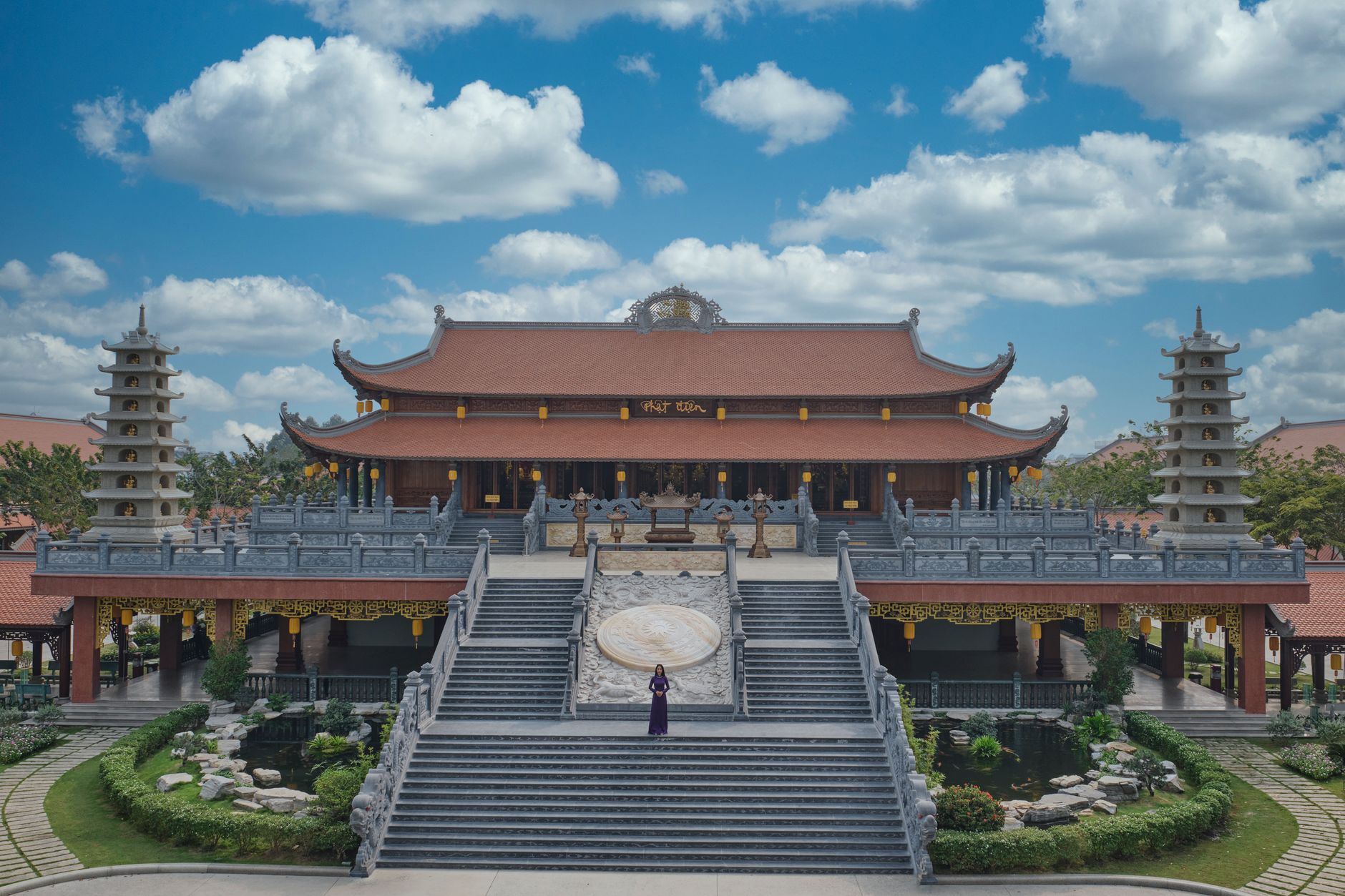
Den May (Cloud Temple) sits in Hung Yen province, about 60 km southeast of Hanoi in the flat Red River Delta lowlands. The temple dates back several centuries and is dedicated to a local deity associated with water and agriculture — fitting for a region where rice paddies stretch to the horizon in every direction. The complex includes the main worship hall, a front courtyard with banyan trees, and secondary shrines arranged in a layout typical of northern Vietnamese communal temples.
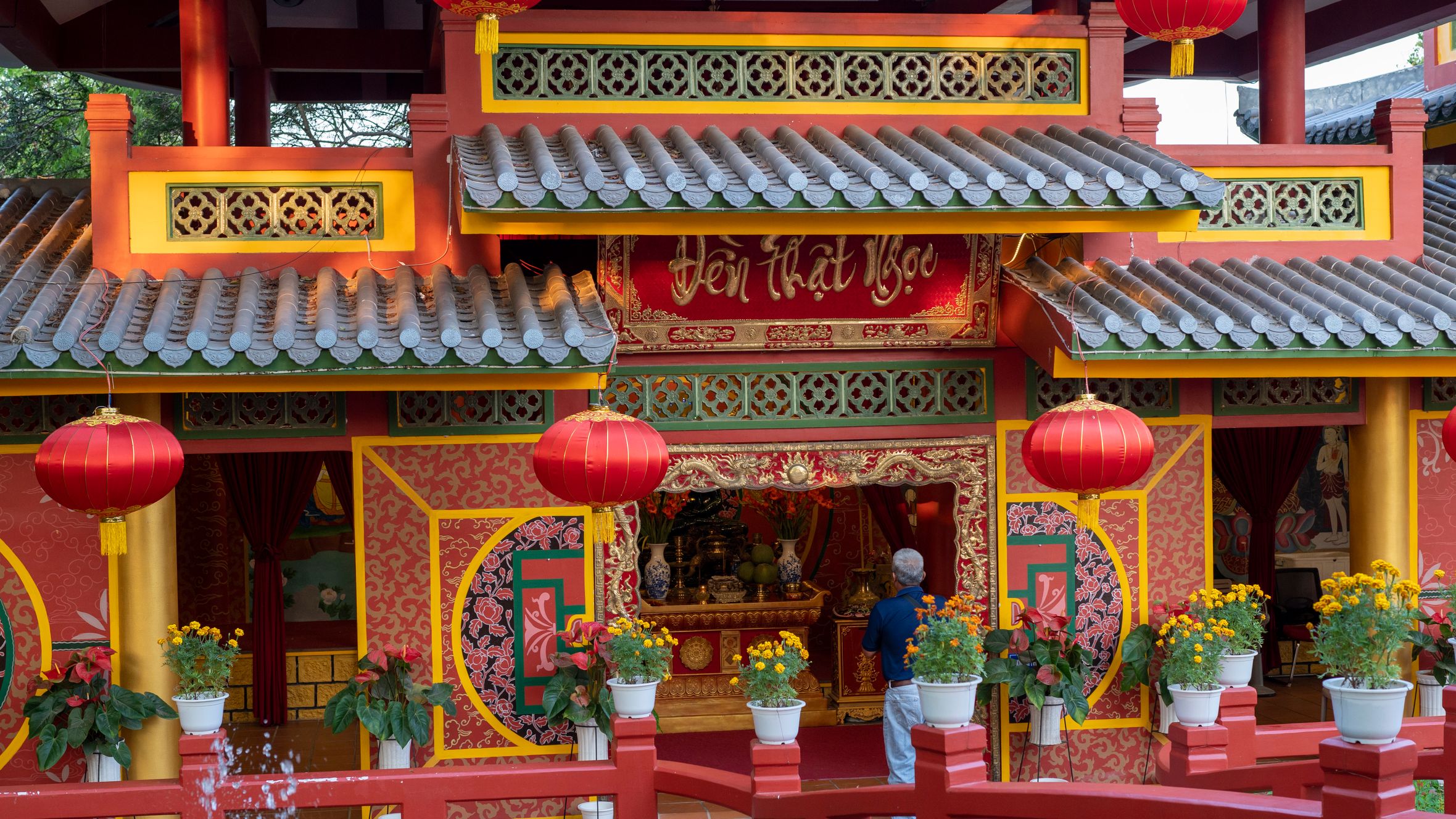
Unlike the heavily touristed sites around Hanoi (하노이 / 河内 / ハノイ), Den May receives mostly domestic visitors — pilgrims and families from surrounding villages. The architecture is modest but genuine: carved wooden beams darkened by incense smoke, stone stele with inscriptions, and tile roofs with dragon ridge ornaments that haven't been over-restored.
Why Travelers Go
Den May appeals to a specific kind of traveler: someone who wants to see how northern Vietnamese spiritual life works outside the famous Hanoi temples like Tran Quoc Pagoda or the Temple of Literature. There are no ticket booths, no tour buses, no souvenir gauntlet. You show up, walk around, maybe watch locals making offerings, and get a sense of village-level religious practice that has continued largely unchanged for generations.
It's also a good excuse to explore Hung Yen province itself — an area most foreign travelers skip entirely. The province produces excellent "nhan long" (longan fruit), and the surrounding countryside is genuinely peaceful without being packaged as a "countryside experience."
Best Time to Visit
The temple is open year-round, but two windows stand out:
February to April ([lunar new year](/posts/tet (뗏 (베트남 설날) / 越南春节 / テト)-lunar-new-year-guide) through spring festival season): This is when Den May sees its busiest periods. Local festivals bring processions, offerings, and ceremonies that give the temple real energy. If your visit overlaps with Tet or the weeks after, you'll see the courtyard decorated and active.
September to November: Cooler weather, fewer visitors, and the surrounding rice fields turn gold before harvest. The light is good for photography and the heat has broken enough that cycling around the area is pleasant rather than punishing.
Avoid June through August if you dislike heat and humidity — the delta is brutally hot and the temple offers limited shade.
How to Get There from Hanoi
Hung Yen city is the main hub. From there, Den May is roughly 15-20 km depending on which route you take through the province's network of small roads.
Option 1 — Bus: Catch a bus from Giap Bat bus station in Hanoi to Hung Yen city. Departures run every 30-45 minutes, the ride takes about 1.5 hours, and tickets cost 60,000-80,000 VND. From Hung Yen city, grab a local xe om (motorbike taxi) for 40,000-60,000 VND to the temple, or use Grab if coverage is available.
Option 2 — Motorbike: Ride from Hanoi via National Road 5 or the newer expressway toward Hai Phong, then cut south. Total distance is about 60-70 km and takes around 1.5 hours without traffic. This gives you freedom to stop at other sites in the province.
Option 3 — Private car/taxi: A Grab car from Hanoi runs roughly 350,000-500,000 VND one way. Practical if you're combining Den May with other Hung Yen stops.

Photo by Quang Nguyen Vinh on Pexels
What to Do
Walk the Temple Complex
Take your time in the main hall. Look up at the wooden beam carvings — many depict scenes from folk tales. The incense holders and altar arrangements follow a specific hierarchy that's worth understanding. If someone is tending the temple, they'll often explain things if you ask politely (even with limited Vietnamese and hand gestures).
Read the Stone Stele
Several carved stone stele in the courtyard record the temple's history, renovations, and donor lists going back generations. Even if you can't read Han Nom script, the craftsmanship on the older ones is worth examining.
Explore the Surrounding Village
The area around Den May is working farmland. Walk or cycle through the lanes between rice paddies. You'll pass fish ponds, small family shrines, and possibly a local market if your timing is right.
Visit During a Ceremony
If you time your visit to a festival day (ask at your hotel or check lunar calendar dates), you'll see "ca tru" or folk music performances, procession rituals, and communal feasting. The atmosphere shifts completely from quiet to celebratory.
Combine with Pho Hien
The ancient trading port of Pho Hien is in Hung Yen province and makes a natural pairing. It was once a major commercial hub rivaling Hoi An in the 17th century, though far less remains today.
Where to Eat Nearby
Hung Yen province isn't a food destination on the level of Hanoi or Hue, but two things are worth seeking:
"Bun thang" Hung Yen style: The local version of this Hanoi-origin noodle soup tends to be slightly simpler, with shredded chicken, egg ribbons, and a clear broth. Look for small shops near the provincial market.
Longan desserts and dried longan: Hung Yen's longan is famous across Vietnam. In season (July-August), fresh fruit is everywhere. Year-round, you'll find dried longan and longan-based "che" (sweet soup) at market stalls. Budget 20,000-40,000 VND for a bowl.
For a proper meal, Hung Yen city has basic "com binh dan" (daily rice) restaurants where 40,000-60,000 VND gets rice with two or three dishes.
Where to Stay
Hung Yen city has a handful of mini-hotels and guesthouses. Don't expect anything fancy:
- Budget (200,000-400,000 VND/night): Basic rooms with AC, hot water, wifi. Clean enough. Look along the main roads near the bus station.
- Mid-range (500,000-800,000 VND/night): A few newer hotels with slightly better furniture and breakfast included. Check booking apps for current options.
Most foreign travelers treat this as a day trip from Hanoi and don't stay overnight. If you do stay, it's quiet after 9 PM.

Photo by Hồng Quang Official on Pexels
Practical Tips
- Dress modestly at the temple: cover shoulders and knees. This is a functioning place of worship, not a museum.
- Bring cash. Card payments are rare outside Hung Yen city proper.
- If riding a motorbike, the small roads in the delta are flat but narrow, with trucks and farm vehicles. Stay alert.
- The temple grounds are small — you won't need more than 45-60 minutes for the temple itself. Budget the rest of your time for the surrounding area.
- There's no entrance fee, but a small donation (20,000-50,000 VND) in the offering box is appropriate.
Common Mistakes
- Showing up without checking festival dates: The temple is atmospheric but quiet on regular days. If you want to see it alive, time your visit to a lunar festival.
- Not bringing water: There may not be a vendor nearby, especially outside festival periods. The delta heat is real.
- Rushing it as a checkbox stop: Den May rewards slow observation. If you speed-walk through in 15 minutes, you'll wonder why you came. Sit in the courtyard, watch the incense burn, notice the details.
Practical Notes
Den May works best as part of a broader Hung Yen province day trip from Hanoi rather than a standalone destination. Pair it with Pho Hien, a longan orchard visit (in season), and lunch in town for a full day. It's the kind of place that reminds you Vietnam's cultural depth extends well beyond the tourist circuit.
Last updated · May 29, 2026 · independently researched, never sponsored.