What it is
Dong Cuu An Hoa is a sheep grazing area spread across the arid, scrubby flatlands near the former Ninh Thuan coast, now part of the expanded Khanh Hoa province after the 2025 administrative merger. It's not a farm you buy tickets to or a manicured attraction — it's an active grazing ground where local Cham and Kinh shepherds bring flocks of several hundred sheep to feed on dry grass and low brush each morning.
The landscape here looks nothing like the green rice paddy Vietnam (베트남 / 越南 / ベトナム) of postcards. Think cracked red earth, scattered cacti, short yellow grass, and a wide-open sky that feels more like rural Rajasthan than Southeast Asia. The sheep — mostly a local breed adapted to the province's semi-arid climate — graze in loose herds across open ground, tended by shepherds who've worked this land for generations.
Photographers started showing up around 2016, and since then it's become a regular stop for Vietnamese travelers doing the Cam Ranh–Phan Rang coastal stretch. Foreign visitors are still rare, which is part of the appeal.
Why travelers go
Three reasons, honestly. First, the visuals: the contrast of white sheep against sun-baked red-brown earth photographs extremely well, especially in early morning light. Second, it's a genuine slice of rural working life — shepherds aren't performing for tourists, they're doing their job. Third, the whole Ninh Thuan coastal strip (now southern Khanh Hoa) has a distinct vibe unlike anywhere else in Vietnam. The Cham cultural influence, the dry climate, the vineyards and salt fields — it all feels like a different country.
Don't come expecting a petting zoo or organized experience. Come expecting a quiet field, some sheep, and good light.
Best time to visit
The dry season runs roughly from December through April, and that's when the grazing fields look their best — golden grass, clear skies, minimal mud. January and February tend to be ideal: the light is soft, temperatures sit around 26-30°C, and the landscape has that parched, cinematic quality.
Avoid September through November if you can. The tail end of the rainy season turns the fields muddy and the sheep are sometimes moved to higher ground. Mornings are non-negotiable for timing — shepherds bring the flocks out around 5:30-6:00 AM and start moving them back by 9:00 AM as the heat builds. Show up at noon and you'll find an empty field.
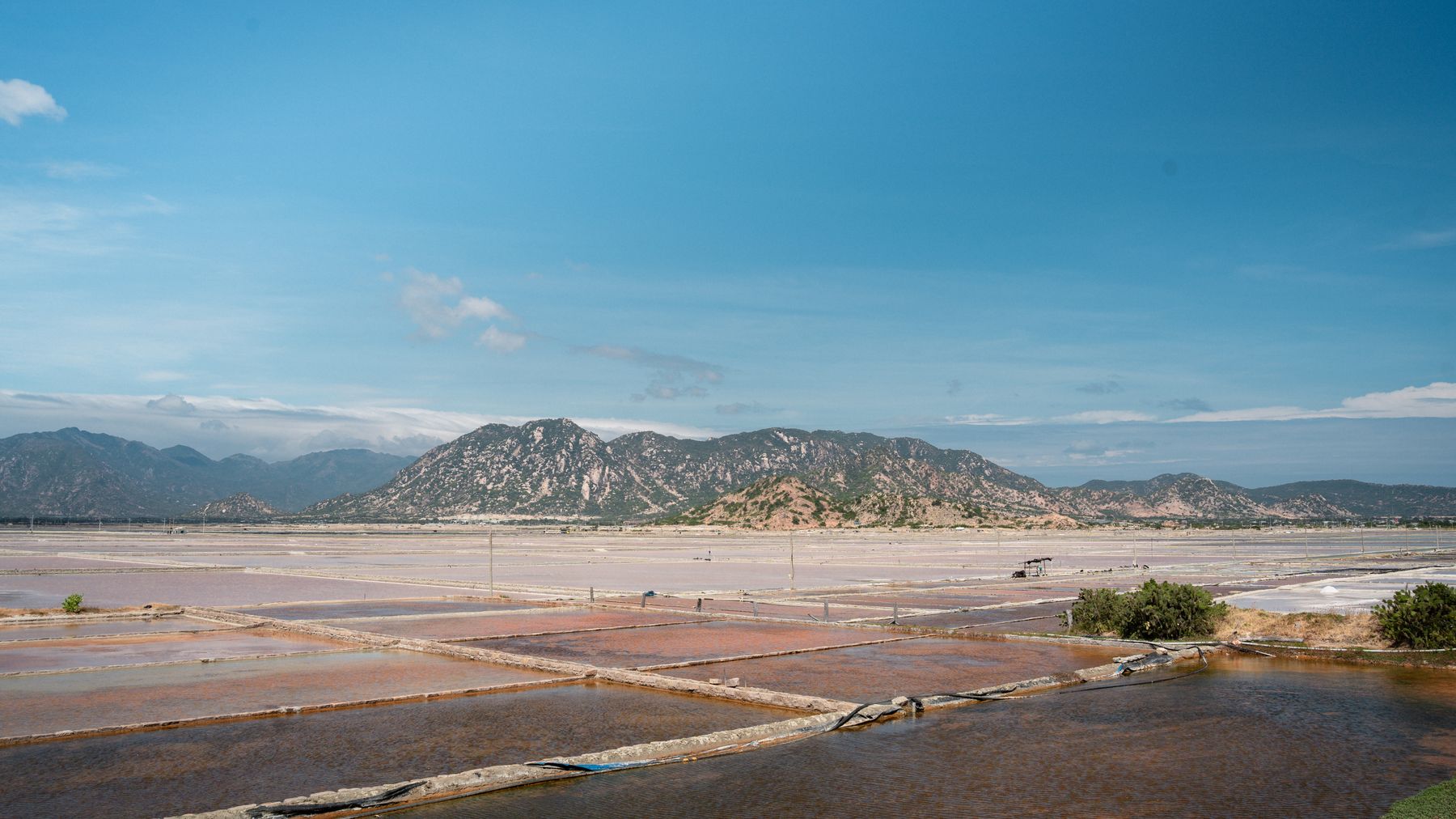
Photo by SICULA Đỗ on Pexels
How to get there
The nearest major hub is Cam Ranh (Nha Trang (냐짱 / 芽庄 / ニャチャン)'s airport area), about 60 km south along the coastal QL1A highway. From Nha Trang city center, it's closer to 80 km.
By motorbike: The most practical option. Rent a semi-automatic in Nha Trang for 120,000-150,000 VND/day and ride south on QL1A. The road is flat and straightforward — about 1.5 hours from Nha Trang, 45 minutes from Cam Ranh. The sheep field is near An Hoa village, roughly 8 km off the main highway on local roads. Ask for "dong cuu" and locals will point you in the right direction.
By car/taxi: A private car from Nha Trang runs around 800,000-1,000,000 VND round trip with a few hours of waiting time. Grab cars are available but drivers may be reluctant to wait in a rural area with no shade.
By bus: Local buses from Nha Trang's southern bus station head toward Phan Rang for about 50,000-60,000 VND, but you'd still need a "xe om" (motorbike taxi) for the last stretch from the highway to the field. Not the most efficient route unless you're on a tight budget.
What to do
Watch the morning herding
This is the main event. Arrive by 6:00 AM and find a spot on the edge of the grazing area. The shepherds walk the flocks out from pens near the village, and the sheep fan out across the field over the next hour or two. Keep a respectful distance — these are working animals and the shepherds don't love people spooking the herd. A 70-200mm lens is more useful than a wide angle here.
Walk the surrounding salt fields
The An Hoa area sits near active salt-harvesting flats. Workers rake and pile sea salt in geometric white mounds that contrast sharply with the red earth. Salt harvesting peaks from January to March. It's a 10-minute ride from the sheep field and worth the detour.
Visit a Cham village
The former Ninh Thuan area has the largest concentration of Cham people in Vietnam. Several villages near Phan Rang — Bau Truc pottery village is the most accessible — offer a look at traditional Cham craftsmanship. The pottery here is made without a wheel, using techniques passed down over centuries.
Catch sunset at Ninh Chu beach
About 15 km east toward the coast, Ninh Chu is a long, wide beach that fills up on weekends but stays quiet on weekdays. The sand is coarse, the water is warm, and there are a handful of seafood shacks along the shore selling grilled "muc" (squid) and cold beer.
Drive the vineyard road
The area around Phan Rang is one of Vietnam's few grape-growing regions. Small vineyards line the roads south of town, and you can buy fresh grapes or local grape wine directly from farmers for 30,000-50,000 VND per kilo of grapes.
Where to eat nearby
The local specialty to seek out is "banh canh" — thick tapioca-flour noodles in a pork or fish broth. The Phan Rang version uses a broth made from fish bones and has a slightly sweet, clean flavor different from the Hue or Saigon styles. A bowl runs 25,000-35,000 VND at market stalls in Phan Rang town.
Also worth trying: grilled lamb or goat, sourced from the same herds you just watched grazing. Small restaurants along QL1A near Phan Rang serve "de nuong" (grilled goat) with rice paper, herbs, and a fermented shrimp dipping sauce. A plate for two costs around 150,000-200,000 VND.

Photo by 🇻🇳🇻🇳 Việt Anh Nguyễn 🇻🇳🇻🇳 on Pexels
Where to stay
Most travelers base themselves in either Nha Trang or Phan Rang town.
- Budget: Guesthouses in Phan Rang town run 200,000-350,000 VND/night. Basic but clean, usually with air conditioning and hot water.
- Mid-range: A few resorts near Ninh Chu beach offer rooms from 500,000-900,000 VND with pools and sea views.
- Nha Trang base: If you're already staying in Nha Trang, the sheep field works as a day trip — leave early, return by lunch.
Practical tips
- Bring water and sunscreen. There's zero shade at the grazing field and the sun hits hard by 8:00 AM.
- Wear shoes you don't mind getting dirty. The ground is uneven, dusty in the dry season, and scattered with sheep droppings.
- Tip the shepherds if you're photographing them up close. 20,000-50,000 VND is appreciated and earns goodwill.
- Fill your fuel tank before leaving the highway. There are few gas stations on the local roads near An Hoa.
Common mistakes
Showing up after 9:00 AM tops the list — the sheep are gone and so is the light. Second: expecting a tourist attraction with signs and parking. This is a field. Third: not budgeting enough time for the wider area. The sheep field alone is a 30-minute experience; the combination of salt fields, Cham villages, vineyards, and coast makes a full, worthwhile day.
Plan this as part of a longer loop through southern Khanh Hoa rather than a standalone destination, and it fits perfectly into a Da Nang-to-Nha Trang coastal road trip.
Last updated · Jul 28, 2026 · independently researched, never sponsored.