Phu Tho sits in the Red River Delta, about 80 km north of Hanoi. The province is quiet by delta standards—less touristy than Ha Noi or Ha Nam, which means the food is still genuinely local. You'll eat well here without hunting for Instagram-worthy plating. Expect river fish, sticky rice (a staple), and plenty of vegetables from the surrounding farms.
Sticky Rice and What It Means
Sticky rice, or "com nep", is the backbone of Phu Tho eating. Locals don't see it as a side; it's the meal. You'll find it served with grilled river fish, herbs, and a simple dipping sauce—usually fish sauce with chili and lime. A full bowl of sticky rice with grilled fish costs 25,000–40,000 VND at a casual shop. Tourist-facing restaurants near the city center charge 50,000–70,000 VND for the same plate.
The best sticky rice comes from morning markets. Phu Tho City Market (Cho Phu Tho) opens early (5:30 AM) and is still busy by 8 AM. Go before 7 AM if you want the pick of vendors. A vendor selling sticky rice with grilled fish will have maybe three tables—plastic stools, a charcoal grill behind them. This is where you eat.
River Fish: Carp, Snakehead, and Others
Phu Tho borders the Da River, and the catch here is fresh. Carp ("ca chep") and snakehead ("ca lon") dominate. Grilled whole is the standard—it's cooked over charcoal until the skin crisps, served with sticky rice and herb leaves (mint, dill, perilla). The dipping sauce is fish sauce, sliced chilies, and a squeeze of lime.
You'll also find river shrimp ("tom da"), which are smaller and sweeter than saltwater varieties. These are usually stir-fried with garlic or grilled whole. A plate costs 50,000–80,000 VND depending on size and season.
Nem chua (fermented pork rolls) is a Phu Tho specialty—the meat is cured with salt and spices, then wrapped in leaves. It has a funk to it, but it's assertively flavored and pairs well with cold beer. 30,000 VND per plate of 4–5 pieces.
Markets: Where Locals Eat
Phu Tho City Market (Cho Phu Tho, Trieu Quang Phuc Street, city center). This is the real market, not a tourist attraction. Ground floor is vegetables and meat; upstairs are food stalls. Sticky rice and grilled fish stalls cluster in the back. Budget 40,000–50,000 VND for a full meal (rice, fish, soup). Open 5 AM–2 PM.
Viet Tri Market (Cho Viet Tri). About 15 km south of Phu Tho City, in Viet Tri. Larger, busier, less touristed. Similar food, same prices. Vendors selling "banh canh" (tapioca cake soup with pork and mushrooms) are reliable here. 25,000 VND per bowl. Open 5 AM–noon.
Thanh Ba Hot Spring Market (Cho Thanh Ba). Smaller, quieter market near the hot springs. Food is fresher and cheaper because fewer outsiders come here. 35,000–45,000 VND for a meal. Open early morning only (5–8 AM).
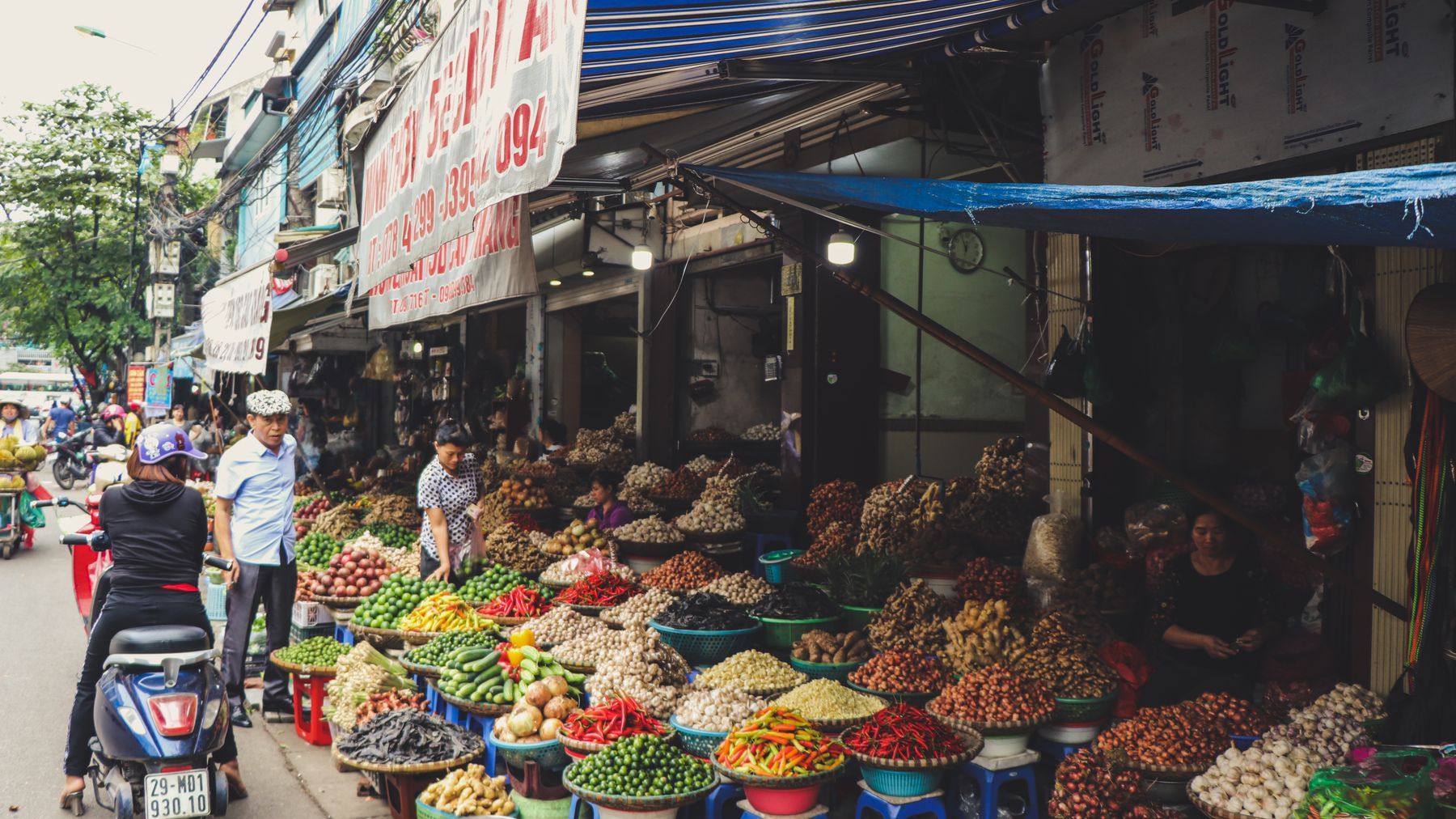
Photo by Hugo Heimendinger on Pexels
Banh Canh and Sticky Rice Noodles
Banh canh is a thick tapioca noodle soup, often served with pork bone broth, offal, and mushrooms. Phu Tho's version is more herb-forward than other regions. You'll find it in every market and at dedicated banh canh shops on side streets. A bowl is 25,000–35,000 VND. Best eaten in the morning; most vendors stop by 11 AM.
Goi Cuon and Fresh Rolls
Goi cuon (fresh rolls with shrimp, pork, herbs, and rice paper) are everywhere. The Phu Tho version uses locally grown herbs—more mint and dill than you'd find in Hanoi versions. A plate of 4 rolls is 20,000–25,000 VND. Quality varies wildly by vendor; the stalls in Phu Tho City Market are consistently good.
Restaurants vs. Street Food
If you want a sit-down meal, head to Nha Hang Phu Tho (a chain, mid-range, 80,000–150,000 VND per person) near Hung Vuong Park. It's not exciting, but it's clean and reliable. Food is standardized—grilled fish, sticky rice, soup.
For authentic local eating, skip named restaurants. Go to the market early, pick a vendor with a line, and sit at a plastic table. You'll pay half the price and eat what locals actually eat. Take a photo of the stall if you want to return; most vendors don't have signs in English.

Photo by Theodore Nguyen on Pexels
Fruits and Sweets
Phu Tho is known for passionfruit and lychee (in season, June–July). Passionfruit juice stands set up around the markets—a fresh glass costs 15,000 VND. Lychee is sold by weight; expect 60,000–80,000 VND per kilo depending on season.
Banh me (sponge cake, sometimes called pandan cake) is a Phu Tho sweet. It's sold in the markets and at bakeries. Light, slightly herbal, 5,000 VND per slice. Pairs oddly well with coffee.
Where to Avoid
Tourist-focused restaurants near the Hung Vuong Temple charge 2–3x market prices for no better food. Avoid places with laminated menus in English and pictures on placemats. The real eating happens in markets and at unmarked shop-houses on side streets.
Fake sticky rice (made with regular rice flour and sweetener) does exist; if it looks too white and uniform, it's not real. Real sticky rice has a slightly gray tone and irregular grains.
Frequently Asked Questions
How much does a typical meal cost at Phu Tho markets?
A full meal at Phu Tho City Market runs 40,000-50,000 VND, covering rice, fish, and soup. Casual street stalls charge 25,000-40,000 VND for sticky rice with grilled fish. Thanh Ba Hot Spring Market is slightly cheaper at 35,000-45,000 VND per meal, while tourist-facing restaurants near the city center charge 50,000-70,000 VND for the same dishes locals pay less for elsewhere.
What are the signature dishes specific to Phu Tho province?
Phu Tho is known for sticky rice (com nep) served with grilled river fish, nem chua (fermented pork rolls at 30,000 VND for 4-5 pieces), and river shrimp (tom da) stir-fried with garlic. Banh canh, a thick tapioca noodle soup with pork bone broth and mushrooms, is also common at 25,000-35,000 VND per bowl. The province borders the Da River, so fresh carp and snakehead fish are central to most meals.
When should you arrive at Phu Tho markets to find the best food?
Arrive before 7 AM at Phu Tho City Market, which opens at 5:30 AM, to get the best selection of vendors. Thanh Ba Hot Spring Market operates only from 5-8 AM. Banh canh vendors across all markets typically stop serving by 11 AM. Viet Tri Market, located about 15 km south of Phu Tho City, runs from 5 AM to noon and is a reliable alternative with similar food and prices.
Practical notes
Eat breakfast in markets (5–8 AM) when vendors are freshest and locals are eating. Lunch and dinner are slower in Phu Tho; many locals eat a large breakfast and a light dinner. Cash only at markets and street vendors; bring 200,000–300,000 VND for a day of eating. Main restaurants accept card but are overpriced relative to quality.
Last updated · May 26, 2026 · independently researched, never sponsored.