
What Thac Dak Lung Is — and Why It's Not on Most Itineraries
Thac Dak Lung sits deep in the western highlands of Quang Ngai province, near the border area that was formerly part of Kon Tum before administrative redistricting folded it into greater Quang Ngai. The waterfall drops through several tiers of dark basalt into a cold pool surrounded by old-growth forest. It's not a well-known stop on the central Vietnam (베트남 / 越南 / ベトナム) circuit — most travelers heading south from Da Nang skip inland Quang Ngai entirely in favor of Hoi An or Quy Nhon. That's exactly why it stays quiet.
The waterfall has long been a spot for Hre and Co Tu ethnic minority communities who live in the surrounding villages. For them it's not a tourist attraction — it's just part of the landscape, a place to cool off and collect water. Tourism infrastructure is minimal, which is part of the appeal and part of the challenge.
Why Travelers Go
People who make it to Thac Dak Lung tend to be motorbike travelers working routes through the Central Highlands (중부 고원 / 中部高原 / 中部高原), or anyone with a genuine interest in getting off the coastal highway. The draw is straightforward: a powerful, multi-tiered waterfall in dense forest with almost nobody else around. No ticket booth, no selfie platforms, no loudspeakers playing pop music.
The ride itself is half the point. The road from Quang Ngai city climbs west through rice paddies, past small Kinh and ethnic minority settlements, and into increasingly hilly terrain where pepper plantations give way to forest. If you've spent days on the coast eating "com tam" and dodging traffic, the highland air and silence feel earned.
Best Time to Visit
Aim for September through December. The rainy season in this part of central Vietnam runs roughly August to November, and while that sounds counterintuitive, the waterfall needs recent rain to be impressive. By late September, water volume is at its peak. October and November are ideal — the forest is deep green, the falls are roaring, and trails are wet but passable.
Avoid January through April. By March, the dry season has drained the upper streams, and Thac Dak Lung can shrink to a trickle. You'll ride hours for a disappointment.
The shoulder months — May through August — can work, but afternoon storms roll in fast and the dirt roads leading to the falls get slippery. Morning starts are non-negotiable in this window.
How to Get There from Quang Ngai City
Quang Ngai city is the nearest real hub, roughly 70-80 km east depending on which route you take.
By motorbike (recommended): Rent a semi-automatic (Honda Wave or Blade) in Quang Ngai for around 150,000-200,000 VND/day. Head west on QL24 toward the highlands, then follow local roads south toward the waterfall area. Budget 2.5-3 hours one way — the last 15-20 km is on narrow, sometimes unpaved roads. A full tank is enough for the round trip, but top off before leaving the last town with a proper petrol station.
By car or taxi: Possible but expensive and less practical. A private car from Quang Ngai runs around 1,200,000-1,500,000 VND for a full-day return trip. The final stretch of road isn't built for sedans — you'll want something with clearance.
By bus: No direct public bus goes to the waterfall. You can take a local bus west from Quang Ngai toward Ba To district (around 60,000 VND), but you'll still need a "xe om" (motorbike taxi) for the last stretch, and finding one isn't guaranteed.

Photo by Thái Trường Giang on Pexels
What to Do
Swim at the Base Pool
The main pool beneath the lowest tier is deep enough for swimming and cold enough to make you gasp. The rocks around the edge are mossy and slick — move carefully. There are no handrails, no lifeguard, no changing rooms. Bring a dry bag for your phone.
Hike the Tiered Cascades
Thac Dak Lung isn't a single drop — it's a series of cascades spread across roughly 200 meters of elevation. A rough trail follows the falls upward through the forest. It's steep, muddy after rain, and unmarked. Allow 1-1.5 hours to explore the upper tiers and come back down. Proper footwear matters — flip-flops will betray you on the first wet rock.
Visit Nearby Ethnic Minority Villages
Several Hre communities live within a few kilometers of the falls. If you approach respectfully — a smile, a wave, maybe buying some fruit or local produce — people are generally welcoming. Don't barge into homes or photograph people without asking. A few words of Vietnamese go a long way; English is essentially nonexistent here.
Birdwatch at Dawn
The forest around the waterfall is home to a surprising range of bird species. Early mornings before the heat sets in are best. You won't need specialist gear — just binoculars and patience. The canopy is thick, so listen more than look.
Picnic and Do Nothing
Bring food, find a flat rock, sit. The sound of falling water and zero phone signal is its own activity.
Where to Eat Nearby
Don't expect restaurants near the waterfall. Pack lunch from Quang Ngai before you leave — "banh mi" from a street cart and a few bottles of water will do.
In Ba To district town (the last proper settlement before the falls), look for local com binh dan (everyday rice plates) shops serving simple meals for 30,000-50,000 VND. If you spot "banh xeo" on a menu, order it — the central Vietnamese version here uses turmeric batter with shrimp and pork, wrapped in greens. It's smaller than the Saigon style and worth trying.
Back in Quang Ngai city, seek out "mi quang" — the province's signature noodle dish, with turmeric-stained broth, shrimp, pork, herbs, and rice crackers. Don Quang Ngai near the central market does a reliable bowl for around 35,000 VND.
Where to Stay
There's no accommodation at Thac Dak Lung itself. Your options:
- Ba To town: A handful of basic guesthouses ("nha nghi") in the 200,000-350,000 VND range. Clean enough, cold water, fan or basic AC. Don't expect English-speaking staff.
- Quang Ngai city: More range here. Budget hotels around Quang Trung street start at 250,000 VND/night. Mid-range options with hot water and decent wifi run 400,000-700,000 VND. Nothing luxury — this isn't Hoi An.
- Homestay near the falls: Occasionally, locals offer basic overnight stays. This is informal and unpredictable — ask around in the nearest village, but don't count on it.
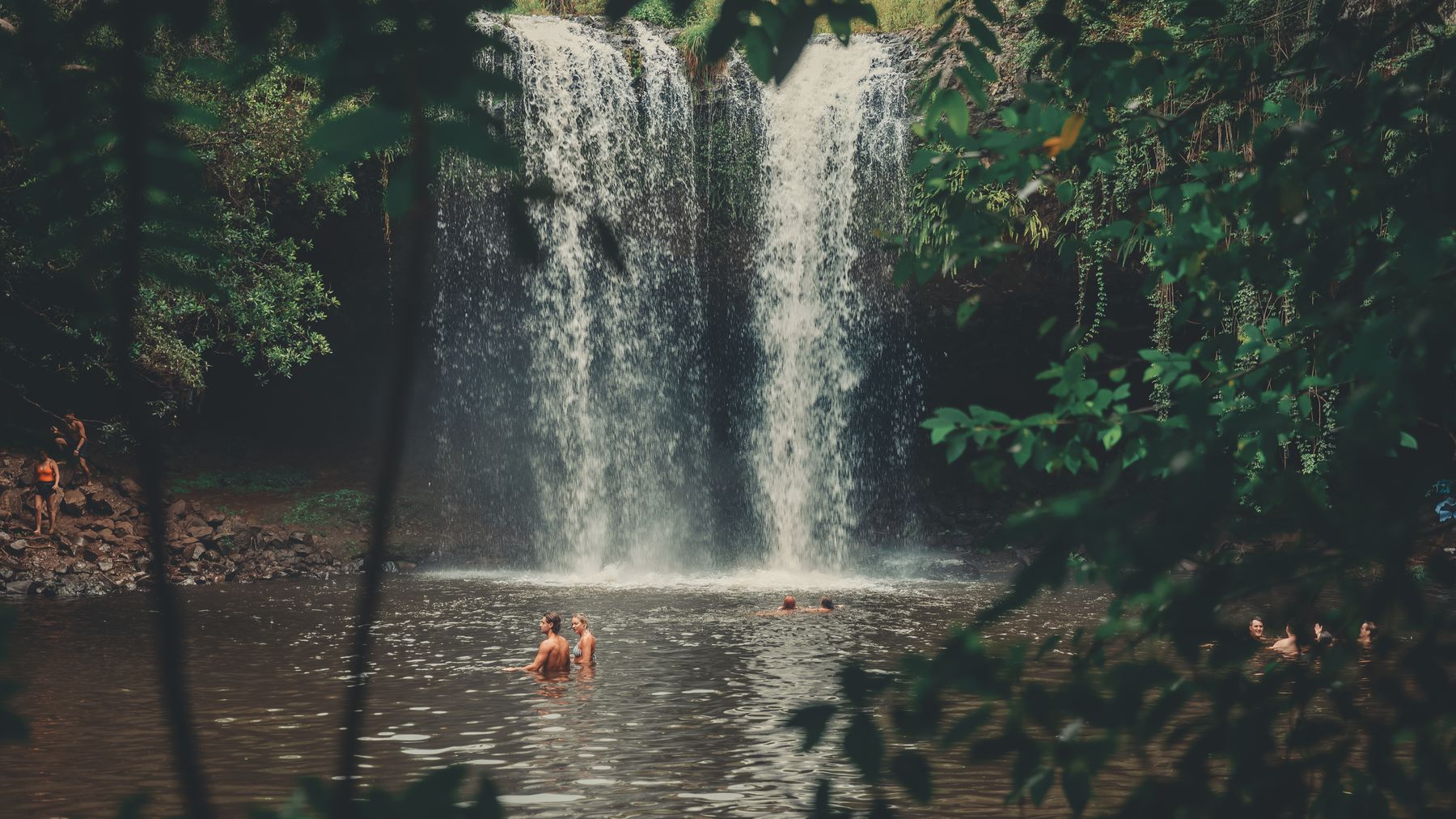
Photo by Brayden Stanford on Pexels
Practical Tips Locals Would Tell You
- Bring cash. There are no ATMs past Ba To, and nobody takes cards.
- Start early. Leave Quang Ngai by 6:00-6:30 AM to avoid afternoon heat and rain.
- Wear long trousers and closed shoes. Leeches are common in the wet season forest. Tuck trousers into socks — it looks ridiculous and works.
- Carry a basic first-aid kit. The nearest clinic is in Ba To, over an hour away.
- Fill your fuel tank before leaving Ba To. The last stretch has no petrol stations.
Common Mistakes to Avoid
- Going in dry season and expecting a waterfall. Check recent rainfall before committing to the trip. March and April are almost always disappointing.
- Wearing flip-flops on the trail. You will slip. It's not a matter of if.
- Not bringing enough water. Two liters per person minimum. The humidity in the forest is brutal.
- Rushing it as a half-day trip. The roads are slow. Plan for a full day from Quang Ngai, or better yet, stay overnight in Ba To and hit the falls fresh in the morning.
- Leaving trash. There's no cleanup crew. Whatever you bring in, bring out. This should go without saying, but the occasional plastic bag snagged on a branch says otherwise.
Practical Notes
Thac Dak Lung rewards effort. It's not a quick detour — it's a commitment to a full day on back roads through a part of central Vietnam that most travelers skip. If you're already exploring Quang Ngai or riding between the coast and the Central Highlands, it's one of the better reasons to head west. Just plan around the rain, pack smart, and keep your expectations grounded in reality rather than Instagram.
Last updated · May 29, 2026 · independently researched, never sponsored.





