The Social Contract of Sacred Spaces
Most guidebooks treat temple dress codes as a checklist of 'don'ts'—no shorts, no tank tops, no bare shoulders. While those rules are technically true, they miss the point of why you are being asked to cover up in the first place. In Vietnam, a pagoda or temple is not just a museum; it is a living, breathing community space. When you walk into the "Tran Quoc Pagoda" in Hanoi or the "Po Nagar" towers in Nha Trang (냐짱 / 芽庄 / ニャチャン), you are stepping into someone’s place of worship. Dressing appropriately isn't about avoiding a fine; it’s about showing that you recognize the sanctity of the environment.
The 'Modesty Baseline' for Travelers
If you want to move through Vietnam (베트남 / 越南 / ベトナム) without feeling like an outsider who forgot their manners, adopt a simple baseline: keep your shoulders and knees covered. This applies to everyone, regardless of gender.
For men, this means skipping the sleeveless gym vests. A standard t-shirt or a polo shirt is perfectly acceptable. For bottoms, avoid board shorts that hit mid-thigh. If you are traveling in the heat of the south, opt for lightweight linen trousers or loose-fitting cotton pants. They breathe better than denim and keep you looking put-together enough to enter a temple without a second thought.
For women, the 'sarong over shorts' trick is a common sight, but it often screams 'I didn't plan ahead.' A better approach is to carry a light, oversized linen shirt or a thin scarf in your day bag. If you are wearing a sleeveless dress, throwing a linen shirt over your shoulders is more comfortable and less cumbersome than wrapping a synthetic sarong that keeps slipping down.

Photo by Nguyen Ngoc Tien on Pexels
Why 'Good Enough' Often Fails
There is a misconception that if you are wearing a long skirt, you are automatically respectful. However, if that skirt has a thigh-high slit, you are still going to get side-eyed by the local aunties managing the incense burners. The goal is to avoid drawing attention to yourself.
Footwear is the other half of the equation. You will almost always be asked to remove your shoes before entering the inner sanctum of a temple. Wear slip-ons or sandals that are easy to take off and put back on. If you are wearing expensive sneakers with complicated laces, you will be the person holding up the line at the entrance of the "Temple of Literature." Also, wear socks if you are visiting on a hot day—the stone floors in places like "Bai Dinh" can be scorching, and walking barefoot on hot tiles is a quick way to ruin your afternoon.
Insider Workarounds for the Unprepared
We have all been there: you are out on a motorbike, the sun is beating down, and you decide to spontaneously pull over at a beautiful, quiet pagoda. You are wearing a tank top and shorts. What now?
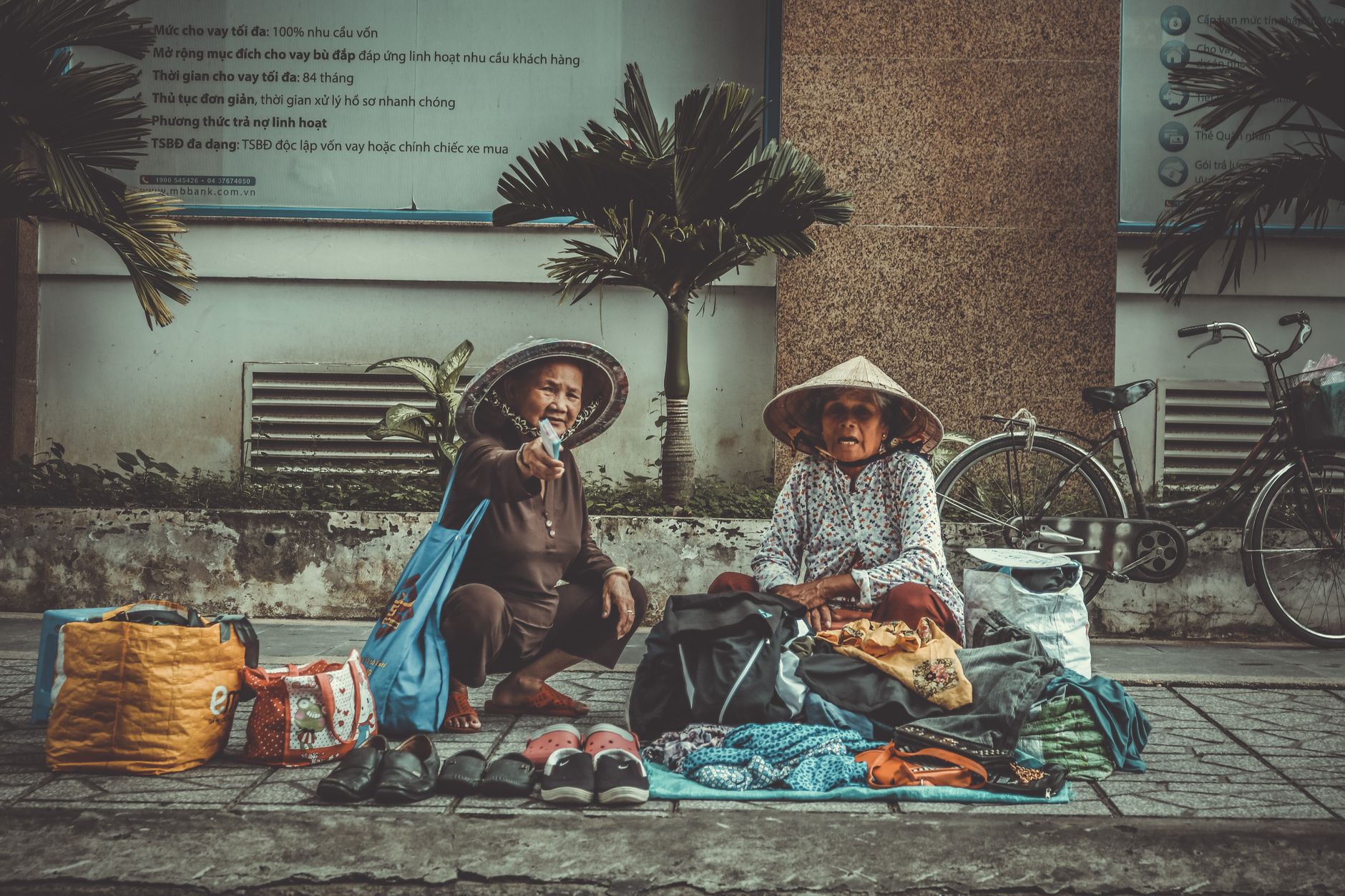
First, check the entrance. Many popular sites like the "One Pillar Pagoda" have small stalls nearby selling basic cover-ups. If you are in a more rural area, look for a local market before you reach the temple. You can often find a cheap, lightweight "non la" (conical hat) or a simple cotton scarf for under 50,000 VND. These aren't just props; they are practical items that will help you survive the humidity while keeping you modest.
If you find yourself at a temple without a cover-up and there is no shop in sight, be honest. Approach the caretaker or a local worshiper with a polite nod and a smile. Often, they will point you toward a designated area where spare cloths are kept for visitors. Do not just walk in and hope for the best. A quick 'xin loi' (excuse me) goes a long way in showing that you are aware of your surroundings.
Photo by Nguyen Ngoc Tien on Pexels
The Cultural Context of Appearance
In Vietnam, appearance is often linked to respect for the host. When you visit a site like the "Tomb of Khai Dinh" or the "Hoa Lu" ancient capital, you are visiting a site of historical and cultural pride. Dressing with a bit of care is a way of acknowledging that you value the history of the place. You don't need to dress in formal "ao dai" attire, but avoiding beachwear is the bare minimum.
Remember that many pagodas are also venues for important festivals like "Tet" or "Tet Trung Thu." During these times, the dress code is even more strictly observed by locals. If you visit during a festival, you will notice that everyone is dressed in their best clothes. By dressing neatly, you blend in rather than standing out as a disheveled tourist. It makes for a much smoother experience, and you are far more likely to be welcomed into the fold of the celebration.
Final Note
Respecting the dress code is the easiest way to ensure you are treated as a guest rather than a nuisance. Keep your shoulders and knees covered, carry a light layer for emergencies, and always be ready to slip your shoes off. It is a small effort that pays off in the quality of your interactions and the depth of your experience.
Last updated · May 30, 2026 · independently researched, never sponsored.