Crossing a street in Vietnam (베트남 / 越南 / ベトナム) feels dangerous until it clicks. Once you understand the unwritten logic behind how Vietnamese drivers negotiate intersections, you stop freezing on the kerb and start moving like everyone else.
The Flow Principle
Vietnamese traffic — especially motorbike traffic — operates less on hard rules and more on flow. Think of it less like chess and more like water finding a path. Nobody is trying to hit you. The default assumption among drivers is that everything in front of them will move predictably and slowly. Your job is to be predictable.
This holds true whether you're on a motorbike yourself, crossing on foot, or sitting in the back of a taxi watching the whole system from outside.
Traffic Lights: When They Mean Stop and When They Don't
In cities like Hanoi and Saigon, major intersections are well-lit and generally respected — especially at lights with a countdown timer, which most now have. A 120-second red with a visible countdown will be held. Drivers use the time to check their phones, light a cigarette, inch forward.
But a light at a small side-street junction with no countdown, no camera, and low traffic? Expect it to be treated as a suggestion. Motorbikes will filter through on red if the cross-traffic has cleared. Locals read the actual traffic, not the signal.
The practical upshot:
- On a major arterial road (Nguyen Hue, Tran Hung Dao, Le Duan): stop on red. These intersections have cameras, police presence, and fast-moving cross-traffic.
- On a back-street junction: follow the vehicles around you. If the pack is moving, move. If they're holding, hold.
- Turning left on red is common practice for motorbikes on quieter roads — not legal, but universal. As a pedestrian, this means the left-turn pocket is never truly clear on red.
Pedestrian Strategy at Traffic Lights
At a signalized crossing, wait for the green, then look left before stepping off the kerb anyway. Left-turning motorbikes treat the pedestrian phase as shared space. Walk at a steady pace, make eye contact when you can, and don't run. Running breaks the predictability contract.
If there's no pedestrian signal and no light, use the roundabout crossing logic below.
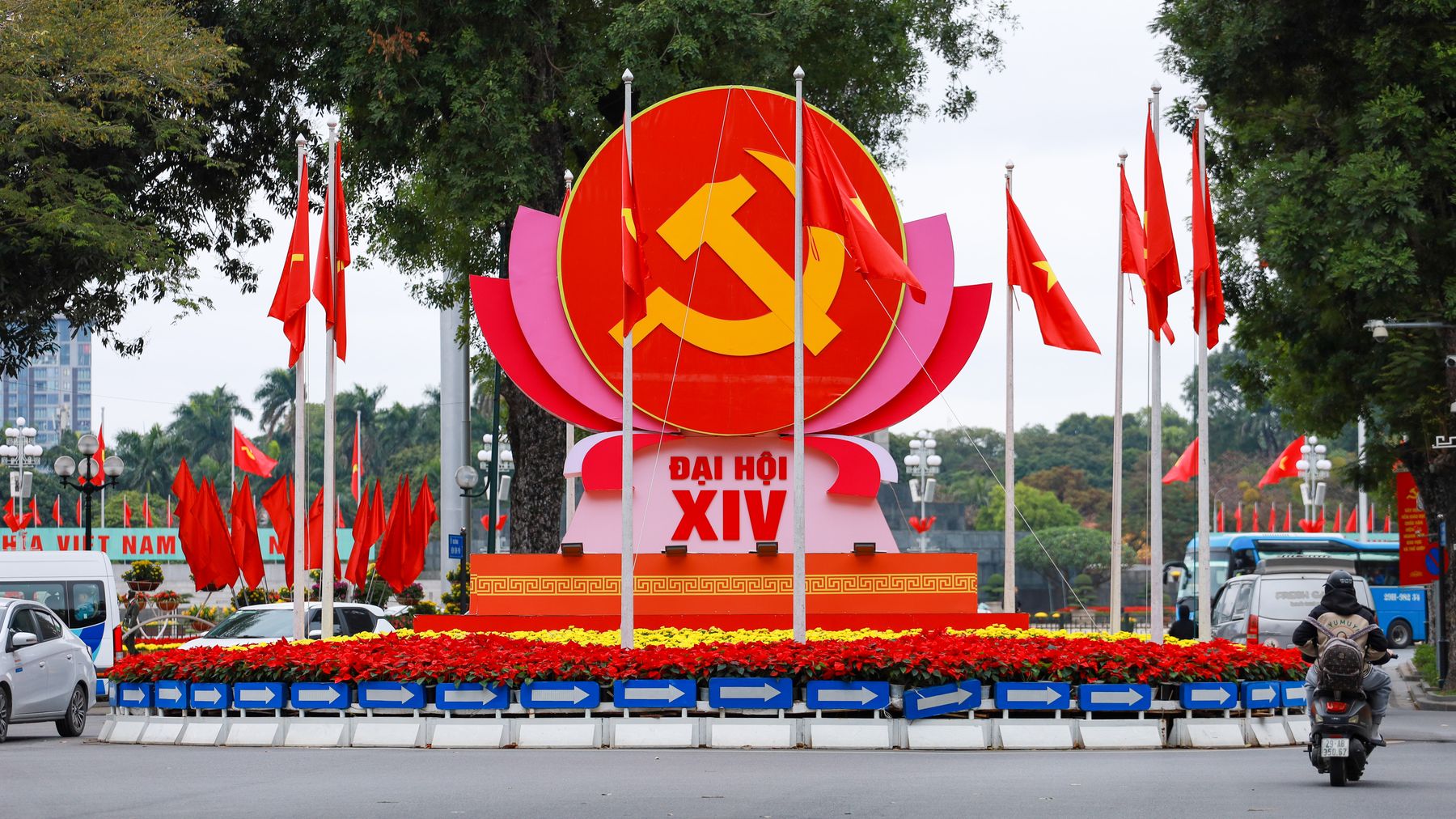
Photo by Hồng Quang Official on Pexels
Roundabouts: The Merge Logic
Vietnam has hundreds of roundabouts, from the massive traffic circles in Da Nang and Hue (후에 / 顺化 / フエ) to small neighborhood ovals in Da Lat and Hoi An. The rule on paper is: traffic inside the roundabout has priority. The rule in practice is: everyone merges simultaneously and slows down enough to avoid contact.
Here's what actually happens:
- Entry: Motorbikes don't stop and yield. They slow, check the density of circulating traffic, and merge into a gap — or create one by easing into the flow at low speed. The circulating traffic adjusts. This is not aggression; it's the expected behavior.
- Inside the roundabout: Stay in your lane loosely. Signals are rarely used. Position — staying toward the outer edge if you're taking the next exit — communicates your intent better than an indicator.
- Exit: Move to the outer edge early. Don't cut across the inside track at the last second. Other drivers won't be watching for it.
For pedestrians at a roundabout, there are almost never controlled crossings. The technique is the same as crossing any busy Vietnamese road: pick a moment when traffic has a natural gap (usually just after a cluster passes), step out at a walking pace, and keep moving. Make yourself visible. Don't stop mid-stream unless you have to — a stationary person is harder to predict than a slow-moving one.
The Honk Vocabulary
Horns in Vietnam are not expressions of anger. A short beep means "I'm here, don't move into me." A double-tap means "I'm overtaking." A long blast from behind usually means a large vehicle (bus, truck) wants the lane cleared. Respond to honks with position adjustment, not panic.

Photo by Tuan Vy on Pexels
City-by-City Variations
Hanoi: Older grid streets, more stop-start traffic, drivers slightly more likely to hold red lights near the Old Quarter where enforcement is visible. The Long Bien Bridge approach and major junctions around Hoan Kiem Lake have consistent police presence.
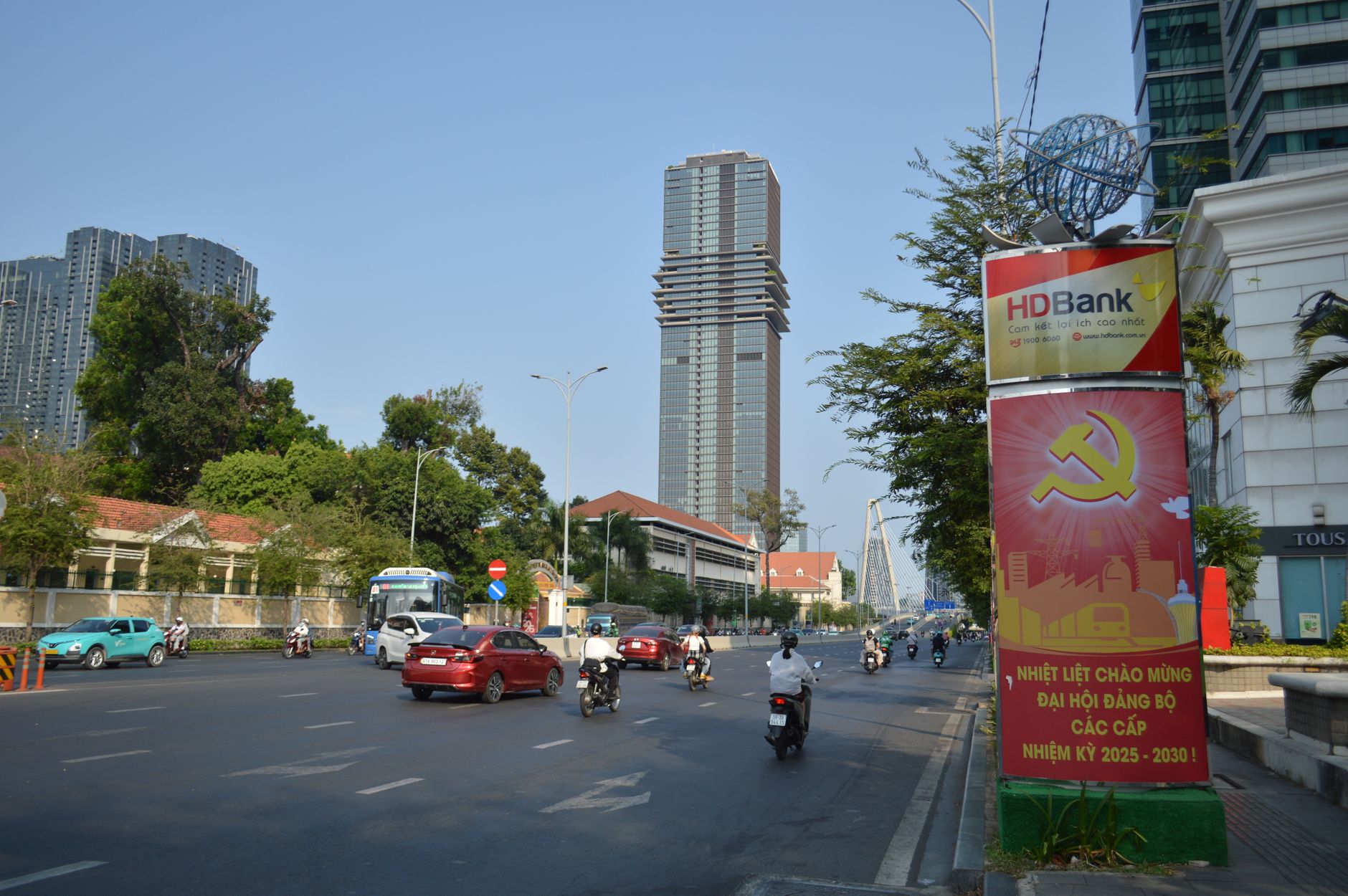
Saigon: Higher speeds on wider boulevards. The intersection at Ben Thanh Market is one of the busiest in the country — cross with the pedestrian phase and don't dawdle. District 1 junctions generally have cameras.
Hoi An: Mostly bicycles and slow motorbikes in the old town. The roundabouts on the edge of town near Cua Dai road are chaotic during morning market hours.
Da Nang: Probably the most orderly driving culture of the major cities. Wide roads, well-maintained lights, drivers tend to actually signal. Good city to build your confidence.
If You're Driving
If you're renting a motorbike — which is easy to do in Da Lat, Mui Ne, Ha Giang, and most beach towns — the key adjustment is lane position. Hug the right side on multi-lane roads. Take roundabouts slowly on your first pass to read the flow. Never overtake on a blind corner, regardless of what the rider ahead of you does. And get an international driving permit before you arrive; riding without one is technically illegal and will affect your insurance if you're in an accident.
Practical Notes
The single most useful habit is watching what the motorbikes directly in front of you do — they read the intersection better than any signal. Traffic cameras are expanding in Hanoi and Saigon, so running reds in major junctions carries a real fine risk (typically 400,000–600,000 VND for motorbikes). As a foreign pedestrian, your greatest asset is a slow, steady walk and eye contact with approaching drivers.
Last updated · May 30, 2026 · independently researched, never sponsored.