Buying a local SIM is one of the first things you should do after landing in Vietnam (베트남 / 越南 / ベトナム) — data is cheap, speeds are solid, and relying on your home carrier's roaming rates is a waste of money. The question is which of the three main networks to pick.
Coverage: Where Each Carrier Actually Works
This is the deciding factor for most trips, and Viettel wins it clearly.
Viettel is Vietnam's largest carrier and the one you want if your itinerary includes anywhere remote — Ha Giang, the highland roads around Sapa, the karst valleys around Ninh Binh (닌빈 / 宁平 / ニンビン), or the back roads of Phong Nha. Its 4G network reaches places the other two treat as afterthoughts. If you're doing a Ha Giang loop on a motorbike and want Google Maps to actually work in Dong Van, Viettel is the answer.
Vinaphone (owned by VNPT, the state telecom) is the second-strongest on rural coverage and performs reliably across most of central Vietnam — Hue, Da Nang, Hoi An, and the mountain passes between them. It's a solid backup choice if Viettel SIMs are sold out at the airport counter.
Mobifone is the weakest of the three in the countryside but arguably the smoothest experience in dense urban areas. In Hanoi's Old Quarter, Saigon's District 1, or around Ben Thanh Market, Mobifone signal is strong and consistent. If your trip is mostly city-based — Hanoi, Saigon, Da Nang — it's fine. Leave Vietnam beyond the provincial capitals and you'll start seeing the gaps.
Short version: Viettel for anywhere remote or mixed. Mobifone or Vinaphone if you're staying in cities the whole time.
Data Plans and Prices
All three carriers sell tourist-oriented prepaid SIMs with data bundles. Prices shift occasionally but the ballpark figures below are accurate as of mid-2025.
Viettel
- 90,000–120,000 VND for a tourist SIM with around 4–6 GB, valid 15–30 days
- 120,000–200,000 VND for unlimited-ish plans (throttled after a daily cap of around 2 GB down to 1 Mbps)
- Data speeds on 4G are consistently fast when you have signal
Vinaphone
- Tourist SIMs typically run 100,000–150,000 VND for 4–8 GB over 15–30 days
- VNPT also sells a "tourist SIM" package at major airports with a QR-based activation process — easier for people who don't speak Vietnamese
- Coverage-to-price ratio is good if you're doing a central Vietnam swing
Mobifone
- Similar price range: 90,000–150,000 VND depending on data volume and validity
- Mobifone's tourist SIM packaging is often the most polished at international airport counters — English-language instructions, cleaner registration process
- Some plans include a small call credit, useful if you're booking local taxis or calling guesthouses
None of these are expensive. Even the priciest option here costs less than a single day of European roaming.

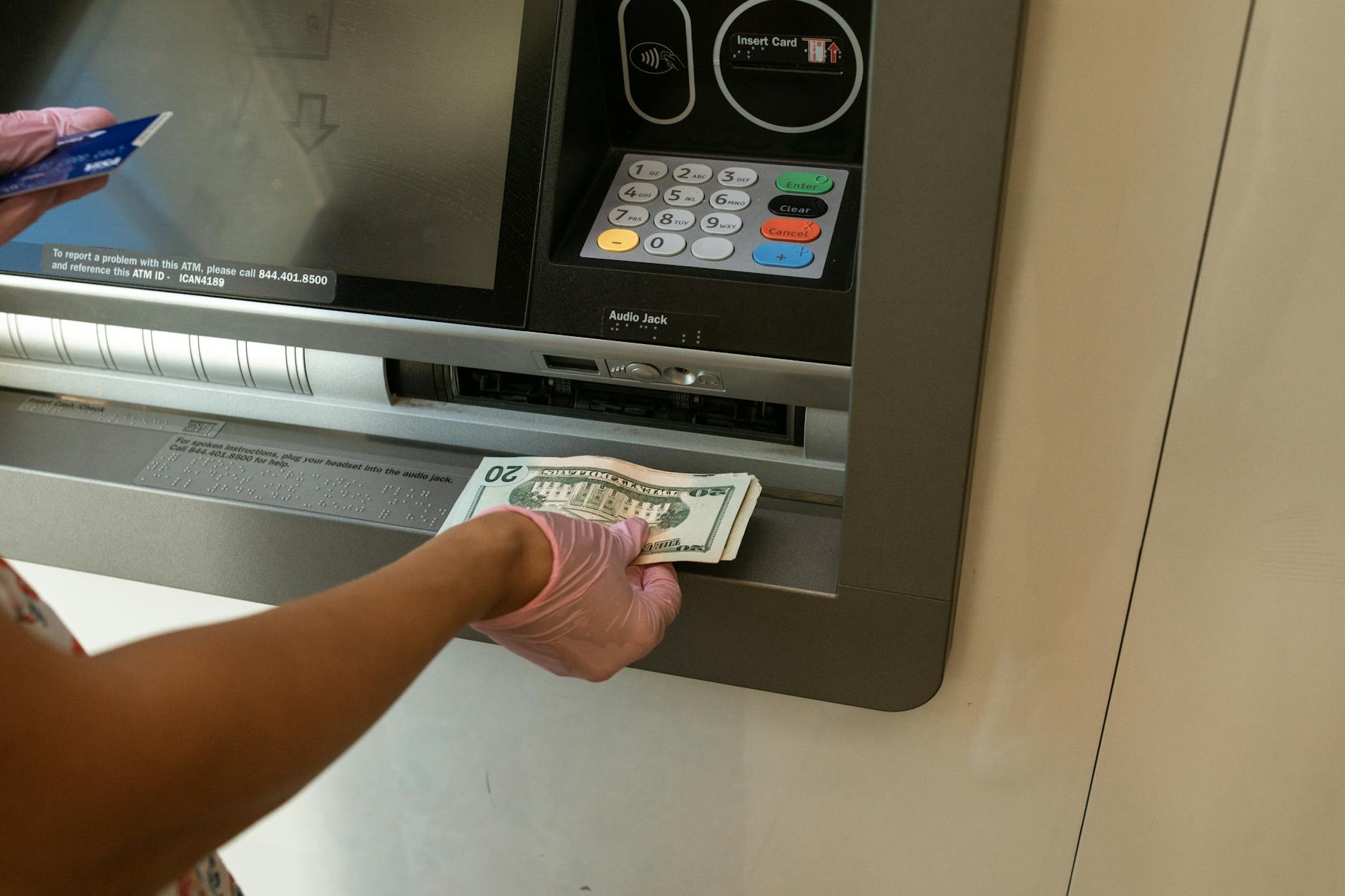
Photo by Thuan Pham on Pexels
Where to Buy
At the Airport
All three carriers have official counters at Noi Bai (Hanoi), Tan Son Nhat (Saigon), and Da Nang international airports. The counters are usually just past customs in the arrivals hall — follow signs for SIM or look for the branded booths.
Airport prices are slightly higher than in the city, but the difference is minor (maybe 20,000–30,000 VND) and the convenience is worth it. Staff at the bigger airports speak enough English to walk you through activation. Bring your passport — registration is legally required and the staff will photograph your ID page.
Viettel's airport counter tends to have the longest queue at Tan Son Nhat. If it's backed up, Vinaphone next door will get you a working SIM just as fast.
In the City
You'll find carrier stores on almost every major street in Hanoi and Saigon. Look for the official branded shopfronts rather than random phone repair stalls — you want a proper receipt and a SIM that's registered to your passport correctly.
In Hanoi, Viettel has a large store near Hoan Kiem Lake on Dinh Tien Hoang street. In Saigon, there are Mobifone and Viettel branches throughout District 1. Prices here are slightly lower than the airport and staff can help troubleshoot if activation doesn't go smoothly.
Convenience stores like Circle K and GS25 also sell top-up cards (the scratch-and-dial kind) if you need to reload data mid-trip.

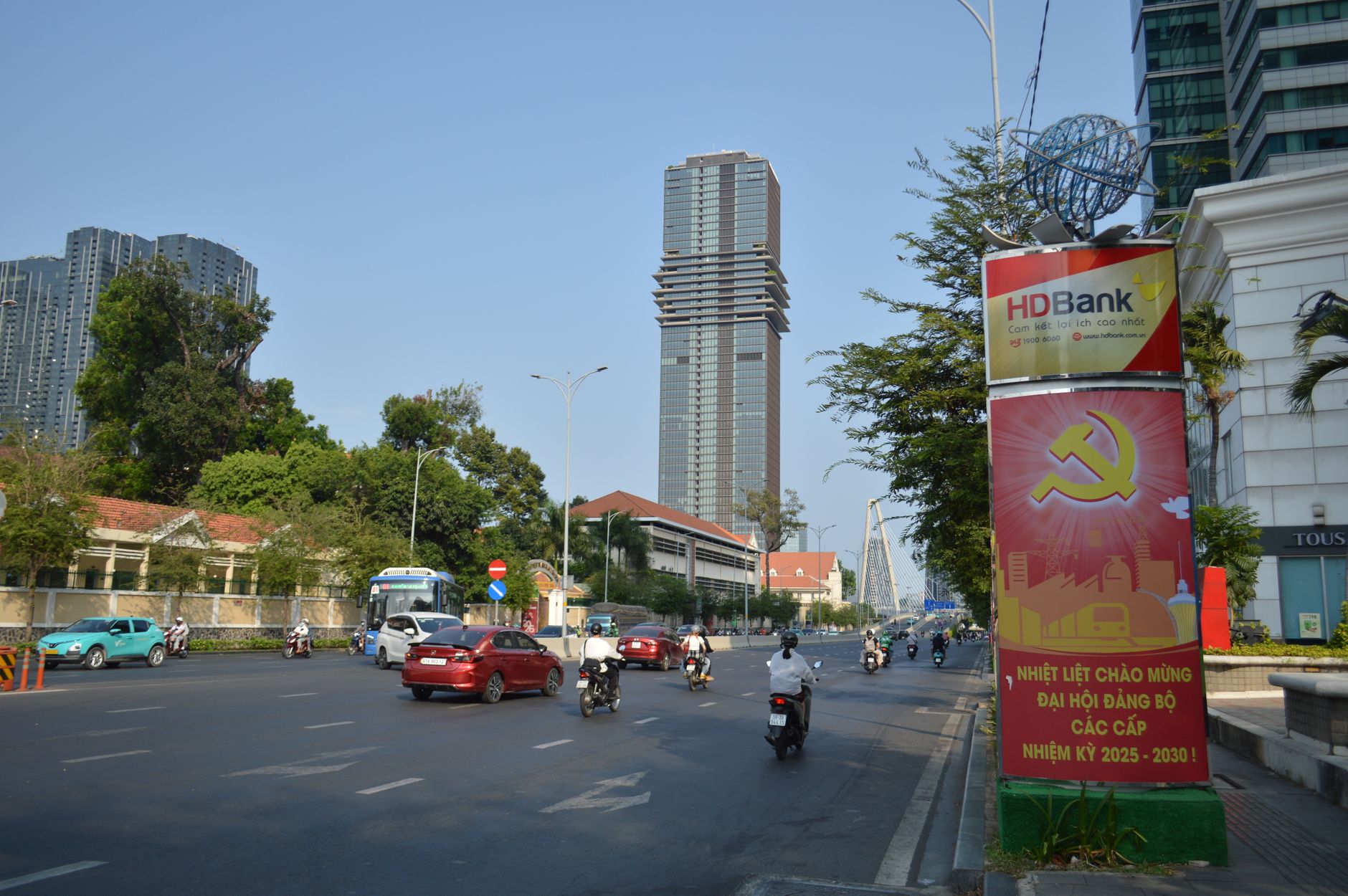
Photo by Quang Nguyen Vinh on Pexels
A Few Practical Things Worth Knowing
Passport registration is mandatory. Since 2023 enforcement has tightened — carriers will photograph your passport and enter your details into the national system. This is standard and quick; don't try to get around it with a pre-registered SIM from a street vendor.
eSIM is available from all three carriers now, which is convenient if your phone supports it. Viettel and Mobifone both offer eSIM activation through their apps or via QR code at airport counters. Worth asking about if you travel light.
Throttled "unlimited" plans are common. Most of the higher-tier data packages give you a daily high-speed bucket (usually 2–4 GB) then drop to slower speeds. For most travel use — maps, messaging, uploading photos — this is fine. If you're working remotely and doing video calls all day, buy the next plan up or top up mid-trip.
Topping up is easy at any convenience store, carrier store, or via the carrier's app. Viettel's My Viettel app and Mobifone's app both work in English well enough to navigate.
Bottom Line
Buy Viettel unless you have a specific reason not to — it covers the most ground and that matters the moment you step outside a major city. If Viettel isn't available or you're doing a purely urban trip, Vinaphone is a reliable second and Mobifone is fine for city-only itineraries. Budget 100,000–150,000 VND for a SIM with enough data for a two-week trip, sort it out at the airport arrivals hall, and move on.
Last updated · May 30, 2026 · independently researched, never sponsored.