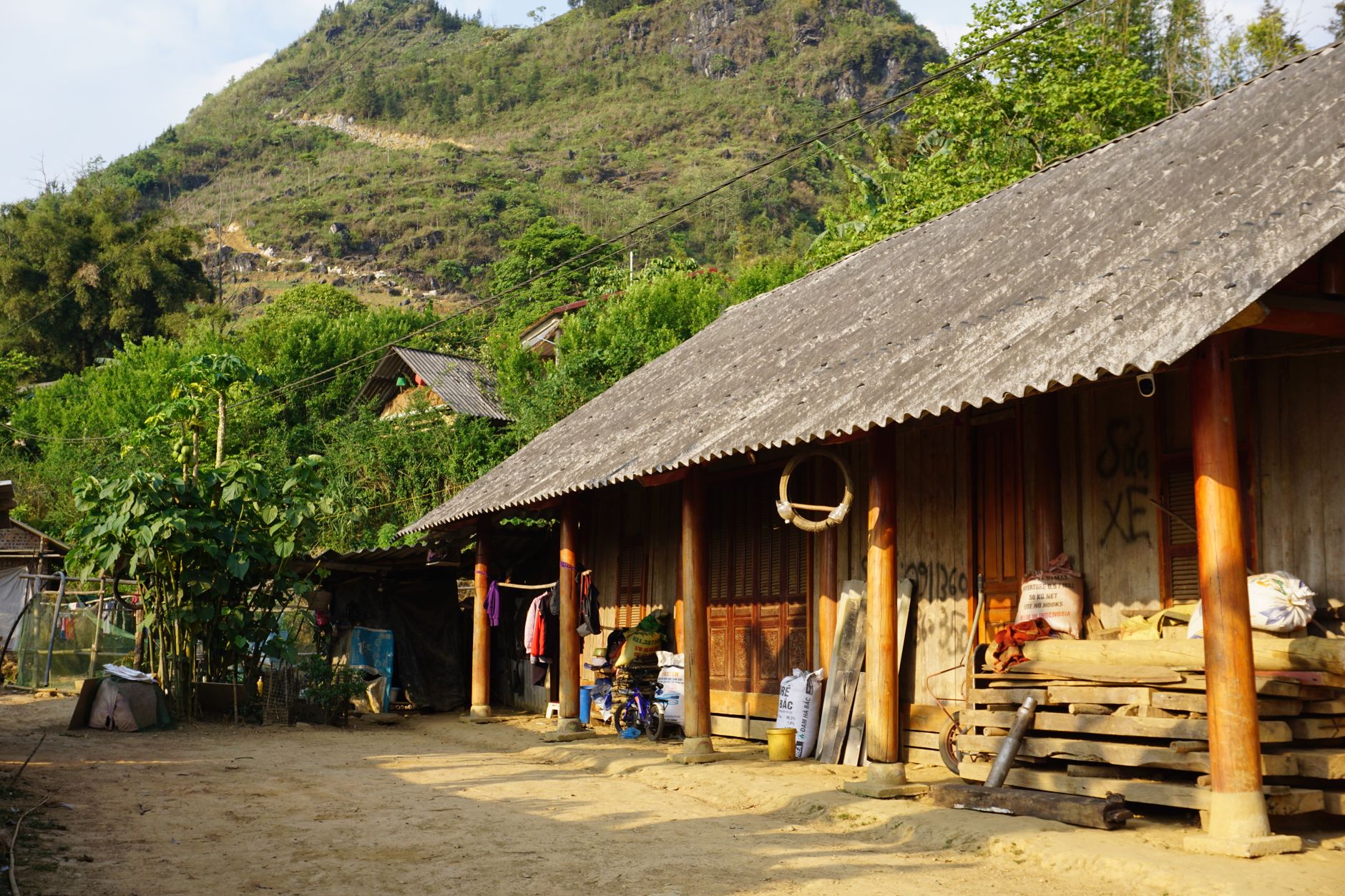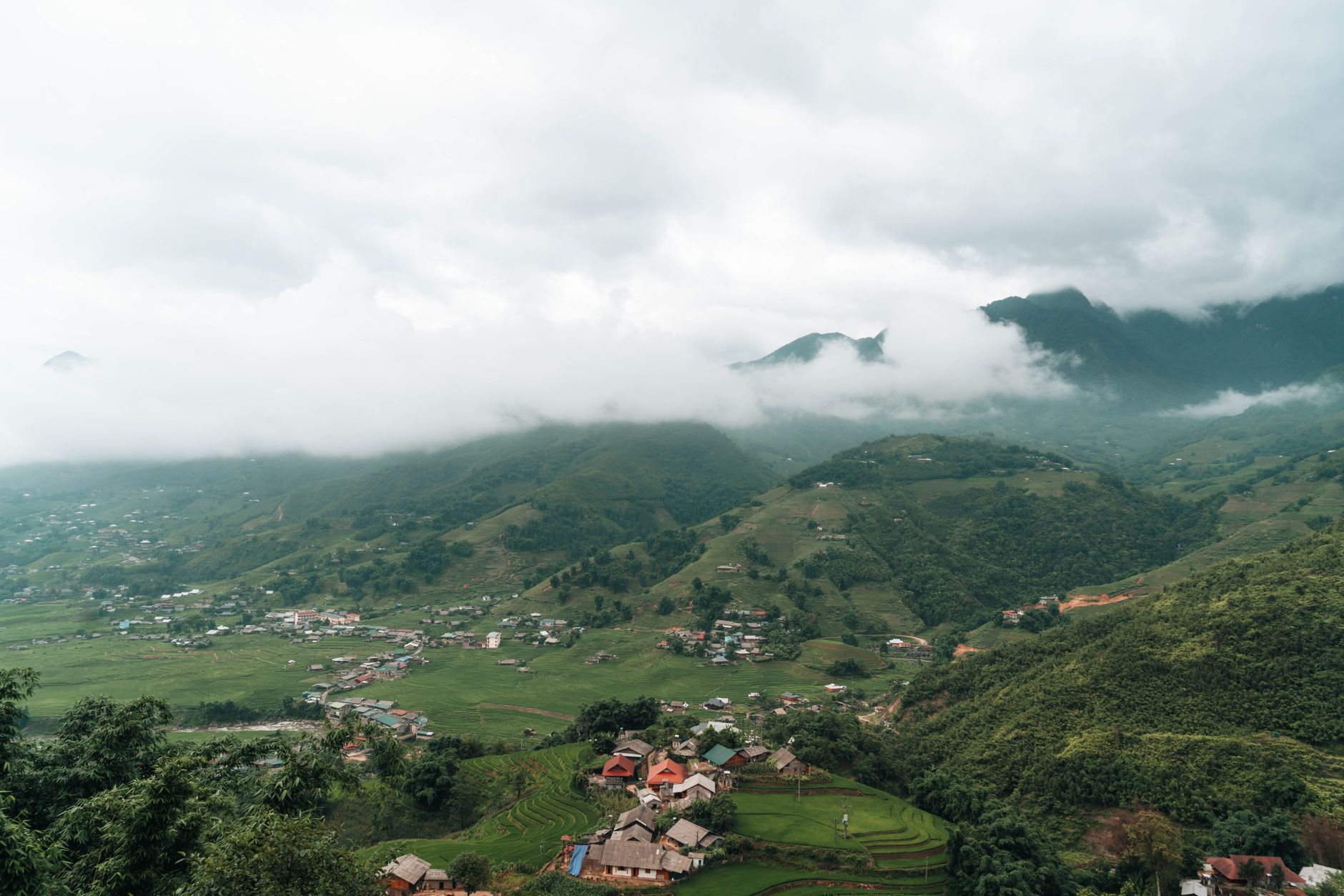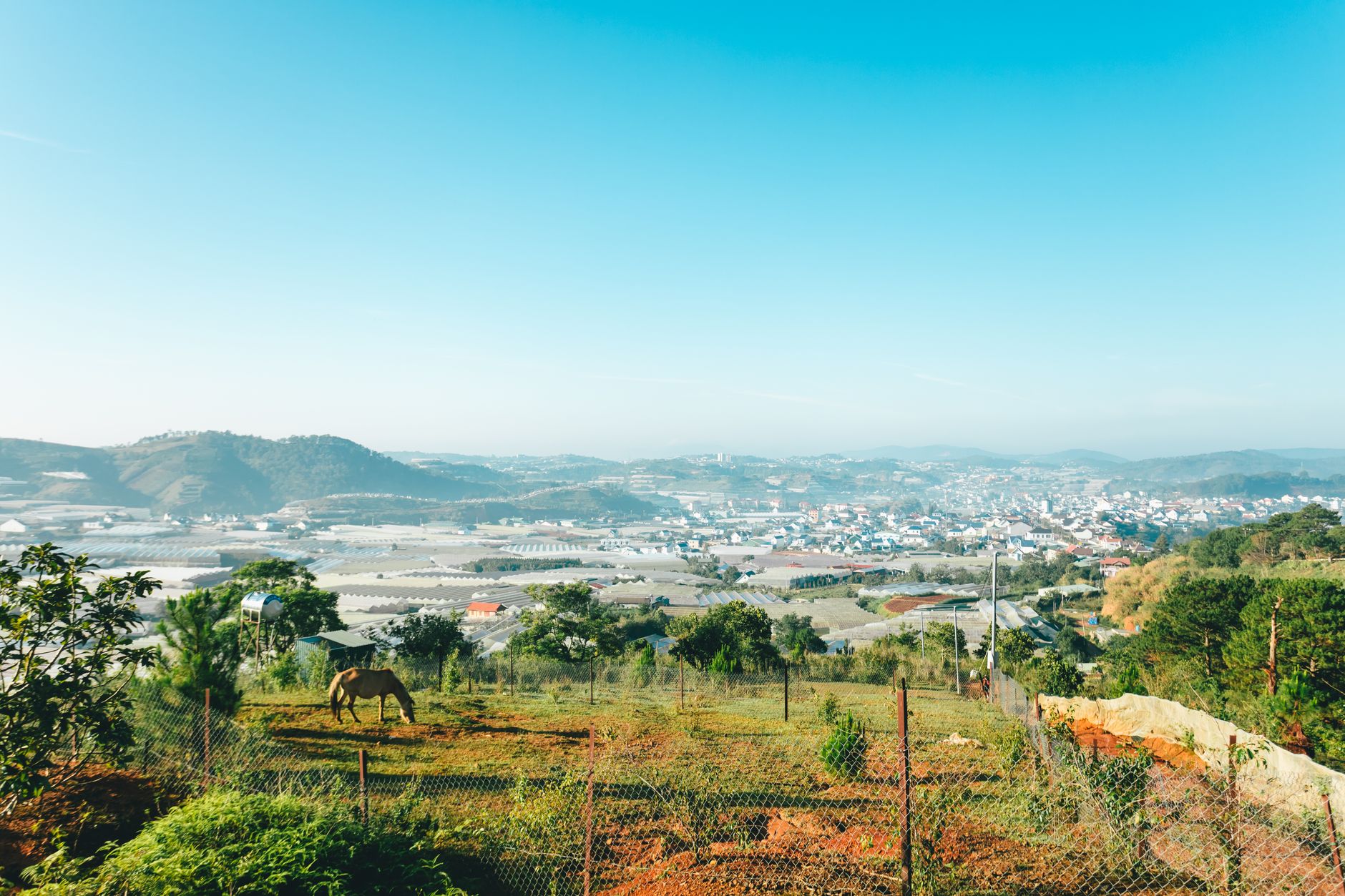
Bac Ha's Sunday market runs every week, but not every Sunday is the same. Hit it during the summer holiday crush or the weeks around Tet and you're essentially queuing through a handicraft bazaar aimed at camera-wielding day-trippers. Come in shoulder season — think late September through November, or February into early March — and you get something closer to what the market actually is: a weekly meeting point for Flower Hmong, Tay, Giay, and Nung communities from the surrounding valleys.
Why Shoulder Season Works Better
The math is simple. Peak season (June–August and the Tet (뗏 (베트남 설날) / 越南春节 / テト (ベトナム旧正月)) window in late January–February) pulls tourists up from Sapa and down from Hanoi on organized day trips. On those Sundays, the outer ring of the market — the part nearest the entrance — becomes a solid wall of indigo-dyed fabric, embroidered bags, and silver jewellery priced for negotiation with foreigners. Vendors selling to locals get pushed to the edges.
In shoulder season, that outer ring shrinks. Vendors who set up specifically for tourist traffic don't bother making the trip from Lao Cai city if the numbers aren't there. What's left is the core market: livestock, produce, fermented goods, and the kind of social gathering that justifies a two-hour walk down from a hillside village. You're not exactly invisible as a foreigner, but you're not the economic event of the day either.
Temperature also works in your favor. Late October and November bring cool, dry air to the Bac Ha plateau — around 15–20°C by mid-morning. The light is cleaner than the hazy summer months, which matters if you're shooting. March can be misty but rarely oppressively cold.
What's Actually Traded
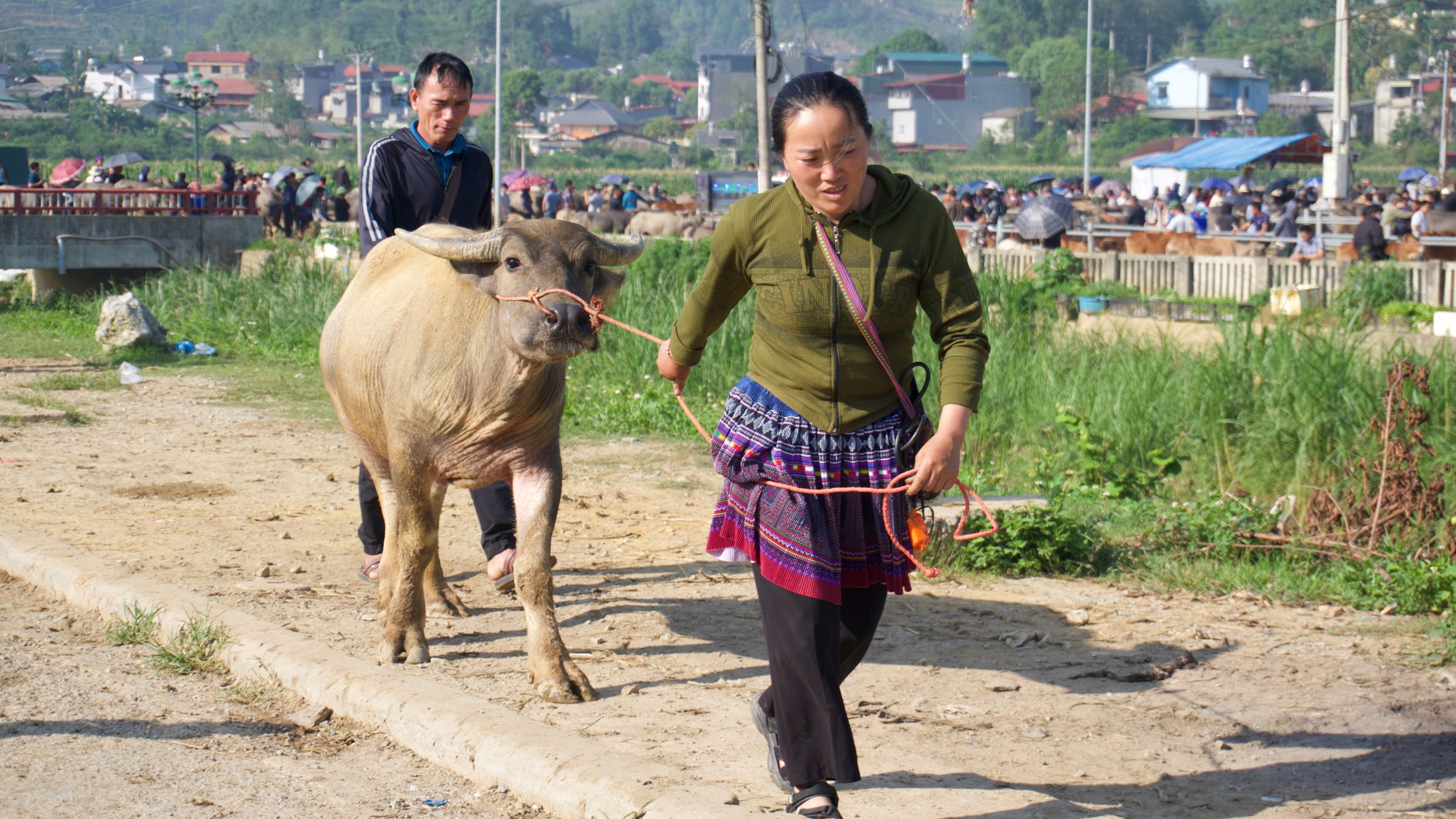
The livestock section is the market's backbone and the part that changes least regardless of season. Water buffaloes, pigs, and chickens move through a dedicated pen area on the lower slope. Prices for a mid-size buffalo run roughly 25–40 million VND depending on age and condition — this is functional commerce, not performance. Men cluster around animals, run hands along flanks, argue, walk away, come back.
Produce stalls reflect whatever's coming out of the valley gardens that week. In October and November you'll see stacks of persimmons, bundles of mustard greens, dried corn still on the cob, and enormous ginger roots sold by weight. Chili pastes and fermented soybean blocks wrapped in banana leaf sit next to bottles of locally distilled corn liquor — "ruou ngo" — which is the real drink of the plateau, not the rice wine you see marketed to tourists in Sapa.
The Flower Hmong women who've walked down from villages like Na Hoi or Ban Pho tend to sell smaller items: hand-stitched aprons, beeswax batik fabric by the meter (around 80,000–120,000 VND/meter for unfinished cloth), and occasionally silver bracelets that are actually worn rather than made for display. The embroidery work here is some of the most technically complex in the north — geometric cross-stitch across every surface — and in shoulder season you're more likely to be able to actually talk price without six other buyers hovering.
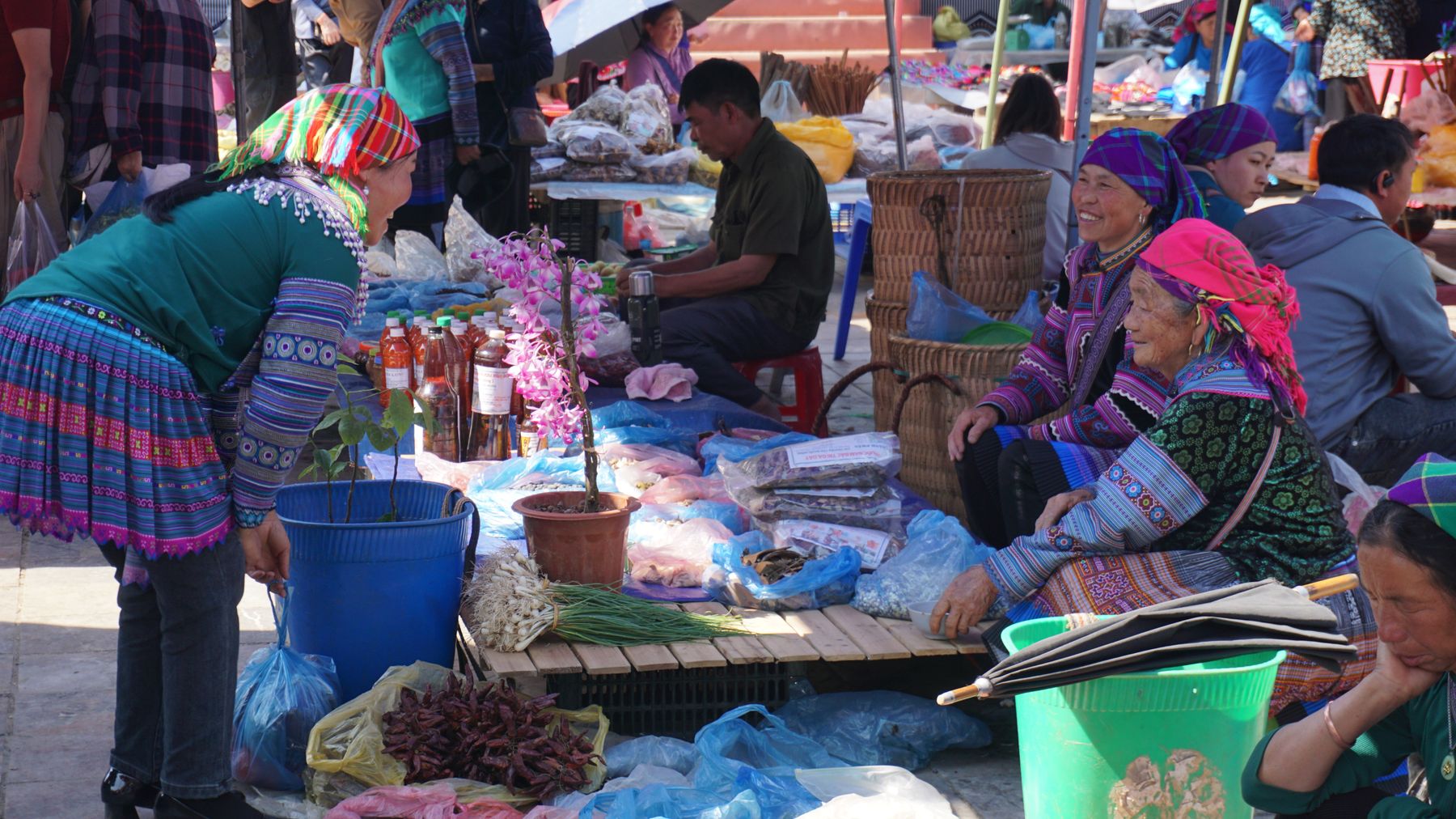
Photo by Duong Nguyen on Pexels
Getting There from Sapa or Lao Cai
Bac Ha sits about 65 km northeast of Sapa by road, or roughly 55 km from Lao Cai city. The most practical approach from Sapa is to take the road through Bao Thang — budget two hours minimum in a hired car or motorbike, more if it rained the previous day. From Lao Cai city, a xe om (motorbike taxi) or private car gets you there in around 90 minutes.
The market officially starts around 6 AM but peaks between 8 and 11 AM. By noon the livestock section is mostly cleared and produce vendors start packing. If you're coming from Lao Cai, the 6 AM departure puts you there for the best of it. From Sapa, a 5:30 AM start is realistic if you want the first hour.

Photo by Duong Nguyen on Pexels
Where to Lunch After the Market
The row of open-fronted restaurants along the main road just uphill from the market square does a reasonable "thang co" — a Hmong horse-meat and organ stew cooked in a large communal pot with lemongrass and galangal. It's the traditional market-day meal in this part of Lao Cai province and costs around 50,000–70,000 VND a bowl. It's an acquired taste; the broth is rich and slightly gamey. If that's a step too far, the same stalls serve "pho" and "banh mi" for the same price range.
For something more substantial, the Hoang Yen restaurant near the Bac Ha guesthouse strip does a solid set lunch — usually three or four local dishes with rice — for around 80,000–100,000 VND per person. Nothing remarkable, but reliable and filling before the drive back.
The corn liquor sold in plastic bottles throughout the market is strong (often 40%+ ABV) and cheap (around 30,000–50,000 VND per 500ml bottle). Worth buying as a souvenir. Less worth drinking heavily before a mountain road drive.
Practical Notes
Bac Ha has a handful of guesthouses if you want to stay Saturday night and hit the market fresh at dawn — recommended over the dawn departure from Sapa. Cash only at the market; the nearest ATM is in the town center and it doesn't always have notes. Bring at least 500,000 VND in small bills if you plan to buy fabric or produce.
Last updated · May 29, 2026 · independently researched, never sponsored.