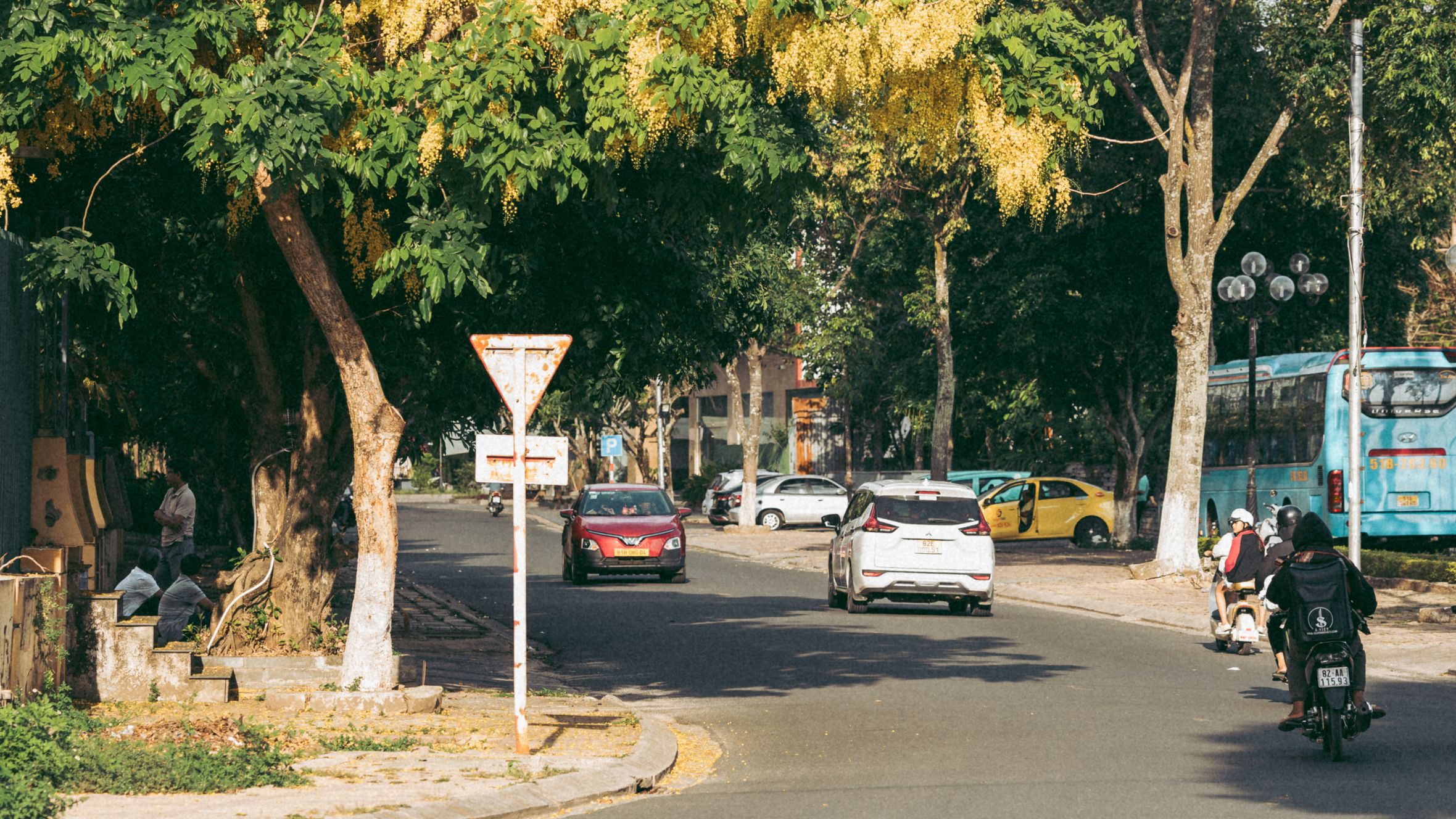
Tuyen Quang is a quiet northern province wedged between the mountains and the Red River, roughly 170 km northwest of Hanoi. Most travelers skip it for Sapa or Ha Giang, which means you'll escape the tour-bus crowds — but you need to know how to get there first.
From Hanoi
Hanoi is the obvious jumping-off point. You have four realistic options.
Bus
This is the cheapest and most frequent way. Several operators run daily buses from Hanoi (하노이 / 河内 / ハノイ) to Tuyen Quang city. The ride takes about 3–4 hours depending on traffic and road conditions. You can book through Trang Chi Coach or ask at your hotel; tickets run 80,000–120,000 VND. Buses leave early morning (around 6–8 a.m.) from various stations on the outskirts of Hanoi. The advantage is cost; the downside is cramped seating and a long ride on a winding road.
Most departures leave from My Dinh bus station on the western side of Hanoi. A Grab bike to My Dinh from the Old Quarter costs around 30,000–50,000 VND and takes 20–30 minutes depending on morning traffic. Get there at least 30 minutes before departure — ticket windows open early, but seats on the first bus fill fast on weekends. Some operators also pick up passengers along Pham Van Dong road, so confirm the exact boarding point when you book. Once you arrive at Tuyen Quang bus station (Ben Xe Tuyen Quang), the town center is about 2 km east — a quick xe om ride for 15,000–20,000 VND.
Train
The Hanoi–Thao Nguyen railway line passes through Tuyen Quang, but service is infrequent and slow. A train ride takes 5–7 hours depending on the train type and stops. Tickets cost 150,000–250,000 VND for a hard sleeper or soft seat. Check the national railway website (duongsat.com.vn) for current schedules; trains don't run every day, so book in advance if you plan to use this option. It's atmospheric but not practical if you're on a tight itinerary.
If you do take the train, depart from Hanoi's Gia Lam station on the east bank of the Red River, not from Hanoi main station. The route threads through flat delta farmland before climbing into low hills — bring snacks and water because the onboard food cart, if there is one, sells instant noodles and warm beer. The Tuyen Quang railway station sits a few kilometers from the city center, so arrange a pickup through your hotel or flag a xe om outside the station gate.
Motorbike rental
Renting a motorbike in Hanoi and riding to Tuyen Quang gives you flexibility and stops along the way. Rental costs 80,000–150,000 VND per day depending on bike quality. The ride is roughly 3–4 hours on Highway 2, which is mostly paved but can be chaotic in town sections. You'll need an international driving permit (IDP) and travel insurance that covers motorbike use; both are legally required. This option suits confident riders who want scenic stops in villages and smaller towns en route.
A worthwhile detour on the way: turn off Highway 2 at Viet Tri and swing through Phu Tho province, where the Hung Kings Temple complex sits on a forested hill. It adds about 30 km and an hour to the ride, but it's one of the most significant historical sites in northern Vietnam (베트남 / 越南 / ベトナム) and rarely crowded on weekdays. Fuel up in Viet Tri — petrol stations thin out once you leave the main highway. Expect to pay around 25,000 VND per liter for RON 95.
Car or taxi
Hire a driver through your hotel or apps like Grab for a private sedan. Costs run 600,000–900,000 VND one-way for a 4-seater, depending on the car class. Travel time is 3–4 hours on the same Highway 2. You get comfort and flexibility but pay premium prices. Use this if you're traveling with a group or have luggage and don't want to deal with buses.
One tip: negotiate a return trip if you plan to come back to Hanoi the same way. Many drivers will offer a round-trip discount of 10–15% because it guarantees them a return fare rather than deadheading back empty. For a 7-seater van (useful for families or groups of 4–6), expect 900,000–1,300,000 VND one-way.
From Saigon
Tuyen Quang is in the opposite corner of the country from Saigon, so direct travel options are limited.
Fly + overland
There are no direct flights from Saigon to Tuyen Quang. Your best move is to fly from Tan Son Nhat to Hanoi (1.5 hours, 500,000–1,500,000 VND one-way), then take a bus or motorbike north as described above. Total travel time is 5–6 hours plus airport time.
If you land at Noi Bai airport in Hanoi, you can skip the city entirely and head straight toward Tuyen Quang. Grab a taxi or arrange a private car from Noi Bai directly — the airport sits north of Hanoi, so you shave about 30–40 minutes off the drive compared to going into the Old Quarter first and then doubling back out. Expect 800,000–1,100,000 VND for a direct Noi Bai-to-Tuyen Quang sedan. Some bus operators also stop at Phuc Yen or Vinh Phuc, which are closer to the airport corridor, but confirming pickup points requires calling ahead in Vietnamese — ask your hotel or a Vietnamese-speaking friend to help.
Overnight bus
A few long-distance carriers run Saigon–Hanoi buses (12–14 hours), and you can ask the driver to drop you in Tuyen Quang city on the way. This saves you a separate Hanoi–Tuyen Quang leg but is exhausting and not recommended unless you're on an ultra-tight budget (tickets are 300,000–500,000 VND). Most travelers will find the fly-and-bus combo more comfortable.

Photo by Thien An on Pexels
From Da Nang
Da Nang to Tuyen Quang is roughly 600 km and involves doubling back toward Hanoi.
Bus
Take a Da Nang–Hanoi bus (8–10 hours, 300,000–500,000 VND) and ask the driver to drop you in Tuyen Quang, or arrange a separate Hanoi–Tuyen Quang connection. This adds a long day to your journey and isn't efficient unless you're already heading to Hanoi.
Fly to Hanoi + bus
Flying from Da Nang to Hanoi (1 hour, 400,000–1,200,000 VND) and then bussing to Tuyen Quang is the fastest route (total 4–5 hours). Book your internal flight through budget carriers like Vietjet or Bamboo Airways.
If you're coming from further south — say Hoi An or Hue — get yourself to Da Nang airport first. Hoi An to Da Nang airport is about 30 km (taxi around 250,000–350,000 VND, 40 minutes). Hue to Da Nang is 100 km by car or a short domestic flight. Either way, Da Nang is your funnel point for reaching anywhere in the north.

Photo by NGUYỄN THÀNH NHƠN on Pexels
Where to base yourself
Tuyen Quang city is the main hub, with budget hotels, restaurants, and a night market. Guesthouses like Tuyen Quang Tourist Hotel and smaller backpacker-friendly places charge 150,000–350,000 VND per night for a clean double room. The town itself is quiet and not particularly scenic, but it's a good overnight stop if you're heading further north to Ha Giang or exploring the surrounding countryside by motorbike.
For a longer stay, consider renting a room in a village or ecolodge in the surrounding area — options like Souffle Organic Farm or homestays along the Red River offer more character, though you'll need a motorbike to reach them.
The night market along the Lo River waterfront is worth a wander after dark. Street food stalls sell grilled meats, sticky rice wrapped in banana leaves, and "che" (sweet dessert soup) for 10,000–30,000 VND per serving. You won't find the same "pho" or "banh mi" variety as in Hanoi's Old Quarter, but the local "com tam" (broken rice) plates and noodle soups hold their own. Look for the stalls with the longest local queues — that's your quality filter.
What to eat in Tuyen Quang
You came for the transport guide, but nobody should pass through Tuyen Quang without eating. The province has its own food identity that sits somewhere between Hanoi's refined northern cooking and the mountain flavors you find near Sapa or Ha Giang.
The local specialty is "banh cuon" — thin steamed rice rolls filled with minced pork and wood ear mushroom, served with fried shallots and a light fish sauce dip. Tuyen Quang's version is thinner and more delicate than what you'll get in Hanoi. Find it at breakfast stalls near the central market for 20,000–35,000 VND a plate. Point and say "banh cuon" — the vendor will know what to do.
Another dish to track down is grilled stream fish, usually served whole on a skewer with herbs, chili salt, and sticky rice on the side. Restaurants along the Lo River serve it in the evening for 80,000–150,000 VND depending on fish size. If you're heading into the countryside, keep an eye out for "thang co," a hearty organ meat hotpot borrowed from ethnic Hmong cooking — it's not for everyone, but it's real mountain food.
For drinks, local "bia hoi" (fresh draft beer) is available at corner stalls for 8,000–12,000 VND per glass. Vietnamese coffee is easy to find in Tuyen Quang city — small "ca phe" shops on the main drag serve a strong drip "ca phe sua da" (iced milk coffee) for 15,000–25,000 VND. Don't expect egg coffee here; that's more of a Hanoi thing.
Quick reference: getting to Tuyen Quang
- Distance from Hanoi: ~170 km northwest (Highway 2)
- Distance from Saigon: ~1,700 km (fly to Hanoi first)
- Distance from Da Nang: ~600 km (fly to Hanoi first)
- Nearest airport: Noi Bai (Hanoi), 150 km southeast
- Bus from Hanoi: 3–4 hours, 80,000–120,000 VND, departs My Dinh station
- Train from Hanoi: 5–7 hours, 150,000–250,000 VND, departs Gia Lam station (infrequent)
- Motorbike from Hanoi: 3–4 hours, rental 80,000–150,000 VND/day
- Private car from Hanoi: 3–4 hours, 600,000–900,000 VND one-way
- Flight Saigon to Hanoi: 1.5 hours, 500,000–1,500,000 VND
- Flight Da Nang to Hanoi: 1 hour, 400,000–1,200,000 VND
- Budget hotels in Tuyen Quang city: 150,000–350,000 VND/night
- Best months to visit: October–April (dry season)
- Rainy season: May–September (wet roads, possible delays)
Common mistakes foreigners make
Booking a sleeper bus Saigon–Tuyen Quang and expecting comfort. The 12–14 hour haul is brutal even on a good bus. Fly to Hanoi and take a 3-hour ride north — the extra cost is worth your sanity.
Arriving without cash. ATMs exist in Tuyen Quang city, but they're unreliable on weekends and sometimes cap withdrawals at 2,000,000 VND. Bring enough dong from Hanoi to cover your first day or two. Small bills — 50,000 and 100,000 VND — are essential for buses, street food, and xe om rides.
Skipping fuel stops on the motorbike ride. Highway 2 has petrol stations, but the stretches between Viet Tri and Tuyen Quang can feel long. Top up whenever you see a pump. Running out of fuel on a mountain road with no phone signal is not a story you want to tell.
Assuming everyone speaks English. Tuyen Quang is not a tourist town. Hotel reception staff might manage basic English, but bus drivers, food vendors, and taxi riders usually don't. Learn a few phrases: "di Tuyen Quang" (go to Tuyen Quang), "bao nhieu?" (how much?), "cam on" (thank you). Having Google Translate downloaded for offline Vietnamese helps enormously.
Trying to day-trip from Hanoi. Technically possible, but 6–8 hours of round-trip travel for a few hours on the ground doesn't make sense. Stay at least one night so you can actually see the province — the countryside around Na Hang lake and Lam Binh district is where Tuyen Quang earns its keep, and those spots are another 1–2 hours north of the city.
Practical notes
Tuyen Quang has no airport, so all routes funnel through Hanoi or Da Nang. Book transport in advance during peak travel season (October–April); buses fill up and motorbike rental slots get tight. Bring small bills (50,000 and 100,000 VND notes) because rural ticket sellers often don't have change. The roads are safe but can be wet and slippery during the rainy season (May–September).
If you're building a longer northern loop, Tuyen Quang works well as a stopover between Hanoi and Ha Giang. From Tuyen Quang city, it's roughly 250 km north to Ha Giang city — a full day's ride on a motorbike through increasingly dramatic mountain scenery. You could also loop east toward Ninh Binh on your way back to Hanoi, though that route adds significant distance. For a shorter side trip, the Temple of Literature and the Old Quarter are worth a day in Hanoi before or after your Tuyen Quang leg.
Final note
Tuyen Quang won't blow up your Instagram feed the way Ha Giang or Sapa will. That's precisely the point. It's a place where you eat well, ride quiet roads, and deal with zero tourist infrastructure headaches — because there are almost no tourists. The hardest part is getting there, and as this guide shows, even that isn't very hard.
Last updated · May 29, 2026 · independently researched, never sponsored.






