Lang Dong Khanh sits about 8 km south of central Hue, sandwiched between the more famous Tomb of Tu Duc and the Tomb of Khai Dinh. It's the smallest of Hue's royal tomb complexes, and that's exactly why it's worth your time — you'll often have the place nearly to yourself.
What it is and a bit of history
Lang Dong Khanh is the mausoleum of Emperor Dong Khanh, the ninth emperor of the Nguyen Dynasty, who ruled for just three years (1885–1889) before dying at age 24. He never got to build his own tomb during his short reign, so the complex was constructed posthumously by his son, Emperor Khai Dinh, between 1917 and 1923.
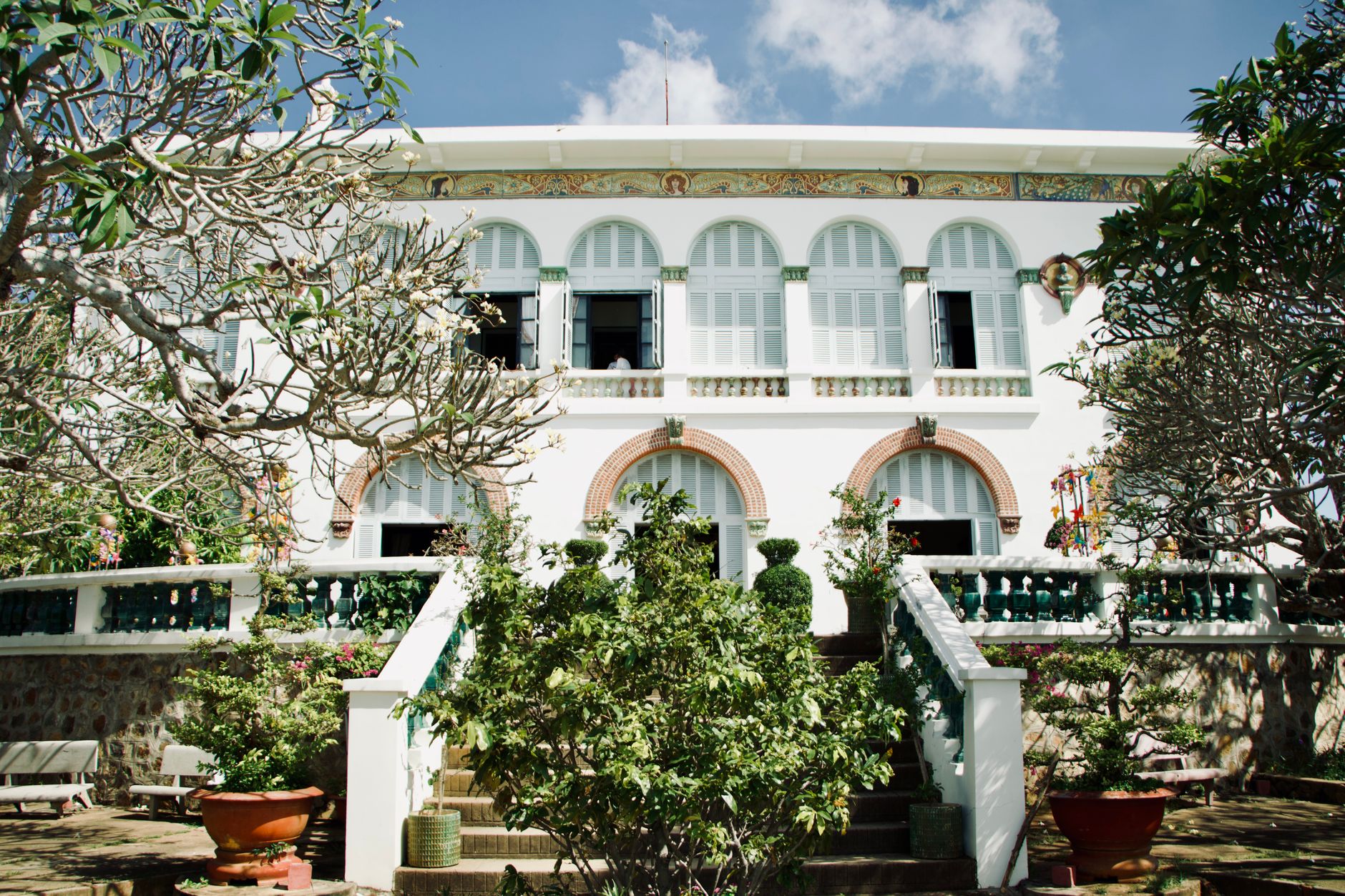
That timing matters. By the early 20th century, French colonial influence had seeped into Vietnamese royal architecture. Lang Dong Khanh shows this clearly — you'll find a European-style gate with wrought-iron details sitting next to traditional Nguyen-era pavilions with curved dragon roof ridges. The mix feels less jarring and more like a snapshot of a culture in transition.
The complex includes a worship temple (Ngung Hy), a stele pavilion, a courtyard with stone mandarins and horses, and the burial mound at the rear. It's compact enough to see everything in 30–40 minutes.
Why travelers go
Most people visiting Hue (후에 / 顺化 / フエ)'s royal tombs hit the Tomb of Tu Duc and Tomb of Khai Dinh, then call it a day. Lang Dong Khanh rarely makes the tour-bus circuit, which means you get something increasingly rare in Hue: space to look at things without a selfie stick in your peripheral vision.
The real draw is the Ngung Hy worship temple. The interior still holds original furniture, lacquerware, and portraits — including a painted likeness of Dong Khanh that's one of the earliest realistic portraits of a Vietnamese emperor. The color palette inside leans toward deep reds and golds, and the detailing on the altar screens is some of the finest woodwork you'll see in any Hue tomb.
Photographers tend to like this place for the interplay of French and Vietnamese elements. The front gate, with its neoclassical columns topped by Vietnamese dragon motifs, frames well against the pine-lined approach.
Best time to visit
Hue's dry season runs from March through August, with April and May being the sweet spot — warm but not yet at peak summer heat. September through November brings the heaviest rain, and the tomb grounds can get muddy.
Early morning (before 9 AM) is ideal. The light filters through the pine trees nicely, and you'll beat any stray tour groups. Afternoons work too, but the site closes at 5:30 PM.
How to get there from Hue
From the center of Hue, Lang Dong Khanh is about 8 km south along the road toward the cluster of royal tombs.
- Motorbike or scooter: The most flexible option. Rentals in Hue run 120,000–150,000 VND per day. The ride takes about 20 minutes via Dien Bien Phu Street heading south. The road is paved and straightforward.
- Grab bike: Around 30,000–40,000 VND one way. Getting a return Grab from the tomb area can be slow — drivers are fewer out here — so consider asking your driver to wait.
- Taxi: Roughly 100,000–130,000 VND one way from the city center.
- Organized tomb tour: Many hotels and tour offices in Hue offer half-day royal tomb circuits for 250,000–400,000 VND per person. Lang Dong Khanh isn't always included by default, so confirm before booking.
The tomb shares a road with Tu Duc and Khai Dinh, so it makes sense to combine two or three in one trip.

Photo by Quang Nguyen Vinh on Pexels
What to do — 4 specifics
Walk the mandarin courtyard
The honor courtyard has stone statues of mandarins, horses, and elephants lined up in rows — standard for Nguyen tombs, but here they're slightly smaller scale. Notice how the mandarin figures wear both civil and military dress. The stonework is weathered but intact.
Spend time inside Ngung Hy Temple
This is the highlight. The worship hall contains Dong Khanh's portrait, ceremonial objects, and elaborately carved wooden screens. Take a moment to look up — the ceiling panels have painted designs that are easy to miss if you just glance around at eye level.
Study the French-Vietnamese gate
The entrance gate is where the architectural fusion is most obvious. Corinthian-style columns support a Vietnamese-style roof. Iron railings replace traditional stone balustrades. It's a small detail that tells a big story about early 20th-century Hue.
Walk to the burial mound
Behind the temple complex, a pine-shaded path leads to the actual burial mound. It's quiet back here, shaded, and usually empty. The crescent-shaped pond in front of the mound is a classic feng shui element found in most Nguyen tombs.
Where to eat nearby
The tomb area south of Hue isn't a dining destination, but you have options.
Head back toward the city and stop along Kim Long Street, where several family-run places serve "bun bo Hue" — the spicy, lemongrass-heavy beef noodle soup that's the city's signature dish. A bowl runs 35,000–45,000 VND. Quan Bun Bo Hue O Phuong on Kim Long is a reliable local pick.
If you're combining tombs and heading back to the Old Quarter, the area around Dong Ba Market has cheap "com tam" (broken rice) plates and "banh canh" — a thick tapioca noodle soup with crab that Hue does particularly well. Budget 30,000–50,000 VND per dish.
Where to stay in Hue
Stay in the city center rather than near the tombs — everything south of town is residential with no real tourist accommodation.
- Budget: Hostels and guesthouses along Pham Ngu Lao and Le Loi streets run 150,000–300,000 VND per night.
- Mid-range: Boutique hotels near the Perfume River go for 600,000–1,200,000 VND. Many include breakfast and bicycle loans.
- Upper-range: A few heritage properties along the river charge 1,500,000–3,000,000 VND, with river-view rooms and pools.

Photo by ㅤ quang vinh ㅤ on Pexels
Practical tips locals would share
- Combo tickets save money. Hue sells a combined ticket covering multiple royal tombs and the Imperial Citadel for 530,000 VND (as of 2024). A single-site ticket for Lang Dong Khanh alone is 100,000 VND. If you're visiting more than two sites, the combo pays for itself.
- Wear shoes you don't mind getting dusty. The paths between structures are packed earth and gravel, not paved.
- Bring water. There's no cafe or vendor at the site. The nearest drink stand is back on the main road.
- Combine with Tu Duc. The Tomb of Tu Duc is barely 500 meters away. Doing both back-to-back takes under two hours total and gives you a good contrast between a sprawling complex (Tu Duc) and an intimate one (Dong Khanh).
Common mistakes to avoid
- Skipping the interior of Ngung Hy. Some visitors peek through the door and move on. Go inside — the portrait and the woodwork justify the entire visit.
- Coming midday in summer. There's limited shade between structures. The heat from June through August is serious. Mornings or late afternoons only.
- Not confirming it's open. Lang Dong Khanh occasionally closes for restoration without much notice. Check with your hotel or a local tour desk before making the trip out.
Practical notes
Lang Dong Khanh won't be the tomb that makes your jaw drop in Hue — that's probably Khai Dinh or Tu Duc. But if you want to understand how Hue's royal architecture evolved under French influence, this small, overlooked complex is the clearest example. Budget 30–45 minutes, pair it with a neighboring tomb, and you'll come away with something the tour-bus crowds miss entirely.
Last updated · May 26, 2026 · independently researched, never sponsored.