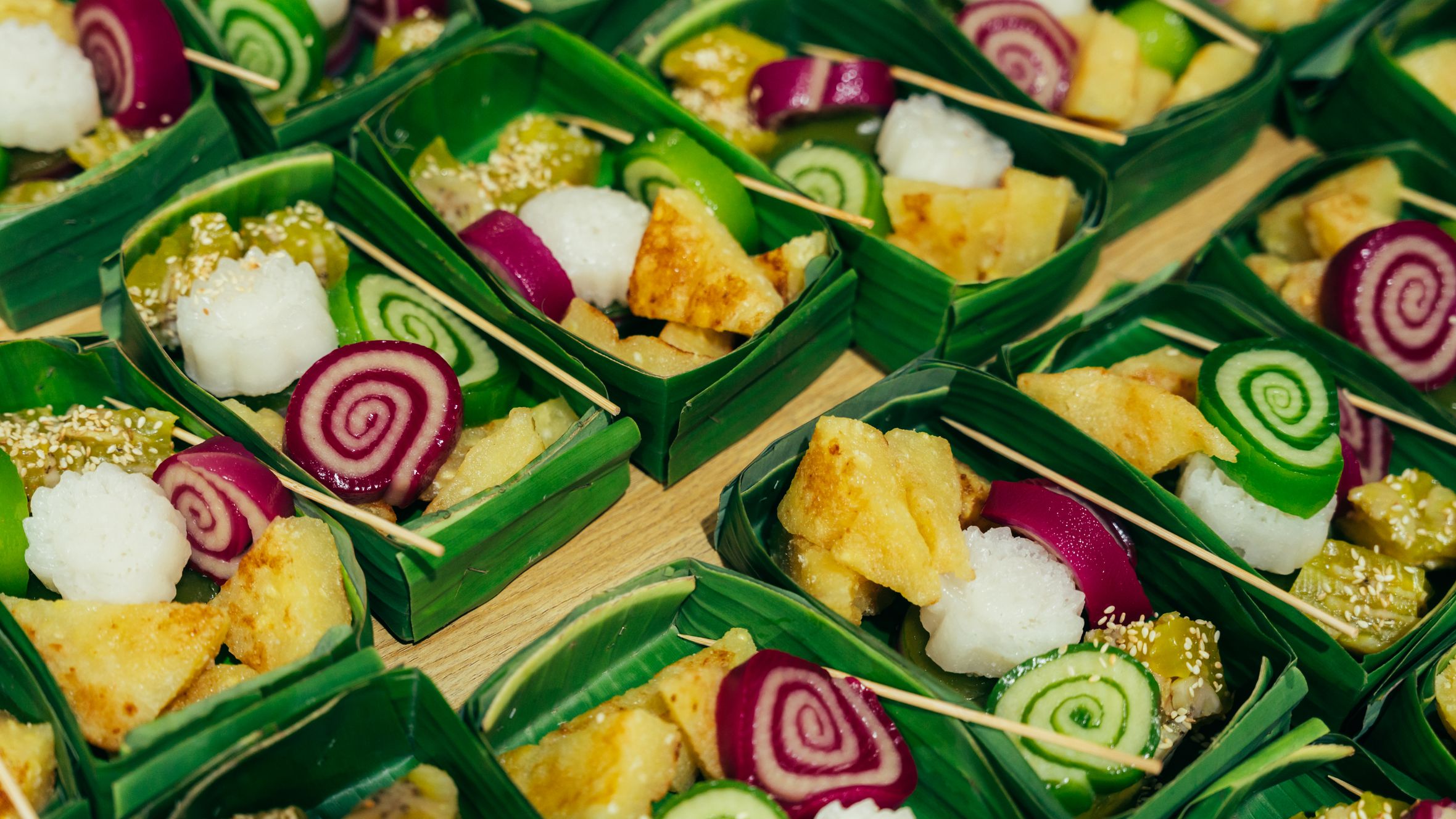
"Che chuoi" is the Mekong Delta (메콩 델타 / 湄公河三角洲 / メコンデルタ)'s answer to a spoon-and-bowl dessert: green tapioca pearls, soft banana chunks, and a silky coconut or brown-sugar syrup, eaten hot or cold depending on the season and the shop. In Can Tho, it's not a novelty—it's a rhythm. You'll see it wheeled on carts at 6 a.m., sold at lunch counters, and still available at 9 p.m. at family-run stalls. The difference between a forgettable bowl and one you'll think about for weeks is almost always freshness and the balance of tapioca chew to banana sweetness.
What makes Can Tho (껀터 / 芹苴 / カントー)'s "che chuoi" distinct is the Mekong itself. Local bananas here are smaller, denser, and sweeter than northern varieties—they cook down faster and hold their shape better. The tapioca is often made in-house daily, which changes the texture entirely. In Saigon or Hanoi, many shops buy pre-packaged pearls; in Can Tho, you're more likely to get ones rolled fresh that morning. The syrup ratios also lean heavier toward brown sugar and coconut milk than the honey-forward versions you find upriver.
Che Chuoi Thom (Tran Phu Street)
This is the spot. A corner stall about 300 metres east of Can Tho Cathedral on Tran Phu, near the intersection with Ngo Tat To. The owner, Mrs. Lien, has been running it for nearly 25 years. She makes her tapioca in the early morning—you can smell it as you walk past—and uses bananas bought from Cai Rang floating market almost daily. A small bowl costs 20,000 VND; large is 30,000 VND.
The tapioca here has a subtle give—not mushy, not rubbery. The bananas are cut into discs and are almost translucent from cooking. The syrup is brown sugar with just enough coconut milk to coat without overwhelming. Mrs. Lien doesn't advertise. Word travels by word of mouth, which is why you'll see university students, office workers, and the occasional motorcyclist waiting for a seat at one of three tiny plastic tables outside. Best time to go is 7–8 a.m. or around 2–3 p.m. Lunch hour (11:30 a.m. to 1 p.m.) gets crowded, and lines form quickly.
Che Thom (Hoa Binh Park area)
Near Hoa Binh Park, a larger stall (still humble, still no signage) run by Mr. Thanh. He operates from around 6 a.m. to 8 p.m., so it's accessible if you're not an early riser. His specialty is offering both a "che chuoi nong" (hot version) in cooler months and "che chuoi da" (iced version) year-round. The hot version is thinner—more broth than pudding—and served in a cup. Cold version is thicker and eaten with a spoon. Both are 25,000 VND.
Mr. Thanh sources his bananas from a specific vendor at Cai Rang and is particular about ripeness; too green and they don't soften evenly, too ripe and they fall apart. The tapioca is slightly chewier here than at Che Chuoi Thom—some people prefer that texture. The brown sugar is darker, almost caramelized. If you go in the afternoon, sit for a few minutes and watch the locals. Most order it as a break between lunch and dinner, not as a full meal. Regulars know to ask for "them duong" (extra sugar) if they like it sweeter, though the default is already balanced well.
Che Nuoc Duong (Duong An Thuong Alley)
Down a narrow alley off Duong An Thuong (south of Can Tho Bridge), this is technically a "che" shop, meaning it sells multiple kinds of sweet soups and puddings—not just "che chuoi." But their banana version is worth the detour. It's run by an older woman whose name most people don't know; they just call it "Che Nuoc Duong" after the alley.
What's different here is the coconut milk—it's fresher, from coconuts delivered most mornings. The syrup has a lighter, almost nutty taste. The tapioca is fine-grain, almost sand-like, and the banana is sliced thinner. A bowl is 22,000 VND. This is where locals send you if they want you to taste the most "traditional" version—minimalist, not oversweetened, letting the ingredient quality do the talking. Open 6 a.m. to 10 p.m. Evening is actually good here; the cool night air and a hot bowl of "che chuoi" is a quiet ritual for many families.

Photo by Quí Trần on Pexels
Che Chuoi at Floating Market Stalls
If you're at Cai Rang floating market in the early morning (5–7 a.m.), you'll see vendors selling "che chuoi" directly from boats. It's less refined than the permanent stalls—the tapioca might be softer, the portions more generous—but the cost is lower (15,000–18,000 VND) and the energy is different. You're eating standing up on a wooden dock, surrounded by fruit traders and morning commerce. Not everyone's preference, but it's authentic and an experience.
How to Order & When to Go
At any stall, you can just say "mot tho che chuoi" (one bowl of che chuoi) or point if language is a barrier. If you want it hot, say "nong"; cold, say "da." If you want extra sweetness, say "them duong." Most places offer it as-is, and if they ask, they're asking if you want sugar added—the default syrup is already in.
Morning (6–9 a.m.) is peak freshness. The tapioca is newest, bananas are just-cut, and there's a sense of purpose—people are grabbing breakfast before work. Afternoon (2–4 p.m.) is when locals eat it as a mid-day break or light snack; it's less crowded than lunch hour. Evening (7–9 p.m.) is quieter, good if you want conversation with the vendor or a slower pace.
Avoid the absolute lunch rush (11:30 a.m. to 1 p.m.) unless you enjoy standing in a queue. And avoid late evening (after 9:30 p.m.) at smaller stalls—they sometimes run out of fresh tapioca and switch to what was made earlier.
Photo by Quí Trần on Pexels
Why Can Tho's "Che Chuoi" Tastes Different
The water quality in the Mekong Delta affects how tapioca absorbs and softens. Local bananas, as mentioned, are smaller and denser. But the real reason is consistency of supply and time investment. In Can Tho, vendors aren't buying pre-made components from suppliers two provinces over. They're buying bananas from Cai Rang twice a week, making tapioca in small batches, and adjusting syrup ratios based on the season and fruit sweetness. That attentiveness, repeated daily over decades, becomes flavor.
You also taste the competition—or rather, the lack of pretense. These aren't Instagram-able desserts. There's no branding. So vendors compete on taste and service, not aesthetics or marketing. A bad bowl of "che chuoi" doesn't survive in a place this size with this much word-of-mouth.
Practical notes
Bring small change in VND; most stalls don't use mobile payment. Budget 20,000–30,000 VND per bowl. If you're combining "che chuoi" with a meal, eat it after—it's light enough as a dessert but heavy enough that eating it first will dull your appetite. The stalls mentioned above are walkable from Can Tho city center, no need for a taxi.
Last updated · Apr 28, 2026 · independently researched, never sponsored.







