What it is
Muong Lo is Vietnam (베트남 / 越南 / ベトナム)'s second-largest rice valley after Muong Thanh in Dien Bien, stretching roughly 2,000 hectares across a flat basin surrounded by the Hoang Lien Son mountain range. The valley sits at about 300 meters elevation near Nghia Lo town, in what is now part of Lao Cai province in the far northwest.
The Thai ethnic minority — specifically Black Thai communities — have farmed this valley for centuries. Their irrigation channels, fed by the Nam Thia river system, turn the basin into a patchwork of flooded paddies each May and golden terraces each September. Unlike the steep terraced hillsides of Sapa or Ha Giang, Muong Lo is flat and wide, giving it a completely different visual rhythm.
Why travelers go
Most visitors to northwest Vietnam follow the Sapa or Ha Giang (하장 / 河江 / ハーザン) routes and skip the lowland valleys entirely. Muong Lo rewards the ones who don't.
The draw is simple: open landscape, Thai stilt-house villages, almost zero tourist infrastructure (in a good way), and some of the best sticky rice in northern Vietnam. This isn't a place with ticket counters or guided tours. You ride a motorbike along dike paths, stop at villages when someone waves, and eat "xoi ngu sac" (five-color sticky rice) cooked over wood fire.
Photographers come for the harvest season light. Cycle tourers use it as a rest day between mountain passes. Culture-focused travelers come for the "xoe Thai" circle dance, which UNESCO recognized in 2021.
Best time to visit
Two windows:
- Late May to mid-June — Paddies are freshly flooded and transplanted. Bright green shoots against mirror-water reflections. Mornings are misty.
- Late September to mid-October — Harvest gold. Farmers cut rice by hand, and the valley smells like cut grass and woodsmoke. This is peak.
Avoid November through March: paddies are brown stubble, skies often grey with drizzle. July–August works but expect afternoon downpours and full green (less dramatic contrast).
How to get there
From Hanoi
Drive northwest via the Noi Bai–Lao Cai expressway, exit at Yen Bai, then follow QL32 toward Nghia Lo. Total distance: about 270 km, roughly 5–5.5 hours by car or motorbike.
Alternatively, take a night bus from My Dinh station to Nghia Lo (departures around 9–10 PM, arriving 3–4 AM — not ideal) or the newer daytime limousine vans that take about 5 hours.
From Sapa or Lao Cai city
Head south on QL32 through Mu Cang Chai. This is a spectacular mountain road — about 130 km and 4–5 hours by motorbike due to passes. It's one of the best riding roads in the north, passing through terraced rice country the whole way.
Getting around locally
Rent a motorbike in Nghia Lo town (150,000–200,000 VND/day for a Honda Wave). The valley roads are flat, paved, and easy. A bicycle works too if you stay within the central basin — ask your homestay.

Photo by Quang Nguyen Vinh on Pexels
What to do
Ride the dike roads. The network of raised paths between paddies stretches for kilometers. No map needed — just head toward the mountains and turn when the path ends.
Visit Ban Sai Luong or Ban Dep. Traditional Black Thai villages with intact stilt houses. No entry fee. Be respectful — these are people's homes, not exhibits.
Watch or join xoe dancing. Evenings at some homestays or community houses include "xoe Thai" circle dances. It's participatory — you'll get pulled in.
Swim in Suoi Giang. About 15 km from Nghia Lo, this highland commune has ancient tea trees (some over 300 years old) and cool mountain streams. The tea here is excellent — buy directly from farmers for 200,000–400,000 VND per kilogram.
Hike to the Nghia Lo viewpoint. A short climb (about 30 minutes) to a hilltop west of town gives a panoramic view across the entire valley. Best at sunrise.
Where to eat
Thai cuisine here is distinct from what you'll find in Hanoi restaurants marketing "Thai-Vietnamese" food.
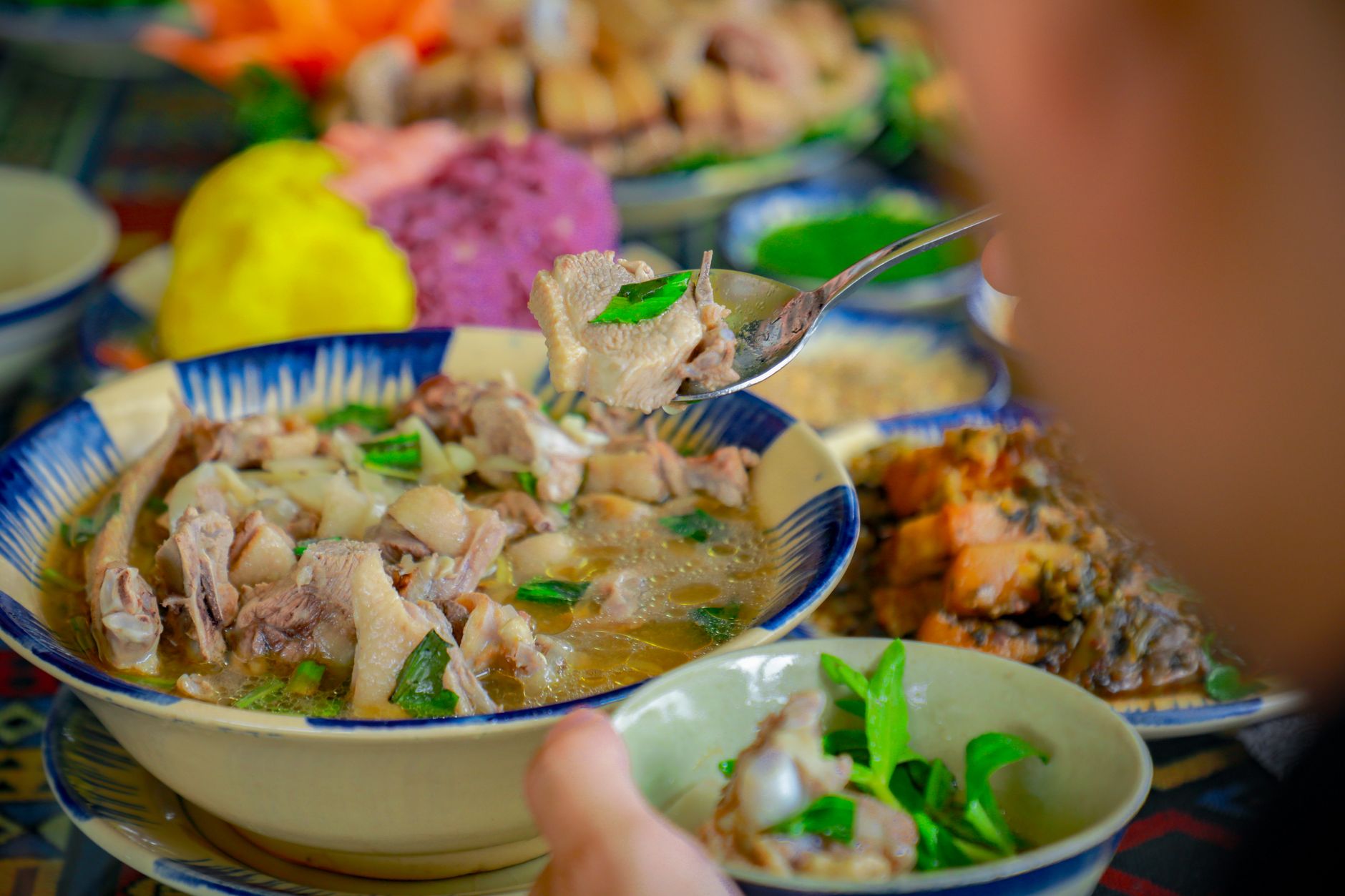
- Xoi ngu sac — Five-color sticky rice, dyed with natural plant extracts (purple from magenta leaf, green from pandan, yellow from turmeric). Served at morning markets and homestays.
- Ca suoi nuong — Stream fish grilled in banana leaf with "mac khen" (a local pepper similar to Sichuan peppercorn). Ask any homestay to prepare this.
- Thit trau gac bep — Smoked buffalo meat hung above the kitchen hearth for weeks. Chewy, intensely savory.
- Com lam — Sticky rice cooked inside bamboo tubes over coals. Common at roadside stalls for 15,000–20,000 VND per tube.
For a proper sit-down meal, Nghia Lo town has a handful of "com Thai" restaurants along the main road — look for places with Thai script signage. Expect 80,000–150,000 VND per person for a full spread.
Where to stay
Homestays are the right choice here. Most are Thai stilt houses with mattresses on the floor, mosquito nets, shared bathrooms, and communal dinners.
- Budget: 150,000–250,000 VND/person/night including dinner and breakfast.
- Mid-range: A few newer homestays in Ban Dep offer private rooms with hot water for 400,000–600,000 VND/room.
Nghia Lo town has basic hotels (nha nghi) starting at 200,000 VND if you want air conditioning and a private bathroom, but you lose the valley atmosphere.
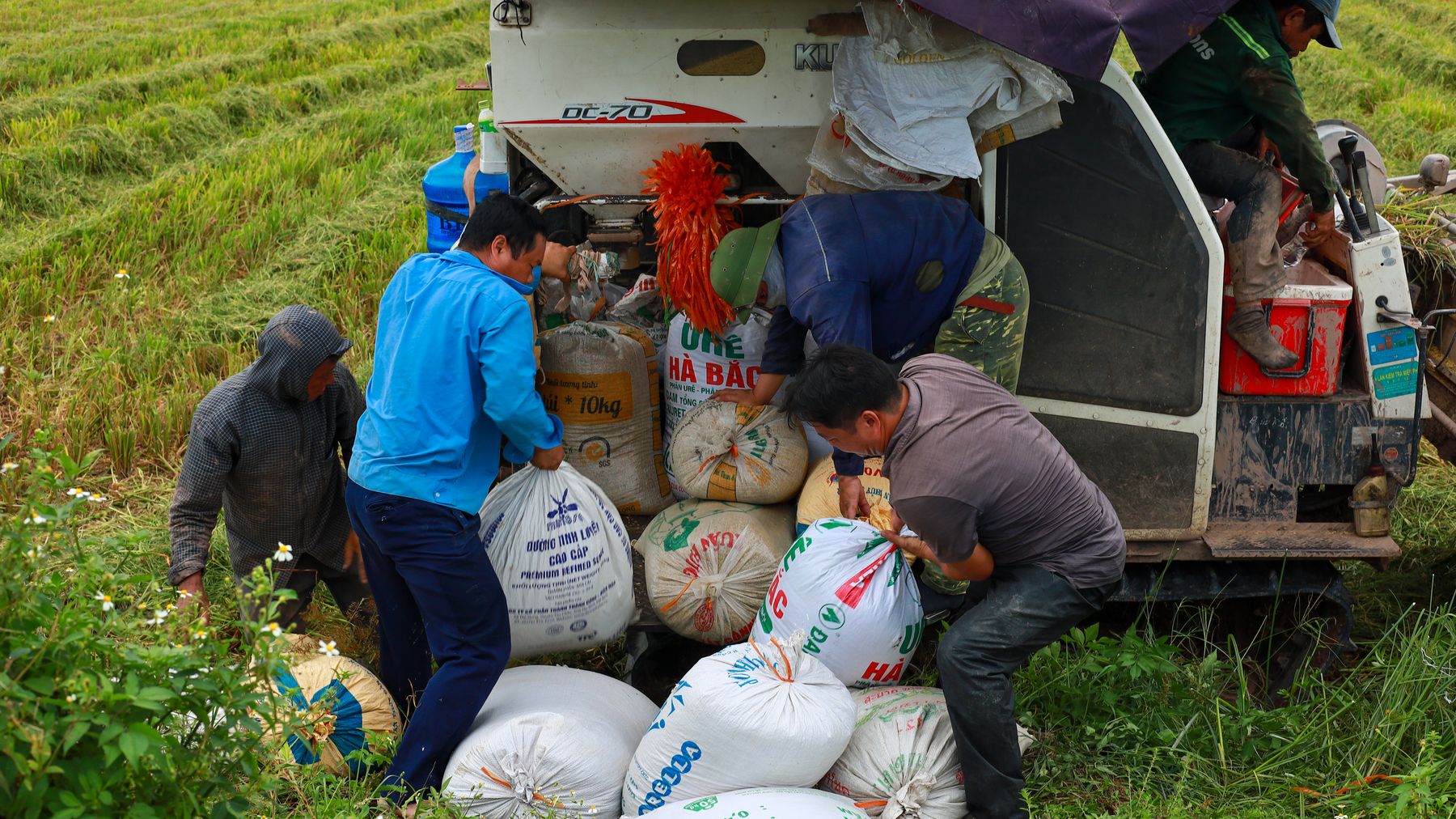
Photo by Hồng Quang Official on Pexels
Practical tips
- Cash only. No ATMs in the villages; Nghia Lo town has a few (Agribank, BIDV). Withdraw before heading into the valley.
- Language. Very little English spoken. Download Vietnamese on Google Translate offline. Basic phrases go far.
- Fuel up in Nghia Lo. No petrol stations once you're on the dike roads.
- Mosquitoes. Fierce near the paddies at dusk. Bring repellent or buy locally (Soffell brand, 25,000 VND at any pharmacy).
- Connectivity. Viettel has the best coverage here. Other carriers drop signal in villages.
Common mistakes
- Rushing through. Muong Lo isn't a day trip from Hanoi. Two nights minimum to actually settle into the rhythm.
- Coming in winter. The valley is bleak from November to March. Time your visit around rice cycles.
- Expecting Sapa-level infrastructure. There are no tour desks, no English menus, no booking apps for homestays. That's the point. Show up, ask around, adapt.
- Skipping the Mu Cang Chai road. If you're riding from Sapa, the QL32 route through Mu Cang Chai is half the reason to come this way. Don't shortcut via the expressway unless you're pressed for time.
Practical notes
Muong Lo works best as part of a northwest loop — Hanoi to Mu Cang Chai to Muong Lo to Hanoi, or as a detour off the Sapa route. Budget 2–3 days for the valley alone. The reward is a quieter, flatter, more intimate side of northern Vietnam that most travelers never see.
Last updated · May 29, 2026 · independently researched, never sponsored.