What is "com hen"?
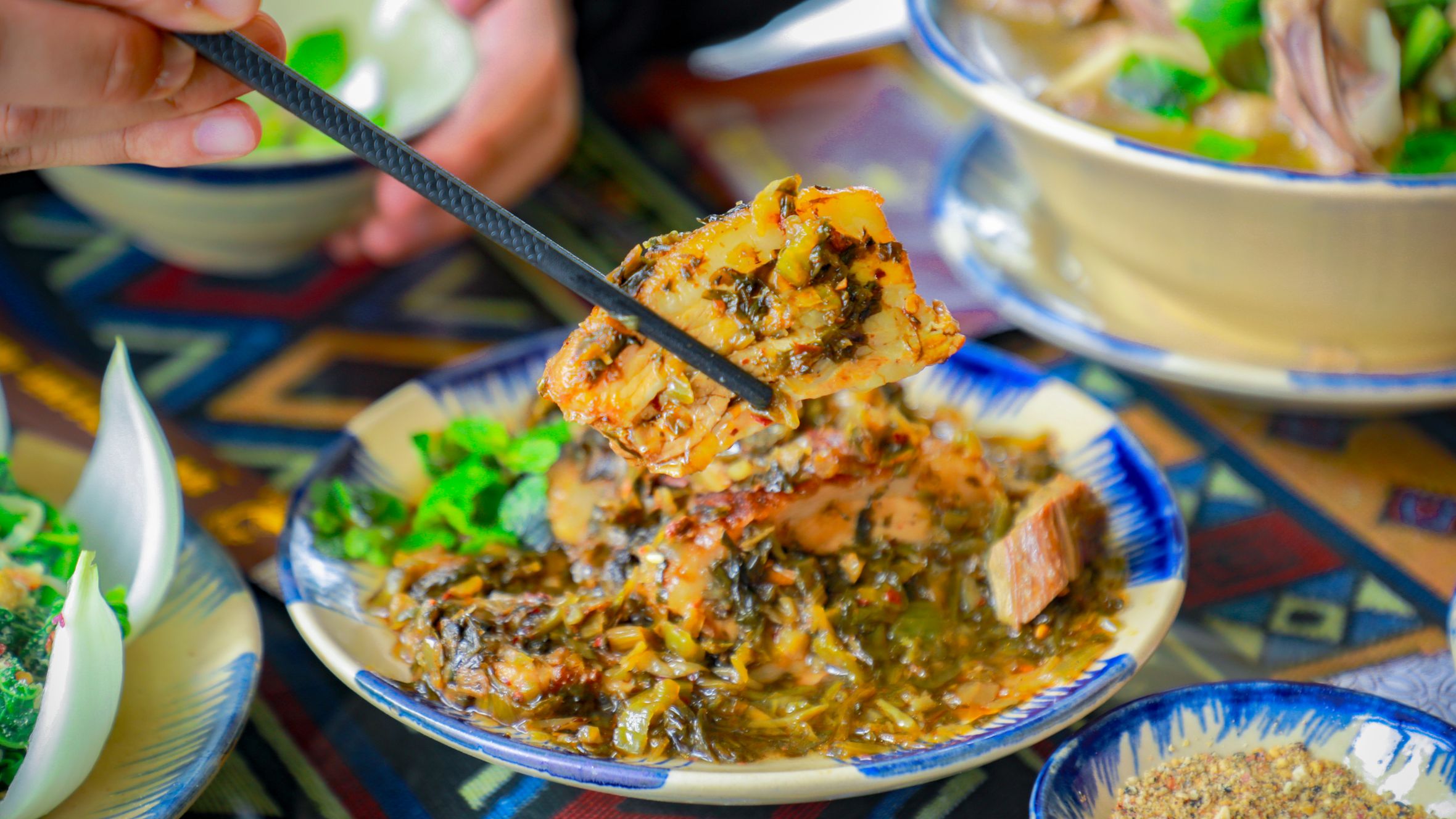
"Com hen" is a deceptively simple bowl: white rice topped with cooked freshwater clams, fried shallots, and a tangle of fresh herbs—mint, coriander, dill. You mix it all together, add a squeeze of lime and a dash of fish sauce, and eat it fast while the clams are still warm. The clams themselves are small, briny, slightly sweet. The whole thing tastes more like the coast than rice.
It's not soup. It's not quite a stir-fry. It's uniquely Hue, and it's almost always a breakfast or early lunch dish. You'll rarely see it on dinner menus.
Why Hue's com hen stands apart
Other cities have clam rice (Da Nang, Can Tho, even Saigon have versions), but Hue's is the original and the benchmark. The clams here come from the nearby Tam Giang lagoon—a coastal wetland system where freshwater meets salt water, producing sweeter, smaller clams than you'd find inland. Local vendors have been cooking the same recipe for decades, which means the broth that clings to the rice and clams tastes almost medicinal in its restraint: just clam stock, a pinch of salt, maybe a whisper of shrimp paste.
The other thing: Hue (후에 / 顺化 / フエ)'s version leans harder on raw herbs. You get fat handfuls of mint and dill stirred in raw, which cuts through the richness of the clams and makes the whole dish feel lighter than it has any right to be.
Where to eat com hen in Hue
Com Hen A Thanh
This is the spot that gets mentioned first when locals talk. It's a three-stool counter on Nguyen Hue Street (the busy commercial strip), about 50 meters east of the Perfume River. The owner, Thanh, has been there for over 30 years. The clams are cooked in an enormous wok over a charcoal burner, and you watch the whole thing happen. A bowl costs 35,000-40,000 VND. Open 6 a.m.–10 a.m. only. Arrive by 8:30 a.m. or you'll hit the tail end of the morning rush and risk running out of clams.
Com Hen Hoa
Hoa's spot is even smaller—a cart parked on a side street near the old market, about 200 meters north of Ben Thanh Market. She's been there since around 6 a.m., and by 9 a.m. the cart is often picked clean. The clams here are slightly larger and less briny than A Thanh's; some locals prefer them, others say that means they're not from Tam Giang. A bowl is 30,000-35,000 VND. Cash only. You eat standing or squatting on a plastic stool. No English menu, no printed prices—ask the person next to you what they paid.
Com Hen Thao (Tran Hung Dao Street)
This one is a sit-down spot (not a street stall), with maybe 10 plastic tables crammed into a narrow storefront. Thao's version comes with a side of grilled pork rib ("suon nuong"), which some say is gilding the lily, but it's good. The clams are reliable and consistent. 40,000-50,000 VND per bowl depending on size. Open 6 a.m.–noon. Less crowded than A Thanh's, but also slightly less revered.
Com Hen Thuy (Chu Van An Street)
Smaller, family-run, less famous, but worth trying if you want to eat without crowds. The clams are lighter in flavor—some say they're from a different part of the lagoon. 35,000 VND. Open 6:30 a.m.–9:30 a.m.

Photo by Quang Nguyen Vinh on Pexels
How to order
If you don't speak Vietnamese, point at someone else's bowl and hold up one or two fingers. Say "mot / hai" (one / two) and nod. The vendor will know. If you want extra herbs (always a good idea), say "them rau" (more herbs) or just gesture at the herb pile.
Some places offer a version with extra clams or a larger portion for a few thousand VND more. Ask "co co them khong?" (you have bigger?) or just wait and see what size bowl the person next to you gets.
When to go
Com hen is a breakfast and early-lunch food. Most vendors open between 6 and 6:30 a.m. and close by 10 or 11 a.m. The best time is 7–8 a.m., when the clams are hottest and the herb pile is still fresh. By 9 a.m., the herbs have wilted a bit, and by 10 a.m., the clams often taste flabby.
You won't find com hen at dinner. If a vendor claims to have it at 3 p.m., it's probably yesterday's batch reheated.
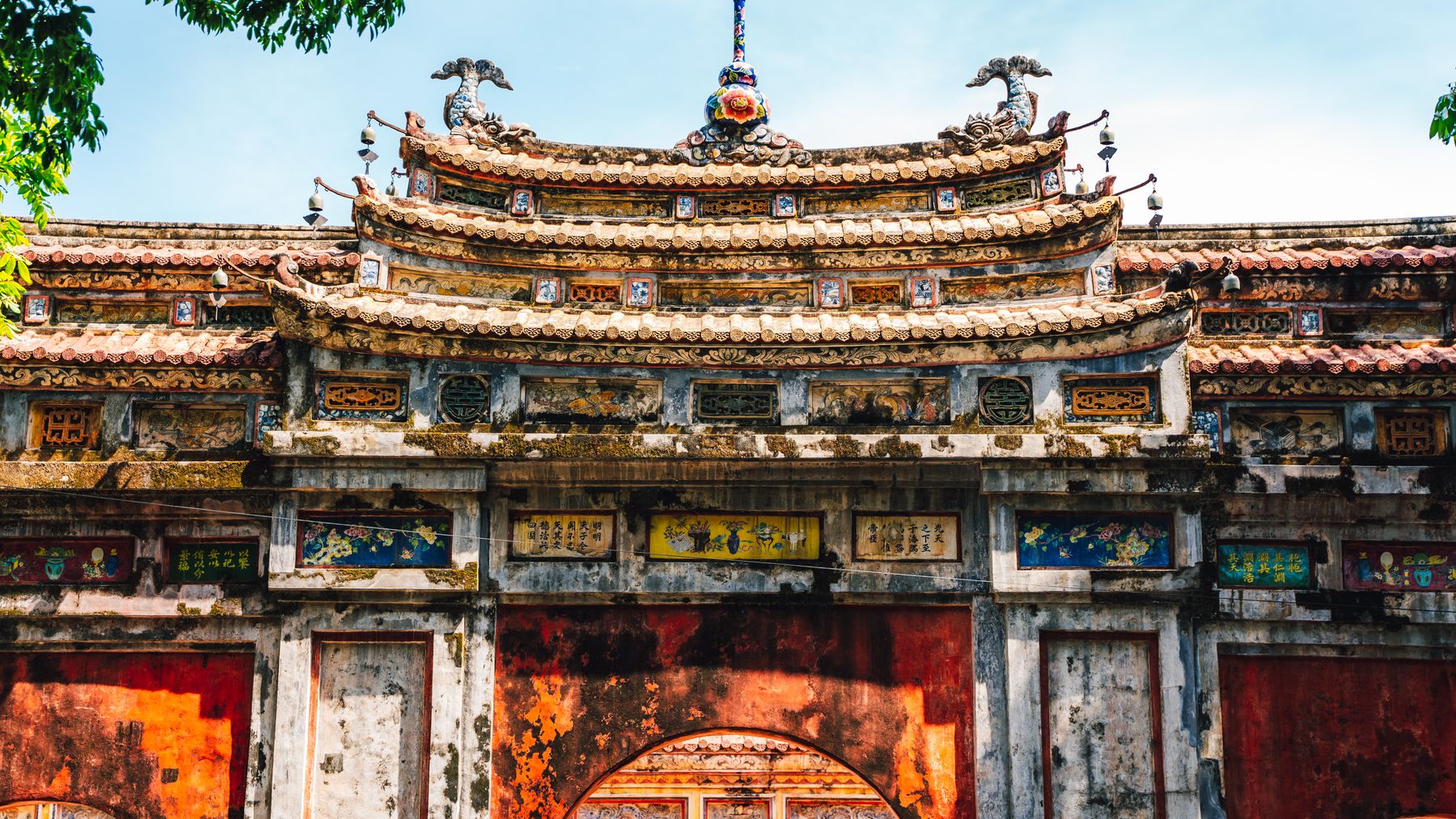
Photo by Vietnam Tri Duong Photographer on Pexels
Cost and what to expect
A regular bowl runs 30,000–50,000 VND (roughly $1.30–$2.20 USD). That usually includes the rice, clams, herbs, and fried shallots. Lime and fish sauce are served on the side or already mixed in. Some vendors throw in a small cup of clam broth to pour over everything.
Drink choice: iced green tea ("tra da") or black iced coffee ("ca phe den da"). Many stalls serve these on the side for 10,000–15,000 VND.
A note on texture and taste
If you're new to freshwater clams, the meat is chewier than sea clams and sometimes has a faint mineral, almost metallic taste. That's normal and regional—it's the lagoon. Some visitors find it off-putting; others say that's the whole point. Eat it once before deciding.
Practical notes
All the spots above are within walking distance of Hue's city center, near the market or river. Bring cash (no cards accepted at street stalls). The best com hen happens before 8:30 a.m., so plan your morning accordingly. If you're staying near the Citadel or backpacker district, walk toward the river and the market in the early morning—you'll stumble into a vendor. Ask your hotel owner or a taxi driver where they eat com hen; you'll get a different answer than any guidebook.
Last updated · May 26, 2026 · independently researched, never sponsored.