
What Ho Dak Ke Is and Why It Matters
Ho Dak Ke is a reservoir sitting at roughly 600 meters elevation in the mountainous western reaches of Quang Ngai province. The lake was originally built as an irrigation reservoir serving the surrounding agricultural communities — mostly ethnic Ba Na and Hre villages that farm the hillsides around it. Following recent administrative boundary adjustments, the area now falls under Quang Ngai rather than Kon Tum province, which can create some confusion when you're searching for directions online.
The lake itself is modest in size but sits in a valley ringed by forested hills, with the water shifting between deep green and slate grey depending on the season and cloud cover. It's not a resort. There are no ticket booths or tour buses. That's the whole point.
Why Travelers Go
Most people who end up at Ho Dak Ke are motorcyclists riding the inland routes between Quang Ngai city and the Central Highlands (중부 고원 / 中部高原 / 中部高原), or travelers specifically interested in ethnic minority villages in the region. The lake is a logical rest stop and overnight destination along these routes.
The draw is straightforward: quiet water, highland air that's noticeably cooler than the coast, and a pace of life that moves at village speed. If you've spent a week bouncing between Hoi An, Da Nang, and Hue on the tourist circuit, Ho Dak Ke is the kind of place where you sit on a hillside, drink tea, and hear nothing but birds and motorbike engines in the distance.
Best Time to Visit
The dry season — roughly from January through August — is your best window. The best months are February to May, when rainfall is minimal, the reservoir is full from the prior wet season, and temperatures hover around 22-28°C during the day. The surrounding hills are green without being waterlogged.
Avoid October and November if you can. This is peak rainy season in the central region, and the mountain roads leading to Ho Dak Ke can get muddy and unpredictable. Landslides aren't unheard of on the steeper sections. If you're on a motorbike, wet laterite roads are genuinely dangerous.
How to Get There
The nearest major hub is Quang Ngai city, about 80-90 km to the east on the coast.
By motorbike: This is the most practical option and how most travelers do it. Rent a semi-automatic (Honda Wave or Yamaha Sirius) in Quang Ngai city for around 150,000-200,000 VND/day. The ride takes roughly 2.5-3 hours heading west through the foothills. Roads are paved for most of the route but deteriorate to packed earth and gravel for the final 10-15 km approaching the lake. Fill your tank in Quang Ngai — fuel stops thin out fast once you leave the lowlands.
By car or hired driver: A private car from Quang Ngai runs about 1,200,000-1,500,000 VND round trip. Worth considering if you're not confident on mountain roads. Negotiate a wait time or overnight arrangement with the driver.
By bus: There's no direct bus to the lake. You can catch a local bus heading toward the western districts from Quang Ngai bus station (around 60,000-80,000 VND), but you'll still need a xe om (motorbike taxi) for the last stretch. Unreliable for return timing.

Photo by Quang Nguyen Vinh on Pexels
What to Do
Walk the Reservoir Perimeter
A dirt path follows roughly two-thirds of the lake's shoreline. It's not a groomed hiking trail — expect tree roots, mud patches, and the occasional water buffalo blocking your way. The full walkable section takes about 90 minutes at a relaxed pace. Early morning is best, when mist sits on the water.
Visit a Ba Na or Hre Village
Several small ethnic minority villages dot the hills within a few kilometers of the lake. The Ba Na communities here still build traditional "rong" communal houses — tall, peaked-roof structures used for village gatherings. Be respectful: don't walk into homes uninvited, ask before photographing people, and bring a small gift if you're offered food or drink. A bag of fruit or some coffee from town goes a long way.
Fish the Lake
Locals fish Ho Dak Ke with basic rod-and-line setups, and they're generally happy to let visitors join in. Don't expect sport fishing — this is sitting on a bank with a bamboo pole, catching small freshwater fish. You can buy basic tackle in the nearest district town for under 50,000 VND.
Ride the Back Roads
The network of small roads radiating out from the lake into the surrounding hills is excellent for motorbike exploration. Laterite tracks wind through cassava fields, pepper plantations, and patches of secondary forest. No map needed for short loops — just keep the lake's valley as your reference point and you won't get seriously lost.
Catch the Sunset from the Dam Wall
The reservoir's dam wall offers the widest vantage point over the water. Late afternoon light hits the western hills behind you and reflects off the surface. Bring something to sit on — the concrete is rough.
Where to Eat Nearby
Don't expect restaurants. The nearest proper eateries are in the district town, roughly 15-20 km from the lake. Look for "com binh dan" signs — basic rice-and-dish meals for 30,000-50,000 VND.
Two things worth seeking out in the area: "com lam" — sticky rice cooked inside bamboo tubes over charcoal, common in highland ethnic minority areas — and "ga nuong" (grilled free-range chicken), which the hill villages do well because the birds actually roam and forage rather than sitting in cages. If you're staying near a village and someone offers to prepare a chicken, say yes. It'll cost around 200,000-250,000 VND for a whole bird.
When you're back in Quang Ngai city, the local specialty is "don" — a savory rice cake unique to the province. Street stalls near the central market sell it for around 20,000-30,000 VND per portion.
Where to Stay
At the lake itself, accommodation is essentially homestay or camping. A few families near the reservoir host travelers informally — expect a mattress on the floor, mosquito net, shared bathroom, and meals included for around 200,000-350,000 VND per night. Bring your own sleeping bag liner if you're particular about bedding.
If you're carrying a tent, the grassy areas near the dam wall work fine. No facilities, no fee — just be tidy.
For more comfort, the nearest guesthouses ("nha nghi") are in the district town: basic rooms with fan and hot water for 200,000-300,000 VND. Nothing fancy, but clean enough.
Back in Quang Ngai city, budget hotels run 300,000-500,000 VND/night.
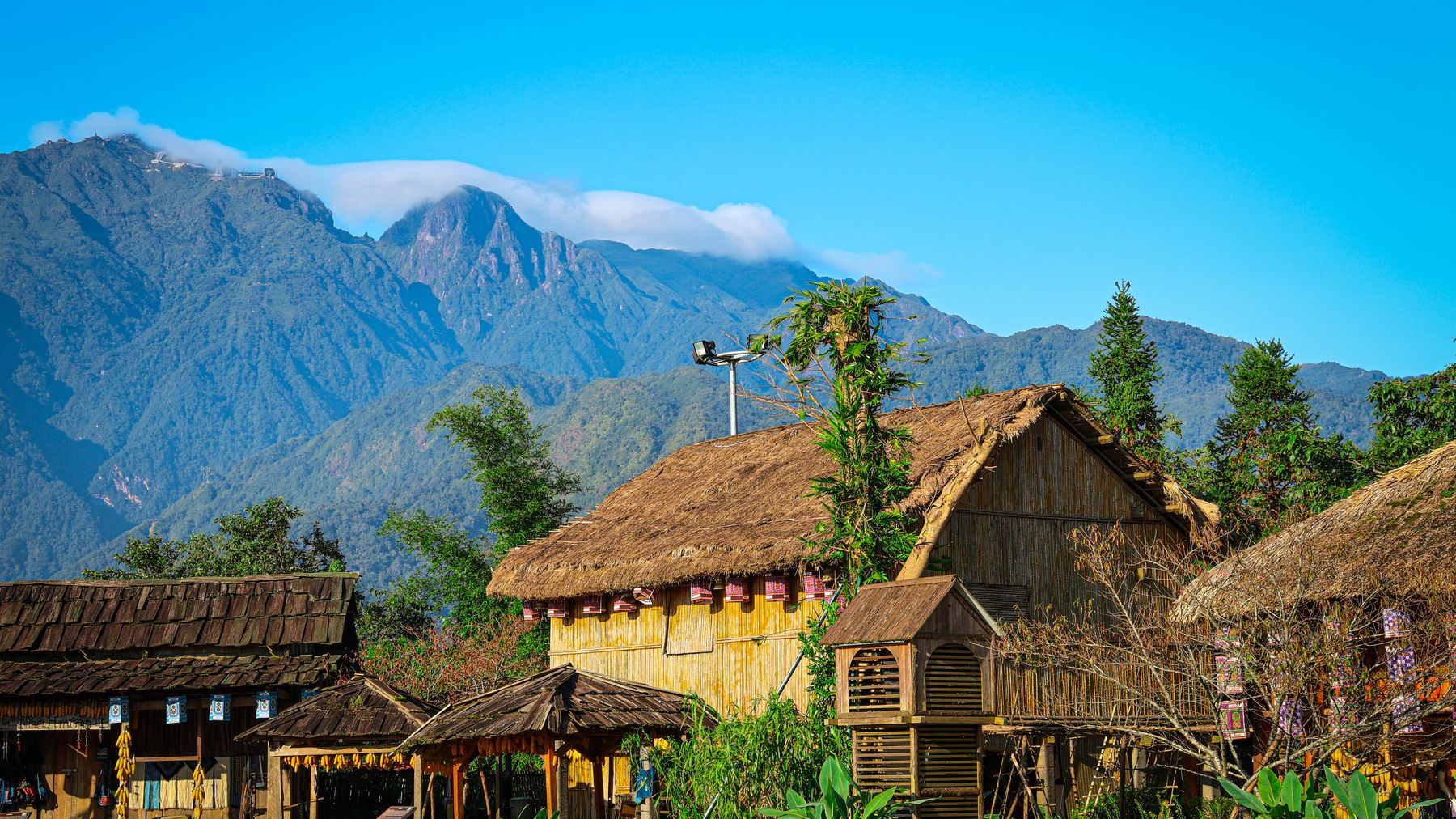
Photo by Haneul Trac on Pexels
Practical Tips Locals Would Tell You
- Bring cash. There are no ATMs near the lake. Withdraw what you need in Quang Ngai city before heading west.
- Carry water and snacks. The last reliable shop is in the district town.
- Mosquito repellent is non-negotiable. Highland reservoirs at dusk are mosquito paradise.
- Learn three phrases in Vietnamese: "Xin chao" (hello), "Cam on" (thank you), and "Bao nhieu" (how much). English is effectively zero out here.
- Fuel up early. The petrol stations in the foothills keep irregular hours. Don't assume they'll be open after 5 PM.
Common Mistakes to Avoid
Treating it as a day trip from Quang Ngai city. The 3-hour ride each way on mountain roads is tiring. You'll arrive, feel rushed, and ride back in fading light on bad roads. Stay overnight.
Relying on Google Maps for the final stretch. Map data for the roads around Ho Dak Ke is incomplete. Ask locals for directions once you're within 20 km — hand gestures and pointing work fine.
Underestimating the road surface. Even in dry season, sections of the approach road are loose gravel. If you're not experienced on a motorbike, go slow. A spill out here means a long wait for help.
Practical Notes
Ho Dak Ke rewards patience and low expectations. It's not a destination you rush to — it's a place you find on the way to somewhere else and decide to stay. Pair it with a broader loop through the western highlands, or use it as a decompression stop between the coast and the mountains. Bring cash, bring repellent, and leave the itinerary loose.
Last updated · May 26, 2026 · independently researched, never sponsored.





