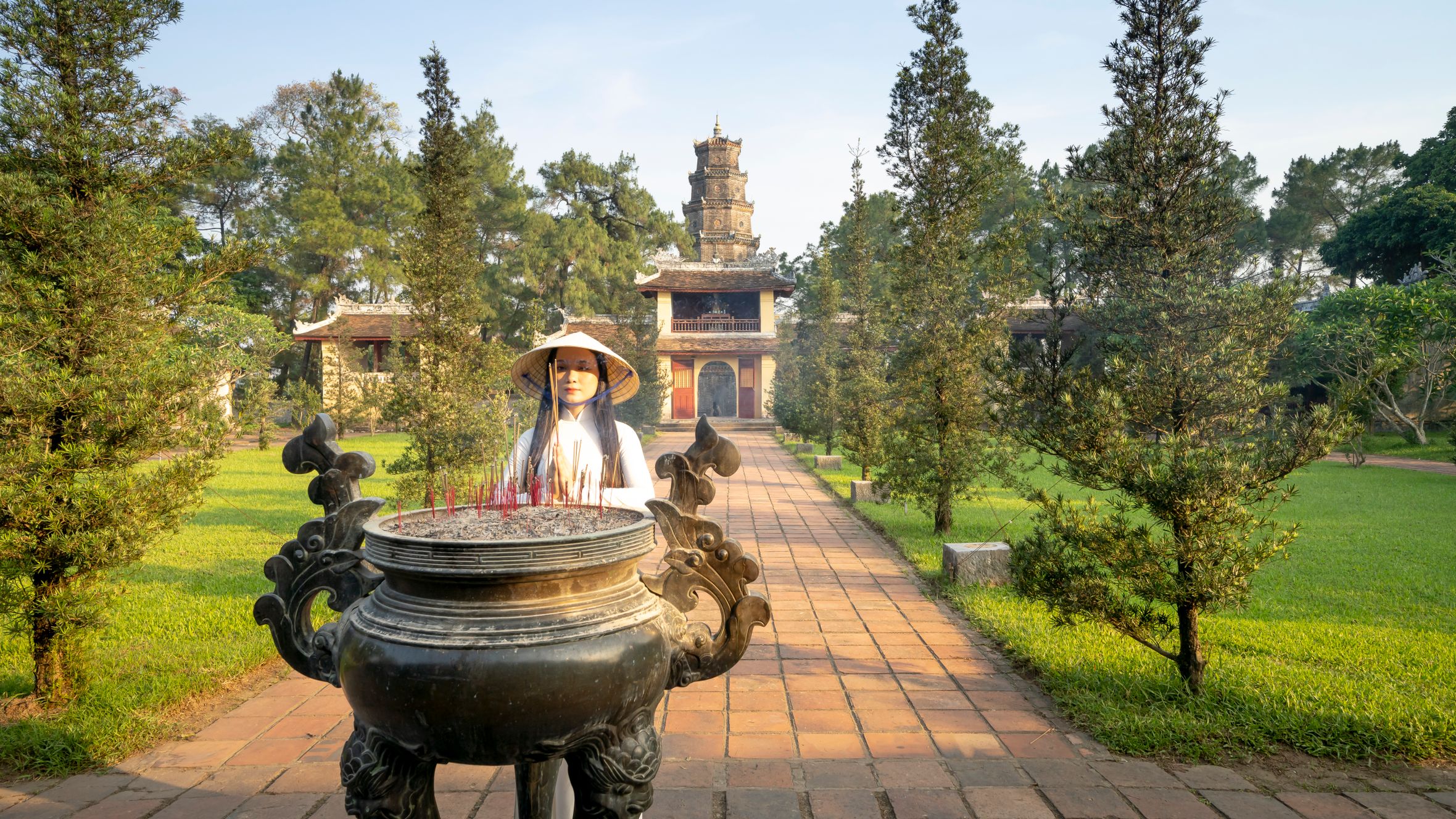
Most visitors to southern Vietnam (베트남 / 越南 / ベトナム) skip Binh Duong entirely, driving straight through to Saigon or the coast. That's a mistake. The province, which wraps around the northeast suburbs of Saigon, has enough worth your time — especially if you're looking to see how real southern Vietnamese people live and eat, away from the backpacker trail.
Thien Tan Pagoda and the religious circuit
Thien Tan Pagoda, in Thu Dau Mot district, is the most visited temple in Binh Duong. Built in 1952, it's a working Buddhist site with a 42-meter central tower, incense-thick courtyards, and often packed with local devotees on weekends and lunar holidays. The architecture is a mix of French-era and modern Vietnamese styles — less ornate than Jade Emperor Temple in Saigon (사이공 / 西贡 / サイゴン), but genuinely atmospheric at dawn.
Practically speaking: get there early (7–8 a.m.) before crowds arrive. The main bus station in Saigon has frequent buses to Thu Dau Mot (about 35 km, 45 minutes). Dress modestly; removing shoes at certain points is expected. No admission fee.
Nearby is Minh Huong Pagoda, smaller and quieter, set in a residential garden. Worth combining with Thien Tan in a half-day trip.
Phu Cuong Ancient Town (if it's accessible)
Binh Duong's old commercial hub, Phu Cuong — now Thu Dau Mot — has fragments of French colonial architecture still standing along the main street. A few shop-houses from the early 1900s remain, though most are being quietly demolished or repurposed as cheap hotels and karaoke bars. There's no "historic district" preservation effort here, so exploring is a bit like archaeological treasure hunting. The real value is wandering the wet market (Cho Phu Cuong, near the river) early morning and watching vendors selling fresh herbs, dried fish, and local snacks like "banh trang nuong" (grilled rice paper) — a Binh Duong specialty.
Ben Cui Showroom and the car-culture surprise
This one's odd, but genuine: Ben Cui is a massive car auction and showroom complex just off Highway 13, where locals buy used and semi-new vehicles. The grounds are open to the public, and it's a fascinating (if surreal) slice of local commerce — nothing you'd find on a "best of Vietnam" list. Useful mainly if you're renting a car and curious about how Vietnamese dealers operate.
Photo by Karolina on Pexels
Tam Phuong Coffee Plantations
The southern highlands around Dak Lak and Lam Dong are famous for coffee, but Binh Duong has developed its own smaller coffee-growing zone in Tan Uyen district. A handful of small plantations welcome visitors: Tam Phuong Coffee Estate is the most accessible, with a cafeteria overlooking rows of Robusta plants. You can buy freshly roasted beans and drink strong, unsweetened "ca phe den" (black coffee) on-site. It's less slick than the tourist plantations in Da Lat, and that's the appeal — mostly local Vietnamese stopping by after work.
Buses from Saigon's Mien Dong station reach Tan Uyen in about 90 minutes. The estate itself is a 10-minute taxi ride from town.
Outdoor activities: Binh Duong Lake and cycling
Binh Duong Lake (Ho Binh Duong) is an artificial reservoir in the center of the province, about 35 km from Saigon. It's popular with locals for kayaking, fishing, and picnicking on weekends, but remains largely unknown to tourists. A few basic guesthouses and restaurants line the water. If you rent a motorbike, the loop around the lake (about 30 km) is a pleasant half-day ride through rubber plantations and small farming villages. Stop for lunch at a "com tam" stand in one of the villages — Binh Duong's "com tam" (broken-rice) bowls are affordable and authentic.
Day-trip ideas from Saigon
If you have 4–5 hours: Thien Tan Pagoda in the morning, wet market in Phu Cuong at midday, lunch at a local "banh mi" or "banh canh" spot, return to Saigon by 4 p.m.
If you have a full day: Start at Tam Phuong Coffee Plantation, spend 2–3 hours there, move to Binh Duong Lake for an afternoon loop on motorbike, sunset picnic near the water, dinner in Tan Uyen town (try grilled river fish at any waterside "nha hang").
If you're passing through: Most travelers are in Binh Duong only while transiting between Saigon and the north. If you have 1–2 hours, stop for coffee at Tam Phuong or a quick market walk in Thu Dau Mot rather than sitting in a highway cafe.

Photo by 1500m Coffee on Pexels
What to skip
Golf courses and resort hotels marketed to expat weekenders often feature Binh Duong in their brochures, but they're not worth a traveler's time — the courses are generic, the resorts overpriced and soulless. Avoid the "tourism zones" on the Saigon side of the province; they're mostly concrete industrial parks and new apartment blocks.
Also skip any "factory tours" unless you have specific interest in rubber or electronics manufacturing. They're organized mainly for school groups and business delegations, not casual tourists.
Food and drink in Binh Duong
The food here is straightforward southern Vietnamese: "com tam" (broken rice), "banh canh" (tapioca noodles in crab broth), fresh grilled fish, and roadside pho. There are no famous restaurants to name-drop, and that's the point. Eat at family-run spots in Thu Dau Mot or Tan Uyen. Lunch is 30,000–50,000 VND per person. Coffee culture is strong; a "ca phe sua da" (iced milk coffee) costs 15,000–20,000 VND.
Practical notes
Binh Duong is industrial and underdeveloped for tourism, so infrastructure is basic. Most locals speak no English; download a translation app. Public transport is reliable if slow — allow extra time. Motorbike rental is available in Saigon or any Binh Duong town; a day costs 100,000–150,000 VND. The best reason to visit is to experience the province as a Vietnamese person would, not as a polished destination. If you're looking for temples, coffee, and authentic local life 40 km north of Saigon without the tourist markup, Binh Duong delivers.
Last updated · May 29, 2026 · independently researched, never sponsored.







