What is Don Phu Thong?
Don Phu Thong is a former French military outpost tucked into the hills of what is now Thai Nguyen province, following the recent administrative merger with the former Bac Kan territory. The fort dates to the early 20th century, when the French colonial administration built a network of small garrisons across the northern highlands to control trade routes and monitor local populations.
The outpost saw action during the resistance period in the late 1940s and early 1950s, and the site is preserved today as a historical relic — part crumbling stonework, part open-air memorial. It's not a polished museum. There are no audio guides or gift shops. What you get is a quiet, slightly overgrown piece of northern Vietnam (베트남 / 越南 / ベトナム)'s layered past, set against a backdrop of limestone karst and tea plantations.
Why travelers go
Don Phu Thong draws a specific kind of visitor: people interested in Vietnam's colonial and wartime history who have already done the more obvious sites like Cu Chi Tunnels or the Imperial Citadel Thang Long in Hanoi. It's also a reasonable stop for anyone riding motorbikes through the northern provinces between Thai Nguyen and the Ha Giang loop, or heading toward Bac Kan's Ba Be Lake.
The appeal isn't spectacle — it's atmosphere. The fort sits on a small rise with views over the surrounding valley. On a clear morning, with mist still hanging in the low ground, the place has a weight to it that the bigger, more touristed historical sites in Vietnam sometimes lack.
Best time to visit
Aim for October through December or March through April. These shoulder months give you dry weather, cooler temperatures (18–25°C), and good visibility for the surrounding landscape. January and February can be cold and foggy — not miserable, but the site is entirely outdoors, so grey drizzle makes it less enjoyable.
Avoid July and August if you can. The summer rains hit hard in this part of the north, and the access road can get muddy. The fort's stone walls are slippery when wet, and there are no handrails.
How to get there
The nearest major hub is Thai Nguyen city, about 80 km to the south. From Hanoi (하노이 / 河内 / ハノイ), Thai Nguyen is roughly 75 km north — about 1.5 hours by car or bus from My Dinh bus station (tickets around 80,000–100,000 VND).
From Thai Nguyen city to Don Phu Thong, you have two options:
- Motorbike: The most practical choice. Rent in Thai Nguyen for 150,000–200,000 VND/day and ride north on QL3 toward the former Bac Kan area. The ride takes about 1.5–2 hours depending on road conditions. The final stretch is a narrower provincial road — paved but winding.
- Local bus + xe om: Catch a bus heading toward Cho Don or Bac Kan town from Thai Nguyen's bus station, then arrange a "xe om" (motorbike taxi) for the last 10–15 km. Expect to pay around 60,000 VND for the bus leg and negotiate 50,000–80,000 VND for the xe om.
There is no direct tourist shuttle. This is not on any standard tour circuit.

Photo by Thilina Alagiyawanna on Pexels
What to do
Walk the fort grounds
The outpost itself is compact — you can cover it in 30–45 minutes. The main structures include the watchtower foundation, sections of the perimeter wall, a few partially intact rooms that served as barracks or storage, and a small commemorative marker. Information boards are in Vietnamese only, so having Google Translate's camera mode ready helps.
Hike the surrounding ridge
A trail from the fort leads along the ridgeline for about 2 km. It's not signposted, but it's well-worn by locals. The views over the valley — terraced rice fields, scattered homesteads, limestone outcrops — are the best reason to linger. Budget an extra hour for this.
Visit nearby tea plantations
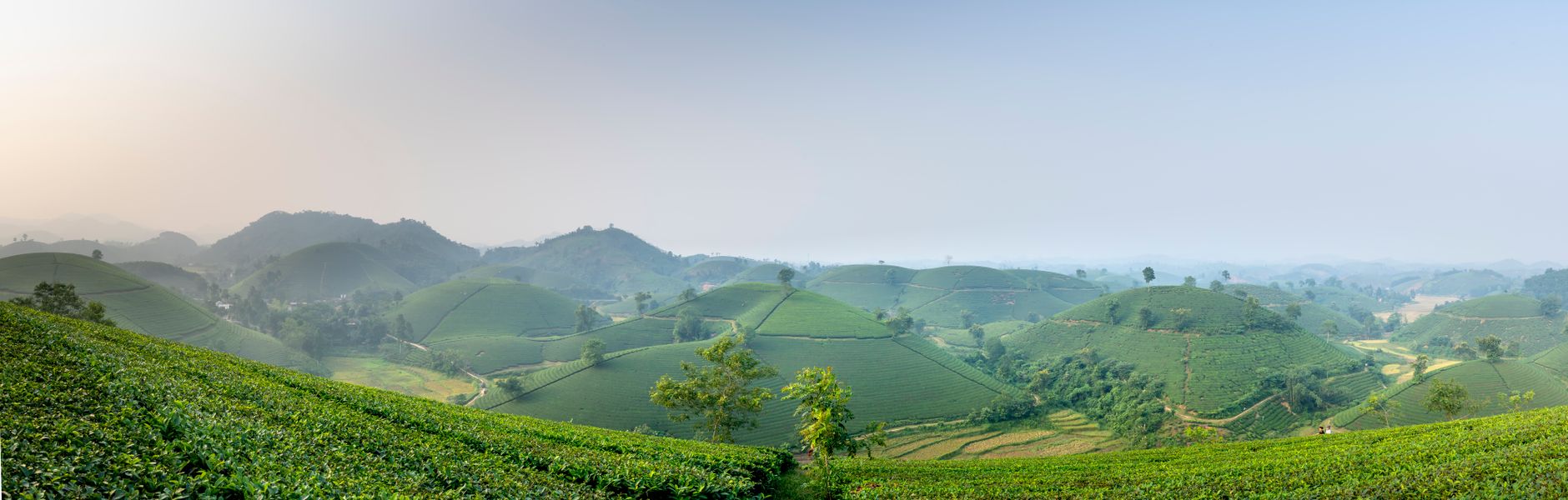
Thai Nguyen province is Vietnam's most famous tea-growing region. On the road between Thai Nguyen city and Don Phu Thong, you'll pass through kilometers of manicured tea hills. Some smallholders are happy to let you watch the picking and processing if you stop and ask politely. Buying a bag of fresh "tra Thai Nguyen" directly from a producer runs about 100,000–200,000 VND for a generous portion — far cheaper and fresher than anything in Hanoi.
Stop at a local market
If your timing lines up, the periodic markets in smaller towns along the route sell everything from hill-tribe textiles to live poultry. They're not tourist markets — expect curious looks and zero English. These typically run in the morning and wrap up by noon.
Combine with Ba Be Lake
If you're already heading this far north, Ba Be Lake is another 60–70 km beyond. It's one of the largest natural freshwater lakes in Vietnam and makes a logical next stop for a two- or three-day northern loop.
Where to eat nearby
Don't expect restaurants at the site. Eat before or after in the nearest town.
- "Pho" and "bun rieu" are easy to find at roadside stalls along QL3. A bowl runs 30,000–45,000 VND. The northern-style pho up here tends to be clean-flavored and less sweet than what you'll find in Saigon.
- Grilled stream fish ("ca suoi nuong") is the local specialty worth seeking out. Small family-run places near river crossings serve whole fish grilled over charcoal with turmeric, dill, and a sour dipping broth. Ask for "ca suoi" and point — menus, if they exist, are in Vietnamese. A plate costs around 80,000–120,000 VND.
Where to stay
- Thai Nguyen city has the widest range: budget guesthouses ("nha nghi") from 200,000–350,000 VND/night, mid-range hotels for 500,000–800,000 VND.
- Closer to the site, options are limited to basic homestays or local guesthouses in smaller towns. Expect to pay 150,000–250,000 VND for a clean room with a fan and shared bathroom. Don't expect hot water or English-speaking staff.
- If you're continuing to Ba Be Lake, there are better homestay options there with lake views and organized boat trips.

Photo by Quang Nguyen Vinh on Pexels
Practical tips locals would tell you
- Bring water and snacks. There's nothing to buy at the fort itself.
- Wear proper shoes. The ground is uneven stone and packed earth — flip-flops are a bad idea, especially after rain.
- Carry cash. There are no ATMs near the site. Load up in Thai Nguyen city before heading out.
- Fuel up your bike in town. Petrol stations thin out on the provincial roads, and the last reliable one may be 20+ km before the site.
- Start early. The fort is best in morning light, and you'll want to be off the smaller roads before dark — street lighting is nonexistent.
Common mistakes to avoid
- Treating it as a half-day trip from Hanoi. The driving alone eats 3–4 hours each way. Build it into a longer northern itinerary rather than rushing it as a day trip.
- Expecting a museum experience. There's no ticket booth, no guide, no café. If you need infrastructure, this isn't your site. If you're comfortable exploring independently, you'll enjoy it.
- Skipping the tea stops. The road through Thai Nguyen's tea country is half the experience. Don't just blast through to the fort — pull over, drink some tea, talk to the farmers.
Practical notes
Don Phu Thong works best as one stop on a multi-day motorbike route through Vietnam's northern highlands — combine it with Thai Nguyen's tea country, Ba Be Lake, or even a longer push toward Ha Giang. Come with realistic expectations: this is a quiet, slightly rough-edged historical site, not a curated attraction. That's exactly what makes it worth the ride.
Last updated · May 29, 2026 · independently researched, never sponsored.