What it is
Thanh Hoang De — sometimes called Thanh Do Ban or the Hoang De Citadel — is a laterite-and-brick fortification in An Nhon district, about 27 km northwest of Quy Nhon city center in Binh Dinh province. Originally built by the Champa kingdom around the 11th century as their northern capital (called Vijaya), it was later seized and rebuilt by the Tay Son brothers in the late 18th century as their imperial seat during one of Vietnam (베트남 / 越南 / ベトナム)'s most dramatic peasant revolts.
What remains today is a rectangular citadel outline — crumbling walls of reddish laterite stretching roughly 1.4 km in perimeter, scattered foundation stones, a restored south gate, and a few Cham towers nearby. It's not Angkor Wat. But if you're interested in how Champa civilization intersected with Vietnamese dynastic history, or you just want to see something that almost no foreign tourists bother with, it's a worthwhile stop.
Why travelers go
Three reasons, mostly:
-
Cham heritage without crowds. My Son gets tour buses daily. Thanh Hoang De gets maybe a handful of visitors on weekends — mostly local history students. You'll likely have the site to yourself.
-
Tay Son history. The Tay Son rebellion (1771-1802) is one of Vietnam's great underdog stories. Emperor Quang Trung launched his legendary Tet offensive against the Qing Chinese from a base near here. The citadel gives that history a physical anchor.
-
Binh Dinh's broader Cham tower circuit. Within a 15 km radius you can visit Thap Banh It, Thap Duong Long, and Thap Canh Tien — all Cham towers in various states of restoration. Thanh Hoang De ties the circuit together.
Best time to visit
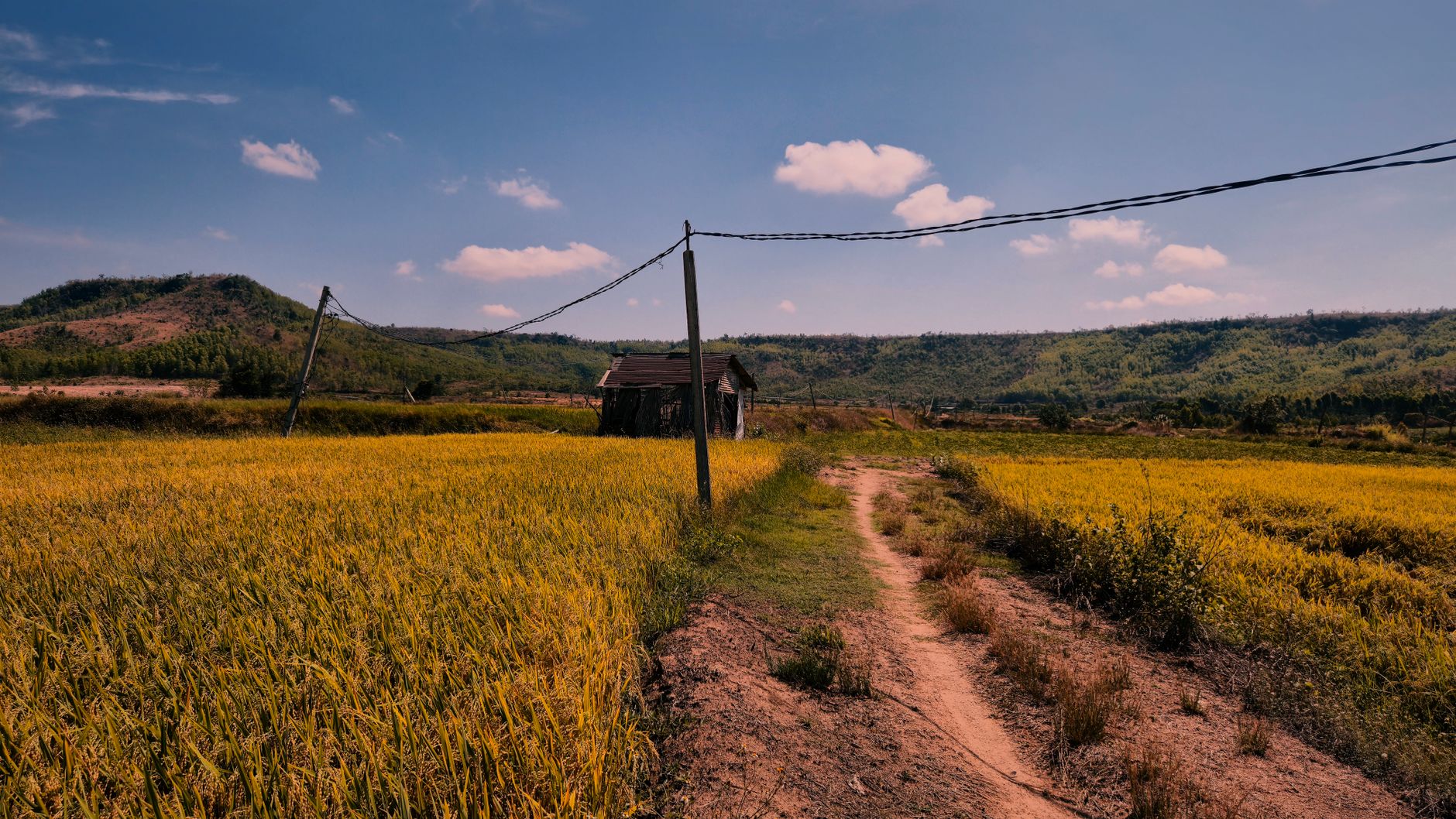
Binh Dinh has a dry season from January through August, with March to June being the sweet spot — warm but not yet scorching, and the surrounding rice paddies are bright green. Avoid October-December when heavy rains can turn the unpaved paths around the citadel into mud. Early morning (before 9 AM) is best for photos; the laterite walls glow orange in low light.
How to get there
From Quy Nhon, head northwest on QL1A toward An Nhon town, then turn onto DT636 toward Nhon Hau commune. The citadel sits just north of Nhon Hau — look for the modest signpost reading "Di tich Thanh Hoang De." Total drive: about 35-40 minutes by motorbike.
From Da Nang or Hoi An: Take the train or bus south to Quy Nhon (roughly 5-6 hours by train, 300,000-400,000 VND). From Quy Nhon, rent a motorbike (120,000-150,000 VND/day from most guesthouses) or hire a Grab car.
From Saigon: Overnight train to Dieu Tri station (11-12 hours, 450,000-700,000 VND depending on berth class). Dieu Tri is actually closer to the citadel than Quy Nhon station — only about 15 km.
There's no public bus to the citadel itself. A xe om (motorbike taxi) from An Nhon town costs around 30,000-50,000 VND one way.

Photo by Thái Nguyễn on Pexels
What to do
Walk the walls
The south gate is the most intact section — a restored brick archway flanked by laterite walls about 3-4 meters high. Walk the perimeter clockwise. The east wall runs alongside fish ponds and banana groves. The north section is the most eroded but gives you a sense of the original scale. Budget 45-60 minutes for the full loop.
Visit the interior shrine
Inside the citadel, a small shrine honors the Tay Son leaders — Nguyen Nhac, Nguyen Hue (Emperor Quang Trung), and Nguyen Lu. Incense burns year-round. There's a modest exhibition room with maps and photographs, though signage is Vietnamese-only.
Combine with Cham towers
Thap Banh It is only 8 km southeast — a hilltop cluster of four Cham towers dating to the 11th-12th century, with panoramic views over the Kon River valley. Thap Duong Long (12 km north) has three imposing brick towers that rival Po Nagar in scale if not in tourist infrastructure. A half-day motorbike loop covering all three sites plus Thanh Hoang De is easily doable.
Tay Son Museum
If you want more context, the Quang Trung Museum in Tay Son town (about 25 km west) has weapons, documents, and dioramas covering the rebellion. Entry is 20,000 VND.
Where to eat
An Nhon town has a few local rice shops along the main road. Look for "com binh dan" signs — expect plates of broken rice with grilled pork or catfish for 30,000-45,000 VND. Binh Dinh is famous for "banh xeo (반세오 / 越南煎饼 / バインセオ)" — the central-style version here is smaller and crispier than the southern pancakes, stuffed with shrimp and bean sprouts.
Back in Quy Nhon, don't miss "bun cha ca" (fish cake noodle soup), the city's signature dish. Bun Cha Ca Ba Lu on Tran Duc is a reliable pick — bowls run 35,000-50,000 VND. For seafood, the stalls along Xuan Dieu beach road do grilled squid and clams by weight, usually 80,000-150,000 VND per plate depending on catch.
Where to stay
Nothing exists at the citadel site itself. Stay in Quy Nhon:
- Budget: Quy Nhon has numerous nha nghi (guesthouses) in the 200,000-350,000 VND range along Nguyen Hue and An Duong Vuong streets.
- Mid-range: Life's a Beach Hotel or Seagull Hotel — both near the waterfront, 500,000-900,000 VND/night, clean rooms with breakfast.
- Splurge: AVANI Quy Nhon or FLC Quy Nhon if you want a pool and ocean views, from about 1,500,000 VND/night.

Photo by Quang Nguyen Vinh on Pexels
Practical tips
- Entry fee: Free as of 2024. No ticket booth, no opening hours — the site is unfenced and accessible anytime, though the interior shrine closes after dark.
- Bring water and sunscreen. There's zero shade inside the citadel walls and no vendors nearby.
- Language: Almost no English spoken in the area. Download Google Translate's Vietnamese offline pack before you go.
- Photography: No restrictions. The south gate at golden hour is the money shot.
- Time needed: 1-2 hours for the citadel alone; half a day if combining with nearby Cham towers.
Common mistakes
- Confusing it with Thanh Hoang De in Hue. Different site entirely. This one is in Binh Dinh.
- Coming without transport. There's no taxi rank or Grab availability at the citadel. Arrange your return ride in advance or bring your own wheels.
- Skipping the towers nearby. The citadel walls alone are modest. The real payoff is combining them with Thap Banh It and Thap Duong Long for the full Champa picture.
- Visiting midday. The exposed laterite bakes in afternoon sun — 35°C+ in summer with no shade. Morning or late afternoon only.
Practical notes
Thanh Hoang De rewards travelers who care about layers — Champa foundations beneath Tay Son ambitions, all slowly dissolving back into Binh Dinh's rice country. It's a quiet site, best paired with the province's scattered Cham towers and a base in Quy Nhon's increasingly good food scene. Give it a half-day, bring your own bike, and you'll have a piece of Vietnamese history almost entirely to yourself.
Last updated · May 29, 2026 · independently researched, never sponsored.