What it is
Doi Che Gia Lai — the tea hills of Gia Lai province — refers to a cluster of tea plantations spread across the basalt-red plateau around Pleiku and the surrounding districts. Unlike the manicured tourist tea farms you find in Da Lat or Moc Chau, these are working estates. Rows of tea bushes carpet low hills in every direction, broken only by dirt paths, the occasional shade tree, and workers in conical hats ("non la") harvesting leaves by hand.
Tea cultivation here dates back to the French colonial period, when the Central Highlands (중부 고원 / 中部高原 / 中部高原)' volcanic soil and elevation (600–800m) made it ideal for both coffee and tea. The plantations around Bien Ho (T'Nung Lake) and along the road toward Mang Yang have been producing green tea for domestic markets for decades. Only recently have photographers and weekend travelers from Da Nang and Saigon started showing up.
Why travelers go
Three reasons, honestly:
- The landscape. The hills roll in clean geometric lines — bright green rows against red earth, fog settling in the valleys at dawn. It photographs well without trying.
- The quiet. Gia Lai doesn't have the tourist infrastructure (or crowds) of Da Lat (달랏 / 大叻 / ダラット). You'll likely be the only visitor on a Tuesday morning.
- The context. The tea hills sit within a broader Central Highlands trip that can include Kon Tum's wooden churches, the Jarai and Bahnar village communities, and Pleiku's surprisingly good food scene.
This isn't a theme park. There's no ticket booth, no gift shop. You walk between rows of tea, talk to workers if your Vietnamese is decent, and enjoy a landscape that most foreign visitors never see.
Best time to visit
The tea is greenest during and just after the rainy season — May through October. The hills peak in color around June-July. Mornings are foggy, which makes for moody photos but also means you'll want a light rain jacket.
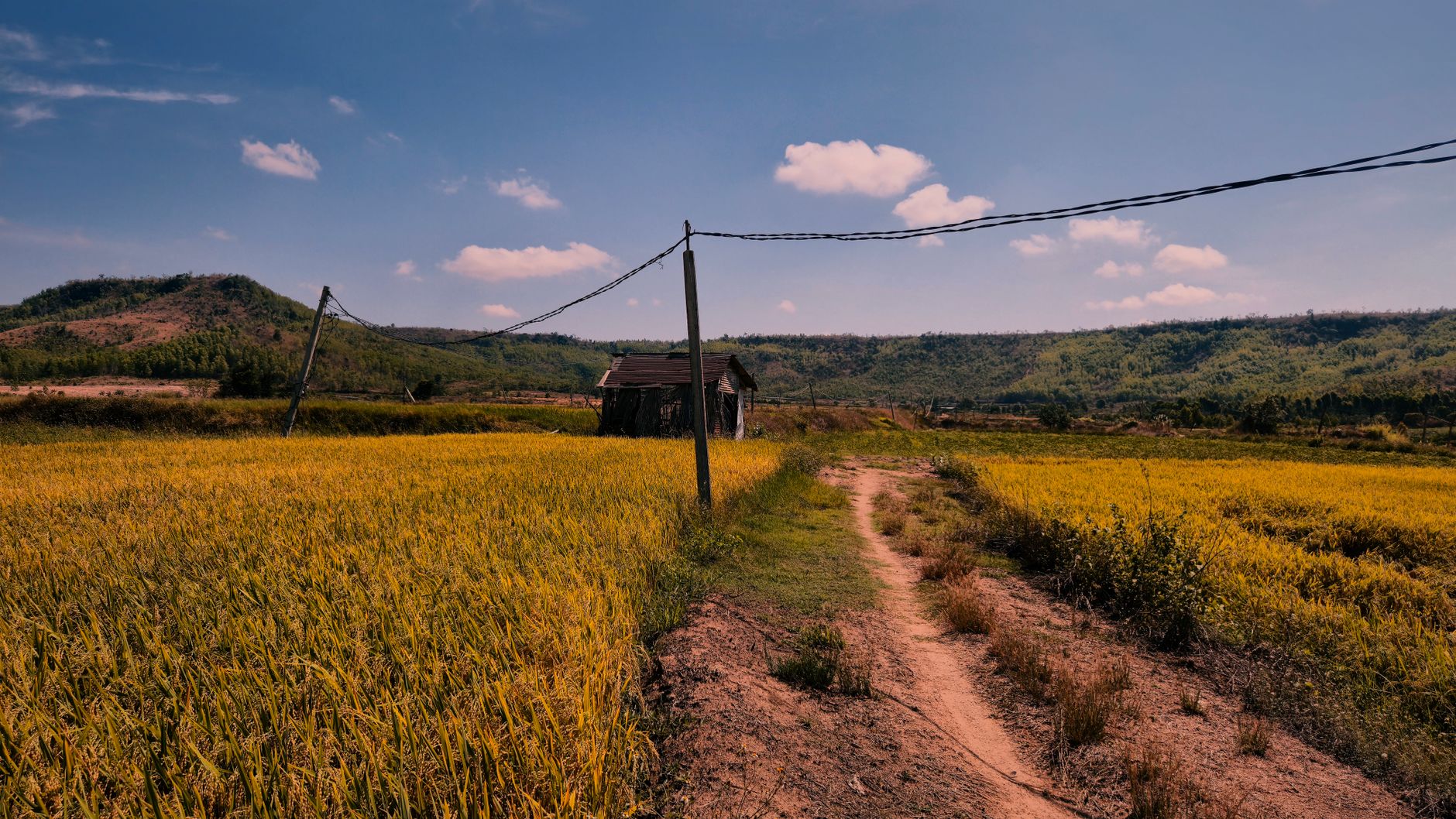
Dry season (November–March) turns the palette more muted. The earth cracks, dust kicks up on the dirt roads, and some sections look sparse. Still worth visiting, but less photogenic.
Early morning — before 7:30 AM — is when the light is best and workers are already harvesting. By midday it's hot and flat.

Photo by Ahmad Malulein on Pexels
How to get there
Fly into Pleiku (Gia Lai Airport). Vietnam Airlines and Bamboo Airways operate daily flights from Saigon (1h15) and Hanoi (1h30). Flights from Da Nang run several times a week.
From Pleiku city center, the main tea hill areas are:
- Bien Ho tea hills: ~7 km north, along the road to Bien Ho lake. 15 minutes by motorbike.
- Bau Can tea plantations: ~25 km east toward Mang Yang district. 40 minutes on QL19.
- Chu Se area: ~45 km south, with scattered smaller farms.
You'll need your own wheels — rent a motorbike in Pleiku for 120,000–150,000 VND/day, or hire a car with driver for around 800,000–1,000,000 VND for a half-day loop.
There's no public bus to the tea hills themselves. Grab operates in Pleiku for getting around town, but drivers won't wait at a rural tea plantation for an hour.
What to do
Walk the rows
The main activity is simply walking through the tea plantations. No entrance fee at most locations — these are farms, not attractions. Be respectful: stay on paths between rows, don't trample plants, and ask before photographing workers up close.
Combine with Bien Ho
Bien Ho (T'Nung Lake) is a volcanic crater lake just north of the tea hills. Dark water, surrounded by forest, slightly eerie in the mist. The tea hills and the lake make a natural half-day loop.
Visit a tea processing workshop
Some farms have small processing facilities where leaves are withered, rolled, and dried. If you speak basic Vietnamese (or bring a local friend), workers are usually happy to explain. You can buy fresh green tea directly — expect 50,000–80,000 VND per kilogram for basic grades.
Photography
Drone pilots: check local regulations and be aware that some areas near military installations in the highlands are restricted. A telephoto lens (70-200mm) compresses the rows nicely. Wide-angle captures the scale but loses the pattern.
Where to eat
Pleiku has genuine food worth seeking out:
- Pho kho Gia Lai — the local dry pho variation, served with broth on the side and a heap of scallions. Try it at Pho Kho Hong at 2 Nguyen Van Troi (25,000 VND).
- Bun gio heo — pork knuckle noodle soup, rich and slightly sweet. Common at market stalls around Pleiku's central market.
- Com tam is available everywhere if you want something familiar after a morning in the hills.
- For Vietnamese coffee, Pleiku runs on robusta grown locally. Any small cafe near the market will pour a proper "ca phe sua da" for 15,000–20,000 VND.
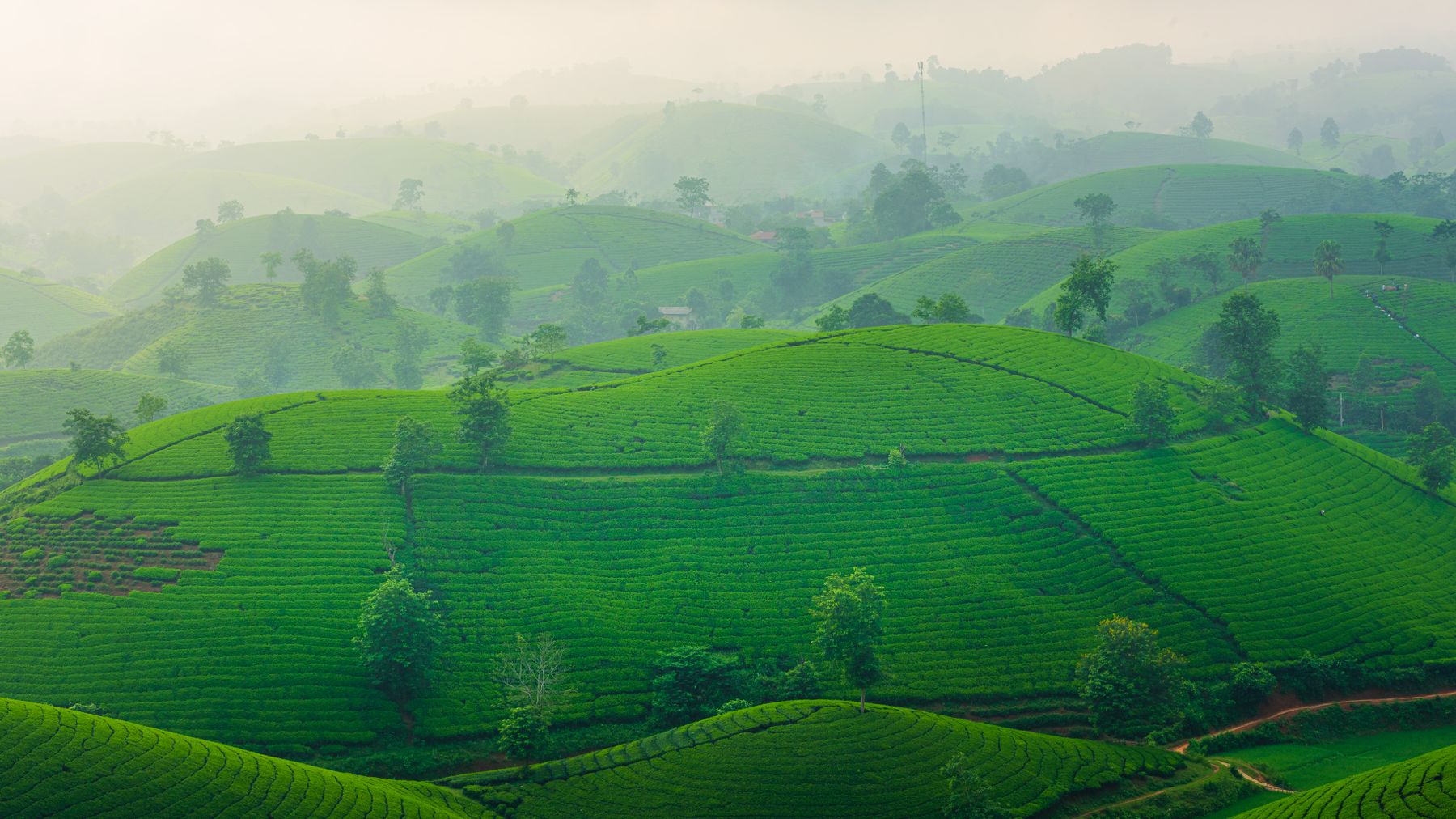
Photo by Duc Nguyen on Pexels
Where to stay
Pleiku isn't a tourist town, so accommodation is functional rather than charming:
- Hoang Anh Gia Lai Hotel: the nicest option in town, around 600,000–900,000 VND/night. Clean, central, has a pool.
- Duc Long Gia Lai Hotel: mid-range, 400,000–550,000 VND. Fine for a night or two.
- Nha nghi (guesthouses): budget spots along Hung Vuong and Tran Phu streets, 150,000–250,000 VND. Basic but adequate.
No homestays at the tea hills themselves — you'll base in Pleiku and day-trip out.
Common mistakes
- Coming at midday. The light is harsh, workers take lunch breaks, and it's just hot. Get there before 8 AM.
- Expecting infrastructure. There are no cafes, bathrooms, or shade structures at the plantations. Bring water and sunscreen.
- Only planning one day for Gia Lai. The tea hills take a morning, but the province has enough for 2–3 days if you add Kon Tum, the Bahnar communities, and the Mang Yang pass.
- Skipping the food. Pleiku's pho kho alone justifies the flight.
Practical notes
Gia Lai is one of the least-visited provinces by foreign tourists, which is precisely the appeal. The tea hills won't take your whole day — pair them with Bien Ho and a long lunch in Pleiku. If you're building a longer Central Highlands loop, Gia Lai connects naturally to Kon Tum (50 km north) or Buon Ma Thuot (200 km south). Bring cash — card acceptance outside Pleiku hotels is unreliable.
Last updated · May 29, 2026 · independently researched, never sponsored.