
Huu Nghi border gate sits about 15 km north of Lang Son city, right where National Highway 1A ends and China begins. It's one of the busiest international land crossings in northern Vietnam (베트남 / 越南 / ベトナム), and for travelers heading overland between Hanoi and Nanning (or deeper into China), this is likely where you'll stamp your passport.
What it is
Cua Khau Huu Nghi — literally "Friendship Gate" — is the main international border crossing between Vietnam and China in Lang Son province. The gate complex includes immigration offices on both sides, a duty-free zone, and a constant flow of cargo trucks that defines the rhythm of this place. The current crossing infrastructure has been expanded several times since the 1990s, and today it handles both tourist and commercial traffic.
Most foreign travelers pass through here rather than linger, but Lang Son province and the border area itself have more going on than you'd expect from a frontier checkpoint.
Why travelers go
Three reasons, mostly. First, it's the most direct overland route between Hanoi (하노이 / 河内 / ハノイ) and southern China — Nanning is only about 180 km on the Chinese side. Second, some travelers come specifically for the border markets, where goods from both countries pile up in chaotic, warehouse-style shopping halls. Third, Lang Son province has limestone karst scenery and historical sites that make a stopover worthwhile if you're not in a rush.
If you're doing the classic Southeast Asia overland loop and want to cross into China without flying, this is your most practical option in the north.
Best time to visit
October through March is the most comfortable window. Lang Son sits at higher elevation than Hanoi, and winters here are genuinely cold — temperatures can drop to 5-8°C in December and January, so pack layers. The upside is dry air and clear skies over the karst hills.
Avoid the weeks around Tet (late January or early February, depending on the lunar calendar). The border crossing gets extremely congested with Vietnamese workers returning from China, and processing times spike. Similarly, Chinese national holidays (especially Golden Week in early October) create bottlenecks on the other side.
The summer months (June-August) bring heavy rain and occasional fog that slows road travel from Hanoi.
How to get there from Hanoi
Lang Son city is roughly 155 km northeast of Hanoi, and the drive takes about 2.5-3 hours on the Hanoi-Lang Son expressway (CT.04).
Bus: Regular coaches leave from Hanoi's My Dinh and Gia Lam bus stations throughout the day. Tickets run 120,000-180,000 VND depending on the operator. Hoang Long and Dong Bac are reliable names. Buses drop you at Lang Son bus station in the city center.
Private car/taxi: A one-way car from Hanoi costs around 1,500,000-2,000,000 VND. Grab doesn't reliably serve intercity routes this far north, so arrange through your hotel or a local driver.
Train: There's a Hanoi-Dong Dang railway line, but the train is slow (5-6 hours) and infrequent. It's a nostalgic ride through the northern countryside, but not practical if you're on a schedule.
From Lang Son city to Huu Nghi gate itself, it's another 15 km north along Highway 1A. Local taxis or xe om (motorbike taxis) charge about 80,000-120,000 VND for the run.

Photo by Sergey Guk on Pexels
What to do
Walk the border gate area
The gate complex itself is worth seeing even if you're not crossing. The Vietnamese and Chinese sides face each other across a short no-man's land, with flags and guard posts on both sides. You can walk right up to the Vietnamese immigration building without a ticket or crossing intent. Watching the truck traffic and the flow of traders is its own kind of theater.
Browse the Tan Thanh and Dong Dang border markets
Tan Thanh market, about 3 km from Huu Nghi gate, is where most of the cross-border retail action happens. Think electronics, fabrics, dried goods, Chinese snacks, and kitchenware at prices lower than Hanoi. Bargaining is expected. Dong Dang town, closer to the gate, has a smaller market with similar goods. Neither market is polished — these are working trade floors, not tourist bazaars.
Visit Nhi Thanh and Tam Thanh caves
Back in Lang Son city, these two caves sit right at the edge of town inside limestone cliffs. Tam Thanh cave has Buddhist shrines inside and a viewing platform that looks out over Chi Lang valley. Nhi Thanh cave, nearby, contains inscriptions dating back several centuries. Entry is around 20,000 VND each.
Explore the Lang Son citadel ruins
The old Mac Dynasty citadel (Thanh Nha Mac) in the center of Lang Son is a modest set of stone walls and gates — not a grand complex, but it gives you a reason to walk the older part of town. Free to visit.
Take in the karst scenery along Highway 4B
If you have your own wheels, the road heading west from Lang Son toward Bac Son valley passes through some of the best limestone karst landscapes in northern Vietnam. It's a less-traveled alternative to the Ha Giang loop or Ninh Binh for this kind of scenery.
Where to eat nearby
Lang Son's signature dish is "pho chua" — sour pho. It's nothing like the "pho" you know from Hanoi. Cold rice noodles topped with roasted pork, pork liver, sliced cucumber, peanuts, and a tangy broth made from vinegar and sugar. Find it at the stalls along Tran Dang Ninh street in Lang Son city for about 30,000-40,000 VND a bowl.
Also worth seeking: "vit quay" (roasted duck), a local specialty with crackling skin and five-spice seasoning. Restaurants along Le Loi street serve it by the portion (around 150,000-250,000 VND for a half duck). Pair it with sticky rice and a bottle of local "bia hoi" if it's available — some places tap it fresh.
Where to stay
Lang Son city has a decent range of hotels. Budget guesthouses and nha nghi (mini-hotels) near the bus station start at 200,000-350,000 VND per night — basic but clean. Mid-range hotels like Muong Thanh Lang Son or Van Xuan Hotel offer air conditioning, hot water, and breakfast for 500,000-800,000 VND. There's nothing approaching a resort here; this is a provincial capital, not a tourist hub.
Stay in the city rather than near the border gate itself — there's almost no accommodation near Huu Nghi, and you'll have more food and transport options in town.
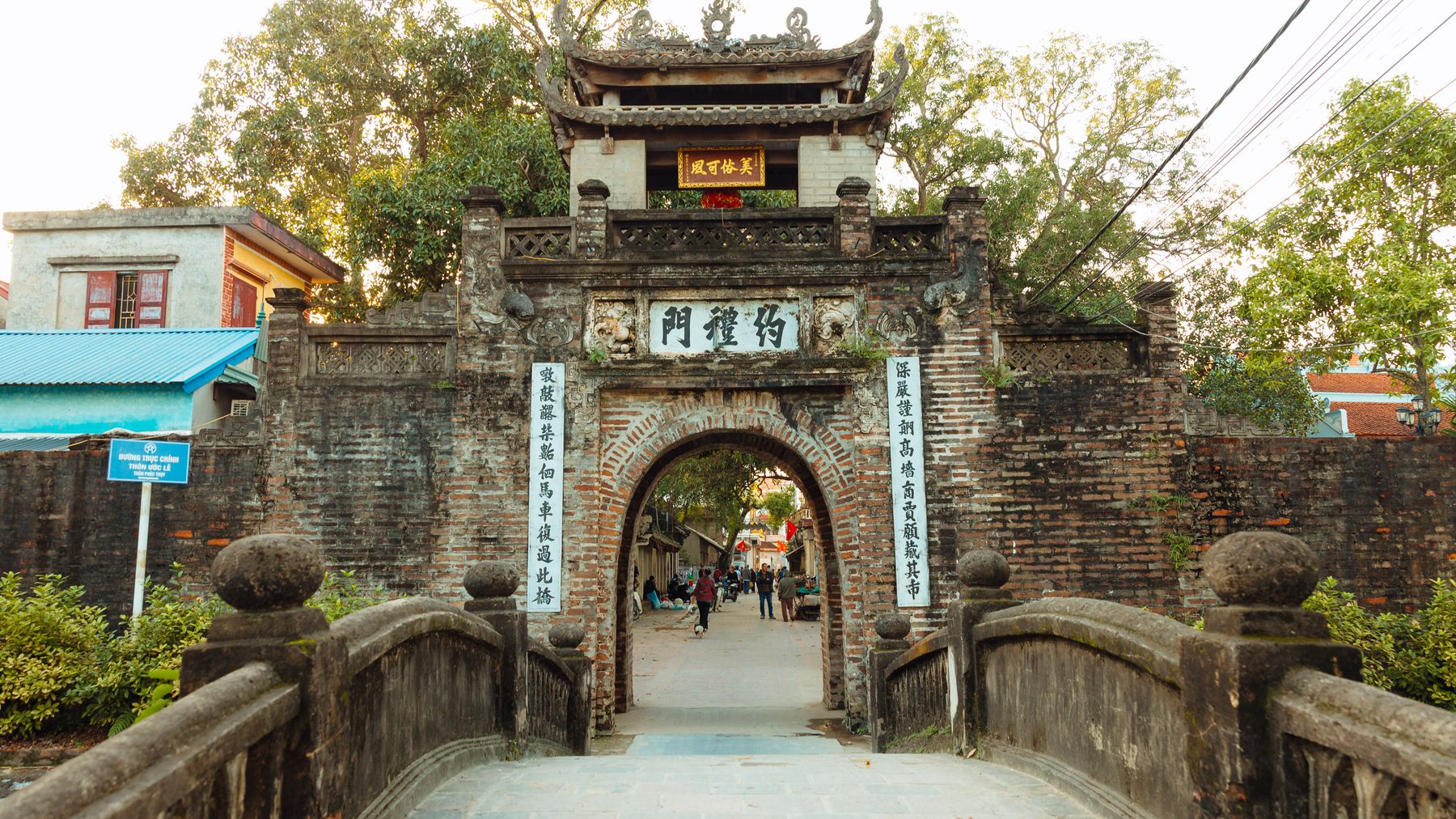
Photo by HONG SON on Pexels
Practical tips locals would tell you
- Bring your passport. Even if you're not crossing into China, the border zone sometimes has checkpoints where police ask for ID. Foreign faces attract attention here more than in Hanoi or Sapa.
- Change money in Lang Son city, not at the gate. Gold shops along Tran Dang Ninh street give better rates for VND-to-CNY exchange than the booths near the crossing.
- Crossing hours matter. The border gate opens at 7:00 and closes at 19:00 (Vietnam time). Arrive before 8:00 to avoid the commercial traffic that clogs the queue from mid-morning onward.
- Carry cash. Card acceptance is limited outside the hotels. ATMs exist in Lang Son city but are scarce near the border.
Common mistakes to avoid
Don't assume you can just walk across without a visa. Chinese visa requirements apply — check your eligibility before showing up. Some travelers confuse this gate with the smaller Huu Nghi Quan checkpoint or with Mong Cai border crossing in Quang Ninh province; they're different places.
Don't plan a tight connection. Bus schedules from Hanoi aren't precise, and the border queue can take anywhere from 20 minutes to 2 hours depending on the day. Build in buffer time.
Practical notes
Huu Nghi gate is functional, not glamorous — but paired with a night in Lang Son city, it makes a solid day trip or stopover on an overland route north. The food alone justifies a meal stop, and the karst hills around Lang Son deserve more attention than they get.
Last updated · May 29, 2026 · independently researched, never sponsored.






