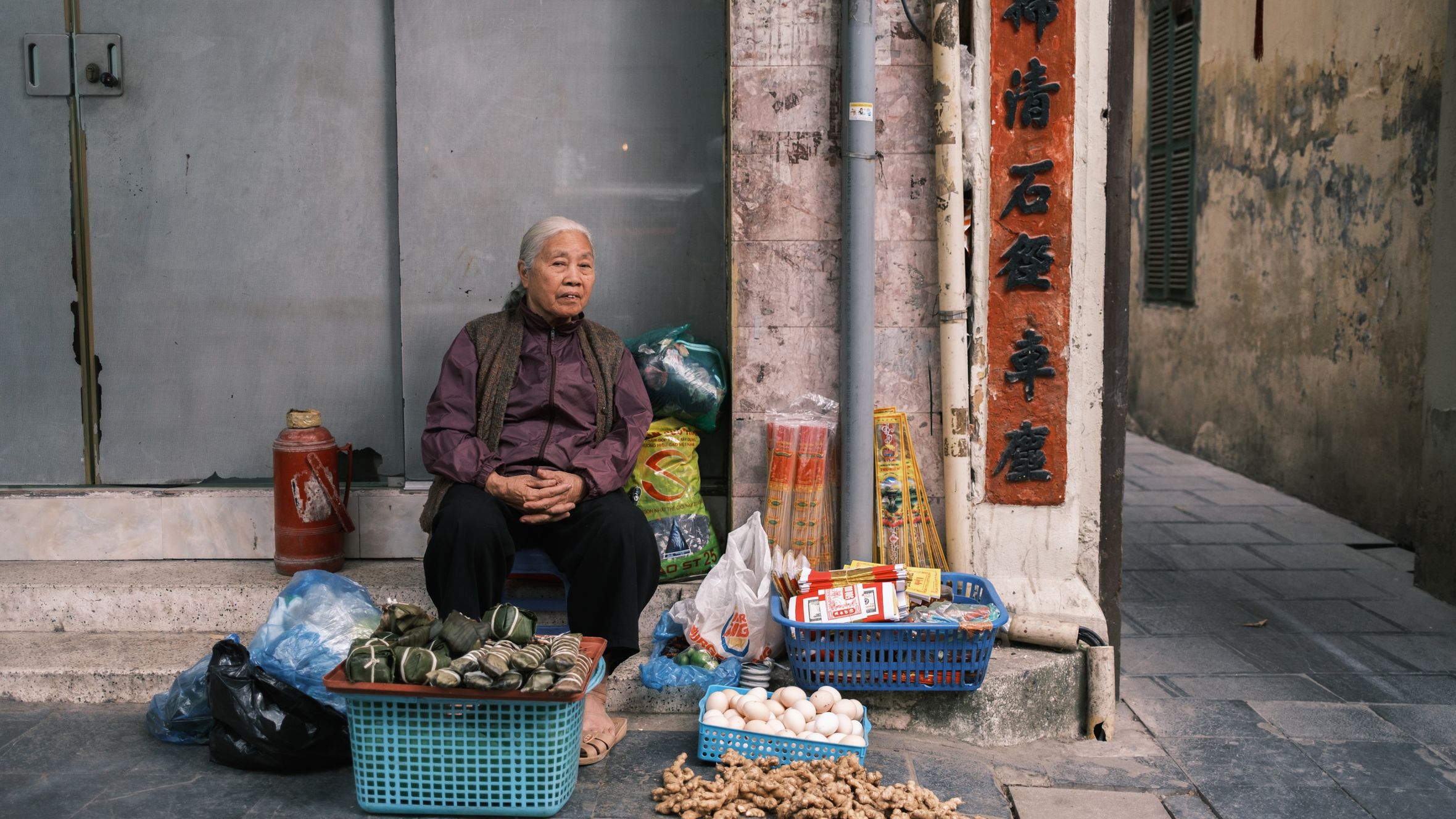
Cho Ky Lua has been the commercial heart of Lang Son for over 200 years. It sits right along the Ky Cung River in the center of town, and it's one of the few markets in northern Vietnam (베트남 / 越南 / ベトナム) where you can watch cross-border trade happen in real time — Chinese goods flowing south, Vietnamese agricultural products heading north, and a chaotic, fascinating mix of Hill tribe textiles, dried medicinal herbs, and cheap electronics piled on tarps in between.
What it is and why it matters
Cho Ky Lua dates back to the Nguyen Dynasty period, when Lang Son served as a key trading post on the route between Hanoi and China's Guangxi province. The market originally operated on specific days of the lunar calendar — and while it's now open daily, the biggest trading days still fall on dates ending in 2 and 7 of the lunar month. On those days, Tay and Nung ethnic minority traders come down from surrounding villages, and the market swells well beyond its permanent hall into the surrounding streets.
The market complex itself is divided into sections: a large indoor hall with dry goods and clothing, an outdoor area for fresh produce and meat, and a sprawling zone of stalls selling everything from Chinese-branded power tools to knockoff handbags. It's not curated or photogenic in the way Hoi An's markets are. It's a working market, noisy and crowded, and that's exactly the point.
Why travelers go
Most foreign visitors to Lang Son are already on their way to or from the Huu Nghi (Friendship) border gate with China, or making a loop through the northeast. Cho Ky Lua gives you a reason to stop for half a day instead of just passing through. The draw is the atmosphere more than any single purchase — watching the pace of border commerce, eating well for almost nothing, and browsing goods you won't find in Hanoi (하노이 / 河内 / ハノイ).
If you're interested in ethnic minority textiles — Tay and Nung indigo-dyed fabrics, hand-embroidered bags, silver jewelry — this is one of the better places to buy them in the north, often cheaper than Sapa, where tourist markup is baked into every price.
Best time to visit
The market runs year-round, but the sweet spot is September through November. The weather in Lang Son cools down significantly compared to the summer heat, sitting around 20-25°C, and the autumn harvest means more produce and more traders. Avoid Tet (late January or February) unless you want to see the market shuttered — most vendors close for a full week.
If you can time your visit to a lunar 2 or 7 day, the market is noticeably bigger and livelier. Check a lunar calendar before you book.
How to get there from Hanoi
Lang Son is about 155 km northeast of Hanoi, and the easiest way is by bus from My Dinh or Gia Lam bus stations. Buses run roughly every 30 minutes from early morning until late afternoon. The ride takes about 3 to 3.5 hours on the expressway (longer if you take the old QL1A route). Tickets cost 120,000-150,000 VND one way.
From Lang Son bus station, Cho Ky Lua is only about 2 km — a 30,000 VND xe om ride or a short walk along the river.
There's also a train from Hanoi's Gia Lam station, but it's slow (5-6 hours) and the schedule is limited. The bus is the practical choice.
Photo by Nguyen Khuong on Pexels
What to do at Cho Ky Lua
Browse the textile section
The second floor of the main hall has rows of Tay and Nung woven fabrics, plus Chinese-made silks sold by the meter. If you're buying indigo fabric, check for hand-dyed versus synthetic dye — hand-dyed pieces have slight color variations and will stain your fingers a little when rubbed. Expect to pay 80,000-200,000 VND per meter for handmade cloth.
Explore the herbal medicine stalls
The northeast corner of the outdoor market has vendors selling dried herbs, roots, and traditional remedies sourced from both Vietnamese and Chinese suppliers. You'll see bins of dried ginger, star anise, cinnamon bark, and more obscure items like dried gecko and various mushrooms. Even if you're not buying, it's worth a slow walk through.
Hit the fresh market early
The produce and meat section peaks between 6:00 and 8:00 AM. This is where local families shop, and you'll see mountain vegetables, river fish, and seasonal fruits you won't recognize. It's the most photogenic part of the market, but ask before taking close-up photos of vendors — a smile and a gesture go a long way.
Check the electronics and household goods zone
The stalls closest to the river sell an overwhelming volume of Chinese-imported goods: phone chargers, tools, kitchen gadgets, clothing. Quality varies wildly. It's interesting as a spectacle of cross-border commerce, but be skeptical of anything electronic.
Walk along the Ky Cung River after
Once you've had enough of the market crowds, the riverbank path heading south makes for a quiet 20-minute walk. It's a good way to decompress.
Where to eat nearby
Lang Son's signature dish is "pho chua" — sour pho. It's nothing like the Hanoi version of pho. Cold rice noodles are tossed with sliced pork, crispy fried shallots, peanuts, herbs, and a tangy sauce. Several small shops within a block of the market sell it for 30,000-40,000 VND a bowl. Look for the places where construction workers and market vendors are eating.
Also try "khau nhuc" — a Tay-origin dish of pork belly steamed with taro until both are falling apart. It's rich, slightly sweet, and usually served at com binh dan (rice stall) spots around the market for 40,000-50,000 VND a plate.
Where to stay
Lang Son isn't a tourist town, so accommodation is mostly local hotels and guesthouses. Budget places near the market run 200,000-350,000 VND per night — basic but clean, with hot water and Wi-Fi. The Muong Thanh hotel on Tran Dang Ninh street is the most comfortable option in town at around 600,000-800,000 VND, and it's a 10-minute walk from Cho Ky Lua.
Most travelers treat Lang Son as a day trip from Hanoi or a stopover on a northeast loop through Cao Bang and Ha Giang.

Photo by Tuan Vy on Pexels
Practical tips locals would tell you
- Bargain, but don't be aggressive. Prices at Cho Ky Lua are already lower than tourist markets. A 10-20% reduction is reasonable; demanding half price will just get you ignored.
- Bring cash in small denominations. Most vendors don't use card machines, and breaking a 500,000 VND note at a 30,000 VND noodle stall is a headache for everyone.
- Wear shoes you don't love. The fresh market section gets wet and slippery, especially in the morning.
- Vietnamese coffee is easy to find nearby. There are several small ca phe shops on the streets surrounding the market — iced "ca phe sua da" runs about 15,000-20,000 VND.
Common mistakes to avoid
- Skipping the lunar calendar days. Visiting on a random Tuesday is fine, but you'll see maybe 40% of what the market can be. Time it right.
- Buying electronics expecting quality. Those USB cables and phone cases are cheap for a reason. Stick to textiles, food products, and herbs for worthwhile purchases.
- Arriving after 10 AM. The market doesn't close, but the energy drains out fast after mid-morning. The fresh section is largely packed up by 9.
- Not exploring beyond the main hall. The surrounding streets, especially toward the river, have overflow stalls and food vendors that are easy to miss if you only go inside.
Practical notes
Cho Ky Lua is open daily, roughly 5:00 AM to 6:00 PM, with the action concentrated in the morning. If you're combining Lang Son with a broader northeast Vietnam trip — Cao Bang's Ban Gioc waterfall, the karst landscapes of Ha Giang — budget one night in town and hit the market first thing before moving on.
Last updated · May 29, 2026 · independently researched, never sponsored.






