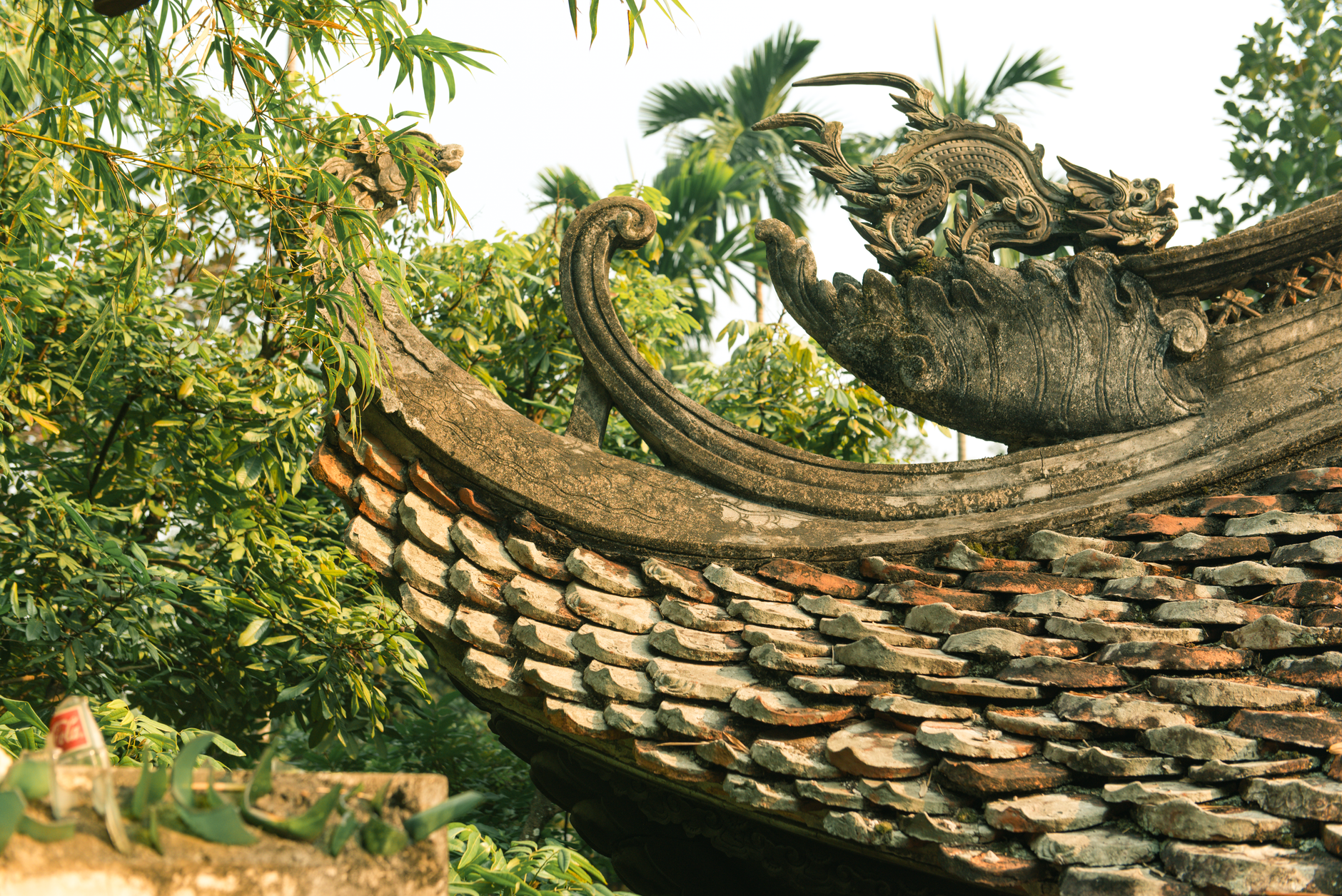
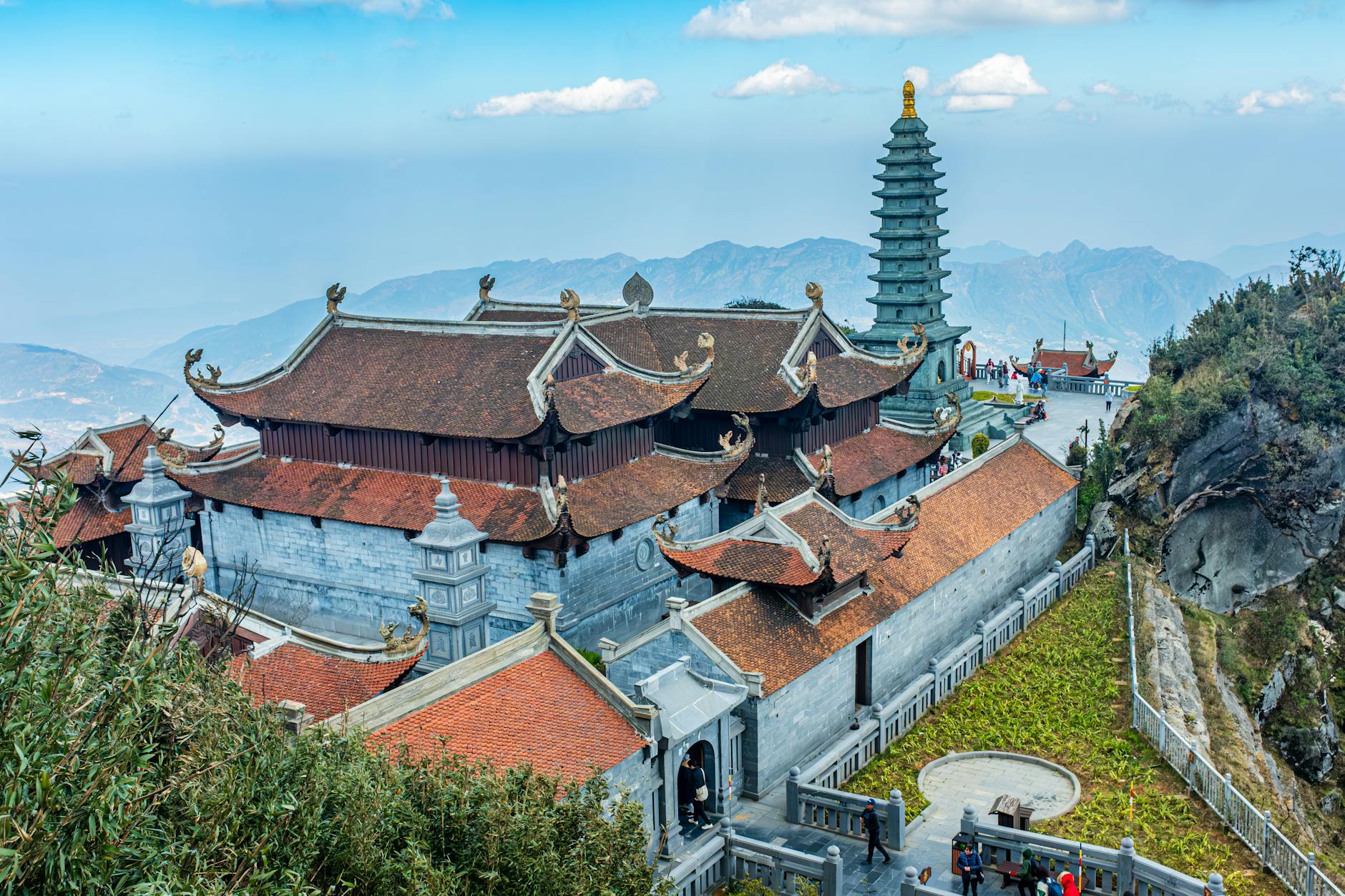
Dinh Tho Tang sits in Tho Tang town, Vinh Tuong district, Phu Tho province — about 60 km northwest of Hanoi. It's one of the best-preserved communal houses in the Red River Delta, and the kind of place where you can spend a quiet morning studying 400-year-old woodcarvings while a market sells live chickens 200 meters away.
What it is
A "dinh" is a communal house — the social and spiritual center of a Vietnamese village. Dinh Tho Tang was originally built in the 16th century and underwent major reconstruction in the 17th century during the Later Le dynasty. The structure that stands today is primarily from that 17th-century rebuild, which makes it one of the oldest surviving wooden communal houses in the north.
What sets Dinh Tho Tang apart is the woodcarving. The beams, brackets, and roof supports are covered in elaborate relief panels depicting scenes of daily life, mythical creatures, and nature — dragons chasing pearls, phoenixes perched in foliage, villagers farming and fishing. The carvings are unusually secular for a Vietnamese dinh. You'll see women breastfeeding, men wrestling, boats on rivers. It's folk art, not court art, and that's what makes it interesting.
The dinh was classified as a national architectural relic, and it remains an active community space. Tho Tang village itself has a long history as a trading hub — the town's commercial markets have operated for centuries, and that merchant energy is still palpable when you walk through.
Why travelers go
Most visitors come for the woodcarvings. If you've seen the [Imperial Citadel](/posts/imperial-citadel-thang-long-hanoi (하노이 / 河内 / ハノイ)-history) Thang Long or the Temple of Literature in Hanoi and want to understand a different layer of Vietnamese architectural history — the village layer, not the royal one — Dinh Tho Tang delivers. The carvings here are raw, expressive, and remarkably well-preserved for their age.
It's also a real village experience. Tho Tang isn't a tourism town. There are no ticket booths, no souvenir shops lining the entrance. You show up, walk in, and look around. If the caretaker is there, they'll open the inner halls for you. If not, the exterior carvings and courtyard are still worth the trip.
Best time to visit
The dinh's annual festival falls in the first lunar month — usually late January or February — and runs for several days with processions, ritual offerings, and traditional games. If you want atmosphere and crowds, that's the window.
For a quiet visit focused on the architecture, go between October and April when the weather is cool and dry. Summer (May–August) is hot and humid in the Red River Delta, and the wooden interior of the dinh can feel stifling without airflow. Weekday mornings are best — you'll likely have the place to yourself.
If your trip coincides with the Hung Kings Festival in Phu Tho (10th day of the third lunar month, usually April), you can combine Dinh Tho Tang with a visit to the Hung Kings Temple complex about 50 km further northwest.
How to get there from Hanoi
By motorbike or car: Take National Highway 2 (QL2) northwest from Hanoi toward Vinh Yen, then continue to Vinh Tuong district. Total distance is roughly 60 km, about 1.5–2 hours depending on traffic through the Hanoi suburbs. The road is good once you clear the city.
By bus: Catch a bus from My Dinh bus station to Vinh Yen (around 50,000–70,000 VND, 1.5 hours). From Vinh Yen, hire a local "xe om" (motorbike taxi) to Tho Tang — about 15 km, expect to pay 40,000–60,000 VND.
By Grab/private car: A round-trip Grab car from central Hanoi runs roughly 800,000–1,200,000 VND depending on wait time. Worth it if you're combining with other stops in the area.

Photo by Q. Hưng Phạm on Pexels
What to do
Study the woodcarvings up close
Bring a flashlight or use your phone light. The interior carvings are in low light, and the detail rewards close inspection. Look for the panel showing a boat race — it's one of the most cited examples of secular folk art in Vietnamese architecture. The dragon carvings on the main beams blend Chinese-influenced motifs with distinctly Vietnamese folk elements.
Walk the village and market
Tho Tang's market is one of the more active local markets in the district. It's a wholesale trading hub, especially for textiles and household goods. Don't expect a photogenic "old world" market — it's functional, chaotic, and real. The surrounding lanes have traditional houses with laterite walls and narrow courtyards.
Visit the banyan tree and pond
The classic Vietnamese village trio is "cay da, gieng nuoc, san dinh" — banyan tree, well, communal house yard. Tho Tang still has all three. The banyan near the dinh is enormous and makes for a good rest stop.
Check the auxiliary temples
Within the village, there are smaller temples and shrines worth a quick look if you're interested in how village spiritual life layers — the dinh for communal governance, the chua (pagoda) for Buddhist practice, the den (temple) for deity worship.
Combine with Tay Thien or Tam Dao
If you have a full day, Tay Thien pagoda complex and Tam Dao hill station are both within 30–40 km and make for a natural circuit through Vinh Phuc/Phu Tho.
Where to eat nearby
Tho Tang doesn't have destination restaurants, but the town is known for "thit cay" — a local specialty you'll see at small eateries along the main road. The morning market has "bun" (rice noodle) stalls and "banh cuon" vendors. A bowl of noodle soup runs 25,000–35,000 VND.
For a proper sit-down meal, head to Vinh Yen (15 km southeast), where you'll find more variety — local rice plates, "pho", grilled meat spots. Quan Com Binh Dan places near Vinh Yen's central market serve filling meals for 40,000–60,000 VND.
Where to stay
Tho Tang itself has no hotels. Your options:
- Vinh Yen: Budget nha nghi (guesthouses) from 200,000–350,000 VND/night. A few mid-range hotels in the 400,000–700,000 VND range with air conditioning and hot water.
- Tam Dao: If combining trips, Tam Dao has dozens of guesthouses and small hotels from 300,000 VND to 1,500,000 VND/night.
- Day trip from Hanoi: The most common approach. Leave Hanoi by 7 AM, spend the morning at the dinh, and return by afternoon.

Photo by Quang Nguyen Vinh on Pexels
Tips locals would tell you
- Ask for the caretaker. The inner sanctum is often locked. Locals near the dinh can point you to whoever holds the key. A small donation (20,000–50,000 VND) in the offering box is appropriate.
- Dress modestly. It's a place of worship. Cover your shoulders and knees.
- Bring your own water. There's no cafe at the dinh. The nearest drinks are at the market, a short walk away.
- Go early. The light through the open doors in the morning is the best for seeing (and photographing) the carvings.
Mistakes to avoid
- Skipping the interior. The exterior is impressive, but the real treasures are the carved beams inside. If the door is shut, ask — don't just leave.
- Coming without context. Read up on Vietnamese communal house architecture before you go. Without some background, the carvings are pretty but opaque. With context, they're a window into 17th-century village life.
- Expecting tourist infrastructure. No English signage, no audio guides, no parking lot attendants. That's the appeal, but plan accordingly.
Practical notes
Dinh Tho Tang is free to enter. There's no formal opening hours — it's a village communal house, not a museum. The caretaker is usually around in the morning. Budget 1–1.5 hours for the dinh itself, plus time for the village walk. Combine it with other Phu Tho or Vinh Phuc stops to make a full day out of the trip from Hanoi.
Last updated · May 26, 2026 · independently researched, never sponsored.